Find the Good and Praise It

a child

Critics like to point out some of the shortcomings of our education system, and we should welcome that debate. A one-size-fits-all system does not work for everyone; it never has and never will. The system will continue to evolve, albeit slowly, and adjustments will always be needed. We should always welcome discussion about public education, which is the highest priority in most communities throughout the state in our country.

My friend, Johnny McDaniel, the Director of Schools in Lawrence County, utilizes a slogan in his system that is inspiring and worth emulating: Find the Good and Praise It.” There is so much good to recognize in our state if we only look for it. Educators across Tennessee make a difference in lives every single day one child at a time. We should take a moment to pause to reflect and appreciate our accomplishments.

Since 2010 Tennessee has improved more than any other state according to the National Assessment of Educational Progress (NAEP), considered the nation’s report card. While our scores were indeed flat and even lost some ground in fourth-grade math during the last reported scores, it does not diminish the claim that Tennessee was the fastest improving state in the nation. Tennessee’s fourth-graders ranked 19th in science, while eighth-grade performance ranked 21st. Yes, we have more work to do. However, that was accomplished by the committed effort of educators and policymakers across Tennessee. We have had both hits and misses, but the herculean effort should be recognized. Our progress and momentum in Tennessee continue to move forward, and we are considered a national leader in student-focused education policy.

Tennessee’s high school graduation rate hit a record-high for the 2018-19 school year. That should have been in headlines across the state. The hard work of our students and teachers across the state is truly making a difference. The current rate is 89.7% and that is a remarkable development. Can we continue to improve? Yes. However, it is time we acknowledge the progress in preparing students for postsecondary education and the workforce. Graduation is the first step, and more Tennessee children are graduating from high school. That makes Tennessee an attractive place for the industry looking to locate in our state. A quality education system ultimately provides economic mobility for all of our citizens.

In August 2018, 59 percent of voters surveyed in a poll conducted by the State Collaborative on Reforming Education (SCORE) said students are not prepared for the workforce, and nearly half of voters said students are not ready for college. A majority of voters favored four specific readiness strategies: expanding access to post-high school educationmore opportunities for students to earn industry certificationhaving a work-based learning experience, and better college and career counseling for every high school student. Governor Bill Lee and the Tennessee General Assembly are moving to address those issues in our state.

The recently passed Governor’s Investment in Vocational Education, also known as the GIVE Act, is designed to support regional partnerships among schools, industry, and technical colleges. This initiative is destined to develop more work-based learning and apprenticeship opportunities. It takes effect on July 2020. If implemented correctly, this should help prepare students for a good job right out of high school. This is a step in the right direction for numerous students across the state.

The reality is that college is not for everyone. It works for many students, but for others, this path is not the best choice. For many, the cost of a college education is too high, and too many young people are attending college and acquiring unnecessary debt—without graduating. We have been guilty too many times in public education of pushing college education exclusively, consequently shortchanging other career paths. Millions of young Americans are still paying the price. We now provide two years of tuition-free attendance at a community or technical college in Tennessee to our students through a program called the Tennessee Promise. In Tennessee, we are addressing college and career by leading the way nationally with Tennessee Promise and the GIVE Act. These innovative programs should be celebrated across the state.

Praise is a powerful tool; it is not used enough in our society. Criticism of things we do not like is an easier vehicle for too many. People in our world are looking for something to be mad about. Me? I am just looking for things to be happy about. Johnny McDaniel is on to something that we should all do more: “Find the Good and Praise It.”

*********

JC Bowman is the Executive Director of Professional Educators of Tennessee, a non-partisan teacher association headquartered in Nashville, Tennessee. Permission to reprint in whole or in part is hereby granted, provided that the author and the association are properly cited.

Culture, Discipline, and Salaries

Fotolia_6952138_Subscription_XXL.jpg

Bureaucrats keep piling on more requirements of educators with barely a nod of appreciation. Fewer occupations have undergone more changes than those in public education. Three critical issues often cited by our educators for leaving our profession are school culture, student discipline, and teacher salaries.

The National School Climate Center notes that “empirical research has shown that when school members feel safe, valued, cared for, engaged, and respected, learning measurably increases, and staff satisfaction and retention are enhanced.” Bad school culture is a barrier to student learning and quality teaching.

Business leaders have long recognized the connection between employee working conditions and productivity. Establishing positive working conditions for school staff improves the learning conditions for students. Quality instruction cannot be provided if staff morale is low, the staff does not feel supported by school administration and/or the staff turnover is high. Teacher recruitment and retention is a critical role in any school or district. Factors such as teacher-administrator relationships, collegiality, job expectations, and participation in decision-making, are among the most important reasons in whether or not teachers choose to stay at their school or in the profession.

Lack of student discipline, inadequate administrative support, and lack of respect are all frequently cited reasons as to why teachers leave the profession, almost as much as salary and working conditions. We continue to place children with serious and chronic behavior issues into regular classrooms, where the teacher is already overwhelmed with other students also with behavior problems. Instruction time is lost every time a teacher has to deal with discipline issues. Some students need attention and intervention beyond the scope of what a classroom teacher can provide. It is imperative that a school and district adopt policies that support effective classroom management as well as instruction for all students. Districts must have policies in place that protect all students’ right to learn.

To be clear, student discipline is a serious issue and it must be addressed, both at the state and local level. Any assault that causes an injury to students or teachers should be a police matter. One possible policy is better tracking of time an educator spends on discipline issues. For example, do parents have the right to know if one student disrupts their own child’s education so frequently their child loses instruction time? We need to document all discipline incidents so corrective courses of action can be taken at the building level, district level, and state level. We should work to reduce unnecessary suspensions and expulsions in our schools, by looking at this data on a regular basis and providing better training for all staff.

In California, schools will no longer be allowed to suspend elementary and middle school students from school for disrupting classroom activities or defying school authorities. The state of California undermined local control of schools and made it harder for teachers to manage their classroom. Their one-size-fits-all disciplinary requirement will likely have a chilling effect on teacher recruitment and retention. Let’s hope policymakers in other states have more forethought and common sense than their counterparts in California. Without discipline, students cannot learn. Students themselves must respect rules and authority.

The Comptroller’s Office of Research and Education Accountability (OREA) proved through research that there was a slightly more than 6 percent increase total in average classroom salaries in fiscal years 2016, 2017, and 2018 through the Instructional Salaries and Wages category of the Basic Education Program (BEP). More than $300 million in new, recurring state dollars was appropriated. Unfortunately, as most Tennessee teachers recognized, those dollars did not actually end up in teacher pockets. We must support our teachers and make sure the dollars allocated to their salaries reach them as policymakers intended. This was addressed in Tennessee through subsequent legislation in 2019. We know that many teachers still struggle to support their own families, particularly in places where the cost of living is higher. Salaries must be a priority.

Increasing student achievement takes adequate resources, as well as focus and collaboration to address school culture, student discipline, and teacher salaries. Teachers need the support of their administrators, their district, and the state. If we want to see increased student achievement and student learning, it is paramount that the state and districts work to address issues together. Immediate teacher recruitment and retention efforts will be largely determined by the success or failure on these issues, particularly in chronically hard-to-staff schools.

###

JC Bowman is the Executive Director of Professional Educators of Tennessee, a non-partisan teacher association headquartered in Nashville, Tennessee. Permission to reprint in whole or in part is hereby granted, provided that the author and the association are properly cited.

It is Constitution Day in America

Signing of the Constitution

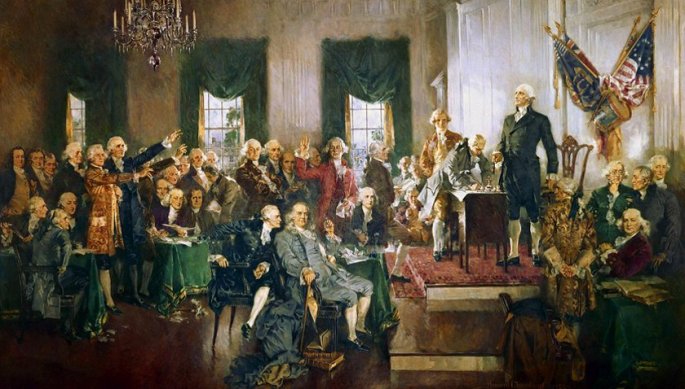
On September 17, 1787, the delegates to the Constitutional Convention met to sign one of the greatest documents ever created:  The United States Constitution. In 2004, the late Senator Robert Byrd led the effort to rename the day ‘Constitution Day and Citizenship Day,’ which requires public schools and institutions to provide information on the history of the country’s constitution.   Our Founding Fathers would likely be pleased that the document they signed 232 years ago is still providing inspiration and guidance for American citizens and other countries around the world.

I was re-reading a letter I wrote to an attorney nearly two decades ago, who was striving to remove any vestige of our Judeo-Christian heritage from our country.  I have always maintained that religion has an appropriate role in the public square.   His position, of course, is that faith should be removed.  My answer to him was simple: ‘base your arguments on the US Constitution, not letters from dead Presidents.’ He had a clear misunderstanding of the Establishment Clause, despite the law degree, and was citing a letter in defense of free exercise of faith from a man who was not even present at the passage of the Constitution.

The United States Constitution is the one document in our public life that operates as a social contract between citizens and government, defining our basic rights and the limits of government with three main purposes:  First, it creates a federal government comprising of a legislative, an executive, and a judicial branch, with a system of checks and balances among the three branches.  Second, it shares power between the federal government and the states.  And third, it safeguards the liberties of all citizens.

The United States Constitution is an indisputably remarkable document, enduring in a world much different than the one in which it was written.  Our founding principles are critical as our country moves forward, if we are to survive as a nation.  It is one area in which Americans are likely to find agreement.  The power, scope, and reach of the government is clearly defined by a simple reading of the document.   Since the only oath every member of Congress takes is to defend the Constitution, it would seem that citizens would place a high priority on this governing document.  However, we are reminded, that interpretations of the Constitution can hold opposing views.

Limiting the power of government and protecting the rights of our citizens is something we must all make a conscientious effort to protect. We should be especially appreciative for the protection afforded in our Bill of Rights, especially our most fundamental rights—freedom of speech, religion, protest, and our equal protection under the law. A free society does not just occur. It has to be deliberately and intentionally preserved. Eternal vigilance is the price of freedom.

The founders knew it wasn’t a perfect document, yet the Constitution has adapted and prevailed. On Constitution Day, take a few minutes to read the document for yourself. In order to protect the values, we hold so dearly, we must guarantee that generations to come will embrace and uphold the one thing that sets us apart from every other nation. That one thing is the United States Constitution.

JC Bowman is the Executive Director of Professional Educators of Tennessee, a non-partisan teacher association headquartered in Nashville, Tennessee. Permission to reprint in whole or in part is hereby granted, provided that the author and the association are properly cited. For more information on this subject or any education issue please contact Professional Educators of Tennessee.

Labor Day Thoughts

This article originally ran in 2017.  This year another Hurricane Dorian threatens our country.  

labor

My ancestors migrated here, including my Native American relatives, and in their own way they have contributed positively to the development of the county. They have been soldiers, teachers, preachers, farmers, bankers, builders and the list goes on. Our nation was formed out of the fires of Revolution –that cost lives, possessions, and even a way of life. America was built on the backs of immigrants, including those forced by slavery to come to our shores.

Labor Day has many meanings, but one meaning is that we must recognize the incredible effort it took to build this great country. We must remember those men and women who came before us and sacrificed for all of us on this day.

President Barack Obama said in his first inaugural address about our settlers: “It has been the risk-takers, the doers, the makers of things — some celebrated, but more often men and women obscure in their labor — who have carried us up the long, rugged path towards prosperity and freedom. For us, they packed up their few worldly possessions and traveled across oceans in search of a new life. For us, they toiled in sweatshops and settled the West, endured the lash of the whip and plowed the hard earth.”

For centuries, our country has attracted people in search of a share of “the American dream” from all corners of the world. E Pluribus Unum (From Many, One) remains the national motto, yet it is true that there no longer seems to be a consensus about what it should mean. Our evolution from the margins of society to the forefront of political change is all the more remarkable when we realize we are a melting pot of cultures. If you step into our public schools today, the many different cultures are on full display not only in our urban communities, but increasingly in our rural communities as well.

Today, our country is divided politically. We see conflicts, in our streets and in the media. We see the “us versus them” attitude that prevents us from collectively working to improve our communities, our state, and our nation. Rather than compromise, we choose to not collaborate on hard issues and pass along our problems to our future generations. Lack of leadership, whether at the local, state or federal level, means our problems only grow larger. Anytime a voice is silenced, it eventually finds a place where it can be heard. Unfortunately, too many voices drown out those who offer attainable solutions to real problems.

However, it is not our differences that divide us. It is our inability to recognize that despite those differences, we have more in common than we can imagine. Nothing brings us closer together as a nation than we face adversity, whether it is a natural disaster or man-made catastrophe. “What unites us is far greater than what divides us,” as John F. Kennedy said. Our great strength as a nation comes in our unity, which is the critical component of America’s perseverance.

While we watched Hurricane Harvey batter Texas, Louisiana and other parts of our country, residents continue to struggle with rain, flooding, and destruction. The damage is still not fully comprehensible, and another Hurricane, Irma, is also threatening.

We can see that many American’s have already lost everything – their homes, cherished items and some their very lives. However, the amazing efforts of volunteers have been an incredible sight to witness. We notice the generosity of the American people to give and share with their neighbors. The way we respond to these tragedies is what makes our nation great.

We will work to repair those areas impacted by natural disaster. The devastation caused by Hurricane Harvey will take years to restore. It is a quintessential American trait that our citizens are dedicated to ensuring those impacted by natural disasters have the support they need to rebuild. History teaches us we will come back stronger than before, as long as America’s men and women today have the same courageous vision, the same audacity and indomitable spirit that made us a great nation in the beginning.

The majority of Americans still want what those first Americans wanted: a better life for themselves and their children. We must commit ourselves individually, and as a nation, to pass the baton of liberty to the next generation in this melting pot of cultures we call the United States of America. This Labor Day, I am reminded of the true value of freedom, the unique heritage of our nation and the effort so many people who came before us put forth so that we could enjoy the fruits of our labors. Happy Labor Day.

– – –
JC Bowman is the Executive Director of Professional Educators of Tennessee, a non-partisan teacher association headquartered in Nashville, Tennessee. Permission to reprint in whole or in part is hereby granted, provided that the author and the association are properly cited.

The Educator and the Classroom

Unterricht

Former President Theodore Roosevelt gave an often-cited speech about citizenship in a Republic called The Man in the Arena at the Sorbonne in Paris, France on April 23, 1910. Roosevelt, a remarkable man of great accomplishments declared: “There is little use for the being whose tepid soul knows nothing of great and generous emotion, of the high pride, the stern belief, the lofty enthusiasm, of the men who quell the storm and ride the thunder.”

I often think of modern educators as “The Man in the Arena,” although in this case, a better title might be “The Educator and the Classroom.” I love this descriptor of those who quell the storm and ride the thunder. Educators do quell the storm and ride the thunder in educating the public. Too often our critics mistake cynicism for critical thinking, and vice-versa. We must never fear to critically analyze our profession or our performance. Roosevelt would likely remind us “It is not the critic who counts” but those who are actually “in the arena.”

On August 21st, the 2019 Tennessee Educator Survey report was released by Tennessee Education Research Alliance and the Tennessee Department of Education, Over 45,000 educators responded to the survey, representing 62% of the state’s teachers – an all-time high response rate. Lots of positive feedback, as well as some gloom and doom.

The positive feedback includes:

  • Three out of Four teachers report feeling positive about the way things are run at their school.
  • Three out of Four teachers agree that teacher evaluation improves their teaching.
  • Nearly 90 percent of teachers say they would recommend their school to parents.

Among the negative conclusions:

  • Four in 10 teachers feel less enthusiastic than when they began in education.
  • One in three Tennessee teachers reports they would choose another profession in hindsight.
  • As well, one in three also says they would leave teaching altogether if they could find a higher paying job, according to a report released TODAY on the opinions of teachers statewide.
  • Teacher opinions are split on how much planning time they have in schools.
  • Teachers are also spending many hours creating instructional materials, with feedback showing educators are divided on whether instructional materials are adequate.
  • About half of all teacher says they need to modify or create instructional materials.

Policymakers and stakeholders need to take those negative findings very seriously. A third of Tennessee teachers wish they had gone into another profession, and they lack the time and adequate instructional materials to teach the children, which they have been assigned. This does not bode well for Tennessee schools moving forward. Merely increasing teacher salaries does not solve the issue of self-respect, time, or resources.

There is a lot of information for all of us to digest. Education is changing. We need increased educator voices to make Tennessee the best state in the nation for education and in turn, the best place to raise a family. We must proactively address the issues raised by educators, with real and attainable solutions. The philosopher Bertrand Russell often discussed the importance of using our imaginations in constructing our world, which was the inspiration for this point by Sharon Ann Lee: “There are people who build things and people who tear things down. Just remember which side you are on.”

Roosevelt added: “Well for these men if they succeed; well also, though not so well, if they fail, given only that they have nobly ventured, and have put forth all their heart and strength.” If you want to see passion just visit a classroom in Tennessee. There you will witness our educators zealous to see our children educated to the highest level possible. So, choose to be one who builds, not a cynic who merely criticizes the work of others. Offer hope, ideas, and support to those in the classrooms. Then criticize, if you must after you made that effort to quell the storm and ride the thunder.

*********

JC Bowman is the Executive Director of Professional Educators of Tennessee, a non-partisan teacher association headquartered in Nashville, Tennessee. Permission to reprint in whole or in part is hereby granted, provided that the author and the association are properly cited

Better Thinking Equals Better Results

Bill Frist and us.jpg

The State Collaborative on Reforming Education (SCORE) celebrated their 10th Anniversary of working to improve the future for Tennessee students on August 12, 2019.  While we have not always agreed with some of the agenda at Professional Educators of Tennessee, we have never doubted their resolve or pursuit in improving public education in our state.  We are glad to partner with them to improve the future for educators and help our students succeed.

As Chairman of SCORE, Senator Bill Frist should be commended and honored for his tireless advocacy and passion for making education a priority in our state.  We are all better in public education because of his commitment to parents, teachers and especially students.

By advocating for many organizations including our own, Governors Phil Bredesen, Bill Haslam and now Bill Lee have all made education a priority in their administrations.  However, SCORE’s insistence of doing what is best for students to achieve excellence for all has made the greatest impact on public policy in the state this decade.  What has been significant has been consistent leadership at the organization, from former CEO and state senator Jamie Woodson to current CEO David Mansouri, who both shared Frist’s relentless drive in educating our students.

To prepare our children for the future, a student-centered education begins with an excellent teacher. SCORE has been pushing that envelope and playing a critical role in advancing student achievement in Tennessee.  That is why our dialogue with SCORE continues to surround how to engage and empower educators to improve public education.  Those who possess the knowledge about students must have input into the decisions.

We can and we must continue to have policy discussions and debates on improving public education.  Marching in complete lockstep has never produced an original thought.  We have to understand that public education must be completely committed to student success.   Continued collaboration and a spirit of unity remain critical in creating a culture that truly values education.

Providing educators with resources and supports seem to be a foolproof means of making sure that student needs are met completely.  In this area, we all can agree on the critical importance of an authentic teacher voice in policy discussions.  One of the greatest weaknesses of public education, is our isolation in classrooms and in schools.  Teachers need more opportunities for reflection and to develop connections beyond their own school walls or even districts.  That is why membership in professional associations can play a critical role.  The amplified voices of educators that are improving outcomes for students through innovative practices must be shared in our state, and we cannot do it alone.

One of SCORE’s strategic priorities is preparing, recruiting, supporting and retaining excellent teachers and leaders.  There is no doubt that is often overlooked by policymakers at the state and local level.  A school system cannot have high expectations for their students, without a high-quality teacher in their classrooms.  This may prove difficult moving forward, as there are not enough qualified teachers applying for teaching jobs to meet the demand in all locations and fields.   It will take forward-thinking for Tennessee to see our potential for the future.  Simply put: better thinking equals better results.

Every mountain top is within reach if you just keep climbing.  Thank you to SCORE, Senator Frist and your team for your commitment to public education this last decade.  We have much more work left to do.  Together, educators and students across Tennessee will continue to climb higher and our state will rise to the top.

##

JC Bowman is the Executive Director of Professional Educators of Tennessee, a non-partisan teacher association headquartered in Nashville, Tennessee. Permission to reprint in whole or in part is hereby granted, provided that the author and the association are properly cited. For more information on this subject or any education issue please contact Professional Educators of Tennessee.

A Primer on Collaborative Conferencing in Tennessee

Fotolia_9588771_Subscription_XXL.jpg

Seemingly every year we have to revisit the issue of collaborative conferencing for stakeholders and policymakers.  The initial training in the principles and techniques of interest-based collaborative problem-solving for use in collaborative conferencing pursuant to this part was initially to be developed by the Tennessee Organization of School Superintendents (TOSS) in conjunction with representative organizations of school leaders and administrators and professional employees’ organizations.  The Tennessee School Boards Association (TSBA) subsequently conducted the training in 2011.  Representatives of Professional Educators of Tennessee, TOSS, TSBA, and the teacher’s union all participated in this training.  A detailed report was sent to the Tennessee General Assembly on the activities of the training and participants in 2012.

Collaborative Conferencing is the process by which local boards of education and their professional employees meet, either directly or through representatives designated by the respective parties, to confer, consult, and discuss matters relating to certain terms and conditions of professional service as specified by the passing of the Professional Educators Collaborative Conferencing Act (PECCA).  The process of collaborative conferencing includes the exchange of information, opinions, and proposals among the conferencing parties, as well as the use of the principles and techniques of interest-based collaborative problem-solving (IBCPS).

The term “interest-based collaborative problem-solving” is not defined by the new law. However, interest-based collaborative problem-solving is an increasingly popular method of multiparty consensus-building negotiation. It is based upon mutual interests and respect among the parties, jointly identifying problems, the open, free exchange of information, nurturing creativity in the generation of options, and a good-faith, non-adversarial approach to solving problems using agreed- to criteria. This is intended to lead to an agreement between the parties based upon consensus and mutual gain.  In the perfect world all parties work together, and all members of the collaborative conferencing teamwork toward a common objective in unity.  In education, that concept may not work, if one side chooses not to engage in consensus building and the other side decides to file unnecessary lawsuits.  Professional Educators of Tennessee fervently supports the right of educators to discuss working conditions and salary with their employers.

In collaborative conferencing local boards are required to address:  Salaries or wages; Grievance procedures; Insurance; Fringe benefits (not to include pensions or retirement programs of the Tennessee consolidated retirement system or locally authorized early retirement incentives); Working conditions, except those working conditions that are prescribed by federal law, state law, private act, municipal charter or rules and regulations of the State Board of Education, the Department of Education or any other department or agency of state or local government; Leave; and, Payroll deductions (except with respect to those funds going to political activities).

Subjects prohibited from conferencing include:  Differentiated pay plans and other incentive compensation programs, including stipends, and associated benefits that are based on professional employee performance that exceeds expectations, or that aid in hiring and retaining highly qualified teachers for hard-to-staff schools and subject areas; Expenditure of grants or awards from federal, state or local governments and foundations or other private organizations that are expressly designed for specific purposes; Evaluation of professional employees pursuant to federal or state law or State Board of Education policy; Staffing decisions and State Board of Education or local board of education policies relating to innovative educational programs under § 49-1-207; innovative high school programs under Title 49, chapter 15; virtual education programs under Title 49, chapter 16; and other programs for innovative schools or school districts that may be enacted by the general assembly; All personnel decisions concerning assignment of professional employees, including, but not limited to, filling of vacancies, assignments to specific schools, positions, professional duties, transfers within the system, layoffs, reductions in force, and recall. No agreement shall include provisions that require personnel decisions to be determined on the basis of tenure, seniority or length of service; and, payroll deductions for political activities.

The law was very clear on deadlines and specific dates.  The submission (by fifteen percent (15%) or more of the professional employees) of a written request to conduct collaborative conferencing with the board of education, must be done not before October 1 and no later than November 1.   The selection and appointment of the professional employee and board of education representatives must be done no later than December 1. The transmission to the board of the confidential poll results and the names and positions of the appointed representatives must be done by January 1.  This is the law.  If the law needs to be changed, all groups should work together through the Tennessee General Assembly to make the appropriate changes.

All educators and all professional employee organizations have the same rights under PECCA.  The school board does not have to enter into a Memorandum of Understanding (MOU), and the MOU should be “prepared jointly” according to the law.  We would suggest that putting some of these items into Board Policy might actually lead to more consistent policy and better working conditions than an MOU that would expire on a specific date.  The law also mandates that any items that require funding cannot become effective “until the local funding body has approved such funding in the budget.”

The Tennessee General Assembly was clear in 2011 that they wanted to get politics out of our public schools while supporting teachers’ rights to fight for higher wages and better working conditions.  The PECCA legislation made clear that directors may communicate with teachers on the subjects of collaborative conferencing through any means, medium or format the director chooses.  Legislators had anticipated that increased collaboration would benefit the women and men in our classrooms with better working conditions, improved dialogue and mutual respect thus benefitting all of our students. There is still work left to do to accomplish this challenging objective.

– – –

JC Bowman is the Executive Director of Professional Educators of Tennessee, a non-partisan teacher association headquartered in Nashville, Tennessee.  Permission to reprint in whole or in part is hereby granted, provided that the author and the association are properly cited. For more information on this subject or any education issue please contact Professional Educators of Tennessee.


The Importance of Mentors in Education

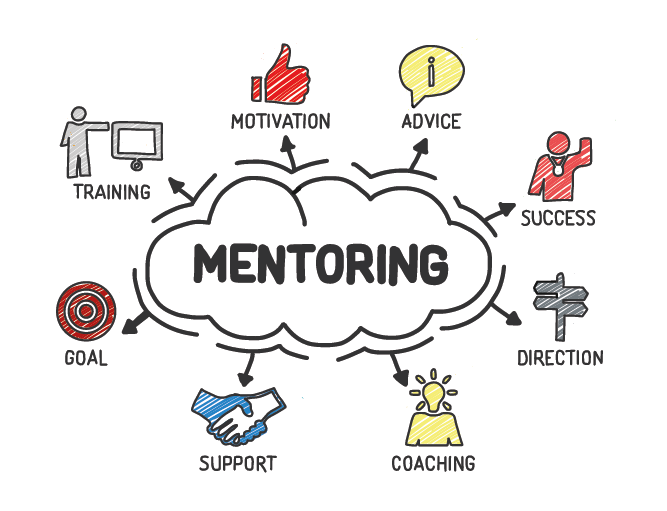
Teachers are some of the most admired people in our world. Teachers are role models. They inspire us and are admired for the skills they possess in helping others learn. Teachers are also normal people, who often get held to higher standards than politicians or even ministers. Like all of us, teachers make mistakes. However, no other group of professionals is as quick to give up on its members as public education administration when effective counseling would probably take care of the problem.

We know there is no magic fairy dust that is sprinkled on someone to make them an effective teacher. There is no genetic marker that an educator is born with that gives him or her a special skill. There is no Branch of Military Service equivalent that someone can join, like the Marine Corps, for example, that gives an individual training in moral, mental and physical strength needed to be successful in the education field. I would argue it is a lot of trial by error, support from colleagues and the prerequisite leadership in our schools that can shape the success or failure of an individual teacher.

I was blessed to have some extraordinary school leaders like Doyle Harmon in Meigs County, Tennessee and Ed Howard in Bradley County, Tennessee to really help guide me. However, one administrator, Ron Chastain, at Trewhitt Junior High School, really became a mentor, whether that was his goal or not. From him, I learned much about student discipline. I learned consistency mattered. I also learned that we needed to be empathetic, but also willing to be tough. He brought the right balance to the job.

Chastain, who still remains a friend, understood adolescent behavior better than anyone I have ever met. He understood that in order to teach, a classroom had to be orderly. In order to create a safe school for all students, discipline was required. I learned much more from Ron than I ever learned in my coursework in my undergrad and/or graduate work.

My question to policymakers: where can we find high-quality mentors for teachers and administrators? We take our new teachers and often toss them into the most difficult assignments like lambs to a slaughter. Then we wonder why discipline suffers and our teachers experience burnout and fatigue, ultimately leaving the profession. Administrators are often in the same boat. Sadly, we are missing that ingredient of mentorship in our schools today.

Our suggestion is to ensure that money is included in the future Basic Education Program (BEP) to allow for mentorship to occur, either by utilizing highly effective retired educators or granting stipends to experienced classroom teachers with a proven track record in classroom management. This strategy will likely impact teacher retention efforts in a positive fashion and create a better school environment with more consistent discipline and student behavior. 

#####

JC Bowman is the Executive Director of Professional Educators of Tennessee, a non-partisan teacher association headquartered in Nashville, Tennessee. Permission to reprint in whole or in part is hereby granted, provided that the author and the association are properly cited. For more information on this subject or any education issue please contact Professional Educators of Tennessee. To schedule an interview please contact Audrey Shores at 1-800-471-4867 ext.102.

Dance of the Lemons or Parade of Favorites?

It’s that time of year when we see changes in leadership across the state in our schools. Superintendents will leave and be replaced. It matters to all of us whomever a school board places in leadership. In some cases, you will see districts go outside their district and pick new leadership while others will promote from within. There are good choices and there are bad choices out there. So, to all school boards, we say: choose wisely. In my circle, we call this time of the year the Dance of the Lemons and/or the Parade of Favorites.

A school district must have competent leadership in managing the daily operations of the school district. A good superintendent leads the districts educational, financial and administrative performance; facilitates the performance of all personnel; and responds to and informs stakeholders and policymakers about the performance and leadership of the district. Probably one of the most important duties of the superintendent is to make sure district students are learning and achieving at the highest level possible.

A superintendent must understand effective academic practices and be supportive of the teachers and administrators in the district. Leadership, vision, and strategic thinking are critical skills for every superintendent. A successful superintendent should also be an effective and excellent communicator. If the only voice a superintendent will listen to is his/her own, or a few members of the school board, public education will eventually lose community support. Does that mean that we simply accept decisions from superintendents, without challenging them? Of course not!

Stakeholders and policymakers must particularly hold Superintendents accountable in regard to educational, financial and administrative performance. However, we should provide them latitude in regards to leadership, vision and strategic thinking on how to address the performance in those areas. And we must expect them to communicate effectively to ALL stakeholders.

Superintendent, like principals, must also demonstrate a keen understanding of teaching, learning and what works for students. As a change leader, a successful superintendent should emphasize the efficient use of resources, personnel, and data to break down resistance and drive systemic change; empower board and personnel to set goals, measure results, develop accountability, and support planning, evaluation, and resource allocation.

As far as degrees and experience go, that really depends on the person. Practical knowledge is likely more important than theoretical knowledge. We have all seen people with advanced degrees who were unable to apply that knowledge to the real world. I think the executive experience might be critical in a larger district. Keep in mind that education is a business, as much as it is a service. In most districts, the school system is one of the largest employers in the community. Teaching experience and some building-level administrative experience is strongly suggested, because it gives the person in charge at least a background in what the educators in the schools face on a daily basis.

In my own experience, I am never concerned with the WHO in a position. I would look at the philosophy of the person, their background and their vision. A smart school board would not focus on what an applicant would do similar to continue the work of the exiting predecessor, but rather on how he or she would differentiate from the previous occupant. You must have a plan to build on the work of the previous administration, not merely maintain the status quo.

Probably the greatest weakness of some superintendents, in my opinion, has been the lack of empathy toward educators. It is one thing to be relentless in support of excellence for children, it is another to manage completely by fear. Personnel drives policy. How you treat your employees is also a reflection of character. Several districts are well-known for unnecessarily treating educators harshly. These districts must understand that schools are not factories, students are not widgets, and personnel is not simply interchangeable on a whim.

Certainly, some educators have been forced to leave their school system for subjective reasons, rather than objective reasons. Actions speak louder than words. In some cases, dismissal may have been warranted, but in many cases, it appears circumstances were little more than personality conflicts and people not fitting into a certain educational or political environment. We have lost some good educators in our state because of this subjectivity, and I would argue many of these educators deserve another chance to keep their career going.

No matter who your district hires—whether from within or bringing in an experienced educator from outside—give that new leader a chance. Don’t be afraid to hold them accountable. Make sure that your local school board has fully vetted the candidate, and takes the time to select the best person for the children, educators, parents, and taxpayers in your community.

___

JC Bowman is the Executive Director of Professional Educators of Tennessee. Permission to reprint in whole or in part is hereby granted, provided that the author and the association are properly cited. For more information on this subject or any education issue please contact Professional Educators of Tennessee.