I just keep my head down and work hard on what I do. —Clint Black

I just keep my head down and work hard on what I do. —Clint Black

Tennessee is a unique state, not only because we have the greatest citizens, but because of our geography. We border eight states, which can be both an advantage and a disadvantage at times. When economic times are good, people want to relocate to our state. When economic times are difficult, it allows residents to move to a neighboring state and pursue more money in their chosen occupation. In education, we lose teachers to our border states regularly.
Effective educator preparation remains critical to the future of education in Tennessee. When we lose teachers to other states, it hurts Tennessee. We must work on teacher retention and continue to offer suggestions on the front end. Also, we must work to have a pipeline of high-quality educators who can move into our classrooms.
We identified prospective solutions in our article Looming Changes in Student Teaching. In that article, we also identified that the existing teacher shortage – especially in special education, math, and science, and in schools serving minorities, low-income students, and English learners – will likely only increase, based on the predicted increase in the school-going population in the future. Colleges of Education must address how to serve Career & Technical Education (CTE). Areas such as business, agriculture, health, automotive, and mechatronics programs need high-quality teachers. Also, we should consider how to better build the skills of paraprofessionals who work alongside teachers in classrooms in critical roles.
One of the other innovative solutions we discussed in our article is one that Professional Educators of Tennessee has been working on with the Clarksville-Montgomery County School System (CMCSS). The district, in partnership with Austin Peay State University (APSU), has a cohort of 40 future teachers who will earn a free bachelor’s degree in only three years, become dual certified in a critical shortage area plus special education, and participate in a multi-year residency experience while being a full-time employed paraprofessional earning a salary, health insurance, and retirement contributions.
In addition, the district plans to partner with Lipscomb University to offer up to 20 future teachers a licensure program that includes a one-year full-time paid residency and dual certification (K-5 and special education) at no cost to the teacher. Through this initiative, these future teachers will also earn a master’s degree in this partnership between Lipscomb and the district. This solution will likely be replicated by districts across the state.
Cathy Kolb, state president of Professional Educators of Tennessee, has long advocated for and assists with the program to recruit and retain educators into public education classrooms. “We believe it is a win-win for our district and our students,” Kolb advises. I would echo the words of CMCSS Chief Academic Officer Sean Impeartrice, “This is the future of teacher recruitment and preparation.” Kolb believes this effort will help “ensure that quality educators enter and remain in the profession in the future.”
This is also a critical part of the agenda that Tennessee Commissioner of Education Penny Schwinn wants to see expanded. Schwinn stated, “If you want to be an educator, you should be in Tennessee. We now have districts where you can get paid to become a teacher, graduate debt-free and be better prepared by spending multiple years in a residency under the mentorship of a great classroom leader,” stated Schwinn. “I look forward to replicating this innovative “Grow Your Own” model across the state.”
The Tennessee Department of Education will be hosting a “Grow Your Own” summit on Monday, November 4 for superintendents to share additional information and provide technical assistance for districts to build their own partnerships and models. We think it is imperative that the state continues to support districts in recruiting and better preparing future teachers, and the “Grow Your Own” partnership is a great new model.
We cannot afford to lose great teacher candidates across our borders. This may also necessitate some changes to teacher licensure. The Commissioner is correct: If you want to be an educator, you should be in Tennessee.
*********
JC Bowman is the Executive Director of Professional Educators of Tennessee, a non-partisan teacher association headquartered in Nashville, Tennessee. Permission to reprint in whole or in part is hereby granted, provided that the author and the association are properly cited.

As educators, we are concerned about the quality and quantity of applicants entering the field of education. Our members have often been catalysts for innovative solutions to the many challenges facing education. That is why we take an interest in the next generation of educators and why our focus is on how to improve their experience and support as they transition from teacher candidate to classroom teacher.
In 1986, education school deans from the top universities developed a report that credited much of the blame for struggling public schools on the training teachers were receiving in college. Research reminds us that although we spend millions of dollars and thousands of hours on teacher preparation courses, we really do not have much evidence justifying some of those requirements in Colleges of Education. Nor do policymakers really know how to measure and define a successful teacher training program.
Effective educator preparation remains critical to the future of education in Tennessee. We have already focused as a state on admission requirements in educator preparation programs. Again, research is mixed on the relationship between academic admission requirements, and teacher candidates’ later effectiveness levels. This provides an opportunity for needed research. Teaching candidates must have a GPA of 2.75 and an ACT/SAT score of 21/1020 for admission to an educator preparation program.
Policymakers should invest much more time and resources into learning about the science of teaching and how individual teachers actually develop their skills—and how long it takes to develop some of those skills—and what changes are needed. Policies currently reflect the fact that we know far more about a teacher after they enter the classroom than before. Important benchmarks we should look at besides program completers are identifying those who actually enter the field of education and teach, as well as those who remain for a number of years. However, change may be on the horizon.
The University of Michigan is making some interesting changes, and moving to end the longtime practice of sending educators into their own classrooms after just a few months of student teaching. Elizabeth Moje, the dean of the school of education at the University of Michigan, is offering some innovative method based on the way doctors are trained — that will extend teacher training through their first three years on the job, supporting them as they take on the daunting responsibility of educating children. The teacher intern program at Michigan would be the first dramatic upheaval in the way teachers are trained in this country in at least a generation—an upheaval that has been a long time coming. Michigan has planned for launch this year.
In a nutshell, the new approach is like a teaching hospital, where future teachers — called interns — will train together under a single roof. They will complete their student teaching there. Then, instead of heading out in search of a job in another school, they will stay on for three more years as full-time, fully certified teaching “residents.” Residents won’t be trainees. They will be real classroom teachers working with real children and making a real salary — the same as any other first-, second-, or third-year teacher. But, unlike their peers in traditional schools, they will continue to learn from their professors and will work closely with the veteran teachers — called attendings — who will make up most of the school’s teaching staff.
Each educational preparation program has its own approach to supporting teacher candidates, and our association tries to fill in gaps with our student members. It is critical to walk the fine line between informing teacher candidates with needed knowledge, and overburdening them with excessive information. We try to touch on issues such as legal and professional development, including some specific helps for student teachers which includes assistance to student teachers with lesson planning, classroom management, and an introduction to our Career Center to help teacher candidates to find future employment.
The existing teacher shortage—especially in special education, math, and science, and in schools serving students of color, low-income students, and English learners—will likely only increase, based on the predicted increase in the school-going population in the future. Colleges of Education must also address how to serve Career & Technical Education (CTE). Areas such as business, agriculture, health, automotive, and mechatronics programs need high-quality teachers. We should also consider how to better build the skills of paraprofessionals who work alongside teachers in classrooms in critical roles.
There is not any magic bullet to ensure that all teachers are great before they begin teaching. However, we can make the effort to equip our educators with skills for a modern age. Change is on the horizon in how we prepare those who educate our children. Policymakers and stakeholders need to work together to make the necessary changes that benefit our students and ensures that quality educators enter and remain in the profession. Together we can make schools better places for teachers to work and students to learn.
##
JC Bowman is the Executive Director of Professional Educators of Tennessee, a non-partisan teacher association headquartered in Nashville, Tennessee. Permission to reprint in whole or in part is hereby granted, provided that the author and the association are properly cited. For more information on this subject or any education issue please contact Professional Educators of Tennessee.


Traveling across the state in my role as Executive Director of Professional Educators of Tennessee I talk with a lot of people interested in public education. One of the most common complaints is a lack of response from Governor Bill Lee or his team on specific education issues. It is problematic and quite honestly has always been problematic in our state. Better communication is always needed. I should know, I used to work for Governor Jeb Bush years ago, and communication is always a struggle for the executive branch despite best intentions.
I would still remind people to be patient with Governor Lee and his staff as we are still in year one. However, staff should now be settled into place, and processes and systems clearly established. We should expect better communication in year two.
Governor Lee laid out a fairly ambitious education agenda, and while we disagreed with some parts of it, he clearly offered more specifics than his opponent in the election last November. He was clear in his support of vouchers from the day he announced his candidacy. It should have been no surprise to policymakers or stakeholders. When surveyed, our members did not support vouchers.
His legislative victory with vouchers has yet to be implemented. This may prove challenging, as the program must be proven successful before any other future voucher program is considered. Members of the Tennessee General Assembly will demand proof of unmitigated success before any expansion or similar program enacted. Cameron Sexton, a voucher critic, has now ascended to Speaker of the House. His track record would indicate that he is a strong supporter of public schools. This actually helps the Governor moving forward on education policy changes needed in public education.
Other parts of the Lee campaign agenda likely won him most of his statewide support, but also gives voters more specifics in which to hold him accountable. Candidate Lee suggested it was time to change the way our high schools look. It was a bold policy suggestion, and as Governor, Bill Lee should move forward on that front.
For the last 50 years, the way high school has educated students has largely remained unchanged. There are many business and community leaders that also believe the traditional high school is disconnected from the demands of the modern economy. They emphasize that graduates need additional skills to be successful in today’s workforce. The State Collaborative on Reforming Education (SCORE) added: “Across Tennessee, students are learning in high schools using models developed for the needs of the 20th century rather than the workforce opportunities of the future. As a result, most Tennessee students do not graduate fully prepared to succeed in college, career, and life.”
Governor Lee stated, “It is time to embrace new, flexible school models to support new opportunities for career and technical education, work-based learning and apprenticeships, and dual-enrollment courses for students preparing for their career.” We agree. Some of that is already in the works, through recent legislation. It is time we break down barriers that have held our teachers, school leaders, and school districts back from creative solutions necessary for the unique challenges of their communities. Increasing flexibility at the local level could lead to incredible innovations in our state.
State grants that allow local districts to fund high school redesign would be one manner to create change and address challenges schools would face as they transition from traditional models to a more flexible school model. Another suggestion would be for the state to establish a pilot program for high performing districts by authorizing the State Board of Education to enter into a performance contract with school districts for the purpose of granting them more flexibility. These high performing districts would be a school district in which a local school board agrees to comply with certain performance goals contained in a performance contract that is approved by the State Board of Education. In return for performance accountability, the district would be granted greater autonomy with both statutory and rule exemptions. This is an idea Governor Lee and his team should explore.
It is past time for the state to make good on its commitment to teachers. The Comptroller’s Office of Research and Education Accountability (OREA) proved that the state of Tennessee invested more than $300 million dollars for teacher salaries in 2015-2018. Most of those dollars did not actually end up in pockets of classroom teachers. Generally, school districts employ more staff than are covered by the funding system utilized in Tennessee, known as the Basic Education Program (BEP). State and local dollars earmarked for salaries during those years were often spread over more teachers than the staff positions generated by the BEP.
The Tennessee General Assembly did address that school districts in the future must now report in where salary increases are spent. Governor Lee included a $71 million increase for a “2.5 percent pay raise for teachers” for fiscal year 2020. It is time to guarantee that teacher salaries, at the very least, match the cost of living increases faced by educators across the state.
Finally, we must update our school funding formula to reflect changing 21st century needs. We need a plan and a funding formula that reflects our modern educational mission, priorities, and strategies. The plan should support teachers, fund facilities, and facilitate innovation and technology, while striving to better connect K-12 education with workforce needs. Governor Lee has proven he will fight for what he believes in. It is time to come together and focus on the other education ideas that were discussed on the campaign trail. It is time to move forward on these issues to help all children, teachers, schools, and communities. Let the policy discussion begin. Communication is critical.
##
JC Bowman is the Executive Director of Professional Educators of Tennessee, a non-partisan teacher association headquartered in Nashville, Tennessee. Permission to reprint in whole or in part is hereby granted, provided that the author and the association are properly cited. For more information on this subject or any education issue please contact Professional Educators of Tennessee.

Why do people teach? The major reason someone says they teach is the ability to make a real difference in the lives of children. There are other reasons, including the fact that someone believes they are “called” to teach. Almost all teachers are linked together by a passion for educating children. The passion is innate and has to come from within.
Former Commissioner of Education in Tennessee, Candice McQueen, reminded a group of educators in a presentation that we were set apart in our mission. She pointed out the gifts that educators have are special talents and abilities. Educators are born for the mission that is being given for us. Dr. McQueen emphasized the profession is a special calling. She is correct.
We are all on a search for significance. We desire to make a difference. Educators are making a huge difference. That is why it is important that we honor them. It is the English social critic, Os Guinness, who stated: “Calling is not only a matter of being and doing what we are, but also of becoming what we are not yet but are called by God to be.” He then adds: “Deep in our hearts, we all want to find and fulfill a purpose bigger than ourselves.” Education of the next generation is one of the most important occupations we could ever do. The belief that one is “called to teach” keeps women and men in education, even with all the unwanted public scrutiny.
Matthew Lynch writes about teaching as a calling: “A calling implies a deep-seated belief that teaching is the only profession that makes sense for you to pursue…” Dylan Fenton, an English teacher and writer does not like the term “calling,” as it creates to him an “idea that good teachers are born, not made and, as a result, allow themselves to stagnate.” I would argue that Lynch is more accurate than Fenton, as a passionate teacher never stops honing their craft. John Hunter, an award-winning teacher and educational consultant wrote: “I used to think teaching was a job. And then I thought it was a profession. And now I’m of the opinion that it’s a calling. It’s a very noble calling.”
Henry David Thoreau said, “Most men lead lives of quiet desperation.” John Keating, in the movie Dead Poets Society challenged his students to not be resigned to that type of life. Yes, John Keating was subsequently fired, and probably never taught another class the rest of his life. However, he taught his students to find their own voice. It was his calling. If you have a profession that brings you passion, gives you someone other than yourself to care for, and is something that makes you want to get up in the morning to accomplish, you will not live a life of quiet desperation.
Teaching is indeed an imposing, self-sacrificing, but also a magnanimous calling. Going through the process to get certified, whether through traditional means or an alternative route is sometimes difficult. The creativity aspect of the profession has slowly been eroded. There is persistent negativity by some lawmakers and the media of public education. Compared to other professions, educators can expect a modest salary and sometimes extremely difficult working conditions. However, if you are called to teach, you will never find a happier place than in a classroom or serving students. Educators are set apart to make a difference. There is no other profession, except perhaps the clergy, that can change lives like a public-school teacher.
##
JC Bowman is the Executive Director of Professional Educators of Tennessee, a non-partisan teacher association headquartered in Nashville, Tennessee. Permission to reprint in whole or in part is hereby granted, provided that the author and the association are properly cited. For more information on this subject or any education issue please contact Professional Educators of Tennessee. To schedule an interview please contact Audrey Shores, Director of Communications, at 1-800-471-4867 ext.102.

Critics like to point out some of the shortcomings of our education system, and we should welcome that debate. A one-size-fits-all system does not work for everyone; it never has and never will. The system will continue to evolve, albeit slowly, and adjustments will always be needed. We should always welcome discussion about public education, which is the highest priority in most communities throughout the state in our country.
My friend, Johnny McDaniel, the Director of Schools in Lawrence County, utilizes a slogan in his system that is inspiring and worth emulating: Find the Good and Praise It.” There is so much good to recognize in our state if we only look for it. Educators across Tennessee make a difference in lives every single day one child at a time. We should take a moment to pause to reflect and appreciate our accomplishments.
Since 2010 Tennessee has improved more than any other state according to the National Assessment of Educational Progress (NAEP), considered the nation’s report card. While our scores were indeed flat and even lost some ground in fourth-grade math during the last reported scores, it does not diminish the claim that Tennessee was the fastest improving state in the nation. Tennessee’s fourth-graders ranked 19th in science, while eighth-grade performance ranked 21st. Yes, we have more work to do. However, that was accomplished by the committed effort of educators and policymakers across Tennessee. We have had both hits and misses, but the herculean effort should be recognized. Our progress and momentum in Tennessee continue to move forward, and we are considered a national leader in student-focused education policy.
Tennessee’s high school graduation rate hit a record-high for the 2018-19 school year. That should have been in headlines across the state. The hard work of our students and teachers across the state is truly making a difference. The current rate is 89.7% and that is a remarkable development. Can we continue to improve? Yes. However, it is time we acknowledge the progress in preparing students for postsecondary education and the workforce. Graduation is the first step, and more Tennessee children are graduating from high school. That makes Tennessee an attractive place for the industry looking to locate in our state. A quality education system ultimately provides economic mobility for all of our citizens.
In August 2018, 59 percent of voters surveyed in a poll conducted by the State Collaborative on Reforming Education (SCORE) said students are not prepared for the workforce, and nearly half of voters said students are not ready for college. A majority of voters favored four specific readiness strategies: expanding access to post-high school education, more opportunities for students to earn industry certification, having a work-based learning experience, and better college and career counseling for every high school student. Governor Bill Lee and the Tennessee General Assembly are moving to address those issues in our state.
The recently passed Governor’s Investment in Vocational Education, also known as the GIVE Act, is designed to support regional partnerships among schools, industry, and technical colleges. This initiative is destined to develop more work-based learning and apprenticeship opportunities. It takes effect on July 2020. If implemented correctly, this should help prepare students for a good job right out of high school. This is a step in the right direction for numerous students across the state.
The reality is that college is not for everyone. It works for many students, but for others, this path is not the best choice. For many, the cost of a college education is too high, and too many young people are attending college and acquiring unnecessary debt—without graduating. We have been guilty too many times in public education of pushing college education exclusively, consequently shortchanging other career paths. Millions of young Americans are still paying the price. We now provide two years of tuition-free attendance at a community or technical college in Tennessee to our students through a program called the Tennessee Promise. In Tennessee, we are addressing college and career by leading the way nationally with Tennessee Promise and the GIVE Act. These innovative programs should be celebrated across the state.
Praise is a powerful tool; it is not used enough in our society. Criticism of things we do not like is an easier vehicle for too many. People in our world are looking for something to be mad about. Me? I am just looking for things to be happy about. Johnny McDaniel is on to something that we should all do more: “Find the Good and Praise It.”
*********
JC Bowman is the Executive Director of Professional Educators of Tennessee, a non-partisan teacher association headquartered in Nashville, Tennessee. Permission to reprint in whole or in part is hereby granted, provided that the author and the association are properly cited.

Bureaucrats keep piling on more requirements of educators with barely a nod of appreciation. Fewer occupations have undergone more changes than those in public education. Three critical issues often cited by our educators for leaving our profession are school culture, student discipline, and teacher salaries.
The National School Climate Center notes that “empirical research has shown that when school members feel safe, valued, cared for, engaged, and respected, learning measurably increases, and staff satisfaction and retention are enhanced.” Bad school culture is a barrier to student learning and quality teaching.
Business leaders have long recognized the connection between employee working conditions and productivity. Establishing positive working conditions for school staff improves the learning conditions for students. Quality instruction cannot be provided if staff morale is low, the staff does not feel supported by school administration and/or the staff turnover is high. Teacher recruitment and retention is a critical role in any school or district. Factors such as teacher-administrator relationships, collegiality, job expectations, and participation in decision-making, are among the most important reasons in whether or not teachers choose to stay at their school or in the profession.
Lack of student discipline, inadequate administrative support, and lack of respect are all frequently cited reasons as to why teachers leave the profession, almost as much as salary and working conditions. We continue to place children with serious and chronic behavior issues into regular classrooms, where the teacher is already overwhelmed with other students also with behavior problems. Instruction time is lost every time a teacher has to deal with discipline issues. Some students need attention and intervention beyond the scope of what a classroom teacher can provide. It is imperative that a school and district adopt policies that support effective classroom management as well as instruction for all students. Districts must have policies in place that protect all students’ right to learn.
To be clear, student discipline is a serious issue and it must be addressed, both at the state and local level. Any assault that causes an injury to students or teachers should be a police matter. One possible policy is better tracking of time an educator spends on discipline issues. For example, do parents have the right to know if one student disrupts their own child’s education so frequently their child loses instruction time? We need to document all discipline incidents so corrective courses of action can be taken at the building level, district level, and state level. We should work to reduce unnecessary suspensions and expulsions in our schools, by looking at this data on a regular basis and providing better training for all staff.
In California, schools will no longer be allowed to suspend elementary and middle school students from school for disrupting classroom activities or defying school authorities. The state of California undermined local control of schools and made it harder for teachers to manage their classroom. Their one-size-fits-all disciplinary requirement will likely have a chilling effect on teacher recruitment and retention. Let’s hope policymakers in other states have more forethought and common sense than their counterparts in California. Without discipline, students cannot learn. Students themselves must respect rules and authority.
The Comptroller’s Office of Research and Education Accountability (OREA) proved through research that there was a slightly more than 6 percent increase total in average classroom salaries in fiscal years 2016, 2017, and 2018 through the Instructional Salaries and Wages category of the Basic Education Program (BEP). More than $300 million in new, recurring state dollars was appropriated. Unfortunately, as most Tennessee teachers recognized, those dollars did not actually end up in teacher pockets. We must support our teachers and make sure the dollars allocated to their salaries reach them as policymakers intended. This was addressed in Tennessee through subsequent legislation in 2019. We know that many teachers still struggle to support their own families, particularly in places where the cost of living is higher. Salaries must be a priority.
Increasing student achievement takes adequate resources, as well as focus and collaboration to address school culture, student discipline, and teacher salaries. Teachers need the support of their administrators, their district, and the state. If we want to see increased student achievement and student learning, it is paramount that the state and districts work to address issues together. Immediate teacher recruitment and retention efforts will be largely determined by the success or failure on these issues, particularly in chronically hard-to-staff schools.
###

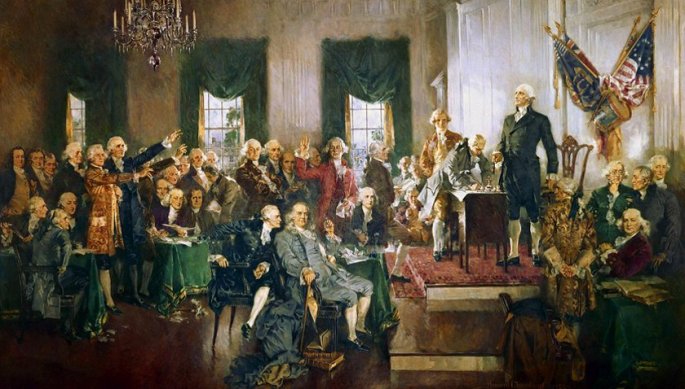
On September 17, 1787, the delegates to the Constitutional Convention met to sign one of the greatest documents ever created: The United States Constitution. In 2004, the late Senator Robert Byrd led the effort to rename the day ‘Constitution Day and Citizenship Day,’ which requires public schools and institutions to provide information on the history of the country’s constitution. Our Founding Fathers would likely be pleased that the document they signed 232 years ago is still providing inspiration and guidance for American citizens and other countries around the world.
I was re-reading a letter I wrote to an attorney nearly two decades ago, who was striving to remove any vestige of our Judeo-Christian heritage from our country. I have always maintained that religion has an appropriate role in the public square. His position, of course, is that faith should be removed. My answer to him was simple: ‘base your arguments on the US Constitution, not letters from dead Presidents.’ He had a clear misunderstanding of the Establishment Clause, despite the law degree, and was citing a letter in defense of free exercise of faith from a man who was not even present at the passage of the Constitution.
The United States Constitution is the one document in our public life that operates as a social contract between citizens and government, defining our basic rights and the limits of government with three main purposes: First, it creates a federal government comprising of a legislative, an executive, and a judicial branch, with a system of checks and balances among the three branches. Second, it shares power between the federal government and the states. And third, it safeguards the liberties of all citizens.
The United States Constitution is an indisputably remarkable document, enduring in a world much different than the one in which it was written. Our founding principles are critical as our country moves forward, if we are to survive as a nation. It is one area in which Americans are likely to find agreement. The power, scope, and reach of the government is clearly defined by a simple reading of the document. Since the only oath every member of Congress takes is to defend the Constitution, it would seem that citizens would place a high priority on this governing document. However, we are reminded, that interpretations of the Constitution can hold opposing views.
Limiting the power of government and protecting the rights of our citizens is something we must all make a conscientious effort to protect. We should be especially appreciative for the protection afforded in our Bill of Rights, especially our most fundamental rights—freedom of speech, religion, protest, and our equal protection under the law. A free society does not just occur. It has to be deliberately and intentionally preserved. Eternal vigilance is the price of freedom.
The founders knew it wasn’t a perfect document, yet the Constitution has adapted and prevailed. On Constitution Day, take a few minutes to read the document for yourself. In order to protect the values, we hold so dearly, we must guarantee that generations to come will embrace and uphold the one thing that sets us apart from every other nation. That one thing is the United States Constitution.
—
JC Bowman is the Executive Director of Professional Educators of Tennessee, a non-partisan teacher association headquartered in Nashville, Tennessee. Permission to reprint in whole or in part is hereby granted, provided that the author and the association are properly cited. For more information on this subject or any education issue please contact Professional Educators of Tennessee.

Who does not want a child to have success with academic achievement, positive behavior, and healthier life choices? On the surface, self-awareness, self-control, and interpersonal skills are indeed essential for success in school, work, and life. Too often good ideas and solutions get lost in poor implementation, and teachers often are not trained specifically to address some of the issue’s children face.
Social-emotional learning (SEL) has become arguably one of the hottest topics in education and the most controversial to critics. Christina Cipriano, the director of research at the Yale Center for Emotional Intelligence and a research scientist at the Child Study Center at the Yale School of Medicine, identifies five competencies children should master: self-awareness, self-management, social awareness, relationship skills, and responsible decision making. This is something she told EdSurge that has been around for decades. Cipriano says: “At the end of the day, we’re talking about teaching people how to be better citizens and more positive contributors to their society.”
As early as 2014, educator Larry Ferlazzo was sounding the alarm in his editorial about how social and emotional learning (SEL) — and its ancestor, character education — was being unduly influenced by some in the education world. Few people would disagree. Those who he identified as manipulating SEL cross a wide variety of ideologies. Ferlazzo states: “Social Emotional Learning has an important place in teaching and in learning. It’s also critical to remember that it has to be kept in its appropriate place.” And the appropriate place is where the debate begins and ends.
Years ago, I remember a discussion with some fellow policy wonks on reading. The consensus was some children will fall through the cracks and never learn to read which was something I could not accept. I blurted out: “You care more about Johnny feeling good about himself, instead of whether he can read or write.”
Don’t get me wrong, I do want children to have self-esteem and self-respect, but I also think it is important that we do not lose focus on academic goals. Which brings me back to the major point: teachers are often not trained specifically to address some of the issue’s children face. To be certain, educators innately encourage healthy social and emotional development of our children. For any program to be successful, there must be complete transparency and community support before implementing any formal SEL program. The creation of this type of climate will support social and emotional learning to nurture emotionally intelligent children.
Tina Olesen, a school teacher in British Columbia wrote:
The way to help the child develop real self-control is tried and true: a caring adult patiently and unflaggingly commits to the moral training of that child. Directing, warning, correcting and disciplining day by day, hour by hour, moment by moment, the adult encourages the child to do what is right, whether or not it feels good. When a child consistently chooses to act in accordance with what is right, he develops moral character. As he develops moral character, he becomes increasingly capable of governing himself and applying himself to his studies, and he develops the self-control required for learning. This can be a long and arduous process that requires self-sacrifice and much patience on the part of a parent or teacher.
The truth is that we have to address so many issues in public education that we forget that parents have the most important role in the moral formation of their own children. Teachers and families should be partners in helping children succeed. Nevertheless, educators are forced to fill a gap in which they may lack appropriate training, and which assessment of success or failure is not readily available.
Quoting Henri-Frédéric Amiel, Oleson added, “The test of every religious, political or educational system is the man which it forms. If a system injures the intelligence, it is bad. If it injures the character, it is vicious. If it injures the conscience, it is criminal.” Whatever your opinion is on this issue, the objective of improved academic achievement, positive behavior, and healthier life choices is a worthy goal to pursue, at home, school, and in the community.
—–
JC Bowman is the Executive Director of Professional Educators of Tennessee, a non-partisan teacher association headquartered in Nashville, Tennessee. Permission to reprint in whole or in part is hereby granted, provided that the author and the association are properly cited. For more information on this subject or any education issue please contact Professional Educators of Tennessee.

Our nation was attacked on September 11, 2001 and our world changed. Muslim terrorists called al-Qaeda, with training camps all around the world were responsible for the death of the more than 3,000 victims. This is an enemy unlike any we have ever faced. There are multiple countries, multiple fronts and multiple threats.
This enemy is committed to the absolute destruction of the American way of life and imposing their beliefs and values upon the world. In their world, law is determined by force—those with power—whether military strength or political dominance—make the rules. It is our belief in freedom, human rights, idealism, personal responsibility and economic opportunity that extremists dislike the most.
If you were a classroom teacher today how would you address the events of September 11, 2001 with your students? Would you blame the incident on the very people who lost their lives? Would you blame those with a misguided ideology for killing innocent people? To me, the answer is very apparent. And those who would blame victims or our nation are siding with evil-doers and promoting savagery.
Since Jeremiah Wright first shocked our nation with his comment in 2008, parroting a Malcolm X phrase, that ‘America’s chickens are coming home to roost,’ which was widely understood as meaning that America brought the September 11 attacks upon itself. Every year that has passed since 2001 that sentiment has been voiced in one manner or another. Eventually that will end up in our classrooms and textbooks. My fear is that the victims will be posthumously put on trial while the terrorists are seen as genial freedom fighters. Nothing could be further from the truth.
It seems to many that we treat perpetrators of evil kinder than we treat their victims in our society. It is an obvious assault on law and order. It is law which enables man to live together, and creates order out of chaos. We first and foremost a nation of laws. Founding Father and future president John Adams called America ‘a nation of laws, not of men.’ These rules should not be subject to the whims of those in power. And those who fail to understand history in the proper context will write textbooks to inform future generations. It is why curriculum has been such a highly debated issue.
Historian Bruce Kauffmann wrote about ‘the Soviet Union’s infamous dictator, Josef Stalin, who in the late 1930s had millions of innocent people incarcerated and murdered after they underwent show trials, or no trials, in which the ‘nature and cause of the accusation’ against them were such specifically identified and legally provable crimes as being ‘foreign agents,’ ‘counterrevolutionaries,’ ‘enemies of the people’ or ‘enemies of the state.’ Have we become so politically correct that only one opinion is allowed?
I accept that countries lie to their citizens, and that we are, regrettably, governed by men and women who are sometimes corrupt. That is undesirable, but it is a fact of life. Often choices made by government is not between good and bad, but between bad and worse. We have done exactly what George Washington warned us against by embracing entangling alliances. We have largely abandoned our Judeo-Christian heritage, in fear of lawsuits and in the name of inclusion. However, we still have the rule of law, right?
I am reminded of Robert Kennedy’s speech in which he was discussing the law. He said about the law: ‘The road ahead is full of difficulties and discomforts. But as for me, I welcome the challenge. I welcome the opportunity, and I pledge to you my best effort — all I have in material things and physical strength and spirit to see that freedom shall advance and that our children will grow old under the rule of law.’
People of reason can disagree with issues and have civil discourse. ‘Everyone is entitled to his own opinion, but not to his own facts,’ according to the late Daniel Patrick Moynihan. Who also reminded us that culture, not politics, determines the success of society. Respect of our fellow human beings is the core outgrowth of a nation committed under a rule of law. It is our shared history in America, and one in which we must be personally committed to follow. That is the real lesson to teach. If we fail to pass that to the next generation, freedom, the political process, civil liberties, individual rights and media independence will be lost to the dustbin of history and no longer tolerated.
We must remember September 11th in our homes and in our classrooms and engage in this important dialogue. Never let it be said that the flame of freedom was extinguished on our watch. That can be summed up in two words: We Remember.
– – –
JC Bowman is the Executive Director of Professional Educators of Tennessee, a non-partisan teacher association headquartered in Nashville, Tennessee. Permission to reprint in whole or in part is hereby granted, provided that the author and the association are properly cited. For more information on this subject or any education issue please contact Professional Educators of Tennessee.
You must be logged in to post a comment.