Education Plays a Vital Role

As residents of Tennessee, every individual has a stake in public education, whether they are students, parents, teachers, taxpayers, or community members. Education plays a vital role in shaping the future of the state, its workforce, and its society as a whole.

Since public education is influenced and governed by public policy decisions made by elected officials, it’s crucial for people to engage in the process if they want to have a say in the direction of education in their state. This involvement can take various forms:

  1. Voting: Participating in local and state elections to choose representatives who will shape education policies.
  2. Advocacy: Contacting elected officials, attending public meetings, and participating in community discussions to voice opinions and concerns about education policies.
  3. Community Engagement: Collaborating with schools, attending parent-teacher association meetings, and joining school improvement committees to contribute to the development of educational initiatives.
  4. Awareness and Education: Staying informed about educational issues, trends, and policies so you can make informed decisions and effectively advocate for change.
  5. Partnerships: Forming partnerships with educators, administrators, and other stakeholders to collectively work towards improving education quality and access.

By actively engaging in these ways, Tennesseans can influence the policies that shape public education, ensuring that it aligns with the needs and aspirations of their communities and supports the growth and development of the state as a whole.

##

JC Bowman is the executive director of Professional Educators of Tennessee

Teachers are Unsung Heroes

Effective teachers are the major in-school factor in improving student achievement. Supporting our teachers and leaders from educator preparation programs to the classroom, and through their careers is the only way to achieve success for all students.

The role of teachers in society is profound and multifaceted. They are often the unsung heroes who contribute significantly to the development and progress of individuals and communities. The crucial role of educators is our:

  1. Foundation for Success: Teachers are responsible for imparting the knowledge, skills, and values that enable students to thrive not only within the confines of the classroom but also in their future endeavors. They lay the foundation for a lifelong journey of learning and personal growth.
  2. Guidance and Support: Beyond academics, teachers often serve as mentors and role models for their students. They offer guidance, emotional support, and a sense of belonging, especially during challenging times. Their presence can make a significant difference in students’ lives.
  3. Educational Achievement: Teachers play a pivotal role in raising the academic achievements of their students. Through effective teaching methods, personalized attention, and dedication, educators can help students reach their full potential and excel in their studies.
  4. Community Building: Teachers are integral to building strong communities. They nurture connections among students, families, and the larger community by creating spaces for collaboration, dialogue, and shared experiences.
  5. Going Above and Beyond: Many teachers go above and beyond their job descriptions. They invest extra time and effort to ensure their students succeed, often taking on additional responsibilities and finding creative ways to engage and motivate their students.
  6. Reflection and Appreciation: Recognizing the contributions of teachers and the positive impact on individuals and society is essential. It’s important for students, families, leaders, and communities, to recognize and support their educators in their endeavors.

Educators are instrumental in shaping the present and future of society by nurturing the potential of each individual student and fostering a culture of learning and growth. Tennessee educators’ commitment and dedication contribute to the state’s educational progress and the growth of its future workforce. Their dedication and hard work deserve the highest recognition and appreciation.

##

JC Bowman is the Executive Director of Professional Educators of Tennessee

The Impact of Continuous Change in Education Policy

The impact of continuous changes in education policies on public education can be both positive and negative, depending on various factors including the nature of the changes, the implementation process, and the overall educational context. Let’s explore both sides of this issue:

Positive Aspects:

  1. Adaptation to New Challenges: Continuous changes in education policies can help public education systems adapt to evolving societal and technological trends. This can ensure that students are equipped with the necessary skills to succeed in a rapidly changing world.
  2. Innovation and Improvement: Frequent policy changes can encourage educational institutions to innovate and improve their teaching methods, curriculum, and overall quality. This can lead to better outcomes for students and increased competitiveness of the education system.
  3. Addressing Inequities: Policy changes can be used to address existing inequalities in public education, by targeting underserved communities, providing resources, and implementing measures to ensure equal access to quality education.

Negative Aspects:

  1. Disruption: Continuous changes can lead to disruptions in the teaching-learning process. Teachers and students may struggle to adapt to new policies, leading to confusion and potentially hindering effective education delivery.
  2. Lack of Implementation Time: Rapid policy changes may not allow sufficient time for schools and educators to fully understand and implement the new measures effectively. This can result in inadequate implementation and potential negative consequences.
  3. Resource Drain: Frequent changes in policies can divert resources and attention away from core educational activities. Schools may need to allocate significant time and effort to adjust to new policies, which could impact their ability to focus on student learning.
  4. Inconsistency: Continual policy shifts can lead to inconsistency in education quality, standards, and assessments. This can undermine the credibility of the education system and hinder students’ preparedness for higher education or the workforce.
  5. Teacher Morale: Rapid policy changes can lead to teacher burnout and decreased morale. Teachers may feel overwhelmed by the constant need to adjust their teaching methods, materials, and assessments.

Balancing Act:

The key to a successful education policy framework lies in finding a balance between stability and adaptability. Periodic updates to policies that are well-researched, thoughtfully planned, and effectively communicated can provide the benefits of adaptation without causing unnecessary disruption. Additionally, involving educators, administrators, parents, and students in the policy-making process can lead to more informed and sustainable changes.

Ultimately, whether continuous changes in education policies hurt public education or not depends on how these changes are designed, implemented, and aligned with the broader educational goals of a society.

Thanksgiving Blessings to You

Do we need a holiday to be thankful? Probably not. However, this year has been tough for so many people, and circumstances have been tremendously difficult. Even so, we all have much to be thankful for as individuals, as a state, and as a nation. Celebrating Thanksgiving is one manner of telling the world that God is bigger than our problems.

Since the first settlement, Americans continued the custom of establishing days of prayer, fasting, and thanksgiving. This could be annually or in response to significant events. Traditionally, educators and historians recognize the “first” Thanksgiving as occurring at the Plymouth colony in the autumn of 1621. 

President George Washington issued a proclamation designating November 26 of that year as a national day of Thanksgiving in 1789. The purpose was to recognize the role of providence in creating the new United States and the new federal Constitution. Washington stated in the first Thanksgiving proclamation that “It is the duty of all nations to acknowledge the providence of Almighty God, to obey His will, to be grateful for His benefits, and humbly to implore His protection and favor.”

Later presidents, including John Adams and James Madison, also declared days of thanksgiving. Following those actions, President Abraham Lincoln took steps to designate a more permanent observance of Thanksgiving. With few exceptions, Lincoln’s example was pretty much kept by every subsequent president–until President Franklin Roosevelt. In 1941, President Roosevelt officially established the fourth Thursday in November as Thanksgiving Day.

President John F. Kennedy challenged Americans to remember the true origins and reasons for Thanksgiving. He also asked Americans to give thanks to those in our past who both fought for and gave us our ideals and values. He wrote in his Thanksgiving Day Proclamation before he was assassinated, “As we express our gratitude, we must never forget that the highest appreciation is not to utter words but to live by them.” Kennedy wanted Americans to be thankful for the intrinsic things that we have. We have gifts, like hope and love, that are can only be destroyed if we allow it. Kennedy wrote: “We recognize too that we live in a world of peril and change–and in so uncertain a time we are all the more grateful for the indestructible gifts of hope and love, which sustain us in adversity and inspire us to labor unceasingly for a more perfect community within this nation and around the earth.” Kennedy challenged us to be mindful of those who have less than us and to strive towards a better world not just for us but for all of humanity.

President Reagan gave America eight Thanksgiving Day proclamations from 1981 through 1988. His Thanksgiving themes almost always expressed our need to show gratitude for family, friends, and good fortune. It is also an opportunity to reflect on the founding of our nation, the principles and ideals it stands for, and the ongoing need for citizens to give back to the community and country to uphold that vision. In 1985, President Reagan eloquently reminded us, “My fellow Americans, let us keep this Thanksgiving Day sacred,” urging Americans to thank God for the “bounty and goodness of our nation.” He then added, “And as a measure of our gratitude, let us rededicate ourselves to the preservation of this: the land of the free and the home of the brave.”

Nobody can dispute the difficulty many Americans faced in 2020. Thanksgiving is just one day set aside that allows us to take a moment to reflect on the things for which we are the most grateful. This Thanksgiving we should be thankful for both the small and large blessings in our lives. And just as in years past, we should seek with grateful hearts the political, moral, and intellectual blessings that make self-government possible. However, we must recognize what is truly essential: faith, family, and friends. Embrace others and treat everybody with dignity and respect. If you want to touch the heart of God, take an interest in the things that interests God. Let God love others through you.

##

JC Bowman is the Executive Director of Professional Educators of Tennessee, a non-partisan teacher association headquartered in Nashville, Tennessee.

Keeping Student Discipline on the Legislative Agenda

Misbehaving-students

Lack of student discipline, inadequate administrative support, and lack of respect are frequently cited as reasons why teachers leave the teaching profession, often as much as low salary and poor working conditions. Too many policymakers yearn for a time that no longer exists and do not understand the reality of what our teachers face daily.

Our classrooms have an abundance of students exhibiting an assortment of disruptive behaviors that take the focus off academics, and in some cases even worse make learning impossible. A teacher might have several of these students misbehaving in the same class. Yes, we need to get students supported in many cases. However, we need to re-establish the foundational support for our educators and schools because they are on the frontlines of student discipline issues.

Education stakeholders can no longer maintain their reticence on the issue of student discipline. We have to speak up and speak out. It is easy for those who are not in classrooms to have a nostalgic sensation about things they do not have to live. However, educators deal with student discipline issues every single day, and it is time we move beyond talk. It is time for the General Assembly and School Boards to finally address it. And I know some legislators will tackle this challenge.

We can have an endless debate about the root causes of student misbehavior. Researchers generally point out two primary causes: 1) The disintegration of the family. And, 2) The lack of parental involvement and support in and for the schools. Those issues are unlikely to be solved by those in the classroom. These are cultural issues, and society has to work to address them. Acknowledging them is the first step.

Former Secretary of Education William Bennett states: “Clearly many modern-day social pathologies have gotten worse. More importantly, they seem impervious to the government’s attempts to cure them. Although the Great Society and its many social programs have had some good effects, there is a vast body of evidence suggesting that these “remedies” have reached the limits of their success.” Bennett is, and was, correct.

However, Bennett did not stop there. He added: “Our social and civic institutions–families, churches, schools, neighborhoods, and civic associations–have traditionally taken on the responsibility of providing our children with love, order, and discipline–of teaching self-control, compassion, tolerance, civility, honesty, and respect for authority. Government, even at its best, can never be more than an auxiliary in the development of character.”

So why should the Tennessee General Assembly even bother to address student discipline issues? Perhaps because we still believe that in our free society, and that the ultimate responsibility still rests with the people themselves. And we must embrace the optimism Bennett shared, “The good news is that what has been self-inflicted can be self-corrected.”

Just as student discipline has been a critical issue for our educators in the last thirty years, it is time we place this behemoth issue of student discipline on every legislator’s agenda. Thus far this year we have numerous legislators’ step into the fray in an ethereal and calm manner with reasoned legislation.

We are particularly supportive of pending legislation introduced by Representative Charlie Baum and Senator Bill Powers that better defines “qualified immunity.” We are extremely supportive of pending legislation by Representative Scott Cepicky and Senator Joey Hensley that gives greater authority of the teacher over their classroom, establishes procedures following removal of a student from the classroom and establishes placement review committees. Senator Ferrell Haile and Representative William Lamberth have proposed legislation to allow a director of schools, or the director’s designee, to determine whether a suspended or expelled student should be required to attend alternative school or an alternative program, to remove a student from alternative school or an alternative program if the student is not benefitting from the placement, and to determine whether, and how, if applicable, to enforce the suspension or expulsion of a student who transfers into the LEA under suspension or expulsion from another LEA. We urge the passage of all three needed pieces of legislation. This forward-thinking legislation should be supported by all members of the Tennessee General Assembly that want to create an orderly environment where educators are free to teach, without chronic student discipline issues.

We cannot continue to lay the blame for continued societal problems at the feet of public education. It is true, public education has its issues, from design to execution, but every problem faced by society gets manifested in our schools. We need more community support and cohesive education policies statewide that enables educators, schools, and districts to address critical issues such as student discipline.

We have heard the desperation in the voices of educators across the state. There is nothing more discouraging than caring, committed teachers, who have lost hope. We need consistent, uniform guidance and enforcement of student conduct. Talk to your legislators and share your thoughts and opinions with them on student discipline. In a self-governing society, we must engage in this critical matter. Failure to do so may well mean that in the near future there will be nobody willing to teach our children.

##

JC Bowman is the Executive Director of Professional Educators of Tennessee. Professional Educators of Tennessee is a non-partisan teacher association headquartered in Nashville, Tennessee. Permission to reprint in whole or in part is hereby granted, provided that the author and the association are properly cited.

Tennessee has Played a Seminal Role in Civil Rights

mlk

Martin Luther King Jr was assassinated in Memphis, Tennessee in 1968, almost 52 years ago. Few know of the significance that Tennessee has played in Civil Rights. First, Tennessee played a pivotal role in the passage of the 19th Amendment, which granted women the right to vote in 1920.  This year marks the centennial of the ratification of the 19th Amendment.  Second, Tennessee was at the forefront of Civil Rights and integrating America.  We should remind ourselves of this history on Martin Luther King Jr. Day in 2020.

The groundbreaking 1954 Supreme Court case Brown v. Board of Education of Topeka was the case in which the Supreme Court Justices ruled unanimously that racial segregation of children in public schools was unconstitutional. It signaled the rightful end of the “separate but equal” principle outlined in the 1896 Plessy v. Ferguson case. The Ferguson case constitutionally allowed laws barring African Americans from sharing the same buses, schools, and other public facilities as whites — known as “Jim Crow” laws — and established the separate but equal doctrine that would stand for the next six decades.

Linda Brown, then a nine-year-old girl, became the face of the issue. Ms. Brown died at age 75 on March 25, 2018. Her national legacy in Civil Rights went far beyond public education. Brown said in a 1985 interview: “I feel that after thirty years, looking back on Brown v. The Board of Education has made an impact on all facets of life for minorities throughout the land. I really think of it in terms of what it has done for our young people, in taking away that feeling of second-class citizenship. I think it has made the dreams, hopes, and aspirations of our young people greater, today.”

Few people know the role Tennessee played in Civil Rights and public education. Avon Williams, Jr., a Knoxville, Tennessee native, became a cooperating attorney for the NAACP Legal Defense Fund in 1949 and began a long career in civil rights activism. In 1950, four years before the Supreme Court outlawed school segregation in Brown v. Board of Education, Williams filed Tennessee’s first public school desegregation suit such case when he sued to integrate the public schools in Anderson County, Tennessee. (McSwain v. Board of Anderson County).

Williams’ first cousin, Thurgood Marshall, was the chief lawyer for the Legal Defense and Educational Fund of the NAACP. Marshall later became the first African-American to serve on the U.S. Supreme Court. Williams and Marshall worked closely on racial discrimination cases. Williams went before the Supreme Court seven times to argue cases involving discrimination in public schools, public housing or other public accommodations. In 1955, Williams, Marshall and Z. Alexander Looby, a fellow African American lawyer focused on civil rights, filed suit Kelley v. Board of Education against the Nashville city schools on behalf of African American children.

Looby and Williams were without a doubt the most prominent civil rights attorneys in Tennessee during their lifetime.

The Journal of African American History stated that “Looby and Williams’s work in school desegregation cases alone encompassed every major case in the state (with the exception of Northcross v. Board of Education) and entered the highest realms of legal activity. Federal judges at the circuit, appeals, and U.S. Supreme Court levels cited and considered many of their cases as the post-Brown v. Board of Education (1954) litigation world unfolded.”

In 1968, Avon Williams, Jr. was elected to the Tennessee State Senate. He was one of the first African-Americans to serve in that body since the Civil War. As a senator, he worked to put guidance counselors in elementary schools and to establish kindergarten classes in Tennessee. The state has a proud, but often untold history in Civil Rights, which greatly enhanced education in our state.

Racism, bigotry, and vitriol hate have no place in modern culture. All children are created in the image of God. Martin Luther King, Jr. poignantly stated: “I have a dream that my four little children will one day live in a nation where they will not be judged by the color of their skin, but by the content of their character.” Does character still matter? Of course, it does.

For centuries, our country has attracted people in search of a share of “the American dream” from all corners of the world. E Pluribus Unum (From Many, One) remains the national motto, yet it appears that there is no longer a consensus about what that should mean. If you step into our public schools today, the many different cultures are on full display.

Americans like Martin Luther King Jr., Linda Brown, Avon Williams, Alexander Looby, and Thurgood Marshall helped integrate America, and move the nation past the old paradigms and backward thinking that dominated our society. We need to remember and reflect on that history. More importantly, we need to fulfill our destiny as a nation where all citizens can realize the benefits of integration and equality of opportunity regardless of the color of their skin. The dream of Martin Luther King, Jr. did not die in Memphis in 1968, it is still alive in 2020.

##

JC Bowman is the Executive Director of Professional Educators of Tennessee, a non-partisan teacher association headquartered in Nashville, Tennessee.

Successful Education Leaders Communicate Effectively

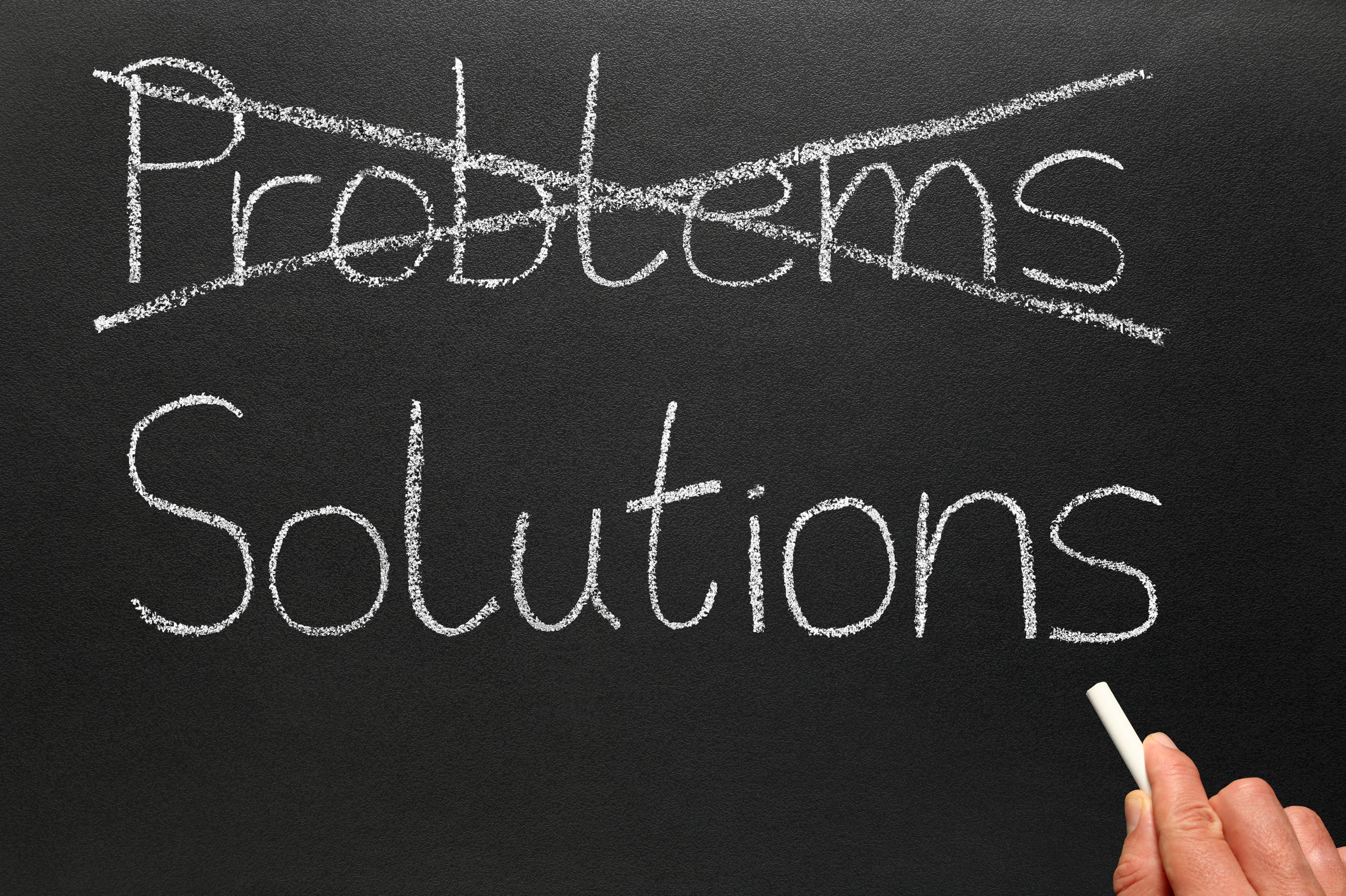
Crossing out problems and writing solutions on a blackboard.

I am very sympathetic to parents who make claims that the school district in their community is tone-deaf, and will not listen. I have called and emailed school superintendents myself across the state and, on occasion, failed to receive a courtesy response.

I will often just pick up a phone and call them or their Board Chair when they failed to respond. I think persistence is key in some cases. However, some superintendents fail to understand their lack of response is harmful to the image of a district.

Parents are in a different position. Many are young parents, and do not know how government works, or is supposed to work. In many cases, this leads to a lack of parent engagement.  In public education, we must solicit more, not less, community involvement.

We must all work to hold our superintendents accountable in regard to educational, financial, and administrative performance. There is a growing debate on whether districts should return to electing these school management leaders; we have generally opposed such legislation, believing school boards can make good choices and hold superintendents accountable. We acknowledge that many school districts do a better job of this than other school districts. Notably, urban districts have consistently had much turnover in their leadership versus rural districts across the state. Constant turnover also hurts the elected versus appointed superintendent debate. School boards must elect good candidates with community input.

School boards must embody the beliefs and values of their community. School board members should be as diverse as the citizens they serve. We should thank the men and women who are serving our communities as school board members more often. They are too often unappreciated, and it is often a thankless but needed job. We need more people with management and education backgrounds to consider running for the school board in their community. The pay isn’t great, but the rewards are immeasurable. The Tennessee School Boards Association has some great information on their website for those interested in this critical role.

School boards should provide superintendents latitude in regards to leadership, vision, and strategic thinking on how to address the performance in those areas. And we must expect them to communicate effectively to all stakeholders. There is no doubt we have some excellent leaders across our state. Superintendents like Melanie Miller, Jerry Boyd, Linda Cash, Johnny McDaniel, Bill Heath, Cathy Beck, Freddy Curtis, Richard Rawlings, and Mark Winningham just to name a few.

These exceptional leaders share many characteristics. Perhaps the most important duty of a superintendent is to make sure district students are learning and achieving at the highest level possible. A superintendent must understand effective academic practices and be supportive of the teachers and administrators in the district. Leadership, vision, and strategic thinking are critical skills for every superintendent. A successful superintendent will also be an effective and excellent communicator. The communication part starts with returning emails and phone calls.

I have been critical over the years of many things in public education. From lack of focus or poorly defined goals to disagreement with curriculum or self-serving unions. However, I have always tried to do what my mother advised, “If you are going to criticize, offer a solution.” Teddy Roosevelt blatantly made it clear, “It is not the critic who counts; but rather the man who is actually in the arena.”

For education leaders to be successful they must communicate effectively.  As a practitioner of my craft, I love reading what is going on in other schools and districts across the state.  Every Monday in my email inbox appears a weekly Marczak Monday Memo from Chris Marczak, the superintendent of Maury County Schools.  It is a great example of effective communication and a model that some districts should adopt.  However, school updates are not a substitute for responding to direct emails or telephone calls.  Something I am sure Dr.  Marczak would agree, as he also excels in returning calls and emails.

At Gettysburg, Abraham Lincoln stated that our government was “for the people.” Cynics take that a step further and tell us government is for those who make themselves effectively heard. That is why it is most critical for elected and appointed officials to communicate clearly, concisely, timely, and effectively. For school leaders, it is even more critical.

**

JC Bowman is the Executive Director of Professional Educators of Tennessee, a non-partisan teacher association headquartered in Nashville, Tennessee. Permission to reprint in whole or in part is hereby granted, provided that the author and the association are properly cited.

2020 Vision for Education Policy

2020

Educator opinions differ on numerous issues and vary from year to year. Professional Educators of Tennessee recently surveyed its teachers and solicited educator input across the state. Nearly 750 educators took the survey sent out from Professional Educators of Tennessee in October of 2019 to our members. While the majority of respondents were classroom teachers, several administrators also took part in the survey.

Salary, school climate, and student behavior have been a constant issue during the last four years. Researchers, policymakers, and stakeholders can gain useful insight into the opinions of those on the frontlines educating children. The majority of educators are satisfied with their jobs and believe their job makes a positive difference in the lives of students. However, two-thirds (67%) of teachers stated that teacher morale was a critical issue in their district.

Student behavior remains a significant issue across the state. While there is a myriad issue that concerns educators, they consistently rank discipline issues near the top. The problem appears to be rooted in the student’s home environment and the school’s culture/climate; both must be considered when addressing the problem.


A school and district must adopt policies that support effective classroom management, as well as instruction for all students. One possible policy needs to be better tracking of time that an educator has to spend on discipline issues. Do parents have the right to know, for example, if one student disrupts their own child’s education so frequently that instruction time is lost? School districts must balance responsibilities toward the community with the responsibility to nurture students. Without discipline, students cannot learn.

Testing is an issue where educators offered some valuable insight. Not only is the amount of testing done by the district a concern, but also tying teacher evaluation scores to the testing data also remains controversial.

Salary issues provide an invaluable perception of how educators view the financial reward for their profession. Educators believe that salary compensation should be equal to other fields with the same degree. It is clear that educators either reject or do not understand what policymakers mean by a “differentiated pay system.”

Well over two thirds (70%) of teacher’s support across the board salary increases. We feel that addressing salary issues should be a primary concern for policymakers. Overall, 92% indicated that salary was an issue which concerned them, followed by retirement and healthcare. Educators were very interested in student loan forgiveness incentives.

If the teacher shortages continue to be an issue state-wide and nationwide, there must be more incentives to go into the teaching field and remain there. Obviously higher pay is the biggest enticement, but also consider giving educators the opportunity to job-share and provide more appealing benefits especially when it comes to health care and retirement. And most importantly, treat educators as professionals and trust them to do their jobs without micromanaging that is currently the norm.

Certainly, some educators have been forced to leave their school system for subjective reasons, rather than objective reasons. Actions speak louder than words. In some cases, dismissal may have been warranted, but in many cases, it appears circumstances were little more than personality conflicts and people not fitting into a certain educational or political environment. We have lost some good educators in our state because of this subjectivity, and we would argue many of these educators deserve another chance to keep their careers going. This will require policymakers to make teacher retention and recruitment a top priority.

The consistency of the same issues in the last few years means that much work remains as educators are not seeing the needed changes. Policymakers and stakeholders must continue to work to make improvements in policies that impact salary, school climate, and student behavior. Education policy must remain a high priority across the state.

##

JC Bowman is the Executive Director of Professional Educators of Tennessee, a non-partisan teacher association headquartered in Nashville, Tennessee. Permission to reprint in whole or in part is hereby granted, provided that the author and the association are properly cited. For more information on this subject or any education issue please contact Professional Educators of Tennessee. To schedule an interview please contact Audrey Shores at 1-800-471-4867 ext.102.

Next Steps for Tennessee

Running Towards Eternity.jpg

Traveling across the state in my role as Executive Director of Professional Educators of Tennessee, I talk with a lot of people interested in public education. One of the most common complaints is a lack of response from Governor Bill Lee or his team on specific education issues. It is problematic, and quite honestly has always been problematic in our state.

Better communication is always needed. I should know – I used to work for Governor Jeb Bush years ago, and communication is always a struggle for the executive branch despite best intentions.


I would still remind people to be patient with Governor Lee and his staff as we are still in year one; however, staff should now be settled into place, with processes and systems clearly established. We should expect better communication in year two.

Governor Lee laid out a fairly ambitious education agenda, and while our organization disagreed with some parts of it, he offered more specifics than his opponent in the election last November. He was clear in his support of vouchers from the day he announced his candidacy. It should have been of no surprise to policymakers or stakeholders. When surveyed, our members did not support vouchers.


His legislative victory with vouchers has yet to be implemented. This may prove challenging, as the program must be proven successful before any other future voucher program is considered. Members of the Tennessee General Assembly will demand proof of unmitigated success before any expansion or similar program is enacted. Cameron Sexton, a voucher critic, has now ascended to Speaker of the House. His track record would indicate that he is a strong supporter of public schools. This helps the governor moving forward on education policy changes needed in public education.

Other parts of the Lee campaign agenda likely won him most of his statewide support, and gave voters more specifics on which to hold him accountable. Candidate Lee suggested it was time to change the way our high schools operate. It was a bold policy suggestion, and as governor, Bill Lee should move forward on that front.


For the last 50 years, the way high schools have educated students has largely remained unchanged. Many business and community leaders believe the traditional high school is disconnected from the demands of the modern economy. They emphasize that graduates need additional skills to be successful in today’s workforce.

The State Collaborative on Reforming Education (SCORE) added: “Across Tennessee, students are learning in high schools using models developed for the needs of the 20th century rather than the workforce opportunities of the future. As a result, most Tennessee students do not graduate fully prepared to succeed in college, career, and life.”


Governor Lee stated, “It is time to embrace new, flexible school models to support new opportunities for career and technical education, work-based learning and apprenticeships, and dual-enrollment courses for students preparing for their career.”

We agree. Some of that is already in the works, through recent legislation. It is time we break down barriers that have held our teachers, school leaders, and school districts back from creative solutions necessary for the unique challenges of their communities. Increasing flexibility at the local level could lead to incredible innovations in our state.

State grants that allow local districts to fund high school redesign would be one manner in which to create change and address challenges schools would face as they transition from traditional models to a more flexible school model.

Another suggestion would be for the state to establish a pilot program for high performing districts by authorizing the State Board of Education to enter into a performance contract with school districts to grant them more flexibility. These high performing districts would be a school district in which a local school board agrees to comply with certain performance goals contained in a performance contract that is approved by the State Board of Education. In return for performance accountability, the district would be granted greater autonomy with both statutory and rule exemptions. This is an idea Governor Lee and his team should explore.


It is past time for the state to make good on its commitment to teachers. The Comptroller’s Office of Research and Education Accountability (OREA) proved that the state of Tennessee invested more than $300 million for teacher salaries in 2015-2018. Most of those dollars did not actually end up in pockets of classroom teachers. Generally, school districts employ more staff than are covered by the funding system utilized in Tennessee, known as the Basic Education Program (BEP). State and local dollars earmarked for salaries during those years were often spread over more teachers than the staff positions generated by the BEP.

The Tennessee General Assembly did address that school districts in the future must now report where salary increases are spent. Governor Lee included a $71 million increase for a “2.5 percent pay raise for teachers” for the fiscal year 2020. It is time to guarantee that teacher salaries, at the very least, match the cost of living increases faced by educators across the state.


Finally, we must update our school funding formula to reflect changing 21st century needs. We need a plan and a funding formula that reflects our modern educational mission, priorities, and strategies. The plan should support teachers, fund facilities, and facilitate innovation and technology while striving to better connect K-12 education with workforce needs.

Governor Lee has proven he will fight for what he believes in. It is time to come together to focus on the other education ideas that were discussed on the campaign trail. It is time to move forward on these issues to help all children, teachers, schools, and communities. Let the policy discussion begin. Communication is critical.


##

JC Bowman is executive director of Professional Educators of Tennessee, a non-partisan teacher association headquartered in Nashville.

Christmas Memories

JC-Dad.jpg

My dad was not a man of grace and refinement. He was, and I can correctly describe him this way, a bona fide tough man. I can only recall seeing him cry twice. Once when his mother died, and once when I told him I had joined the Marine Corps. He was also never afraid to share his opinion on the issues of the day that interested him.

I have written stories of my dad, as witnessed through my eyes, numerous times. Most versions are probably incomplete, but it was my perspective at that time in my life. That perception was based on my age, my knowledge at the time, and my interaction.

When someone moves out of your life, either through relocation, separation, divorce, or even death, we tend to leave that person frozen in time in our minds. For example, as a former teacher, when I interact with former students, they still come up to me and call me “Coach” or Mr. Bowman. I think back on them as they were, but now see them as they are. The challenge we have as we get older is to let our perceptions change as we often reflect on the people and the times that shaped us without complete information.

Growing up we embraced the concept of Santa Claus, yet we kept our focus that the season was about a miracle in the birth of Jesus Christ. My dad and several of his brothers had played the role of Santa Claus in holiday festivities. My Uncle Ed played Santa Claus for the city of Baltimore. My dad donned the suit for the United States Navy at an orphanage in Korea. A little girl asked Santa for a Daddy. It impacted my dad to such an extent that he never played Santa Claus again.

One Christmas, my dad decided we would be that one family in the neighborhood who had all of the holiday lights on their house. While not to Clark Griswold’s level in National Lampoon’s Christmas Vacation, it was not far from it. We lit up the neighborhood. Other neighbors also joined in with decorations that year.  As my dad looked at his handiwork with the Christmas lights, he noticed the gap in the huge window in the front of our house.

My dad disappeared into our utility room and retrieved some lumber.  On our carport in the cold, he started measuring, cutting and crafting something. What was it going to be? My brother and I were not certain. He painted the ends, then wrapped it in thick aluminum foil, to which he wired lights to it. He had made a perfect cross. My dad had built a giant wooden cross. The amazing thing was we were not a particularly religious family, yet he wanted an illuminated cross to shine through the darkness for all to see. It was at the center of our house. The message was not lost to me.

At Christmas, we reflect on a baby in a manager. It is the picture in our minds of a simple manger, a feeding trough out of which livestock would consume food from that the Savior of the World rested in as a newborn baby. It is an amazing story to consider. From the meekest of women, in one of the most unassuming of small towns, in modest accommodations, Jesus Christ was born. In fact, he was laid to rest each night in the most self-effacing of cradles. However, we are reminded it was His death, not just His birth that truly changed the world. That was why my dad focused on the Cross as a proclamation of our faith.

While the faith aspect of the holiday is often lost on many people, it is the central part. We should take the time and discuss the importance of faith in their lives, and share stories and traditions with their family and friends, lest the stories are lost. Yes, as children we still expected a white-bearded man to show up with gifts between Christmas Eve and Christmas morning and bring prizes as rewards for our good behavior.

From that Christmas on, at least in my house, we started placing a greater emphasis on things that were more important and had a more significant eternal value. I had discovered that my dad, unbeknownst to us, had also been purchasing hams for people every Christmas—People who had influenced him or who he knew had no money or were less fortunate. He did that in secret. The only reason my brother and I knew that fact was that he sought our help when he was no longer physically able to do the task himself.

My perception of my dad was often skewed by personal battles between us, but of this I am certain—my dad understood Christmas and celebrated its true meaning. In his own way, he sought to spread cheer to his family, friends, and neighbors. Even for non-believers, the core elements of Christmas — being good, spreading love, and kindness, as well as giving selflessly to others, are traits worth imitating. It is something we must pass on to the next generation.  I learned those values as a child growing up here in Tennessee. I would never trade that memory of a Christmas Cross.

Merry Christmas to All. And God Bless Us, Everyone. 
*********

JC Bowman is the Executive Director of Professional Educators of Tennessee, a non-partisan teacher association headquartered in Nashville, Tennessee. Permission to reprint in whole or in part is hereby granted, provided that the author and the association are properly cited.