Yes, Your Vote Matters

Not everyone shares the same perspective on every issue concerning politics, policies, social matters, or worldviews. Rather than attempting to stifle political discourse, we should encourage and empower voters to make their own informed decisions. We must have faith in the voters to make educated choices that will help shape a brighter future for our state and nation.

Economic concerns and who you trust to handle the economy are cited as the most significant factors influencing voter sentiment for the 2024 presidential election. Education is a crucial driver of economic growth and prosperity, but that has been lost in the discussion.

Extensive research shows that investing more in education fosters economic development, resulting in higher individual salaries, improved workforce efficiency, and an increased gross domestic product. Evolving party dynamics and changing priorities will shape the electoral landscape. Additionally, crime and health care remain significant issues.

Public education is most effective when accountable to the local community rather than a distant bureaucracy in state capitals or Washington, DC. Since 1965, federal one-size-fits-all mandates have burdened local educators. We need leaders dedicated to educating our children and transforming them into moral, productive, and literate citizens.

One viewpoint criticizes the government and advocates for dismantling public education. Proponents of this perspective argue for a privately managed system that they believe will be more effective. Regardless of individual opinions, polished marketing messages emphasizing opportunity, innovation, and efficiency can be expected. Ultimately, the goal is to eliminate public education, which they perceive as detrimental.

Conversely, another perspective highlights that non-academic skills can significantly impact life outcomes, sometimes even more than academic skills. This does not diminish the essential role of literacy and numeracy education, nor does it lessen the importance of history and science courses; both are critical for informed citizenship and workforce success. However, it’s crucial to recognize that success in various life domains is not solely dictated by a few points on state assessments, which often lack true predictive power.

Under both perspectives, it is imperative that parents and community members have a strong vested interest in the success of the schools, and they must co-own the outcomes that are produced. Parents have the right to know how well their children perform compared to their peers nationwide. In addition, taxpayers who support our public school system have the right to know that any system they fund produces the promised results.

The education reform movement urgently needs reform. It has become disconnected from teachers and no longer prioritizes students. Many reforms lack solid evidence. We must consider teachers’ insights on their development to improve student performance. Raising test scores doesn’t guarantee lifelong success, especially if we ignore essential social and fine motor skills vital for cognitive growth.

Education “reformers” have lost their path because they focus on the wrong ideas in education and lack direct first-hand experience in public education. Opinions disguised with misinterpreted data create a bias that becomes terrible public policy.

Educators recognize that critical thinking, creativity, conflict resolution, communication, and teamwork are essential and should not be overlooked. Research shows that well-rounded individuals pursue personal fulfillment and have greater self-confidence. Education should focus on preparing students for careers and teaching lifelong values, discipline, and independent thinking. Albert Einstein noted, “The true sign of intelligence is not knowledge but imagination.”

Winston Churchill taught us that “the price of leadership is responsibility.” This is true of leadership everywhere, from the White House to the state house and even the schoolhouse. While educators have been the ones who have borne the crux of education reform efforts, those in the highest offices of our nation’s capital and state capitols are all too often exempt from being held responsible for their actions. That doesn’t seem fair.

Are we using the right metrics for success? How long will education reform continue without accountability? Who do you trust more: a local teacher who works with your child daily or a bunch of non-educators and lobbyists in Nashville or Washington, D.C.?  Yes, your vote matters. 

##

JC Bowman is the executive director of Professional Educators of Tennessee

Teachers are Unsung Heroes

Effective teachers are the major in-school factor in improving student achievement. Supporting our teachers and leaders from educator preparation programs to the classroom, and through their careers is the only way to achieve success for all students.

The role of teachers in society is profound and multifaceted. They are often the unsung heroes who contribute significantly to the development and progress of individuals and communities. The crucial role of educators is our:

  1. Foundation for Success: Teachers are responsible for imparting the knowledge, skills, and values that enable students to thrive not only within the confines of the classroom but also in their future endeavors. They lay the foundation for a lifelong journey of learning and personal growth.
  2. Guidance and Support: Beyond academics, teachers often serve as mentors and role models for their students. They offer guidance, emotional support, and a sense of belonging, especially during challenging times. Their presence can make a significant difference in students’ lives.
  3. Educational Achievement: Teachers play a pivotal role in raising the academic achievements of their students. Through effective teaching methods, personalized attention, and dedication, educators can help students reach their full potential and excel in their studies.
  4. Community Building: Teachers are integral to building strong communities. They nurture connections among students, families, and the larger community by creating spaces for collaboration, dialogue, and shared experiences.
  5. Going Above and Beyond: Many teachers go above and beyond their job descriptions. They invest extra time and effort to ensure their students succeed, often taking on additional responsibilities and finding creative ways to engage and motivate their students.
  6. Reflection and Appreciation: Recognizing the contributions of teachers and the positive impact on individuals and society is essential. It’s important for students, families, leaders, and communities, to recognize and support their educators in their endeavors.

Educators are instrumental in shaping the present and future of society by nurturing the potential of each individual student and fostering a culture of learning and growth. Tennessee educators’ commitment and dedication contribute to the state’s educational progress and the growth of its future workforce. Their dedication and hard work deserve the highest recognition and appreciation.

##

JC Bowman is the Executive Director of Professional Educators of Tennessee
The Impact of Continuous Change in Education Policy

The impact of continuous changes in education policies on public education can be both positive and negative, depending on various factors including the nature of the changes, the implementation process, and the overall educational context. Let’s explore both sides of this issue:

Positive Aspects:

  1. Adaptation to New Challenges: Continuous changes in education policies can help public education systems adapt to evolving societal and technological trends. This can ensure that students are equipped with the necessary skills to succeed in a rapidly changing world.
  2. Innovation and Improvement: Frequent policy changes can encourage educational institutions to innovate and improve their teaching methods, curriculum, and overall quality. This can lead to better outcomes for students and increased competitiveness of the education system.
  3. Addressing Inequities: Policy changes can be used to address existing inequalities in public education, by targeting underserved communities, providing resources, and implementing measures to ensure equal access to quality education.

Negative Aspects:

  1. Disruption: Continuous changes can lead to disruptions in the teaching-learning process. Teachers and students may struggle to adapt to new policies, leading to confusion and potentially hindering effective education delivery.
  2. Lack of Implementation Time: Rapid policy changes may not allow sufficient time for schools and educators to fully understand and implement the new measures effectively. This can result in inadequate implementation and potential negative consequences.
  3. Resource Drain: Frequent changes in policies can divert resources and attention away from core educational activities. Schools may need to allocate significant time and effort to adjust to new policies, which could impact their ability to focus on student learning.
  4. Inconsistency: Continual policy shifts can lead to inconsistency in education quality, standards, and assessments. This can undermine the credibility of the education system and hinder students’ preparedness for higher education or the workforce.
  5. Teacher Morale: Rapid policy changes can lead to teacher burnout and decreased morale. Teachers may feel overwhelmed by the constant need to adjust their teaching methods, materials, and assessments.

Balancing Act:

The key to a successful education policy framework lies in finding a balance between stability and adaptability. Periodic updates to policies that are well-researched, thoughtfully planned, and effectively communicated can provide the benefits of adaptation without causing unnecessary disruption. Additionally, involving educators, administrators, parents, and students in the policy-making process can lead to more informed and sustainable changes.

Ultimately, whether continuous changes in education policies hurt public education or not depends on how these changes are designed, implemented, and aligned with the broader educational goals of a society.

The Problem with Restorative Justice

principal-office

I grew up in the idyllic town of Cleveland, Tennessee. Nestled on the foothills of the Great Smoky Mountains. I was fortunate to be from a town that valued faith, family, and education. It was a quintessential life for an American boy.

I lived on Sycamore Drive growing up. I look back and see the kids I grew up with are all successful and thriving adults. It is an amazing story. It didn’t happen by luck.

I know most of the kids I grew up with had two-parent homes, both their parents worked jobs, and all of us lived in modest homes. Most went to church somewhere on Sunday. We were very much a blue-collar community. If there drugs and alcohol, we never saw it. (Although some of us had the occasional beer in high school.) The drinking age was 18 at that time. We listened to rock music. The go-to radio station early on was WFLI until KZ106 came along. The disc jockey we all listened to was Tommy Jett, who is now in the Tennessee Radio Hall of Fame.

Education was a large part of our lives. The big question was: would you choose to go to high school in the city or the county. It was Cleveland or Bradley. That was the choice. No matter the choice, you were going to get a quality education. There was a high school in Charleston, on the northern end of the county. But that was not a choice for us. Besides, who would want to be a Panther, when you could be a Blue Raider or a Bear.

The teachers in our community schools shared the values of our community. You would see teachers at the grocery store or church on the weekends. The last thing you would want would be for Mrs. Miller or Mrs. Painter to see you at the grocery store with your mom and give a behavior report that was less than flattering.

That didn’t mean we didn’t get in trouble. We just knew that somewhere there was a line you didn’t cross, and if you did then your teacher and your parent would meet at the school or in public and the outcome would not be pleasant for you when you got home. Parents supported teachers. Teachers reinforced the values that we learned at home.  It was a tag-team effort.

When we look today, we see so many teachers, parents and children disconnected. Society is being torn apart. Our culture is changing before our eyes. Children are raising themselves. Parents are out of the picture. Parents do not trust schools, and teachers are not supported by parents. Children do not listen to parents. Children do not listen to teachers. It is a problem.

The latest trend to tackle the issue in schools is Restorative Justice. If you listen to “experts” the objective is to reduce the number of suspensions. However, in these efforts to reduce suspensions, other students and teachers are left suffering. Often, Restorative Justice is not concerned with rehabilitating offending students, the objective is to merely reduce suspensions and avoid punitive consequences for student actions.

A frequent pattern of disruptive children being endlessly returned to the classroom without any actual change in their behavior is emerging. Schools have to be able to remove continually disruptive students from classes. Ideally, chronically disruptive students should be placed in high-quality alternative education settings where they can receive long-term, intensive interventions. We especially need to strengthen the authority of teachers who manage defiant students. The concept of Restorative Justice may be noble, but the implementation is often flawed and harmful.

Some of the other problems for this form of discipline to work include that all participants have to buy into the process. That is never going to happen. Schools, parents, and students are never going to be on the same page regarding student discipline. The concept is not supposed to be an alternative to punishment, which it has become. The objective should be behavior change, not just a reduction in student suspensions.

Student discipline should be designed to improve behavior. In that regard, there is not just one victim. It is not a student versus a teacher scenario, but rather a chronically disruptive student interrupting an entire class of fellow students. Should parents be made aware when their child’s class is constantly interrupted?  Many educators think so.  These other students are victims, as is their education. Restorative Justice proponents are seeking to make educators take even more time away from instruction to put in effort and time to deal with a chronic behavior problem. The modeled misbehavior could have a negative impact on other students who are deprived of instruction time. They may emulate this negative behavior for attention.

Perhaps I look at life in the simplest of terms. Where I grew up, misbehavior and defiant conduct would not be acceptable. Parents and teachers would work together to address any behavior problem. My parents would not be as concerned with my opinion of my behavior as they would be of a teacher’s opinion. There would be unpleasant consequences for continual misbehavior. I suspect all the children on Sycamore Drive in Cleveland, Tennessee all had similar experiences. We all turned out alright. That is real justice.

##

JC Bowman is the Executive Director of Professional Educators of Tennessee, a non-partisan teacher association headquartered in Nashville, Tennessee. Permission to reprint in whole or in part is hereby granted, provided that the author and the association are properly cited. For more information on this subject or any education issue please contact Professional Educators of Tennessee.


The Educator and the Classroom

Unterricht

Former President Theodore Roosevelt gave an often-cited speech about citizenship in a Republic called The Man in the Arena at the Sorbonne in Paris, France on April 23, 1910. Roosevelt, a remarkable man of great accomplishments declared: “There is little use for the being whose tepid soul knows nothing of great and generous emotion, of the high pride, the stern belief, the lofty enthusiasm, of the men who quell the storm and ride the thunder.”

I often think of modern educators as “The Man in the Arena,” although in this case, a better title might be “The Educator and the Classroom.” I love this descriptor of those who quell the storm and ride the thunder. Educators do quell the storm and ride the thunder in educating the public. Too often our critics mistake cynicism for critical thinking, and vice-versa. We must never fear to critically analyze our profession or our performance. Roosevelt would likely remind us “It is not the critic who counts” but those who are actually “in the arena.”

On August 21st, the 2019 Tennessee Educator Survey report was released by Tennessee Education Research Alliance and the Tennessee Department of Education, Over 45,000 educators responded to the survey, representing 62% of the state’s teachers – an all-time high response rate. Lots of positive feedback, as well as some gloom and doom.

The positive feedback includes:

  • Three out of Four teachers report feeling positive about the way things are run at their school.
  • Three out of Four teachers agree that teacher evaluation improves their teaching.
  • Nearly 90 percent of teachers say they would recommend their school to parents.

Among the negative conclusions:

  • Four in 10 teachers feel less enthusiastic than when they began in education.
  • One in three Tennessee teachers reports they would choose another profession in hindsight.
  • As well, one in three also says they would leave teaching altogether if they could find a higher paying job, according to a report released TODAY on the opinions of teachers statewide.
  • Teacher opinions are split on how much planning time they have in schools.
  • Teachers are also spending many hours creating instructional materials, with feedback showing educators are divided on whether instructional materials are adequate.
  • About half of all teacher says they need to modify or create instructional materials.

Policymakers and stakeholders need to take those negative findings very seriously. A third of Tennessee teachers wish they had gone into another profession, and they lack the time and adequate instructional materials to teach the children, which they have been assigned. This does not bode well for Tennessee schools moving forward. Merely increasing teacher salaries does not solve the issue of self-respect, time, or resources.

There is a lot of information for all of us to digest. Education is changing. We need increased educator voices to make Tennessee the best state in the nation for education and in turn, the best place to raise a family. We must proactively address the issues raised by educators, with real and attainable solutions. The philosopher Bertrand Russell often discussed the importance of using our imaginations in constructing our world, which was the inspiration for this point by Sharon Ann Lee: “There are people who build things and people who tear things down. Just remember which side you are on.”

Roosevelt added: “Well for these men if they succeed; well also, though not so well, if they fail, given only that they have nobly ventured, and have put forth all their heart and strength.” If you want to see passion just visit a classroom in Tennessee. There you will witness our educators zealous to see our children educated to the highest level possible. So, choose to be one who builds, not a cynic who merely criticizes the work of others. Offer hope, ideas, and support to those in the classrooms. Then criticize, if you must after you made that effort to quell the storm and ride the thunder.

*********

JC Bowman is the Executive Director of Professional Educators of Tennessee, a non-partisan teacher association headquartered in Nashville, Tennessee. Permission to reprint in whole or in part is hereby granted, provided that the author and the association are properly cited

Better Thinking Equals Better Results

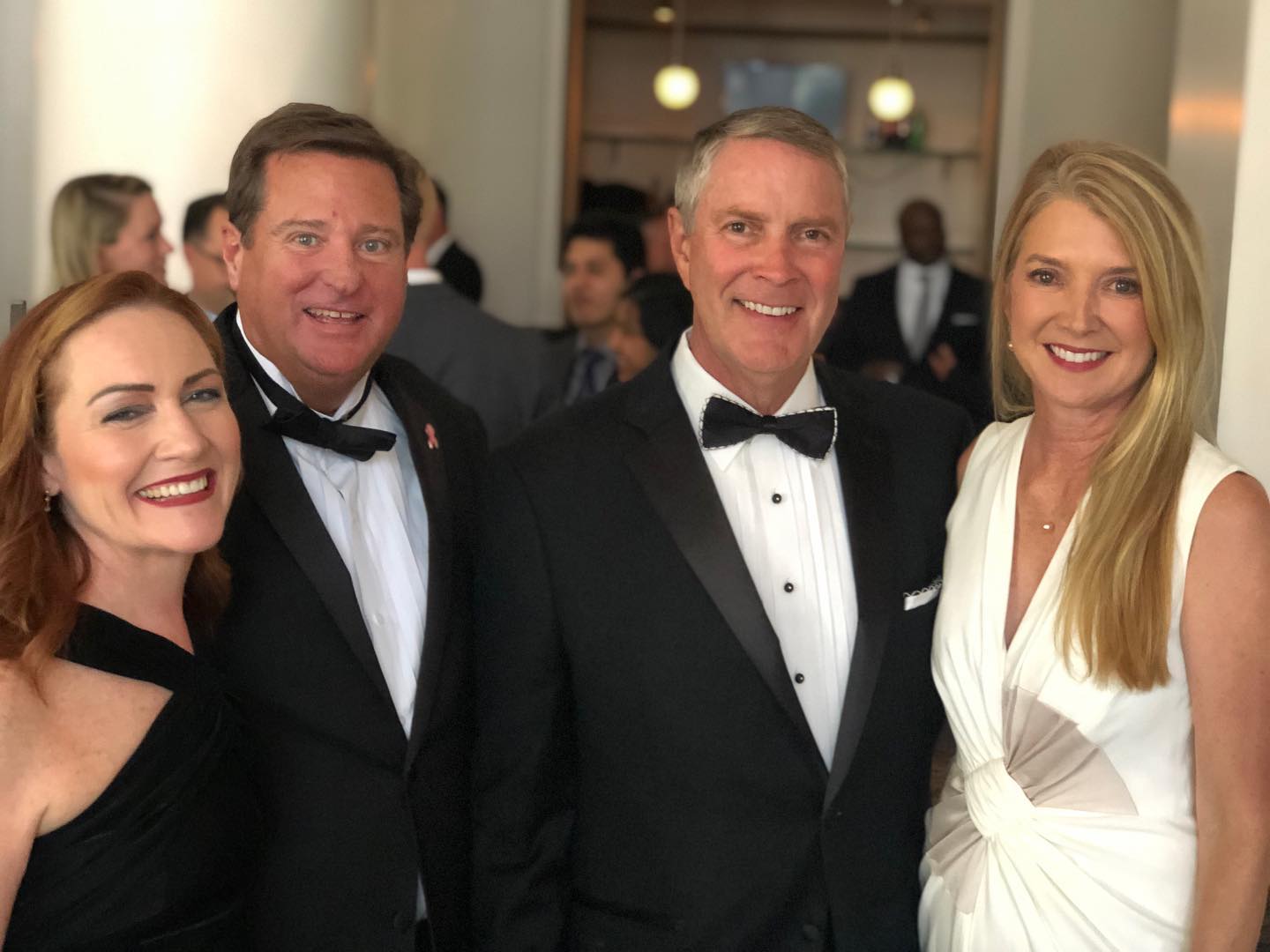
Bill Frist and us.jpg

The State Collaborative on Reforming Education (SCORE) celebrated their 10th Anniversary of working to improve the future for Tennessee students on August 12, 2019.  While we have not always agreed with some of the agenda at Professional Educators of Tennessee, we have never doubted their resolve or pursuit in improving public education in our state.  We are glad to partner with them to improve the future for educators and help our students succeed.

As Chairman of SCORE, Senator Bill Frist should be commended and honored for his tireless advocacy and passion for making education a priority in our state.  We are all better in public education because of his commitment to parents, teachers and especially students.

By advocating for many organizations including our own, Governors Phil Bredesen, Bill Haslam and now Bill Lee have all made education a priority in their administrations.  However, SCORE’s insistence of doing what is best for students to achieve excellence for all has made the greatest impact on public policy in the state this decade.  What has been significant has been consistent leadership at the organization, from former CEO and state senator Jamie Woodson to current CEO David Mansouri, who both shared Frist’s relentless drive in educating our students.

To prepare our children for the future, a student-centered education begins with an excellent teacher. SCORE has been pushing that envelope and playing a critical role in advancing student achievement in Tennessee.  That is why our dialogue with SCORE continues to surround how to engage and empower educators to improve public education.  Those who possess the knowledge about students must have input into the decisions.

We can and we must continue to have policy discussions and debates on improving public education.  Marching in complete lockstep has never produced an original thought.  We have to understand that public education must be completely committed to student success.   Continued collaboration and a spirit of unity remain critical in creating a culture that truly values education.

Providing educators with resources and supports seem to be a foolproof means of making sure that student needs are met completely.  In this area, we all can agree on the critical importance of an authentic teacher voice in policy discussions.  One of the greatest weaknesses of public education, is our isolation in classrooms and in schools.  Teachers need more opportunities for reflection and to develop connections beyond their own school walls or even districts.  That is why membership in professional associations can play a critical role.  The amplified voices of educators that are improving outcomes for students through innovative practices must be shared in our state, and we cannot do it alone.

One of SCORE’s strategic priorities is preparing, recruiting, supporting and retaining excellent teachers and leaders.  There is no doubt that is often overlooked by policymakers at the state and local level.  A school system cannot have high expectations for their students, without a high-quality teacher in their classrooms.  This may prove difficult moving forward, as there are not enough qualified teachers applying for teaching jobs to meet the demand in all locations and fields.   It will take forward-thinking for Tennessee to see our potential for the future.  Simply put: better thinking equals better results.

Every mountain top is within reach if you just keep climbing.  Thank you to SCORE, Senator Frist and your team for your commitment to public education this last decade.  We have much more work left to do.  Together, educators and students across Tennessee will continue to climb higher and our state will rise to the top.

##

JC Bowman is the Executive Director of Professional Educators of Tennessee, a non-partisan teacher association headquartered in Nashville, Tennessee. Permission to reprint in whole or in part is hereby granted, provided that the author and the association are properly cited. For more information on this subject or any education issue please contact Professional Educators of Tennessee.

State of the State Expectations 2019

Governor Bill Lee will give his first State of the State address on Monday, March 4, 2019. The speech is highly anticipated, as it will signal to the state the administration’s priorities for the immediate future. It is where campaign promises, either become realities or go to die. He will undoubtedly address issues across the board, from roads to mental health to criminal justice, and all things in between. My interest will be squarely on public education.

What do I expect the Governor to say about education?

  1. His administration will focus on getting students ready for work.
  2. He will work to strengthen the public education system.
  3. He will look for innovative and student-centered strategies for public education.

How will he do that? Here is what I suggest he might say on Monday night:

He will stress the need to build better connections between labor and education. This will mean facilitating improved linkage between school districts, community and technical colleges, four-year colleges and universities, and local industry. Meaning the state must assess our progress towards the Drive to 55 Goal. Which may include outreach to middle school students about their goals and aspirations. This is likely why one of the first assignments given to the new Education Commissioner, Penny Schwinn, has been to meet with students. Likewise, we will want secondary students to start thinking about their career. Governor Lee will probably push toward greater access to high-quality dual enrollment and dual credit opportunities in technical fields across our state. Work-based learning may be referenced. Governor Lee sees this as an opportunity to help students develop the practical abilities that help them perform in project-based environments, learn to work with others, and grow the discipline needed for success in a competitive workplace. This will require new partnerships between industry and our schools, and may facilitate a more concrete connection between labor and education, which is a direction that the federal government has taken the past few years. The state will also need to expand and improve offerings in STEM.

Governor Lee will likely continue to highlight the work of his predecessors, namely Governor Bredesen and Governor Haslam, in looking at ways to strengthen the foundations of our public education system. It is uncertain if Pre-K will be included. I would argue that he will look at some of the efforts underway and consult with State Representative Bill Dunn on this matter. All success in public education hinges on quality instruction, so it begins with our educators. We all agree that every student deserves highly effective teachers and administrators. So, it would be no surprise to hear the Governor talk about his plan to better develop a pipeline to secure educators here in Tennessee. Compensation is the key to recruitment and retention. Our teacher compensation model needs to be competitive nationally. I expect the Governor to send a message to educators that he recognizes and appreciates their efforts, and he will work to see they are paid for their efforts. I also expect that the Governor will stress the need to build upon Governor Haslam’s efforts in literacy. We know that school safety will also be a priority, as well as the need for additional school counselors. It is important that focus in counseling goes beyond mere college and career, but also into helping students with mental health issues—-especially children who have experienced physical abuse, verbal abuse, sexual abuse, physical neglect, and emotional neglect. Governor Lee must address the testing issue. Too many policymakers and stakeholders have been waiting on a message from the governor about how he plans to improve our assessment system, to ensure that our metrics are empowering and informing, not inhibiting quality instruction, while providing accurate feedback for educators, parents, and students.

On the innovation front, the question is, will he or won’t he bring up parental choice, specifically regarding school vouchers and/or education savings accounts? The administration has signaled more of a wait and see approach thus far. If he plans to bring up school choice, it is more likely to be done in his first term. There has been some indication that the votes are simply not there for a proposal in the Tennessee General Assembly. The Governor is more likely to discuss changes he envisions in creating a modern high school. He is correct that for the last 50 years the way high school has educated students has largely remained unchanged. He may suggest that it is time to embrace new, flexible school models in our high schools. This means he must also discuss supporting locally-driven flexibility and innovation. On the campaign trail, he argued for the need to break down the barriers that have held our teachers, school leaders, and school districts back from creative solutions to the unique challenges of their communities. I would not be surprised to see something like innovation grants from the state for our districts. The question is whether he is willing to make some adjustments to testing, like a pilot project that allows some districts to use the ACT, ACT Aspire, or SAT Suites as a means of assessment in high performing districts. Lee understands when we empower school leaders to bring new solutions to the table and hold them accountable for results, we all win. By piloting innovative approaches that encourage our schools and their communities to work together and design solutions without bureaucratic hurdles, he could send a huge message across the state. Hopefully, Governor Lee will grab the bull by the horns on school finance and discuss the possibilities of a school funding formula to reflect changing 21st century needs. Because of our modern educational mission, priorities, and strategies, businessman Governor Lee understands better than most policymakers the required formula that will support teachers, fund facilities, and facilitate innovation and technology, while looking to better connect K-12 education with workforce needs.

I expect the speech of a lifetime from Governor Lee on Monday night. The State of the State is his one opportunity to lay out for all Tennesseans why we are the best state in the nation for education and in turn, the best place to raise a family. Tennessee continues to be a state that is moving forward.

##

JC Bowman is the Executive Director of Professional Educators of Tennessee, a non-partisan teacher association headquartered in Nashville, Tennessee. Permission to reprint in whole or in part is hereby granted, provided that the author and the association are properly cited. For more information on this subject or any education issue please contact Professional Educators of Tennessee.

What I Didn’t Say

Candice-McQueen-at-appointment-press-conference

I had several news organizations call and/or email for a statement on the departure of Tennessee Department of Education Commissioner Candice McQueen.  I hastily put together my thoughts, and wrote:

“Professional Educators of Tennessee appreciates the contributions of Commissioner Candice McQueen.  Commissioner McQueen is one of the most visible members of the Haslam Administration.   She took over the Department during a dark period in public education, and she made a significant difference within the Department, particularly in the infrastructure.  Those changes are not readily noticeable, as they include systems, processes and human capital.  There are some exceptional people within the Department of Education working to make public education a success in our state.  It is unfortunate that online testing continues to be a point of contention, but the state is moving in a positive direction.  The next Commissioner of Education and the 111th Tennessee General Assembly will need to make adjustments in student assessment as we move forward.   We will always be grateful to Commissioner McQueen for her unwavering support of increasing teacher salaries and commitment to student literacy.  These are incredible legacies to leave as she departs her critical role serving the citizens of Tennessee, and we wish Commissioner McQueen much success in her new role.   We look forward to working with Governor-elect Bill Lee and offering input on a successor.”
That’s what professionals do.  We issue statements and offer public comments about people and issues.  There is a right way and a wrong way to do that task.  In an era where we seemingly delight in lack of civility and negative tone of politics, we must take the high road.   We are polarized as a country, not because we are afraid to discuss issues of substance, but rather we cannot talk to each other in a respectful manner.  It’s easier for some to just be what my mom used to classify as “rude, crude and uncalled for.”  In the end, we merely see who can be the loudest in the room, and end up talking over each other.

What does that have to do with a statement on the Departure of a Haslam Cabinet official?  Simple, it brings out the ugly.  And I have seen some mean-spirited people critical of Commissioner McQueen, as she moves into the next phase of her career.  Most of those being critical are clueless.  To paraphrase Shakespeare, “In a battle of wits, they are unarmed.”

Tupac Shakur said, “Behind every sweet smile, there is a bitter sadness that no one can ever see and feel.” I spent time with Commissioner McQueen as more than a casual observer. Her heart and passion were always for the children and teachers in Tennessee.  She fought battles which nobody knew about and which, despite the lofty title in front of her name, she had little control.  While we didn’t always agree on every issue, it was always a discussion she was willing to have with me, as well as others. She made it a priority to discuss teacher issues with me regularly, and as needed as frequently as possible.  That alone will always endear her to the teachers who were included in those discussions.

Candice McQueen is a woman of faith.  That is an element that we need more of in public service.  She didn’t wield her faith as a sword, but you knew that she was a believer in Jesus Christ.  She had a preference for ideas over politics.  She chose principle over popularity.  She took ownership of a testing debacle, that she had inherited and didn’t even pick the people who oversaw it.  She could have easily laid blame elsewhere.  She chose not to do that.  She wisely fired a failed testing company.   She was not a seasoned politician.  If you recall legislative hearings, she sat there and took valid criticism of a flawed system.  However, that critique often crossed the line personally.

Candice McQueen symbolized the hope for a more decent and gentler public servant, willing to acknowledge faults in a system—and personally owning them.  Whereas Harry Truman said, “The buck stops here,” McQueen also took ownership while at the same time working to correct the issues.  (Much like building an airplane while at the same time trying to fly it.)  She did this while remaining optimistic and energetic.  From first-hand knowledge, I know she frequently started her work day before 6:00 AM and often finished it after 9:00 PM, even though she was a mother and wife.  Commissioner McQueen will be missed.

As far as the next Commissioner of Education goes, I imagine it will be much harder to fill her shoes than most people realize.  The next Commissioner must make sure she/he has direct access to the new Governor, with complete authority to make changes as needed.  The Governor, not the Commissioner of Education, must fight the legislative battles.  We need a true public servant we can also work with, who understands Tennessee and our educators.

The beautiful thing about legacies is that time is a fair-minded judge.  I suspect that Candice McQueen, like Lana Seivers who served years before her, will be seen as a Commissioner who helped build a modern Department of Education which meets the needs of districts, educators, parents and children.  Tennessee is moving forward in education, and we all should be proud of our accomplishments.

##

JC Bowman is the Executive Director of Professional Educators of Tennessee, a non-partisan teacher association headquartered in Nashville, Tennessee. Permission to reprint in whole or in part is hereby granted, provided that the author and the association are properly cited. For more information on this subject or any education issue please contact Professional Educators of Tennessee.

Getting to “All Means All”

Eight steps to building an education system that delivers on the promise of excellence and equity

POSTED:October 20, 2014
Professor Paul Reville

To build the education system that the 21st century demands, says Professor Paul Reville, we have to look at what’s failed in our attempts to reform the 20th-century education system we’re still living with.

Speaking at the Harvard Graduate School of Education’s Bold Ideas & Critical Conversations event on September 19, Reville summarized the ways in which our current system is failing to meet the promise of excellence and equity in education. Despite more than 20 years of intense reform efforts, there is still “an iron-law correlation between socioeconomic status and educational achievement and attainment.”

Charting a new pathway toward “all means all,” Reville outlined eight broad ideas that both assess and take us beyond today’s shortcomings:

  • There is now a happy coincidence, Reville said, between what we ought to do and what is in our economic interest to do, which is to educate each and every one of our students to a high standard — to educate them for success in employment, citizenship, family life, and as lifelong learners.
  • Schooling alone is insufficient; it is too weak an intervention to overcome the disadvantages of poverty. “We want a society in which demographics are not destiny,” Reville said, noting that the work to meet that ideal has only just begun.
  • Our current system is outmoded, he continued, citing short school days and a one-size-fits-all approach. “We have a batch-processing, mass-production model of education that served us very well if we wanted to achieve a society in which we were sending a lot of people into low-skill, low-knowledge jobs,” Reville said. “But for high-skill, high-knowledge jobs in a post-industrial information age, we need a very different system.”
  • We need a new design — a new way to integrate systems of education and child development that delivers on the goal of preparing each and every student for success.
  • To get there, “we’re going to need to differentiate,” Reville said. We need a system that meets every child where he or she is, and gives them tools to be successful at each stage of their education.
  • We must become more intentional in mitigating the issues in children’s lives outside of school that get in the way of their success in school. He argues that we need to braid systems of health, mental health, and education, taking steps to build social and emotional learning and resiliency.
  • We have to increase access to out-of-school learning for all students. “Affluent families are doing more than ever before in the 80 percent of children’s lives [spent] outside of school to enrich their children’s education. Disadvantaged families can do less and less,” Reville said.
  • All of these needs and priorities are feeding into the creation of the Education Redesign Lab, a new initiative at HGSE that aims to spearhead a national conversation about how we will build a new system of education and child development that finally delivers on the promise of excellence and equity. Reville envisions a national design process that will bring together all of these elements of reform and create “a visionary blueprint for 21st-century education.”

***

Credit to Usable Knowledge at the Harvard Graduate School of Education.

Website:  www.gse.harvard.edu/uk.

Education in the Age of the Underdog

Dr. Ryan Jackson from Mt. Pleasant High School in Maury County, TN, “The Mount,” shares real life examples as he talks about educators being advocates for the “underdog.”