Next Steps for Tennessee

Running Towards Eternity.jpg

Traveling across the state in my role as Executive Director of Professional Educators of Tennessee, I talk with a lot of people interested in public education. One of the most common complaints is a lack of response from Governor Bill Lee or his team on specific education issues. It is problematic, and quite honestly has always been problematic in our state.

Better communication is always needed. I should know – I used to work for Governor Jeb Bush years ago, and communication is always a struggle for the executive branch despite best intentions.


I would still remind people to be patient with Governor Lee and his staff as we are still in year one; however, staff should now be settled into place, with processes and systems clearly established. We should expect better communication in year two.

Governor Lee laid out a fairly ambitious education agenda, and while our organization disagreed with some parts of it, he offered more specifics than his opponent in the election last November. He was clear in his support of vouchers from the day he announced his candidacy. It should have been of no surprise to policymakers or stakeholders. When surveyed, our members did not support vouchers.


His legislative victory with vouchers has yet to be implemented. This may prove challenging, as the program must be proven successful before any other future voucher program is considered. Members of the Tennessee General Assembly will demand proof of unmitigated success before any expansion or similar program is enacted. Cameron Sexton, a voucher critic, has now ascended to Speaker of the House. His track record would indicate that he is a strong supporter of public schools. This helps the governor moving forward on education policy changes needed in public education.

Other parts of the Lee campaign agenda likely won him most of his statewide support, and gave voters more specifics on which to hold him accountable. Candidate Lee suggested it was time to change the way our high schools operate. It was a bold policy suggestion, and as governor, Bill Lee should move forward on that front.


For the last 50 years, the way high schools have educated students has largely remained unchanged. Many business and community leaders believe the traditional high school is disconnected from the demands of the modern economy. They emphasize that graduates need additional skills to be successful in today’s workforce.

The State Collaborative on Reforming Education (SCORE) added: “Across Tennessee, students are learning in high schools using models developed for the needs of the 20th century rather than the workforce opportunities of the future. As a result, most Tennessee students do not graduate fully prepared to succeed in college, career, and life.”


Governor Lee stated, “It is time to embrace new, flexible school models to support new opportunities for career and technical education, work-based learning and apprenticeships, and dual-enrollment courses for students preparing for their career.”

We agree. Some of that is already in the works, through recent legislation. It is time we break down barriers that have held our teachers, school leaders, and school districts back from creative solutions necessary for the unique challenges of their communities. Increasing flexibility at the local level could lead to incredible innovations in our state.

State grants that allow local districts to fund high school redesign would be one manner in which to create change and address challenges schools would face as they transition from traditional models to a more flexible school model.

Another suggestion would be for the state to establish a pilot program for high performing districts by authorizing the State Board of Education to enter into a performance contract with school districts to grant them more flexibility. These high performing districts would be a school district in which a local school board agrees to comply with certain performance goals contained in a performance contract that is approved by the State Board of Education. In return for performance accountability, the district would be granted greater autonomy with both statutory and rule exemptions. This is an idea Governor Lee and his team should explore.


It is past time for the state to make good on its commitment to teachers. The Comptroller’s Office of Research and Education Accountability (OREA) proved that the state of Tennessee invested more than $300 million for teacher salaries in 2015-2018. Most of those dollars did not actually end up in pockets of classroom teachers. Generally, school districts employ more staff than are covered by the funding system utilized in Tennessee, known as the Basic Education Program (BEP). State and local dollars earmarked for salaries during those years were often spread over more teachers than the staff positions generated by the BEP.

The Tennessee General Assembly did address that school districts in the future must now report where salary increases are spent. Governor Lee included a $71 million increase for a “2.5 percent pay raise for teachers” for the fiscal year 2020. It is time to guarantee that teacher salaries, at the very least, match the cost of living increases faced by educators across the state.


Finally, we must update our school funding formula to reflect changing 21st century needs. We need a plan and a funding formula that reflects our modern educational mission, priorities, and strategies. The plan should support teachers, fund facilities, and facilitate innovation and technology while striving to better connect K-12 education with workforce needs.

Governor Lee has proven he will fight for what he believes in. It is time to come together to focus on the other education ideas that were discussed on the campaign trail. It is time to move forward on these issues to help all children, teachers, schools, and communities. Let the policy discussion begin. Communication is critical.


##

JC Bowman is executive director of Professional Educators of Tennessee, a non-partisan teacher association headquartered in Nashville.

Let Hope Rise

Fotolia_11617187_Subscription_L.jpg

While discussing faith, I am reminded of a lyric from an old religious song: “Let hope rise and darkness tremble.” That is a powerful and optimistic statement for those who share a strong belief in God.

I am also convinced that our purpose in life is directly linked to the clarity of our own vision for the future. Too many people imagine a bleak and hopeless future, and it shows in choices they make in their work, their relations and in their outlook on life. The glass is half empty. Darkness and desolation will always be all they see and find.

I had an opportunity to spend a few hours with a friend of mine, Karolyn Marino, as she taught her Kindergarten class. She was bursting with enthusiasm and energy to match that of her pupils. Karolyn told me that her job was not only to reach every child in her class, no matter their level of knowledge on a subject, but to also make sure that her classroom was one of optimism and hopefulness. Her interaction with children went beyond the walls of the schools. The children knew no matter what awaited them at home, for the hours that they were in Miss Karolyn’s class, they were warmly welcomed and loved. She is also one of the top teachers in her school district. Kids learn when they are loved.

As one of her goals, Tennessee Commissioner of Education Penny Schwinn stated she wants to make sure that our schools are equipped to serve the academic and non-academic needs of all kids. That means that schools and districts will have better access to online tools, statewide partnerships and more resources for schools. That is a good and positive direction for our educators and our students. We look forward to working with her on this agenda in Tennessee.

Schwinn also has brought up a subject she wants to champion: character education. This too, should help our students make more meaningful contributions to our society. In a world where it is getting more difficult to determine right from wrong, maybe we do need to step back and look at some of those basic attributes we call character development and reinforce them at school. Loving our neighbors should be innate, but if it is not, we can show the way by practicing what we preach.

Martin Luther King said, “The function of education is to teach one to think intensively and to think critically. Intelligence plus character – that is the goal of true education. We may have all come on different ships, but we’re in the same boat now.” King’s words still ring true.

I am a believer in public education. But I also understand that what that we have gone down a few rabbit holes and lost focus at times. Change will continue and, in education at least, more change is on the way. We should welcome the debate over change in public education and continue the discussion, knowing that a one size fits all strategy does not work in any school, district or community.

Public education is at a crossroads in Tennessee. People say it is broken and beyond repair. I tell those critics that they are wrong. We succeed every single day in small victories across our classrooms and schools. Our success far outweighs our failures and we can acknowledge those failures and take on those challenges head-on.

Strength doesn’t come from what you can do. It comes from overcoming the things you once thought you couldn’t. When the light of hope comes, darkness has no place. Darkness is driven away by light. Let hope rise and darkness tremble. Public education has a bright future.

## 

JC Bowman is the Executive Director of Professional Educators of Tennessee, a non-partisan teacher association headquartered in Nashville, Tennessee. Permission to reprint in whole or in part is hereby granted, provided that the author and the association are properly cited.

Be a Bright Spot During a Dark Time This Thanksgiving

Thanksgiving3

This year will mark the fact that I have had the opportunity to live through 56 Thanksgivings. I was born on a Sunday, November 24th, 1963, two days after the assassination of John F. Kennedy. Thanksgiving occurred on November 28th that year, the same as this year. It was a time, not unlike today, filled with political uncertainty. My mother told me I was the only child born that evening. Nurses and doctors were still in shock at the Kennedy assassination, but my birth was a bright spot during a dark time. I have always loved that story.

Presidents and Congresses from the beginning of our republic have designated days of thanksgiving and fasting. The Thanksgiving we celebrate annually in November was established by Abraham Lincoln during the Civil War and made into law by Congress in 1941. It is rooted in a 1621 event where Plymouth colonists and Wampanoag Indians shared an autumn harvest feast that is acknowledged today as one of the first Thanksgivings.

Rather than allowing fear and trepidation to dictate our state of mind here on the cusp of 2020, we should look at the great hope our country provides to the world. This Thanksgiving we need a more civil, honest discourse among ourselves, as families, friends and as countrymen. The Rev. Martin Luther King Jr. was no stranger to political conflict in his day.  King reminded us, “Hate is always tragic. It is as injurious to the hater as it is to the hated. It distorts the personality and scars the soul.” Hate breeds more hate, but love conquers all.

Rock singer Bono said in a Rolling Stone interview: “I don’t fear politicians or presidents. They should be afraid. They’ll be accountable for what happened on their watch.” Bono added, “It’s an amazing thing to think that ours is the first generation in history that really can end extreme poverty, the kind that means a child dies for lack of food in its belly. This should be seen as the most incredible, historic opportunity but instead, it’s become a millstone around our necks. We let our own pathetic excuses about how it’s ‘difficult’ justify our own inaction. Be honest. We have the science, the technology, and the wealth. What we don’t have is the will, and that’s not a reason that history will accept.”

Poor and starving people are not particularly appealing news stories, but fighting poverty is and should be a moral imperative for citizens in our cities, state, and nation. Teachers are often on the frontlines fighting battles with children who go to bed hungry and wake up starving. Theological apathy, just like political apathy, is not an acceptable excuse. Yes, “the poor will always be with us.” However, Jesus, in his first sermon said, “The spirit of the Lord is upon me, because he has anointed me to preach good news to the poor.”

This Thanksgiving we should be thankful for both the small and large blessing in our lives. And just as in years past, we should seek with grateful hearts the political, moral, and intellectual blessings that make self-government possible. However, we must recognize what is truly essential: faith, family, and friends. Embrace others. Treat everybody with dignity and respect. If you want to touch the heart of God, take an interest in the things that interest God. Let God love others through you.

Every great nation should include the recognition that every child is created in the image of God, and that fact means we will use our resources to meet the most basic needs of all citizens, especially the vulnerable. Think of those less fortunate this year before your Thanksgiving prayers, remind yourself of those in poverty whose plates are often empty. We are incapable of breaking the cycle of poverty without all of us working together to address poverty and hunger.

We must endeavor to understand our nation’s place in the world. And while some Americans may believe we have lost some of our luster, the truth is that we are still the greatest beacon of freedom on the planet. We do not get our rights from the government but from God.  The government exists to protect our rights.  I would remind people, don’t fear the politicians. Hold them accountable.

Our nation is an exporter of dreams, and we must cast a vision of an exceptional America to the world. Do we have problems as a nation? Yes, we do. So does every civilization that has ever flourished. This Thanksgiving let us count our blessings, and be truly grateful for an opportunity to be alive at such a time as this and call ourselves Americans. The most important thing you can do is be a bright spot this Thanksgiving for someone going through a dark time.

##

JC Bowman is the Executive Director of Professional Educators of Tennessee, a non-partisan teacher association headquartered in Nashville, Tennessee. Permission to reprint in whole or in part is hereby granted, provided that the author and the association are properly cited.


Salary Increases Needed, Alinsky Tactics Are Not

Alinsky-dedication_840x480.jpg

I have advocated and fought for increases in teacher salaries for educators over the decades. Beyond mere rhetoric, I actually talk to those policymakers at the state level who set the budget which largely determines salaries. We know that many teachers still struggle to support their own families, particularly in places where the cost of living is higher. That is unacceptable.

Salaries must be a priority, and we believe that based on our candid conversations with policymakers that include Governor Lee, Commissioner Schwinn and the Tennessee General Assembly that they will likely put forth a robust plan to ensure tax dollars are allocated for teacher salaries in 2020 by the State of the State. This is a challenge that policymakers must tackle in order to recruit and retain effective educators in our classrooms, as well as keep needed to support personnel and staff.

State Senator Todd Gardenhire and State Representative Mike Carter have been asking a critical question for the purpose of salary increases, “What exactly constitutes a teacher?” It is a good question, in which policymakers and stakeholders alike need to answer and reach consensus, in order to tie to funding.

While it is as accurate to say that the state has allocated more dollars toward teacher salaries, local school systems are funding more than the number of positions that the state of Tennessee provides through our state funding formula known as the Basic Education Program (BEP). The General Assembly passed legislation last year to increase transparency. The legislation now requires local education agencies to report to the Department of Education how additional funds are used each year when a Local Education Agency receives increased funding from the state for salaries and wages. Some of the BEP dollars allocated for salary increases over the years have been used to cover other costs, such as additional personnel and health insurance.

It is indisputable that after the passage of the Affordable Care Act, school districts and school personnel saw escalating cost increases in health insurance premiums. The increase was triggered when the federal legislation gave many people without medical coverage and pre-existing conditions health care coverage. An essential element to any salary discussion must include an examination of the impact on health care benefits provided to system employees and cost. Politicians reason that the sky-high premiums are balanced by holding down the rate of spending on medical services. For school districts and teachers, it also means a further lack of salary increase and rising health care costs. Managing benefits, especially health insurance costs, will allow school districts to stay competitive and attract and retain employees.

The Comptroller’s Office of Research and Education Accountability (OREA) concluded that the available financial data for districts does not permit tracking salary expenditures back to their revenue sources. District budgets do not identify what portion of expenditures are paid for with state funds versus local funds. That certainly needs to be corrected. This raises questions when local educators try to determine salary increases, as they do not factor in these details in local discussions.

Nashville and Chattanooga have seen some very angry debates take place over education salaries. It is interesting that in both of these cities, teacher union leaders have historically impacted local elections, with political endorsements and political donations, with member dollars electing “their” people. In Nashville, union leaders endorsed at least the last four Mayors, and it appears where teacher vacancies are among the highest, and teacher satisfaction is among the lowest. In both cities, the union has funded school board members and candidates. Obviously, they have little return to show for those efforts as salary increases have not kept up with the cost of living.

Nashville and Chattanooga are also where the antagonism and discontent surface greatest and are the most vitriolic. The union leader solution is the blind faith in the power of controlling politicians through the use of members’ dues for political donations that have not worked. Endorsements and political donations have just not made the teacher’s lives better. Most teachers are slowly coming to realize this brutal fact.

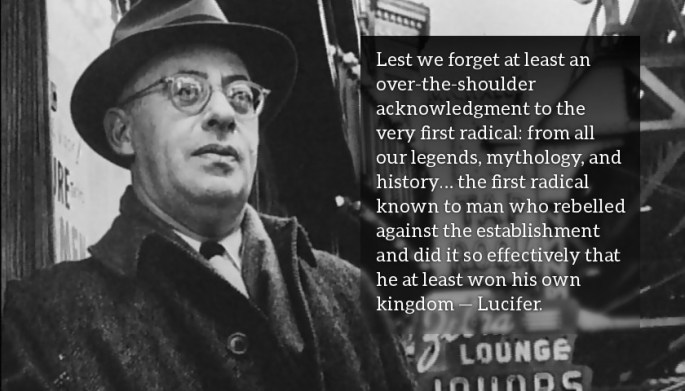
Former NEA leader, John Lloyd, stated his union used Saul Alinsky as a consultant to train their staff. When their strategy fails to deliver results for educators, union leaders have to display faux anger and/or misdirection. They will mention, “Toxic work environments, overwhelming workloads, not enough teaching resources, unfair evaluations, school buildings badly in need of repair, not enough support for students, violence, and trauma, debilitating levels of stress, being expected to work more and more while wages stagnate.” However, their Alinsky tactics helped create those very conditions.  Like Alinsky, union leaders are more focused on transitioning from helping teachers (labor) to more community organizing. They may have had some good intentions, but good intentions don’t help educators. The road to hell is paved with good intentions. For more on who Saul Alinsky read:  https://www.washingtonexaminer.com/politics/the-godfather 

Hamilton County Commissioner Tim Boyd, was just as direct in his response to his local union leaders and their tactics in the Chattanoogan, “What you are doing will not work, and you are complaining to the wrong people. How many times must you be told that it was the School Board who failed to give teachers a raise, not the Commission. The School Board had plenty of money, but the board, along with you as the teacher representative, placed hiring more staff above teacher salaries. Even worse, you as the union president placed absolutely no value on seniority and years of service when deciding to give out Christmas bonuses.” Boyd identified the root of the angst and problem. However, teachers and others are still caught in the crossfire.

There is much need by the state to develop a more complete overview and understanding of salary trends by local districts and the state must understand its role in this process. We must update our K12 funding formula to reflect changing 21st century needs. As a businessman, Governor Bill Lee is well-positioned to push for a new funding plan and formula that reflects our modern educational mission, priorities, and strategies. Salaries have to be addressed as a critical component of that plan.

The single most important factor in student success are teachers, so compensating educators has to be critical for any public policy or future funding formula. We must support our teachers and make sure that the dollars allocated by the state and local government for salaries actually reach them, as policymakers intended. Even Jacobian Magazine, a principal voice of the American left and socialism admits: “Alinsky-style organizations have been increasingly unable to secure substantive victories” (since the 1960s).  Educators should take a more active role in developing political support of public education, but if the past is in any indicator, Alinsky style tactics will no longer work — something teacher union leaders need to understand and many teachers and others already understands.

##

JC Bowman is the Executive Director of Professional Educators of Tennessee, a non-partisan teacher association headquartered in Nashville, Tennessee. Permission to reprint in whole or in part is hereby granted, provided that the author and the association are properly cited. For more information on this subject or any education issue please contact Professional Educators of Tennessee.

The Problem with Restorative Justice

principal-office

I grew up in the idyllic town of Cleveland, Tennessee. Nestled on the foothills of the Great Smoky Mountains. I was fortunate to be from a town that valued faith, family, and education. It was a quintessential life for an American boy.

I lived on Sycamore Drive growing up. I look back and see the kids I grew up with are all successful and thriving adults. It is an amazing story. It didn’t happen by luck.

I know most of the kids I grew up with had two-parent homes, both their parents worked jobs, and all of us lived in modest homes. Most went to church somewhere on Sunday. We were very much a blue-collar community. If there drugs and alcohol, we never saw it. (Although some of us had the occasional beer in high school.) The drinking age was 18 at that time. We listened to rock music. The go-to radio station early on was WFLI until KZ106 came along. The disc jockey we all listened to was Tommy Jett, who is now in the Tennessee Radio Hall of Fame.

Education was a large part of our lives. The big question was: would you choose to go to high school in the city or the county. It was Cleveland or Bradley. That was the choice. No matter the choice, you were going to get a quality education. There was a high school in Charleston, on the northern end of the county. But that was not a choice for us. Besides, who would want to be a Panther, when you could be a Blue Raider or a Bear.

The teachers in our community schools shared the values of our community. You would see teachers at the grocery store or church on the weekends. The last thing you would want would be for Mrs. Miller or Mrs. Painter to see you at the grocery store with your mom and give a behavior report that was less than flattering.

That didn’t mean we didn’t get in trouble. We just knew that somewhere there was a line you didn’t cross, and if you did then your teacher and your parent would meet at the school or in public and the outcome would not be pleasant for you when you got home. Parents supported teachers. Teachers reinforced the values that we learned at home.  It was a tag-team effort.

When we look today, we see so many teachers, parents and children disconnected. Society is being torn apart. Our culture is changing before our eyes. Children are raising themselves. Parents are out of the picture. Parents do not trust schools, and teachers are not supported by parents. Children do not listen to parents. Children do not listen to teachers. It is a problem.

The latest trend to tackle the issue in schools is Restorative Justice. If you listen to “experts” the objective is to reduce the number of suspensions. However, in these efforts to reduce suspensions, other students and teachers are left suffering. Often, Restorative Justice is not concerned with rehabilitating offending students, the objective is to merely reduce suspensions and avoid punitive consequences for student actions.

A frequent pattern of disruptive children being endlessly returned to the classroom without any actual change in their behavior is emerging. Schools have to be able to remove continually disruptive students from classes. Ideally, chronically disruptive students should be placed in high-quality alternative education settings where they can receive long-term, intensive interventions. We especially need to strengthen the authority of teachers who manage defiant students. The concept of Restorative Justice may be noble, but the implementation is often flawed and harmful.

Some of the other problems for this form of discipline to work include that all participants have to buy into the process. That is never going to happen. Schools, parents, and students are never going to be on the same page regarding student discipline. The concept is not supposed to be an alternative to punishment, which it has become. The objective should be behavior change, not just a reduction in student suspensions.

Student discipline should be designed to improve behavior. In that regard, there is not just one victim. It is not a student versus a teacher scenario, but rather a chronically disruptive student interrupting an entire class of fellow students. Should parents be made aware when their child’s class is constantly interrupted?  Many educators think so.  These other students are victims, as is their education. Restorative Justice proponents are seeking to make educators take even more time away from instruction to put in effort and time to deal with a chronic behavior problem. The modeled misbehavior could have a negative impact on other students who are deprived of instruction time. They may emulate this negative behavior for attention.

Perhaps I look at life in the simplest of terms. Where I grew up, misbehavior and defiant conduct would not be acceptable. Parents and teachers would work together to address any behavior problem. My parents would not be as concerned with my opinion of my behavior as they would be of a teacher’s opinion. There would be unpleasant consequences for continual misbehavior. I suspect all the children on Sycamore Drive in Cleveland, Tennessee all had similar experiences. We all turned out alright. That is real justice.

##

JC Bowman is the Executive Director of Professional Educators of Tennessee, a non-partisan teacher association headquartered in Nashville, Tennessee. Permission to reprint in whole or in part is hereby granted, provided that the author and the association are properly cited. For more information on this subject or any education issue please contact Professional Educators of Tennessee.


Critics Should Offer Solutions

save the earth

Need a quick headline in the media?  Attack public education.  Want to gripe about something in government?   Attack public education.  Have a business venture that needs cash influx?  Attack public education.  Attacking public education is becoming a hobby to some, and a profession to several others.

I have been critical over the years of many things in public education.  From lack of focus or poorly defined goals, disagreement with curriculum, to self-serving unions.  However, I have always tried to do what my mother always advised, “If you are going to criticize, offer a solution.”  Teddy Roosevelt blatantly made it clear, “It is not the critic who counts,” but rather “the man who is actually in the arena.”

Too many people want to simply condemn ideas, people, or society and offer nothing realistic in return.   Let’s be clear, there will never be a one size fits all model for public education and no single academic model can work in a diversified population in a state or nation.  That is why it is critical to have collaboration among educators, parents, citizens, and businesses to transform education at local levels based on the needs of each community.  That is real local control.

Students will always need to learn basic skills such as reading and writing, and education stakeholders and policymakers must help students understand the changing world around them.  That will mean many different things from the community to community, and state to state.  There is no debate that evolving technology is changing how we teach and learn.

No single method can accommodate all student learning needs.  Through technology, we can enable educators to provide to the unique needs of individual learners based on their readiness levels and student ability, which simply expands direct instruction to a more flexible and personalized approach to content delivery.  All instruction, including differentiated instruction, must be structured, sequenced, and led by teachers “directing” the instructional process.

A broader student-centered strategy built around personalization should increase the learning growth of all students.  The one-size-fits-all or teach-to-the-middle approach, expecting all students to do the same activity, work at the same pace, do the same homework, and take the same test hurts a significant portion of our students, especially when students lack the prerequisite skills.  In addition, personalization better serves the best and brightest students in our classrooms.  Technology must be an ally for modern educators in classroom instruction.

A degree in education should never be the basis for deliberating public education or offering an opinion.  However, common sense must prevail.  Too many critics of public education are focusing on the wrong things, using faulty information or do not have complete information.  More importantly, many critics are treading into areas in which they know little to nothing about, except by hearsay. This is dangerous.

That does not mean that public education is free from faults, or should not continue to transform and change. We must avoid the condition described by Alexander Pope about being “too vain to mend.”  All citizens should root for the success of public education if for no other reason than 90% of the children in our nation are educated by public schools.  We want our children to succeed and our economy to flourish in this changing world.  That message would make for much better headlines.

##

JC Bowman is the Executive Director of Professional Educators of Tennessee, a non-partisan teacher association headquartered in Nashville, Tennessee. Permission to reprint in whole or in part is hereby granted, provided that the author and the association are properly cited. For more information on this subject or any education issue please contact Professional Educators of Tennessee.

The Looming Changes in Student Teaching

kelly

As educators, we are concerned about the quality and quantity of applicants entering the field of education.   Our members have often been catalysts for innovative solutions to the many challenges facing education.  That is why we take an interest in the next generation of educators and why our focus is on how to improve their experience and support as they transition from teacher candidate to classroom teacher.

In 1986, education school deans from the top universities developed a report that credited much of the blame for struggling public schools on the training teachers were receiving in college. Research reminds us that although we spend millions of dollars and thousands of hours on teacher preparation courses, we really do not have much evidence justifying some of those requirements in Colleges of Education. Nor do policymakers really know how to measure and define a successful teacher training program.

Effective educator preparation remains critical to the future of education in Tennessee.  We have already focused as a state on admission requirements in educator preparation programs.  Again, research is mixed on the relationship between academic admission requirements, and teacher candidates’ later effectiveness levels. This provides an opportunity for needed research.  Teaching candidates must have a GPA of 2.75 and an ACT/SAT score of 21/1020 for admission to an educator preparation program.

Policymakers should invest much more time and resources into learning about the science of teaching and how individual teachers actually develop their skills—and how long it takes to develop some of those skills—and what changes are needed.  Policies currently reflect the fact that we know far more about a teacher after they enter the classroom than before.  Important benchmarks we should look at besides program completers are identifying those who actually enter the field of education and teach, as well as those who remain for a number of years.    However, change may be on the horizon.

The University of Michigan is making some interesting changes, and moving to end the longtime practice of sending educators into their own classrooms after just a few months of student teaching. Elizabeth Moje, the dean of the school of education at the University of Michigan, is offering some innovative method based on the way doctors are trained — that will extend teacher training through their first three years on the job, supporting them as they take on the daunting responsibility of educating children.  The teacher intern program at Michigan would be the first dramatic upheaval in the way teachers are trained in this country in at least a generation—an upheaval that has been a long time coming.  Michigan has planned for launch this year.

In a nutshell, the new approach is like a teaching hospital, where future teachers — called interns — will train together under a single roof.  They will complete their student teaching there. Then, instead of heading out in search of a job in another school, they will stay on for three more years as full-time, fully certified teaching “residents.”  Residents won’t be trainees. They will be real classroom teachers working with real children and making a real salary — the same as any other first-, second-, or third-year teacher. But, unlike their peers in traditional schools, they will continue to learn from their professors and will work closely with the veteran teachers — called attendings — who will make up most of the school’s teaching staff.

Each educational preparation program has its own approach to supporting teacher candidates, and our association tries to fill in gaps with our student members.  It is critical to walk the fine line between informing teacher candidates with needed knowledge, and overburdening them with excessive information. We try to touch on issues such as legal and professional development, including some specific helps for student teachers which includes assistance to student teachers with lesson planning, classroom management, and an introduction to our Career Center to help teacher candidates to find future employment.

The existing teacher shortage—especially in special education, math, and science, and in schools serving students of color, low-income students, and English learners—will likely only increase, based on the predicted increase in the school-going population in the future.  Colleges of Education must also address how to serve Career & Technical Education (CTE).  Areas such as business, agriculture, health, automotive, and mechatronics programs need high-quality teachers.  We should also consider how to better build the skills of paraprofessionals who work alongside teachers in classrooms in critical roles.

There is not any magic bullet to ensure that all teachers are great before they begin teaching.  However, we can make the effort to equip our educators with skills for a modern age. Change is on the horizon in how we prepare those who educate our children.  Policymakers and stakeholders need to work together to make the necessary changes that benefit our students and ensures that quality educators enter and remain in the profession.  Together we can make schools better places for teachers to work and students to learn.

##

JC Bowman is the Executive Director of Professional Educators of Tennessee, a non-partisan teacher association headquartered in Nashville, Tennessee. Permission to reprint in whole or in part is hereby granted, provided that the author and the association are properly cited. For more information on this subject or any education issue please contact Professional Educators of Tennessee.

Next Steps for Tennessee Education

1 innovation.jpg

Traveling across the state in my role as Executive Director of Professional Educators of Tennessee I talk with a lot of people interested in public education.  One of the most common complaints is a lack of response from Governor Bill Lee or his team on specific education issues.  It is problematic and quite honestly has always been problematic in our state.  Better communication is always needed.  I should know, I used to work for Governor Jeb Bush years ago, and communication is always a struggle for the executive branch despite best intentions.

I would still remind people to be patient with Governor Lee and his staff as we are still in year one.  However, staff should now be settled into place, and processes and systems clearly established.   We should expect better communication in year two.

Governor Lee laid out a fairly ambitious education agenda, and while we disagreed with some parts of it, he clearly offered more specifics than his opponent in the election last November.  He was clear in his support of vouchers from the day he announced his candidacy.  It should have been no surprise to policymakers or stakeholders.  When surveyed, our members did not support vouchers.

His legislative victory with vouchers has yet to be implemented.  This may prove challenging, as the program must be proven successful before any other future voucher program is considered.  Members of the Tennessee General Assembly will demand proof of unmitigated success before any expansion or similar program enacted.  Cameron Sexton, a voucher critic, has now ascended to Speaker of the House.  His track record would indicate that he is a strong supporter of public schools. This actually helps the Governor moving forward on education policy changes needed in public education.

Other parts of the Lee campaign agenda likely won him most of his statewide support, but also gives voters more specifics in which to hold him accountable.  Candidate Lee suggested it was time to change the way our high schools look.  It was a bold policy suggestion, and as Governor, Bill Lee should move forward on that front.

For the last 50 years, the way high school has educated students has largely remained unchanged. There are many business and community leaders that also believe the traditional high school is disconnected from the demands of the modern economy.  They emphasize that graduates need additional skills to be successful in today’s workforce. The State Collaborative on Reforming Education (SCORE) added: “Across Tennessee, students are learning in high schools using models developed for the needs of the 20th century rather than the workforce opportunities of the future. As a result, most Tennessee students do not graduate fully prepared to succeed in college, career, and life.”

Governor Lee stated, “It is time to embrace new, flexible school models to support new opportunities for career and technical education, work-based learning and apprenticeships, and dual-enrollment courses for students preparing for their career.”  We agree.  Some of that is already in the works, through recent legislation.  It is time we break down barriers that have held our teachers, school leaders, and school districts back from creative solutions necessary for the unique challenges of their communities. Increasing flexibility at the local level could lead to incredible innovations in our state.

State grants that allow local districts to fund high school redesign would be one manner to create change and address challenges schools would face as they transition from traditional models to a more flexible school model.  Another suggestion would be for the state to establish a pilot program for high performing districts by authorizing the State Board of Education to enter into a performance contract with school districts for the purpose of granting them more flexibility.  These high performing districts would be a school district in which a local school board agrees to comply with certain performance goals contained in a performance contract that is approved by the State Board of Education. In return for performance accountability, the district would be granted greater autonomy with both statutory and rule exemptions.  This is an idea Governor Lee and his team should explore.

It is past time for the state to make good on its commitment to teachers.  The Comptroller’s Office of Research and Education Accountability (OREA) proved that the state of Tennessee invested more than $300 million dollars for teacher salaries in 2015-2018. Most of those dollars did not actually end up in pockets of classroom teachers. Generally, school districts employ more staff than are covered by the funding system utilized in Tennessee, known as the Basic Education Program (BEP).  State and local dollars earmarked for salaries during those years were often spread over more teachers than the staff positions generated by the BEP.

The Tennessee General Assembly did address that school districts in the future must now report in where salary increases are spent.  Governor Lee included a $71 million increase for a “2.5 percent pay raise for teachers” for fiscal year 2020. It is time to guarantee that teacher salaries, at the very least, match the cost of living increases faced by educators across the state.

Finally, we must update our school funding formula to reflect changing 21st century needs.  We need a plan and a funding formula that reflects our modern educational mission, priorities, and strategies. The plan should support teachers, fund facilities, and facilitate innovation and technology, while striving to better connect K-12 education with workforce needs.  Governor Lee has proven he will fight for what he believes in.  It is time to come together and focus on the other education ideas that were discussed on the campaign trail.  It is time to move forward on these issues to help all children, teachers, schools, and communities.  Let the policy discussion begin.  Communication is critical.

##

JC Bowman is the Executive Director of Professional Educators of Tennessee, a non-partisan teacher association headquartered in Nashville, Tennessee. Permission to reprint in whole or in part is hereby granted, provided that the author and the association are properly cited. For more information on this subject or any education issue please contact Professional Educators of Tennessee.


Are You “Called” to Teach

Unterricht

Why do people teach? The major reason someone says they teach is the ability to make a real difference in the lives of children. There are other reasons, including the fact that someone believes they are “called” to teach. Almost all teachers are linked together by a passion for educating children. The passion is innate and has to come from within.

Former Commissioner of Education in Tennessee, Candice McQueen, reminded a group of educators in a presentation that we were set apart in our mission. She pointed out the gifts that educators have are special talents and abilities. Educators are born for the mission that is being given for us. Dr. McQueen emphasized the profession is a special calling. She is correct.

We are all on a search for significance. We desire to make a difference. Educators are making a huge difference. That is why it is important that we honor them. It is the English social critic, Os Guinness, who stated: “Calling is not only a matter of being and doing what we are, but also of becoming what we are not yet but are called by God to be.” He then adds: “Deep in our hearts, we all want to find and fulfill a purpose bigger than ourselves.” Education of the next generation is one of the most important occupations we could ever do. The belief that one is “called to teach” keeps women and men in education, even with all the unwanted public scrutiny.

Matthew Lynch writes about teaching as a calling: “A calling implies a deep-seated belief that teaching is the only profession that makes sense for you to pursue…” Dylan Fenton, an English teacher and writer does not like the term “calling,” as it creates to him an “idea that good teachers are born, not made and, as a result, allow themselves to stagnate.” I would argue that Lynch is more accurate than Fenton, as a passionate teacher never stops honing their craft. John Hunter, an award-winning teacher and educational consultant wrote: “I used to think teaching was a job. And then I thought it was a profession. And now I’m of the opinion that it’s a calling. It’s a very noble calling.”

Henry David Thoreau said, “Most men lead lives of quiet desperation.” John Keating, in the movie Dead Poets Society challenged his students to not be resigned to that type of life. Yes, John Keating was subsequently fired, and probably never taught another class the rest of his life. However, he taught his students to find their own voice. It was his calling. If you have a profession that brings you passion, gives you someone other than yourself to care for, and is something that makes you want to get up in the morning to accomplish, you will not live a life of quiet desperation.

Teaching is indeed an imposing, self-sacrificing, but also a magnanimous calling. Going through the process to get certified, whether through traditional means or an alternative route is sometimes difficult. The creativity aspect of the profession has slowly been eroded. There is persistent negativity by some lawmakers and the media of public education. Compared to other professions, educators can expect a modest salary and sometimes extremely difficult working conditions. However, if you are called to teach, you will never find a happier place than in a classroom or serving students. Educators are set apart to make a difference. There is no other profession, except perhaps the clergy, that can change lives like a public-school teacher.

##

JC Bowman is the Executive Director of Professional Educators of Tennessee, a non-partisan teacher association headquartered in Nashville, Tennessee. Permission to reprint in whole or in part is hereby granted, provided that the author and the association are properly cited. For more information on this subject or any education issue please contact Professional Educators of Tennessee. To schedule an interview please contact Audrey Shores, Director of Communications, at 1-800-471-4867 ext.102.