Called to Teach?

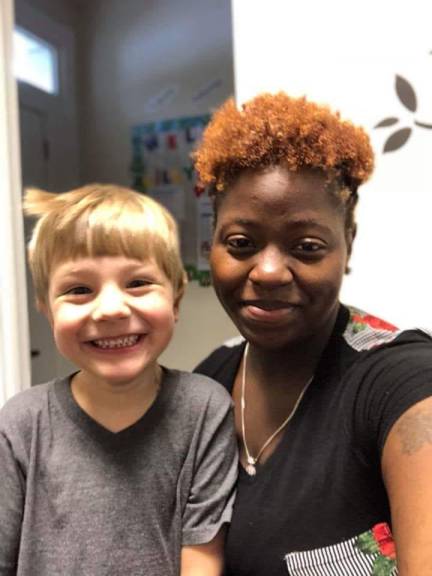
Henry and Brittany

Why do people teach?  The major reason someone says they teach is the ability to make a real difference in the lives of children.  There are other reasons, including the fact that someone believes they are “called” to teach.  Almost all teachers are linked together by a passion for educating children.  The passion is innate and has to come from within.

Commissioner Candice McQueen reminded a group of educators in a presentation that we were set apart in our mission.  She pointed out the gifts that educators have are special talents and abilities.  Educators are born for the mission that is being given for us.  Dr. McQueen emphasized the profession is a special calling.

We are all on a search for significance. We desire to make a difference.   Educators are making a huge difference. That is why it is important that we honor them.  It is the English social critic, Os Guinness, who stated: “Calling is not only a matter of being and doing what we are, but also of becoming what we are not yet but are called by God to be.”  He then adds:  “Deep in our hearts, we all want to find and fulfill a purpose bigger than ourselves.”  Education of the next generation is one of the most important occupations we could ever do.  Belief that one is “called to teach” keeps women and men in education, even with all the unwanted public scrutiny.

Matthew Lynch writes about teaching as a calling: “A calling implies a deep-seated belief that teaching is the only profession that makes sense for you to pursue…”  Dylan Fenton, an English teacher and writer does not like the term “calling,” as it creates to him an “idea that good teachers are born, not made and, as a result, allow themselves to stagnate.”   I would argue that Lynch is more accurate than Fenton, as a passionate teacher never stops honing their craft.  John Hunter, an award-winning teacher and educational consultant wrote: “I used to think teaching was a job.  And then I thought it was a profession.  And now I’m of the opinion that it’s a calling.  It’s a very noble calling.”

Henry David Thoreau said, “Most men lead lives of quiet desperation.”  John Keating, in the movie Dead Poets Society challenged his students to not be resigned to that type of life.  Yes, John Keating was subsequently fired, and probably never taught another class the rest of his life.  However, he taught his students to find their own voice.   It was his calling.  If you have profession that brings you passion, gives you someone other than yourself to care for, and is something that makes you want to get up in the morning to accomplish, you will not live a life of quiet desperation.

Teaching is indeed an imposing, self-sacrificing, but also a magnanimous calling.  Going through the process to get certified, whether through traditional means or an alternative route is sometimes difficult.  The creativity aspect of the profession has slowly been eroded.  There is persistent negativity by some lawmakers and the media of public education.  Compared to other professions, educators can expect modest salary and sometimes extremely difficult working conditions.  However, if you are called to teach, you will never find a happier place than in a classroom or serving students.  Educators are set apart to make a difference.  There is no other profession, except perhaps the clergy, that can change lives like a public-school teacher.

##

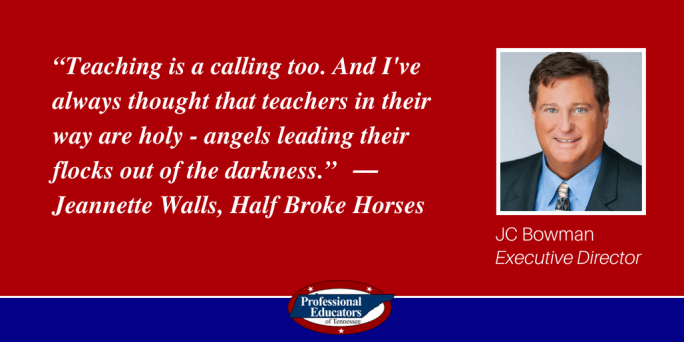
JC Bowman is the Executive Director of Professional Educators of Tennessee, a non-partisan teacher association headquartered in Nashville, Tennessee.  Permission to reprint in whole or in part is hereby granted, provided that the author and the association are properly cited. For more information on this subject or any education issue please contact Professional Educators of Tennessee.
Why I Honor Memorial Day

101026-M-8682Y-003“Courage, of all national qualities, is the most precarious; because it is exerted only at intervals, and by a few in every nation” wrote David Hume.  It takes courage to risk life and limb for our state and country. Norman Schwarzkopf said “It doesn’t take a hero to order men into battle. It takes a hero to be one of those men who goes into battle.”

It is fitting then, that we set aside a day to remember those who have given their lives in service for our country. The least we can do as a nation is to honor these heroes. These brave few who became legends meeting their end on a battlefield, fighting our nation’s enemies.

According to the book Roster of Soldiers and Patriots of the American Revolution Buried in Tennessee, there are about 4,500 veterans of the American Revolution interred in Tennessee.  One is my 4th great-grandfather, Colonel James Taylor, who is buried at Centenary Baptist Church in Blount County, Tennessee. Fortunately, he was able to come home and raise a family.   A privilege that was denied to many.

The first casualty of the American Revolution was Crispus Attucks.  He was killed during the Boston Massacre on March 5, 1770.  Attucks was believed to be the son of a slave and a Native American woman.  As hostilities intensified between the colonists and British soldiers, the British confronted a group of unruly colonists by opening fire and killing five men including Attucks, who was the first to die.  In his 1964 book Why We Can’t Wait, Dr. Martin Luther King Jr. praised Attucks for his part in American history. It is worth noting that Attucks was displayed with the others at Faneuil Hall, where it lay in state.  The men were then entombed in a common sepulcher.  There was no segregation for Patriots.

Traditionally, Americans observed Memorial Day by visiting cemeteries and memorials of our fallen war heroes. In recent years, it has become more of a party celebrating the launch of summer, thus losing the original purpose and meaning.  I think we must remind ourselves to honor those courageous men and women who have served and then given their lives for the cause of freedom.  Freedom cannot guarantee a meaningful life, merely the possibility of having one. To keep that possibility, we need to embrace and strengthen freedom. It was Thomas Jefferson who reminded us: “The tree of liberty must be refreshed from time to time with the blood of patriots and tyrants.”

We need to take a minute to THANK those veterans who gave their lives so we Americans can enjoy our liberty.  Life is so precious.  No doubt those who made the ultimate sacrifice had their hopes and dreams as well for our country.  We should also ask our politicians to remember those veterans who made it back and ensure that they get the benefits they were promised, and the highest quality medical care available—including mental health.

Thomas Smith wrote one of the best tributes to those who died for our nation: ““This country has not seen and probably will never know the true level of sacrifice of our veterans. As a civilian I owe an unpayable debt to all our military. Going forward let’s not send our servicemen and women off to war or conflict zones unless it is overwhelmingly justifiable and on moral high ground. The men of WWII were the greatest generation, perhaps Korea the forgotten, Vietnam the trampled, Cold War unsung and Iraqi Freedom and Afghanistan vets underestimated. Every generation has proved itself to be worthy to stand up to the precedent of the greatest generation. Going back to the Revolution American soldiers have been the best in the world. Let’s all take a remembrance for all veterans who served or are serving, peace time or wartime and gone or still with us. God Bless America and All Veterans.”  I remember their sacrifice.  George Patton added: “It is foolish and wrong to mourn the men who died. Rather we should thank God that such men lived.” That is why I honor Memorial Day.

##

JC Bowman is the Executive Director of Professional Educators of Tennessee, a non-partisan teacher association headquartered in Nashville, Tennessee. Follow him on Twitter @jcbowman. Permission to reprint in whole or in part is hereby granted, provided that the author and the association are properly cited. 

Political Endorsements? Values Still Matter

janus21

French writer André Gide penned one of the most notable quotes when he wrote: “It is better to be hated for what you are than to be loved for what you are not.” Gide was a depraved man, according to the standards of that day, and even as well as our own standards today.  His quote was indicative of someone searching to be himself, without betraying his personal battle over his lack of ethics.  It is similar today to many political endorsements.

I am always astounded at candidates that some groups choose to endorse, or groups who endorse certain political candidates.  Some endorsements can be very damaging to political candidates.  This leads to the question, why would the political candidate seek such an endorsement or accept money from an organization in which they do not share values?  Perhaps that candidate is in a failing political campaign and needs the money for a fledgling campaign?  Perhaps they are finally embracing their true values.  Is it a betrayal of values to even seek such an endorsement if you do not agree with the goals and objectives of the organization?  Most people probably would think so.   A pro-life candidate, for example, would probably not seek an endorsement from a pro-abortion organization or vice-versa.  Such a candidate would be branded a hypocrite.

The personal character of a candidate still matters.  Values such as honesty, reliability, and sincerity matter in life, and they matter on the campaign trial, especially when we elect people.  We need to elect politicians who say what they mean and mean what they say.  Elected officials who sell out their own values create cynical and dismayed citizens, alienate voters, and undercut their own credibility.  It is akin to the fruit of the poisonous tree analogy in the legal world.

Not only are many candidates willing to sell out their own values to the highest bidder, they are also likely to sell out their constituents once elected.  The insider game of election funding has impacted the well-being of our government.  The public policies that gets enacted if we keep electing these types of candidates, will only worsen.   We have seen good legislation stymied for untold reasons and transparency is no longer an option.   A vigorous competition of ideas should be welcome as it is a symbol of an effective system of government. When we fail to elect men and women of character, we get politicians committed to upholding the status quo and their own political preservation.  If that is the case both the fruit and the tree are poison.

Professional Educators of Tennessee does not endorse political candidates.  We work with everybody to strengthen public education.  Our members will choose, who they believe is the most qualified candidate at the ballot box.  They also know that we will never use dues dollars to fund the advancement of any politician, political party or agenda. While we may inform our members of candidates’ positions on educational issues, we do not tell our members how to vote or use our members’ dues dollars to pay for political campaigns. However, we do routinely monitor and inform our members of education-related legislative issues, and alert them of any legislation that has a direct impact.  We testify on legislation and work with agencies, elected officials and policymakers to develop and implement comprehensive strategies that address complex legislative, legal and regulatory problems impacting education statewide on behalf of our members. We do not spend tens of thousands of dollars to push for the advancement of non-educational causes.

Our political process must be welcoming to all citizens, resulting in representative, receptive and responsible government.  Politicians must be honest in who they are, and who they will be in public life.   We must ask those who are seeking political office if they really are who they say they are, or is it just a mask that can be stripped away?  Values still matter.

##

JC Bowman is the Executive Director of Professional Educators of Tennessee, a non-partisan teacher association headquartered in Nashville, Tennessee. Follow him on Twitter @jcbowman. Permission to reprint in whole or in part is hereby granted, provided that the author and the association are properly cited. 

Don’t Fire The Teacher

4ef91294e22d5f56649fababaa7bb3af~2399006406..jpg

Why are teachers dismissed? Sometimes teachers are not a good fit at a particular school. Despite well-meaning efforts and good intentions, it just doesn’t work out. What is an administrator to do?

Many times, in fact, the teacher is simply just dismissed. I think this is a poor strategy and reflective of mediocre management, especially if an administrator’s first reaction is to simply get rid of a teacher. Keep in mind we are not talking about an incompetent teacher. As an organization, we understand teacher quality matters.

Often the problem is not about ability. Sometimes it is that a new teacher doesn’t fit in socially. And schools can be cliquish. It takes some time for a new teacher or a veteran teacher relocating to a school to make new friends or build a relationship with other faculty members.

Think about it like this:  if a teacher does not get quickly embedded into a school culture, he or she jeopardizes his or her entire career over social factors. That doesn’t seem fair.

There is little doubt that many teacher dismissals are arbitrary. Too much of public education is still subjective, rather than objective. Teacher assessment is a difficult task and generally is not done with exacting measures. That means we are letting good teachers walk out of our schools, never to return. This may be due to bad luck of an inappropriate school assignment, lack of support by other educators or unreasonable but influential parents/guardians. It could also be bad management by school administrators who fail to create a manner in which teacher improvement is attainable, or some other unknown factor.

Another scenario that is beginning to escalate is the loss of veteran educators. Some districts may be targeting veteran educators for dismissal or simply encouraging them to retire or move on. This leaves a greater number of less-experienced teachers in some schools. This could prove to be harmful to students, particularly in socio-economically disadvantaged and urban schools.

Of course, teacher burnout is often higher at socio-economically disadvantaged and urban schools/districts. And if we are truthful, we must acknowledge that problems that go along with poverty undeniably make some kids harder to educate and are not so easy to address—especially for beginning teachers. The problem is much greater than who the teachers in a school may be.

Research points out that people who suffer job loss may go through some predictable emotional stages that may include lowered self-esteem, despair, shame, anger and feelings of rejection. Teachers are no different. We need to examine ways to intercede and work to give our educators the benefit of time to improve. Yet we must recognize that the most important task of a teacher is the education of the student. A school district must start with support before it moves to accountability.

At Professional Educators of Tennessee, we regularly seek input of our members to design necessary professional learning opportunities to help the teacher in the classroom, as well as the administrator who wants to assist their staff. We have developed a collaborative relationship with many districts built on this premise and want to make sure all children have great teachers.

Education is not as simple as manufacturing widgets. It cannot be measured by charts, graphs or standardized tests, despite the fact that many believe it can. So, before you fire a teacher or damage a career or a person, we hope that an administrator has exhausted every means at their disposal to invest in that educator and help them reach their full potential. In our opinion, an administrator’s number one objective outside the education of children is to provide support to our teachers.

##

JC Bowman is the Executive Director of Professional Educators of Tennessee, a non-partisan teacher association headquartered in Nashville, Tennessee. 


School Shootings: No More Political Football

schoolshooting17

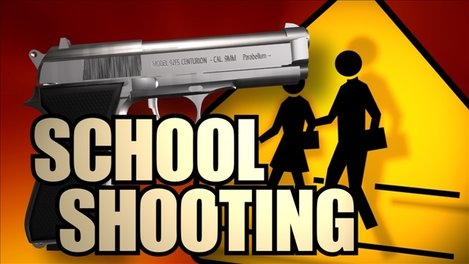
Schools must be safe zones for students and teachers. That means the first step in school safety is securing the perimeter of a school. It seems like simple logic that we should keep intruders out and also make sure the area inside those boundaries is safe for children and adults. Students are our priority, but teachers need protection too.  Our School Safety Survey Results are here. 

Unfortunately, as we have seen far too frequently, our schools are easy targets for those who wish to harm others. When premeditated attacks and school shootings occur, they are usually over within minutes. Most of the time law enforcement is simply not able to respond quickly enough to the event and lives are needlessly lost.

Intruders, who wish to hurt our students and teachers, are usually very familiar with the schools’ defense system and create plans around that information. More than likely, the defense strategy is in the student handbook posted online. These people know when to attack, where to go and often how to escape. Students and teachers alike, as well as approved visitors should have a visible identification badge on them at all times. There needs to be secure exterior doors to limit building access points, and each district should develop a uniform policy for entry into a school.

Former Metro Nashville Principal Bill Gemmill, pointed out: “All schools need upgraded security, whether it is as simple and reasonable as inside locks on classroom doors.” It is also time to put metal detectors in every school across America. The federal government could absorb the cost by simply eliminating any of the already wasteful programs they are funding. Public school safety must be a priority at every level of government. If you see something, say something, and then someone in authority must do something.

The last line of defense that we can have for our kids is an armed person willing and ready to defend them if the unspeakable should happen. That is why it is critical that we look at expanding the School Resource Officer (SRO) program. This is a highly effective program that serves many purposes during the school year and is invaluable where it now exists. It is important that the program be directed by a local law-enforcement agency, working in conjunction with the local education agency. The school can employ and utilize additional security, but the primary responsibility should fall to local law enforcement.

The Center for Problem-Oriented Policing has outlined three basic roles of an SRO: Safety Expert and Law Enforcer, Problem Solver and Liaison to Community Resources and Educator. While all three are important functions, the primary role should focus on the law enforcement and safety component. SRO’s should be preserving order and promoting safety on campus and serving as first responders in the event of critical incidents at schools, such as accidents, fires, explosions, and other life-threatening events. They are not supplementary school administrators dealing with minor school discipline issues or emergency instructors. It is clear that we must better define SRO programs, what we want them to accomplish, and better analyze how we measure their effectiveness. Law Enforcement and School District Leaders should yield to the law enforcement professionals on matters of school safety and law enforcement.

It is time to discuss the gun issue. I strongly support the 2nd Amendment and have a handgun carry permit myself. We must have common sense approach to who, when, and where we can carry firearms, without infringing on the rights of law abiding citizens. We should raise the age for the purchase of certain guns to the age of 21, with exemption to active duty military. We prohibit drinking of alcoholic beverage until 21, we should follow suit here as well. Many young people just are not prepared for the responsibility of drinking or owning a firearm. We should make stronger background checks, considering factors such as criminal background and mental health. We should also prohibit bump stocks that can convert guns into automatic weapons. We should more aggressively punish those who commit crimes with guns. But we will need to be careful that the policy is reasonable.

Policymakers, at the state and federal level, are also likely to look at legislation that empowers individual school districts to determine for themselves what direction they want to take on school safety, including qualified, certified and licensed volunteer school personnel going armed in their building. If a district decides to allow trained and armed teachers and administrators into the schools, the decision should not be taken lightly. The state should never mandate educators having to carry firearms or prohibit them from carrying, if permitted by the district. It is a decision that should be made at the local level based on the needs and size of the community.

Certainly, armed teachers who possess training or a military background would deter some intruders. However, trained law enforcement personnel are much preferred and would be a much greater deterrent. Mike Conrad, a teacher in Detroit said in a recent interview: “I think that the moment that you put a gun on the hip of a teacher in a classroom, that we have accepted the norm that school shootings will not stop, that we are now on the front line to defend against them, instead of trying to find a way to stop them.” The subject is very emotional, with good arguments coming from either side of the debate, which is why each community must decide for themselves this issue.

School safety policies must be flexible and practical. However, the issue of improved school security will not be resolved in the current political environment, as long as real solutions are not considered based on a liberal or conservative bias. It is time to quit playing political volleyball with this issue. Real lives, those of children and adults, are at stake in our schools. The time of talking is past; it is time to take action. Any viable option that can lead to a safer environment in our schools and communities should be on the table.

#####

JC Bowman is the Executive Director of Professional Educators of Tennessee, a non-partisan teacher association headquartered in Nashville, Tennessee. Permission to reprint in whole or in part is hereby granted, provided that the author and the association are properly cited. For more information on this subject or any education issue please contact Professional Educators of Tennessee. To schedule an interview please contact Audrey Shores, Director of Communications, at 1-800-471-4867 ext.102.

This article also appeared at:  http://www.proedtn.org/news/388542/No-More-Political-Volleyball.htm

The School Safety Survey Results are Found here:  http://www.proedtn.org/news/395676/Tennessee-School-Safety-Survey-Results.htm

Dad Gone Wild

Icon

If you are not a regular reader of the education blog Dad Gone Wild written by TC Weber, add it to your list.  He will make you laugh, he will make you mad, and he will make you cry…sometimes in the same article.  His latest column, So Here We Are, goes where few writers dare to go by pointing out: “Nashville has long been over due for a conversation on race and how it plays out in our public institutions.” Weber is right.

In the growing debate over Metro Schools Superintendent Shawn Joseph, Mr. Weber asks the million-dollar question:  How much of the criticism directed toward the Director of Schools is rooted in the color of his skin as opposed to his performance?  Answer that question than proceed to the debate.  If you are judging him because of the color of his skin, you need to exercise your constitutional right and remain silent.  If it is based on performance, then take Weber’s advice and “evaluate with the same rigor we demand of others.”

At times the Dad Gone Wild columns go on for too long, but some of it is so brilliant one wonders if the education students at Lipscomb, Trevecca, Belmont, or Vanderbilt shouldn’t be required to read his columns prior to graduating.  It is where reality and policy intersect, along with a healthy dose of investigative journalism.  A local newspaper should certainly pick up Dad Gone Wild or Mr. Weber should expand his reach beyond Music City and go statewide or national.

Weber states that he wants to “continually push the conversation forward and to expand my boundaries and knowledge base.”  He adds, “I personally don’t believe race is an issue that we can ignore or a conversation we can shy away from. Too many of our important decisions, especially in education, are rooted in race. Funding, programing, and attendance are just some of the areas where race influences our decisions.”  He is correct.  And we all have “skin” in that game.   Then he states: “my goal is to support policy that is best for kids, families, and teachers.”  That point is lost on far too many people, from the bureaucrat to the politician.

Weber emphasizes that “this conversation suffers, as Nashville is currently suffering, from a lack of leadership.”  He believes there “is currently a leadership vacuum in Nashville that starts at the mayoral level and descends downward.”  It would be hard to disagree with this statement, although I might suggest that the grassroots cannot be afraid to lead, and, if needed, push the so called “leaders” out of the way.

I have no problem with the Superintendent rapping along with a song, no matter how vulgar it may be or not be.  That’s his prerogative.  He will ultimately answer to the community if he crosses the professional line.  My opinion of Shawn Joseph will be based strictly on his performance, or lack thereof.  My question is: How do you think he is doing? 

##

JC Bowman is the Executive Director of Professional Educators of Tennessee, a non-partisan teacher association headquartered in Nashville, Tennessee. 

The Edge of Chaos

children expressions

The edge of chaos is a space between order and disorder.  For some, creativity is often found at the edge of chaos. In 2009, neuroscientists stated that evidence is emerging which suggests that operating at the edge of chaos may drive our brain’s astonishing capabilities. In fact, our complex brains may thrive on the chaotic.  In human terms, that may mean a dislike of rules and rigidity and formality, as well as a penchant for not following established rules.

Many people are most creative when their mind is most chaotic. However, a state of chaos is not sustainable and can certainly have negative effects. Albert Einstein, a genius by most accounts, said, “The true sign of intelligence is not knowledge but imagination.”

In A Journey into Chaos: Creativity and the Unconscious, Dr. Nancy C. Andreasen, states that the “capacity to be creative, to produce new concepts, ideas, inventions, objects or art, is perhaps the most important attribute of the human brain.”  She then points out: “Understanding how creative ideas arise from the brain is one of the most fascinating challenges of contemporary neuroscience.”

Is there a relationship between creativity and high intelligence?  Andreasen states that there is “a common assumption is that creativity and high intelligence are the same thing.”  This is, as she points out “a misconception.” Andreasen also studied the relationship between creativity and mental illness, which had inconclusive results because of limited participants.   It is clear consciousness, the unconscious and creativity are all important facets of the human mind.

In 1985, Robert Sternberg put forward his Triarchic Theory of Intelligence, contending that previous definitions of intelligence are too narrow because they are based solely on intelligences that can be assessed in IQ tests. Instead, Sternberg believes types of intelligence are broken down into three subsets: analytic, creative, and practical.

Mogbel Alenizi, a lecturer at Qassim University in Saudi Arabia wrote: “The field of creativity is a broad one, with definitions varying in and between countries and no consensus on how best to test for creativity or measure development.”  He added: “However, agreement is emerging that creativity is complex and the investment theory that suggests a combination of factors contribute to creativity (intellectual abilities, knowledge, styles of thinking, personality, motivation and environment).”  Certainly, genetics could factor in that equation at some level.

The wide range of approaches to creativity—from psychoanalytic, to psychological, to neurobiological—generally reveals the diversity of the field, but has led some to describe it as “a degenerating research program,” as Mark Batey, a senior lecturer in organizational psychology at the University of Manchester, wrote in his article on measuring creativity.

There are also global differences on our conceptions of creativity.  Research has tended to focus more on the person and the process than on the outcome or the social context in which the creativity occurs.  Which opens up a whole field for educators and researchers that may want to reach their creative students, in which formal education or standardized test fail to accurately depict.  It especially difficult, when creativity can be hard to identify and even more difficult to measure.

Education expert Sir Ken Robinson notes that in the factories of the 20th century, creativity was not valued. However, he points out it’s critical for success in the 21st Century.  Our school system, despite its imperfections has still produced students who have enabled America to lead in innovation around the globe.  The number of patents and innovations are one testament to our success, despite an education system that often limits creativity.  This has led to a tug of war between proponents of STEM education (science, technology, engineering, and math) and advocates for STEAM lessons, which add art to the mix.  We should welcome that debate.

So, we must ask ourselves:  Are our schools, which seem so accountability driven, measured by standardized tests reaching all students?  Are we stifling creativity in our schools?  What does success even look like in each school? Each community?  Each state?  Perhaps, we need more creativity, and use of our own imagination to address those issues?  Possibly we need to re-think many factors in how we measure success in public education?  Sometimes, through examination, we may find that in order, a little disorder is good.  Welcome to the Edge of Chaos.

What do you think? 

##

JC Bowman is the Executive Director of Professional Educators of Tennessee, a non-partisan teacher association headquartered in Nashville, Tennessee. 

TNReady Legislation & Guidance

“If you don’t understand — from the school district to the superintendents — that we want our teachers held harmless, then I’m sorry, you’re tone-deaf,” said State Representative Eddie Smith.

That message was heard and understood statewide. The state issued two very important guidance documents that make clear that message, which was released by the Tennessee Department of Education. Professional Educators of Tennessee, along with many others were privileged to work with the Department of Education and add our input. In addition, we will be putting together a webinar on this matter.

The guidance that the Department developed was a result of thoughtful and collaborative efforts to ensure that our state follows all state and federal laws. The new legislation that states that no adverse actions for students, teachers or schools will result from the 2017-18 TNReady administration. These two key documents, which were shared with districts and schools today, are posted on the state website, along with a list of initial improvements the state is making to the state assessment program:

  • Detailed Evaluation Guidance (here)
  • FAQ that provides an overview of the various areas the new laws impact, including student, education, school, and district accountability (here)

Some highlights from these documents:

  • We will still follow the Tennessee Teaching Evaluation Enhancement Act of 2015, which adjusted the growth component of teacher evaluation for a multi-year period, and we will provide educators with the best possible option for calculating their level of overall effectiveness (LOE). In addition, educators who have 2017-18 TNReady data included in their composite will have the ability to nullify their entire LOE score this year IF they choose.
  • Regarding school accountability, rather than issuing A-F grades, we will provide information on school performance based on the various indicators in our ESSA plan, but we will not publish an overall summative label. No adverse action will be taken against a school based on 2017-18 TNReady data. We will still name Reward and Priority schools, but no school will be identified as a Priority school using 2017-18 TNReady data.
  • Districts can decide whether TNReady data factors into students’ scores. If a district chooses to do so, then that cannot result in a lower final grade for a student. This means that districts may include scores for some students and exclude scores for others, or a student may have TNReady scores included for some specific subject areas and not others.

We believe everyone at the Tennessee Department of Education by issuing this guidance, are seeking to follow the letter of the law. Look for an announcement of the webinar coming soon at http://www.proedtn.org within the next few days.

###

JC Bowman is the Executive Director of Professional Educators of Tennessee, a non-partisan teacher association headquartered in Nashville, Tennessee. Permission to reprint in whole or in part is hereby granted, provided that the author and the association are properly cited. For more information on this subject or any education issue please contact Professional Educators of Tennessee.