TNReady Results 2018

tnready1

We view assessment of students much like a school picture. It may not be an accurate depiction, but it is what the student looks like on that day. Our position at Professional Educators of Tennessee has always been that the fewer tests administered to students would equal less disruptions for students and teachers. We have worked with the Tennessee Department of Education toward this objective. We feel like progress has been made and will continue to work with them and the next governor toward this sensible objective.

The 2018 TNReady student assessment results showed mixed results, but state leaders saw encouraging areas of progress, and we celebrate that success. The majority of the 650,000 students who took the assessment this year did so on paper, but about 300,000 students took the test online. Students improved most in early grades reading, and narrowed achievement gaps. In addition, the results show a need for deeper, more sustained work to support improvement. The release of the results of the latest statewide assessment, while flawed, do provide a data point for educators to consider. We encourage them to look at the results, take the result seriously and consider the steps they need to take to help all students and schools succeed.

In general, we must always be careful in determining teacher performance based strictly on the test scores of students to whom the teacher is assigned during a school year. The risk of misidentifying and mislabeling teacher performance based on test scores is too high for it to be the major indicator of teacher performance, especially when you look at issues such as student demographic characteristics. A number of states, including Michigan, have since taken steps to lessen the impact test scores have on teacher evaluations, repeatedly mentioning factors outside an educator’s control which can influence a student’s academic performance. The interaction between teacher and student is the primary determinant of student success.

Moving forward, it is worth noting that Dr. Bill Sanders, the creator of value added assessment, warned of the misuse of TVAAS for individual teacher data because of its volatility. We would certainly remind policymakers of this detail. In fact, classroom observations by trained personnel, along with teacher and principal input, would likely produce far more consistent and reliable data for assessing the quality of teaching than scores on an annual assessment. Assessment outcomes cannot be viewed as a reliable or significant indicator of Tennessee student proficiency until we have consecutive years of stable test delivery in which students and educators are confident.

We look forward to continuing the dialogue with policymakers and working with all stakeholders toward creating a better framework for both educator evaluation and student assessment in Tennessee. We have proven as a state that we are willing to be innovative and now we have the opportunity to get it right. We are committed to working with stakeholders to improve implementation of state assessment so that parents, educators, and policymakers can continue to know how our students are faring each year. As we build on our success, and we need to move forward together.

###

Professional Educators of Tennessee is a non-partisan teacher association headquartered in Nashville, Tennessee. Permission to reprint in whole or in part is hereby granted, provided that the author and the association are properly cited.
Thomas Jefferson & American Education

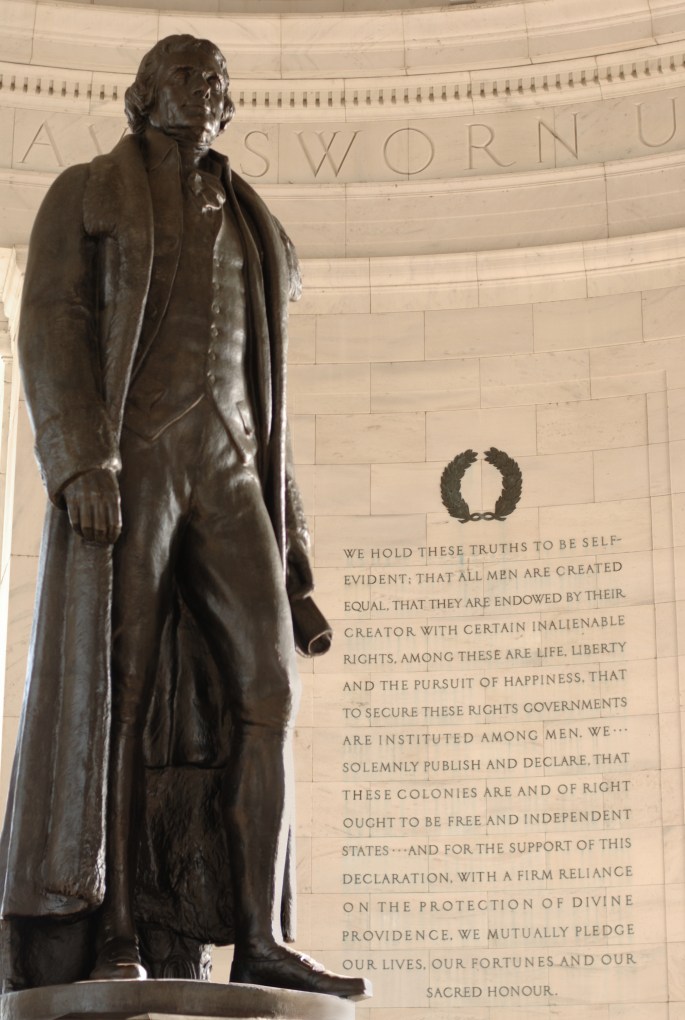
thomas jefferson

The lives of our citizens are enriched through public policies that enhance economic opportunity and freedom. However, some policymakers lack basic understanding of sound economic principles, as well as the fundamental principles of our free enterprise system which include individual initiative, personal responsibility, limited government, respect for private property and the rule of law, economic freedom, and an educated citizenry –the same shared principles that inspired our Founding Fathers.

Most citizens have now started to fully understand that as government growth increases, liberty decreases. They agree it is a shared responsibility of all, stakeholders and policymakers alike, to ensure our tax dollars are wisely spent. In education we need to make sure tax dollars are utilized on programs that benefit students and those who teach them. An essential objective in public education is, and must be, an educated citizenry that creates an informed electorate.

Many have attributed to Thomas Jefferson the genesis of the belief that an educated citizenry is a vital requisite for our survival as a free people. Whether Jefferson ought to be given credit is arguable. However, it is a worthy goal to have an educated citizenry to both secure the future of our democracy and for our citizens to be competitive globally.

To some extent, in education we have abandoned Jefferson’s advocacy that an “enlightened people and an energetic public opinion” should keep the “aristocratic spirit of the government” under control. Jefferson feared the power of the federal government. Government is not the driving force for excellence. The motivation that drives excellence comes from within the individual. Jefferson understood that in order for citizens to lead in the future they must have virtues and talent. It should be by our achievements in life, not an accident of birth, that determine our future. Education is and was the great equalizer.

Jefferson, who is embraced on both the left and the right politically, certainly understood that it was essential that a suitable education be provided for all its citizens. In fact, Jefferson expressed to James Madison, as early as 1787, “Above all things I hope the education of the common people will be attended to, convinced that on their good sense we may rely with the most security for the preservation of a due degree of liberty.” Jefferson virtually echoed the conviction of Montesquieu in Spirit of the Laws, that “virtue may be defined as the love of the laws and of our country” as a principal business of education.

There is no dispute that Jefferson, as a Founding Father, understood the need of public education. He wrote, “a system of general instruction, which shall reach every description of our citizens from the richest to the poorest, as it was the earliest, so will it be the latest of all the public concerns in which I shall permit myself to take an interest.” As if peering into the future, Jefferson also wrote, “If the children are untaught, their ignorance and vices will in future life cost us much dearer in their consequences than it would have done in their correction by a good education.”

A current catchphrase in public education is “college and career ready.” In contrast, in 1814, Thomas Jefferson used a similar comparison, “the laboring and the learned.” He detailed to Peter Carr, “The mass of our citizens may be divided into two classes — the laboring and the learned. The laboring will need the first grade of education to qualify them for their pursuits and duties; the learned will need it as a foundation for further acquirements.” We really have not changed the identified groups; we just use different labels.

Understanding Jefferson’s view challenges the principle that a number of policymakers have embraced that education is merely about job readiness and employment (laboring class). Unmistakably, the imperative of being educated (the learned) is exceedingly indispensable in a knowledge-based economy and for dealing with an evolving interdependent, multipolar world.

In 1816, Jefferson sent a letter to Pierre Du Pont de Nemours in which he favored an idea he thought might secure education without compulsion. It was, according to Jefferson, a Spanish proposal that nobody “should ever acquire the rights of citizenship until he could read and write.” Jefferson said, “It is impossible sufficiently to estimate the wisdom of this provision.” However, Jefferson did not support making parents put their children in school, suggesting that “it is better to tolerate the rare instance of a parent refusing to let his child be educated, than to shock the common feelings and ideas by the forcible transportation and education of the infant against the will of the father.”

By every account, it is clear that Jefferson approved of a tax-supported, public educational system that would enable citizens to express their opinions and understand complex issues that can inform decisions the electorate must make as they cast their votes. In 1824, Jefferson added “a republican nation whose citizens are to be led by reason and persuasion and not by force, the art of reasoning becomes of first importance.”

How public education is to occur and the financial mechanism to leverage those tax dollars can be debated as they were in Jefferson’s day. However, we believe in public education, and when local school systems work in partnership with communities they serve, they can and will educate students successfully. Public education enables students to access opportunities in a rapidly changing, diverse, global society.

The evidence is clear that Jefferson was correct in the importance of public education for the future of democracy and the United States of America. Jefferson believed that “no other sure foundation can be devised for the preservation of freedom and happiness,” and that failing to provide public education would “leave the people in ignorance.” Our job is to make sure we build on that foundation.

##

JC Bowman is the Executive Director of Professional Educators of Tennessee, a non-partisan teacher association headquartered in Brentwood, Tennessee.

Cartoons in the Classroom

I write:  “Without outside assistance, communities across America simply cannot keep up with technology challenges, either from an economic standpoint or an access standpoint. That is why open-source and donated cloud technology has begun to find greater accepted use in classrooms across America.”

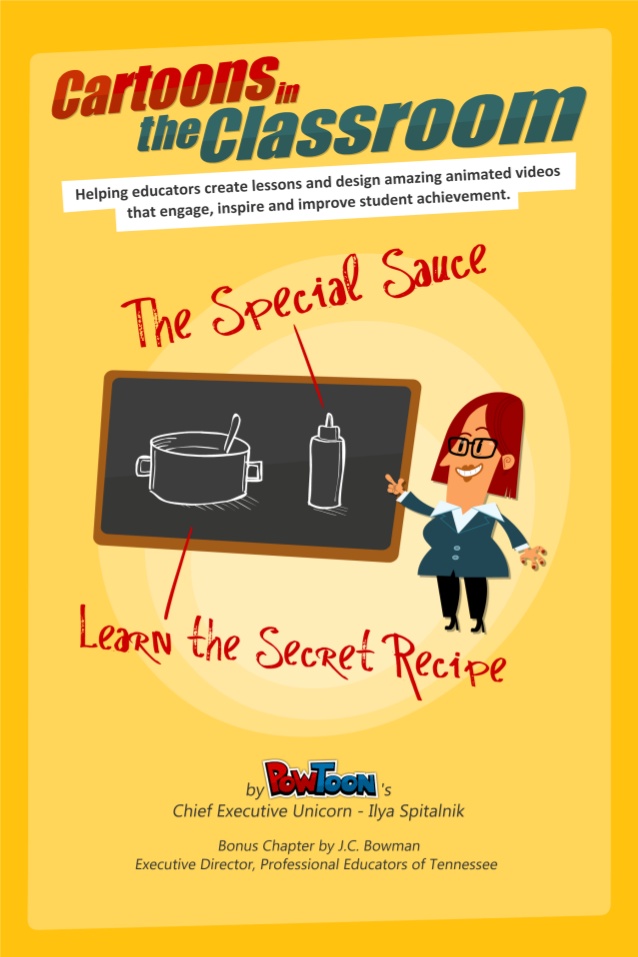
I was honored to write a chapter for the book Cartoons in the Classroom, with Ilya Spitalnik an internationally recognized thought leader, keynote speaker, entrepreneur  and technology adviser.  Ilya created PowToon to assist educators.   PowToon’s commitment to provide technology to educators, as well as their customized tutorials can help educators more effectively integrate cartoons into their teaching methods. You can download the book for free at https://s3.amazonaws.com/powtoon/books/Cartoons-in-the-Classroom-Book.pdf  

cartoons-in-the-classroom


Breast Feeding 101 for Educators

Blackberry 2014 656

“People are more opinionated about parenting issues than political issues,” according to writer, Jennifer Martin.   Admittedly this is an unusual subject for me to address, but it has become a frequently asked question by our female educators.  Hopefully this clears up the issue for school boards, administrators, teachers and school staff.

Health professionals and public health officials promote breastfeeding to improve infant health. The American Association of Pediatrics recommends breast-feeding exclusively for about six months, “followed by continued breast-feeding as complementary foods are introduced, with continuation of breast-feeding for one year or longer as mutually desired by mother and infant.”

Tennessee has one of the lowest rates of breast-feeding in the nation, according to the government’s Center for Disease Control and Prevention. Fewer than 16 percent of Tennessee infants are being breast-fed exclusively at six months old, according to the most recent statistics. Surrounding states are much higher, and in some states – mainly in the Pacific Northwest – the rate is extremely high.

It is important to note that 82% of public school teachers are female in Tennessee. Women are the predominate sex in our profession. More importantly, most of these women are of child bearing age.  So this is an important topic for all stakeholders. Breastfeeding also provides long-term preventative effects for the mother, including an earlier return to pre-pregnancy weight and a reduced risk of pre-menopausal breast cancer and osteoporosis.

Here are the appropriate state laws.

  • Tenn. Code Ann. § 68-58-101 et seq. (2006, 2011) permits a mother to breastfeed in any location, public or private, that the mother is authorized to be, and prohibits local governments from criminalizing or restricting breastfeeding.
  • Specifies that the act of breastfeeding shall not be considered public indecency as defined by § 39-13-511; or nudity, obscene, or sexual conduct as defined in § 39-17-901.
  • Tenn. Code Ann. § 68-58-101 et seq. and § 39-13-511(d) were amended in 2011 by Tenn. Pub. Acts, Chap. 91 (SB 83) to remove a provision permitting mothers to breastfeed only infants 12 months or younger in any location. (2006 Tenn. Law, Chap. 617; HB 3582)
  • Tenn. Code Ann. § 50-1-305 (1999) requires employers to provide daily unpaid break time for a mother to express breast milk for her infant child.
  • Employers are also required to make a reasonable effort to provide a private location, other than a toilet stall, in close proximity to the workplace for this activity. (1999 Tenn. Law, Chap. 161; SB 1856).

President Obama signed the Affordable Care Act (ACA) on March 30, 2010. (See the combined full text of Public Laws 111-148 and 111-152 here.)  Among many provisions, Section 4207 of the law amends the Fair Labor Standards Act (FLSA) of 1938 (29 U.S. Code 207) to require an employer to provide reasonable break time for an employee to express breast milk for her nursing child for one year after the child’s birth each time such employee has need to express milk. The employer is not required to compensate an employee receiving reasonable break time for any work time spent for such purpose.

The employer must also provide a place, other than a bathroom, for the employee to express breast milk.  If these requirements impose undue hardship, an employer that employs fewer than 50 employees is not subject to these requirements. The federal requirements shall not preempt a state law that provides greater protections to employees.

For more information:

In addition, many health insurance plans provide coverage for specified women’s preventive health services with no cost sharing (e.g., copayment, coinsurance, or deductible). Breastfeeding support, supplies and lactation counseling are one of these specified preventive services.

As a member, if you believe your school district is not following the law on this issue, feel free to contact our offices at 615-778-0803 extension 104 to speak to an attorney or simply email legal@proedtn.org.

##

JC Bowman is the Executive Director of Professional Educators of Tennessee, a non-partisan teacher association headquartered in Nashville, Tennessee. Permission to reprint in whole or in part is hereby granted, provided that the author and the association are properly cited. Follow him on social media via Twitter at @jcbowman.

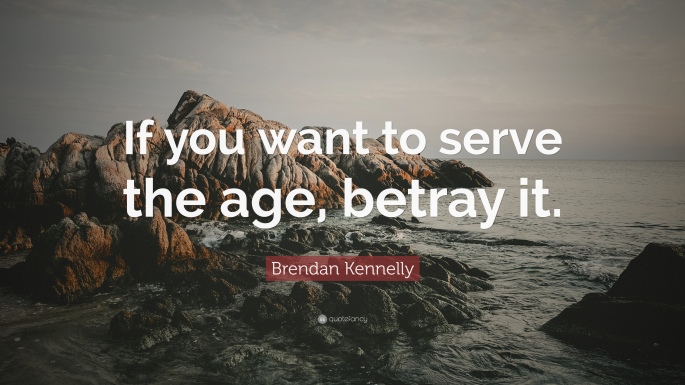
Betray the Age

Quotefancy-2823916-3840x2160

One of my musical heroes, Bono, the singer for the rock group U2, shares the story of the Irish poet, Brendan Kennelly. He relates that Kennelly has a memorable poem called The Book of Judas, and there’s a line in it that says: “If you want to serve the age, betray it.”

Then Bono asks: “What does that mean, to betray the age?”

Answering the question, Bono says: “Well to me betraying the Age means exposing its conceits, its foibles, its phony moral certitudes. It means telling the secrets of the age and facing harsher truths.”

Prevailing wisdom says that it is no measure of mental health to be well adjusted to a profoundly sick society. Every day in Tennessee, educators are challenged by a wide-ranging mixture of social, psychological, and physical problems that impede the improvement of so many students entrusted into their care.

Unfortunately for educators, policymakers worry about the results of a test given at the end of every school the year, used so that we can measure the effectiveness of those teachers educating children. We have made textbook companies and test publishers prosperous, while we engage in a rigorous debate over trivial items.

We eagerly listen to wealthy philanthropists (or organizations representing them) that lack the prerequisite background in the policy areas that they are influencing. By virtue of their wealth, they have gained an unfair advantage, as well as access to policymakers. They then promote public policies by the access of their political donations and may not even understand the problems average people face. In education, they certainly do not understand the challenges confronting public school educators.

For example, Tennessee is the 12th poorest state based on the last US Census figures. Even more startling is that the child poverty rate is 26%. So when the philanthropist experiences donor fatigue and migrates to their next passing interest, educators will still be here to do what God has gifted them to do — which is to educate and demonstrate compassion for the children of our state.

The late political theorist Hannah Arendt wrote, “No cause is left but the most ancient of all, the one, in fact, that from the beginning of our history, has determined the very existence of politics, the cause of freedom versus tyranny.” When political donations replace the contributions of men and women from controlling their own destiny, tyranny will gain a stranglehold in our society.

If we oppose state control of the means of production, it stands to reason that production in the hands of a few would also be undesirable. Politicians understand it is much easier to make laws than repeal them. Too often the extremes on both ends of the political spectrum are heard and the majority of people get silenced.

Every age has moral blind spots, with issues such as slavery, discrimination, unequal pay between sexes, and religious intolerance. Still, my Irish heritage compels me to believe in the idea that anything is possible when we embrace freedom.

The question for educators is this: where are we willing to spend our moral and intellectual capital, our money, or our sweat equity outside of the walls of our classroom or homes?

In a field as diverse as public education, we must all collaborate together to foster a more constructive dialogue among education stakeholders and policymakers. We share a common destiny. We have the power to create amazing change in this world and be champions for the vulnerable who cannot speak for themselves when they need us the most.

This is the time for bold measures. This is Tennessee and we are the generation of Educators to bring change, not only to our profession but to all of our society. Betray the Age.

##

JC Bowman is the Executive Director of Professional Educators of Tennessee, a non-partisan teacher association headquartered in Nashville, Tennessee. Follow him on Twitter @jcbowman. Permission to reprint in whole or in part is hereby granted, provided that the author and the association are properly cited.  His Blog is at http://www.jcbowman.com 
School Safety and Security Event Today

JC Bowman will be joining  Sheriff Jim Hammond and other leaders in Hamilton County to discuss School Safety and Security.  Event is open to the public.  Info: https://atomic-temporary-137731796.wpcomstaging.com/2018/04/13/school-safety-and-security-town-hall/

JC's Blurb 3

School Safety and Security Town Hall

Sheriff-and-Bowman-East-Hamilton

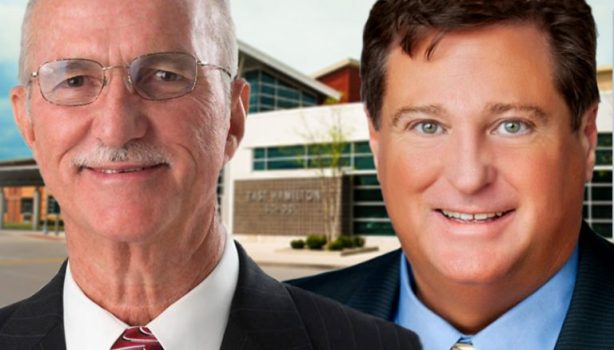
A School Safety and Security Town Hall open to the public will be held Monday at East Hamilton Middle High School to continue a day focused on school safety in Hamilton County.

Hamilton County Sheriff Jim Hammond and Professional Educators of Tennessee are partnering to stage the Town Hall, which will take place 4 p.m. – 5:30 p.m. Monday, April 16, at the school complex in Ooltewah.

In addition to Sheriff Hammond, Chattanooga Police Chief David Roddy, Hamilton County Schools Superintendent Dr. Bryan Johnson, National School Security Expert Michael Yorio, and Dr. J.C. Bowman, Executive Director of Professional Educators of Tennessee, will serve as panelists. Businessman and radio host Weston Wamp will facilitate the Town Hall.

“The Town Hall will give parents, teachers and other stakeholders in public education the chance to offer their views on school safety,” said Sheriff Hammond. “Also, we will be able to share information about the Monday morning discussion with elected and community leaders.”

Dr. Bowman said teachers from counties surrounding Hamilton County will be informed of the timely event. He will also discuss research on school safety which the Professional Educators of Tennessee has completed with its membership.

“We are grateful to join with Sheriff Hammond and other strong leaders in Hamilton County to have timely, orderly discussion about an issue front and center in Hamilton County, the state and the nation,” said Dr. Bowman. “This is a wonderful opportunity for teachers, including our members in Southeast Tennessee.”

Yorio serves as president of SSI Guardian, LLC, and is senior vice president of security for School Specialty, Inc. As he will do in the morning meeting with area leaders, Yorio will bring a national perspective on school safety.

Wamp said the event will be recorded and made available to Professional Educators of Tennessee’s 8,000 members and others. Wamp, a Chattanooga businessman, will facilitate the forum. After brief opening remarks, questions will begin. Partisan, political speech will be stopped from stage, and Wamp urges attendees attending to have prepared, concise questions. Questions will end promptly at 5:30. The theater at East Hamilton has an estimated seating capacity of 300.

About Sheriff Jim Hammond: Sheriff Jim Hammond is the current Sheriff of Hamilton County and has been since August of 2008. His Sheriff’s office personnel consist of 386 full-time and 33 part-time employees. His area of coverage is Hamilton County, which is the fourth largest county in the state of Tennessee. As a Constitutional Elected Official of the State of Tennessee, Sheriff Hammond brings over 54 years of law enforcement experience to his credit, including 15 Years as Chief Deputy. He is also a veteran of the US Navy, an international police instructor, and former adjunct instructor for the University of Tennessee at Chattanooga.

About Professional Educators of Tennessee: Professional Educators of Tennessee is a non-partisan statewide professional association whose members come from all aspects of the educational systems in Tennessee. Their 8,000 statewide members include teachers, administrators and non-certified staff from kindergarten to graduate school level, public and private.

About Michael Yorio and SSI Guardian: National School Security Expert Michael A. Yorio is a former defense industry executive who is credited with founding SSI Guardian, the nation’s leading school safety and security firm and wholly owned subsidiary of School Specialty Inc. He has led the 21st Century Safe School initiative addressing institutional safety from an evidence based best practice approach focusing on the social, emotional, mental and physical factors.

About Weston Wamp: Weston Wamp has worked to promote best-practice guidelines for school safety across the country for two years, and he is currently involved in an effort of a national, non-profit organization that will address gaps in modernizing security in 21st century classrooms. He has hosted “The Pitch” on ESPN Chattanooga (105.1 FM) each Saturday morning for the past two years.

East Hamilton Middle High School is a public high school located in Ooltewah, Tennessee. Established and opened in 2009, it is one of the newest schools in the Hamilton County School district.

Address: 2015 Ooltewah Ringgold Rd, Ooltewah, TN 37363
PrincipalGail Chuy

#####

JC Bowman is the Executive Director of Professional Educators of Tennessee, a non-partisan teacher association headquartered in Nashville, Tennessee. Permission to reprint in whole or in part is hereby granted, provided that the author and the association are properly cited. For more information on this subject or any education issue please contact Professional Educators of Tennessee. To schedule an interview please contact Audrey Shores, Director of Communications, at 1-800-471-4867 ext.102.

JC's Twitter Post 2

The Dream Did Not Die

mlk

On April 4, 2018, we commemorate the 50th anniversary of the assassination of Dr. Martin Luther King, Jr. King was shot and killed in Memphis. Tennessee has played a seminal role in Civil Rights, that we often fail to appreciate.

The ground breaking 1954 Supreme Court case Brown v. Board of Education of Topeka was the case in which the Supreme Court Justices ruled unanimously that racial segregation of children in public schools was unconstitutional. It signaled the rightful end of the “separate but equal” principle set forth in the 1896 Plessy v. Ferguson case. The Ferguson case constitutionally allowed laws barring African Americans from sharing the same buses, schools and other public facilities as whites — known as “Jim Crow” laws— and established the separate but equal doctrine that would stand for the next six decades.

Linda Brown, then a nine-year-old girl, became the face of the issue. Ms. Brown died at age 75 on March 25, 2018. Her national legacy in Civil Rights went far beyond public education. Brown said in a 1985 interview: “I feel that after thirty years, looking back on Brown v. The Board of Education, it has made an impact in all facets of life for minorities throughout the land. I really think of it in terms of what it has done for our young people, in taking away that feeling of second class citizenship. I think it has made the dreams, hopes and aspirations of our young people greater, today.”

Few people know the role Tennessee played in Civil Rights and public education. Avon Williams, Jr., a Knoxville, Tennessee native, became a cooperating attorney for the NAACP Legal Defense Fund in 1949 and began a long career in civil rights activism. In 1950, four years before the Supreme Court outlawed school segregation in Brown v. Board of Education, Williams filed Tennessee’s first public school desegregation suit such case when he sued to integrate the public schools in Anderson County, Tennessee. (McSwain v. Board of Anderson County).

Williams’ first cousin, Thurgood Marshall, was the chief lawyer for the Legal Defense and Educational Fund of the NAACP. Marshall later became the first African-American to serve on the US Supreme Court. Williams and Marshall worked closely on racial discrimination cases. Williams went before the Supreme Court seven times to argue cases involving discrimination in public schools, public housing or other public accommodations. In 1955, Williams, Marshall and Z. Alexander Looby, a fellow African American lawyer focused on civil rights, filed suit Kelley v. Board of Education against the Nashville city schools on behalf of African American children.

Looby and Williams were without doubt the most prominent civil rights attorneys in Tennessee during their lifetime. The Journal of African American History stated that “Looby and Williams’s work in school desegregation cases alone encompassed every major case in the state (with the exception of Northcross v. Board of Education) and entered the highest realms of legal activity. Federal judges at the circuit, appeals, and U.S. Supreme Court levels cited and considered many of their cases as the post-Brown v. Board of Education (1954) litigation world unfolded.” In 1968, Avon Williams, Jr. was elected to the Tennessee State Senate. He was one of the first African-Americans to serve in that body since the Civil War. As a Senator, he worked to put guidance counselors in elementary schools and to establish kindergarten classes in Tennessee. Tennessee has a proud, but often untold history in Civil Rights, which greatly enhanced education in our state.

Racism, bigotry and vitriol hate have no place in a modern culture. All children are created in the image of God. Martin Luther King, Jr. poignantly stated: “I have a dream that my four little children will one day live in a nation where they will not be judged by the color of their skin, but by the content of their character.” Does character still matter? Of course, it does.

For centuries, our country has attracted people in search of a share of “the American dream” from all corners of the world. E Pluribus Unum (From Many, One) remains the national motto, yet it appears that there is no longer a consensus about what that should mean. If you step into our public schools today, the many different cultures are on full display.

Americans like Martin Luther King Jr., Linda Brown, Avon Williams, Alexander Looby, and Thurgood Marshall helped integrate America, and move the nation past the old paradigms and backwards thinking that dominated our society. We need to remember and reflect on that history. More importantly, we need to fulfill our destiny as a nation where all citizens can realize the benefits of integration and equality of opportunity regardless of the color of their skin. The dream of Martin Luther King Jr. did not die in Memphis in 1968, it is still alive in 2018.

##

JC Bowman is the Executive Director of Professional Educators of Tennessee, a non-partisan teacher association headquartered in Nashville, Tennessee. Permission to reprint in whole or in part is hereby granted, provided that the author and the association are properly cited. For more information on this subject or any education issue please contact Professional Educators of Tennessee. To schedule an interview please contact Audrey Shores, Director of Communications, at 1-800-471-4867 ext.102.