Some People are Just Plain Mean

boss blaming an employee

Beverly Flaxington, writing in Psychology Today, reports that “bullying is a fact of life for most school children – over 70% report they have witnessed some sort of bullying event at school. More than 80% of girls have been bullied at school or online, and close to that number for boys.”

Bullying occurs everywhere, even in schools that exhibit the highest academic performance. Adults continue to suffer bullying in their workplaces at about the same rate as children in schools, and it’s even found among teachers and in senior living communities. My grandmother said it best, “Some people are just plain mean.”

Social media is a breeding ground for mean people. Bad behavior and bullying are accelerated by those on social media. Bullies can throw stones at someone, and delight in their role of keyboard warriors, knowing they can’t be seen, and victims can’t respond right away, if at all. It turns a fun and potentially useful tool into a cesspool. Anonymity is harmful and also a problem when people can hide behind aliases or fake names.

On platforms such as Facebook and Twitter, bullies not only post mean things, they troll others and post mean things about them or to them. In political discussions, it is particularly vicious. People do not look for solutions, they want to beat up on someone who does not share their political views or ideology. Civility is seemingly a lost option.

Former President Barack Obama rightly called out some of his supporters for being too ideologically rigid and judgmental. His comments were highly praised on social media across both sides of the political aisle.

Talking directly to his fellow progressives, Mr. Obama said, “This idea of purity and you’re never compromised and you’re always politically woke and all that stuff, you should get over that quickly,” the two-term Democrat said. “The world is messy. There are ambiguities. People who do really good stuff have flaws. People who you are fighting may love their kids and share certain things with you.”

Obama, like so many, understands the premise that as adults we must have conversations that include people whose values you may not share. Even the CDC now acknowledges the impact of “electronic aggression” or “cyberbullying” on mental health.

This pervasive human problem is having an impact on our children. Do we think adults who cannot behave civilly online in social media are kind and caring people in real life? Do we suspect that rigid parenting or sibling bullying will increase or decrease when even more civility is lost?

Merely raising awareness of the problem has not created change. We see bullying occur, we see social media filled with hate, we see people in elective office using twitter as a weapon to castigate opponents. Is there a solution? Clearly, punishment and zero-tolerance for bullying have been ineffective, because the problem is growing. Unless we change the culture or start directly confronting these bullies about their actions it will only continue.

Even then we may be too late. Refuse to be a party to the negativity.

Almost universally, when someone bullies other people, they are likely hiding something themselves. I am reminded of a public-school superintendent who gained notoriety in his district for his promotion of making schools kinder, despite being known to a certain degree inside the school system of being a bully himself. He was better at hiding his deep insecurities; however, his urge was correct that being kind is critical for our emotional and physical well-being. One of the reasons bullies on the public stage can get away with their actions, is that few people know the truth behind their actions.

My grandmother was not a scientist, but she was certainly correct when she said, “Some people are just plain mean.”

The debilitating scars of bullying are real. Bullying is too prevalent in society. My fear is that this type of harassment is increasing and we haven’t found a real solution to the problem.

We know that bullying can have a lasting effect on a person’s mental health. In fact, scientists found strong evidence that being bullied as a child puts kids at high risk for depression as a young adult. We are likely reaping some of that now.

Bullying behavior should be taken seriously by teachers, parents, and others. Early intervention in childhood bullying can help prevent its long-term mental health consequences. And it would probably help all of us if we unplugged from social media and set stricter limits for children.

##

JC Bowman is executive director of Professional Educators of Tennessee, a non-partisan teacher association headquartered in Nashville.


Tags

Keeping Student Discipline on the Legislative Agenda

Misbehaving-students

Lack of student discipline, inadequate administrative support, and lack of respect are frequently cited as reasons why teachers leave the teaching profession, often as much as low salary and poor working conditions. Too many policymakers yearn for a time that no longer exists and do not understand the reality of what our teachers face daily.

Our classrooms have an abundance of students exhibiting an assortment of disruptive behaviors that take the focus off academics, and in some cases even worse make learning impossible. A teacher might have several of these students misbehaving in the same class. Yes, we need to get students supported in many cases. However, we need to re-establish the foundational support for our educators and schools because they are on the frontlines of student discipline issues.

Education stakeholders can no longer maintain their reticence on the issue of student discipline. We have to speak up and speak out. It is easy for those who are not in classrooms to have a nostalgic sensation about things they do not have to live. However, educators deal with student discipline issues every single day, and it is time we move beyond talk. It is time for the General Assembly and School Boards to finally address it. And I know some legislators will tackle this challenge.

We can have an endless debate about the root causes of student misbehavior. Researchers generally point out two primary causes: 1) The disintegration of the family. And, 2) The lack of parental involvement and support in and for the schools. Those issues are unlikely to be solved by those in the classroom. These are cultural issues, and society has to work to address them. Acknowledging them is the first step.

Former Secretary of Education William Bennett states: “Clearly many modern-day social pathologies have gotten worse. More importantly, they seem impervious to the government’s attempts to cure them. Although the Great Society and its many social programs have had some good effects, there is a vast body of evidence suggesting that these “remedies” have reached the limits of their success.” Bennett is, and was, correct.

However, Bennett did not stop there. He added: “Our social and civic institutions–families, churches, schools, neighborhoods, and civic associations–have traditionally taken on the responsibility of providing our children with love, order, and discipline–of teaching self-control, compassion, tolerance, civility, honesty, and respect for authority. Government, even at its best, can never be more than an auxiliary in the development of character.”

So why should the Tennessee General Assembly even bother to address student discipline issues? Perhaps because we still believe that in our free society, and that the ultimate responsibility still rests with the people themselves. And we must embrace the optimism Bennett shared, “The good news is that what has been self-inflicted can be self-corrected.”

Just as student discipline has been a critical issue for our educators in the last thirty years, it is time we place this behemoth issue of student discipline on every legislator’s agenda. Thus far this year we have numerous legislators’ step into the fray in an ethereal and calm manner with reasoned legislation.

We are particularly supportive of pending legislation introduced by Representative Charlie Baum and Senator Bill Powers that better defines “qualified immunity.” We are extremely supportive of pending legislation by Representative Scott Cepicky and Senator Joey Hensley that gives greater authority of the teacher over their classroom, establishes procedures following removal of a student from the classroom and establishes placement review committees. Senator Ferrell Haile and Representative William Lamberth have proposed legislation to allow a director of schools, or the director’s designee, to determine whether a suspended or expelled student should be required to attend alternative school or an alternative program, to remove a student from alternative school or an alternative program if the student is not benefitting from the placement, and to determine whether, and how, if applicable, to enforce the suspension or expulsion of a student who transfers into the LEA under suspension or expulsion from another LEA. We urge the passage of all three needed pieces of legislation. This forward-thinking legislation should be supported by all members of the Tennessee General Assembly that want to create an orderly environment where educators are free to teach, without chronic student discipline issues.

We cannot continue to lay the blame for continued societal problems at the feet of public education. It is true, public education has its issues, from design to execution, but every problem faced by society gets manifested in our schools. We need more community support and cohesive education policies statewide that enables educators, schools, and districts to address critical issues such as student discipline.

We have heard the desperation in the voices of educators across the state. There is nothing more discouraging than caring, committed teachers, who have lost hope. We need consistent, uniform guidance and enforcement of student conduct. Talk to your legislators and share your thoughts and opinions with them on student discipline. In a self-governing society, we must engage in this critical matter. Failure to do so may well mean that in the near future there will be nobody willing to teach our children.

##

JC Bowman is the Executive Director of Professional Educators of Tennessee. Professional Educators of Tennessee is a non-partisan teacher association headquartered in Nashville, Tennessee. Permission to reprint in whole or in part is hereby granted, provided that the author and the association are properly cited.

Men Who Helped Shape Our Lives

Francis Bowman JC Bowman

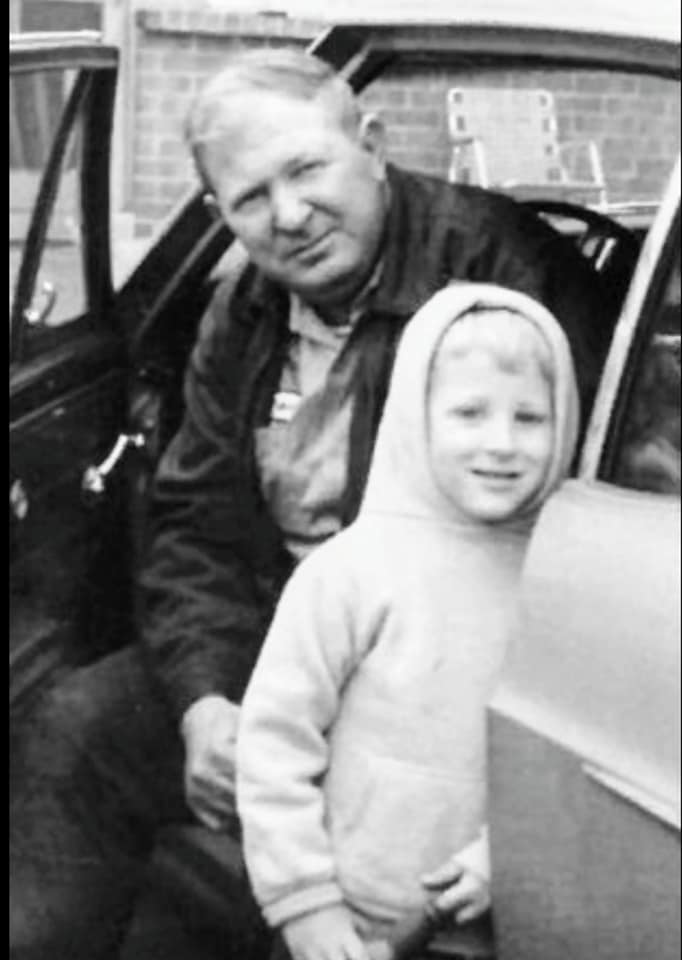
My dad would have been 87 today. Strange how dates become milestones. They say memories fade. Some should never fade. Over time I have learned to reflect on the good in people. My dad and I had a tough relationship, to say the least, but one thing I know because of him I literally have no fear of facing tough situations in life or difficulties. He was a self-made, often stubborn man, who died too soon. That stubborn trait was passed on to his sons. I fear no challenge in life, not even death itself, because I watched my dad take on life’s difficulties with a laugh. Here is to the men who helped shape our lives, imperfect as they may be, may we always remember them and be grateful for their influence. Thank you, Francis Bowman, Happy Birthday in heaven. —- JC Bowman

Tennessee has Played a Seminal Role in Civil Rights

mlk

Martin Luther King Jr was assassinated in Memphis, Tennessee in 1968, almost 52 years ago. Few know of the significance that Tennessee has played in Civil Rights. First, Tennessee played a pivotal role in the passage of the 19th Amendment, which granted women the right to vote in 1920.  This year marks the centennial of the ratification of the 19th Amendment.  Second, Tennessee was at the forefront of Civil Rights and integrating America.  We should remind ourselves of this history on Martin Luther King Jr. Day in 2020.

The groundbreaking 1954 Supreme Court case Brown v. Board of Education of Topeka was the case in which the Supreme Court Justices ruled unanimously that racial segregation of children in public schools was unconstitutional. It signaled the rightful end of the “separate but equal” principle outlined in the 1896 Plessy v. Ferguson case. The Ferguson case constitutionally allowed laws barring African Americans from sharing the same buses, schools, and other public facilities as whites — known as “Jim Crow” laws — and established the separate but equal doctrine that would stand for the next six decades.

Linda Brown, then a nine-year-old girl, became the face of the issue. Ms. Brown died at age 75 on March 25, 2018. Her national legacy in Civil Rights went far beyond public education. Brown said in a 1985 interview: “I feel that after thirty years, looking back on Brown v. The Board of Education has made an impact on all facets of life for minorities throughout the land. I really think of it in terms of what it has done for our young people, in taking away that feeling of second-class citizenship. I think it has made the dreams, hopes, and aspirations of our young people greater, today.”

Few people know the role Tennessee played in Civil Rights and public education. Avon Williams, Jr., a Knoxville, Tennessee native, became a cooperating attorney for the NAACP Legal Defense Fund in 1949 and began a long career in civil rights activism. In 1950, four years before the Supreme Court outlawed school segregation in Brown v. Board of Education, Williams filed Tennessee’s first public school desegregation suit such case when he sued to integrate the public schools in Anderson County, Tennessee. (McSwain v. Board of Anderson County).

Williams’ first cousin, Thurgood Marshall, was the chief lawyer for the Legal Defense and Educational Fund of the NAACP. Marshall later became the first African-American to serve on the U.S. Supreme Court. Williams and Marshall worked closely on racial discrimination cases. Williams went before the Supreme Court seven times to argue cases involving discrimination in public schools, public housing or other public accommodations. In 1955, Williams, Marshall and Z. Alexander Looby, a fellow African American lawyer focused on civil rights, filed suit Kelley v. Board of Education against the Nashville city schools on behalf of African American children.

Looby and Williams were without a doubt the most prominent civil rights attorneys in Tennessee during their lifetime.

The Journal of African American History stated that “Looby and Williams’s work in school desegregation cases alone encompassed every major case in the state (with the exception of Northcross v. Board of Education) and entered the highest realms of legal activity. Federal judges at the circuit, appeals, and U.S. Supreme Court levels cited and considered many of their cases as the post-Brown v. Board of Education (1954) litigation world unfolded.”

In 1968, Avon Williams, Jr. was elected to the Tennessee State Senate. He was one of the first African-Americans to serve in that body since the Civil War. As a senator, he worked to put guidance counselors in elementary schools and to establish kindergarten classes in Tennessee. The state has a proud, but often untold history in Civil Rights, which greatly enhanced education in our state.

Racism, bigotry, and vitriol hate have no place in modern culture. All children are created in the image of God. Martin Luther King, Jr. poignantly stated: “I have a dream that my four little children will one day live in a nation where they will not be judged by the color of their skin, but by the content of their character.” Does character still matter? Of course, it does.

For centuries, our country has attracted people in search of a share of “the American dream” from all corners of the world. E Pluribus Unum (From Many, One) remains the national motto, yet it appears that there is no longer a consensus about what that should mean. If you step into our public schools today, the many different cultures are on full display.

Americans like Martin Luther King Jr., Linda Brown, Avon Williams, Alexander Looby, and Thurgood Marshall helped integrate America, and move the nation past the old paradigms and backward thinking that dominated our society. We need to remember and reflect on that history. More importantly, we need to fulfill our destiny as a nation where all citizens can realize the benefits of integration and equality of opportunity regardless of the color of their skin. The dream of Martin Luther King, Jr. did not die in Memphis in 1968, it is still alive in 2020.

##

JC Bowman is the Executive Director of Professional Educators of Tennessee, a non-partisan teacher association headquartered in Nashville, Tennessee.

Shine as Lights to the World

JC at SoL

No dreams are too big, but sometimes we lose the courage to pursue them.  French Nobel Laureate André Gide writes that “Man cannot discover new oceans unless he has the courage to lose sight of the shore.” Fear keeps us holding onto the shore.

Time is running so fast, flowing like a river in our lives, sometimes stormy, sometimes with stillness.  We all encounter the world’s brokenness in different ways. For some we know there are more days behind us, then in front of us.  We struggle to find relevance in a changing world, which we helped create but sometimes do not understand.  When we were young, we never took advice, now we want to pass along the experiences and it falls on deaf ears.  Greek poet Heraclitus said it best: “No man ever steps in the same river twice, for it’s not the same river and he’s not the same man.” Life is about change, and managing the seasons of our lives.

Many of us are not the person we desired to be as we thought we would be growing up.  Life has taught us many hard lessons.  We can feel the weight of the world on our shoulders.  We grasp to find the sweet memories from our past, discover the strength to face today and find hope for the future.  Amazing how we can get so lost in a broken world, and forget who we are—or whose we are.

When we strip everything back to bare basics, we are all the same.   We want to find love.  We want someone who knows that we are not perfect but treats us as if we are.  We want someone whose greatest fear is losing us, and we want to hang on to that love and meet challenges all couples face—together.  When they tell us they love us, we want to hear that conviction in their voice.  When those we love are with us, we want them present at the moment. We want to smile from within, because we know smiles are often faked on the outside.

We need to connect to God on a spiritual level, but we need another person to connect with on an emotional level.  When we find them, we have to hold on to them and value how blessed we truly are.  Being truly fulfilled mentally, physically, and emotionally is essential to being truly happy here on earth.  John Rzeznik, of the band Goo Goo Dolls, sings in Better Days: “I wish everyone was loved tonight, and somehow stop this endless fight, just a chance that maybe we’ll find better days.”

in a dark world, full of lies, hate, and confusion we can all find better days, by looking inside ourselves and being better people.  Hard to fathom, but you may be the only light in a dark world that some people will ever see.  We all have a mission to bring hope to the world and show a heart of compassion to others.  It is easy to judge and condemn, it is harder to engage with love and show kindness.  We should find something in life to be grateful for, and see our lives as a gift. And share that gift with others, not in isolation.

Those who bring hope to the world in the darkest of times and battle despair, inspire hope for future generations.  Light drives out darkness.  Nothing is ever lost, if hope is on your side.  Philippians 2:14-16 says:  Do all things without grumbling or disputing, that you may be blameless and innocent, children of God without blemish in the midst of a crooked and twisted generation, among whom you shine as lights in the world, holding fast to the word of life, so that in the day of Christ I may be proud that I did not run in vain or labor in vain.

What you are is God’s gift to you, what you become is your gift to God.  Shine your light in the world, we need it now more than ever before.

##

JC Bowman, Random Thoughts on a Tuesday

Children are the victims in ‘reading wars’ of educators

I tend to avoid the debates among people discussing reading. I think there is some truth in all sides of a debate. I learned to read early and easily. I am also unabashedly an advocate for children with dyslexia, as it has been an issue identified and championed by the members of Professional Educators of Tennessee. I am encouraged by the research being conducted at the Center for Dyslexia at Middle Tennessee State University. I believe the work they do there will affect thousands of children across the state who learn to read because of their research and efforts.

‘The reading wars’

For the better part of the last five decades, what has been described as “the reading wars” has pitted “phonics-based” instruction against “whole language” instruction. Another approach in the reading wars, a hybrid of phonics-based and whole language instruction called balanced literacy, has emerged in the last decade. However, the debate over reading instruction itself is centuries old. The debate will continue as long as educators are free to hold differing opinions.

All sides of the reading debate have proponents, often found in the ivory towers of academia. The dispute is a genuine political issue, and the opinions of policymakers drive our education policy. You may not notice the debate, but it is occurring when states approve and purchase textbooks and other materials for instruction, how we teach in our teacher preparation programs, and what is offered in our professional development for teachers.

Emily Hanford, an advocate of phonics-based reading instruction, points out that according to the National Assessment of Educational Progress, “more than six in 10 fourth-graders aren’t proficient readers. It has been this way since testing began. A third of kids can’t read at a basic level.” In her New York Times editorial, she states that the faculties of colleges of education simply do not teach the science of reading.

What about phonics?

Stacy Reeves, an associate professor of literacy at the University of Southern Mississippi, says, “Phonics for me is not that answer.” Her former colleague Mary Ariail, past chair of the Department of Curriculum, Instruction and Special Education at the University of Southern Mississippi, remains opposed to explicit phonics instruction. Arial states: “One of the ideas behind whole language is that when [reading] is meaningful, it’s easy,” she said. “And when it’s broken down into little parts, it makes it harder.”

Hear more Tennessee voices: Get the weekly opinion newsletter for insightful and thought-provoking columns.

Ariail left her position in 2018 because of her disappointment in changing reading instruction in Mississippi. She said she sees it “as an example of lawmakers telling educators what to do,” and she doesn’t like it. She now resides in North Carolina working as an independent consultant. Mississippi did an exhaustive evaluation of its early literacy programs in a recent study.

Whole language? Balanced literacy?

Mark Seidenberg, a University of Wisconsin cognitive neuroscientist and author of the book “Language at the Speed of Sight,” argues that “Balanced literacy was a way to defuse the wars over reading. … If the whole language/balanced literacy approach is as flawed as described, many children will struggle to learn,” Seidenberg insists. For those students, in thousands of U.S. schools, there is Reading Recovery, “an expensive remediation program based on the same principles. Fewer children would need Reading Recovery if they had received appropriate instruction in the first place,” he writes. As for teachers, they are “left to discover effective classroom practices [on their own] because they haven’t been taught them.

Educators have argued about multiple approaches to reading instruction since public education began. The politics over literacy will continue to be contentious and debated. Perhaps we as educators know less about how children actually learn to read or how they should be taught than we care to admit. Perhaps it is different for every child. The more we honestly look at the issues surrounding the reading wars, it is clear that a one-sized solution does not work for everyone.

JC Bowman is the executive director of Professional Educators of Tennessee, a non-partisan teacher association headquartered in Nashville. 
As featured in The Tennessean on 12/31/2019:  https://www.tennessean.com/story/opinion/2019/12/31/children-victims-reading-wars-educators/2777698001/

A Closer Look at Collaborative Conferencing

Young man presenting his ideas to his business team

Collaborative Conferencing is the process by which local boards of education and their professional employees meet, either directly or through representatives designated by the respective parties, to confer, consult, and discuss matters relating to employment.  The process of collaborative conferencing includes the exchange of information, opinions, and proposals among the conferencing parties, as well as the use of the principles and techniques of interest-based collaborative problem-solving (IBCPS).

Our organization supports the right of employees to discuss their working conditions, and always have; however, a failed Industrial era model dubbed Collective Bargaining was previously utilized. Numerous researchers such as Michael LovenheimAlexander WillenAndrew CoulsonCaroline HoxbyAgustina Paglayan, and Terry Moe criticized this approach. The term “collective bargaining” was coined in 1891 by British socialist reformer Beatrice Webb.

Recognizing that this contentious 18th Century industrial model did not serve teachers and students in the 21st century, the Tennessee General Assembly made changes to the law in 2011. This more modern approach to addressing issues and removing barriers to cooperation, while including more voices on working conditions called Collaborative Conferencing.  It has also been somewhat problematic, even though the intent was positive.

We disagree with some of the items like differentiated pay plans and other incentive compensation programs, including stipends and associated benefits being excluded. The process has clearly established a timeline for how this process must be completed. Any time the specifics of a law that is included in the legislation are being ignored it creates a risk for the entire results to be invalidated outright. All parties involved should want to ensure that the process is followed lawfully so that a Collaborative Conferencing agreement is successful.

In particular, the timeline written into the collaborative conferencing law was established to interact with school district budgeting processes, which align with City and County government budget processes and the state budgeting processes. Items that require funding are not effective until the local funding body has approved such funding in the budget. If the amount of funds appropriated is less than the amount required, the parties may continue to confer to reach agreement within the number of funds appropriated. It is a cycle.

Deviation from that cycle in the bureaucratic processes make alignment with local, state, and federal budgets difficult. Whether or not we agree with the timeline established in the law is moot. It is the law. Perhaps it is time that we look at needed changes to the law.   However, until the law is changed, we have no other option but to follow the law.

The goal of collaborative conferencing has always been to include more, not less, teacher voices in the debate for teacher working conditions. It is a means to express an opinion and work toward solving disagreements on issues such as salaries or wages, grievance procedures, insurance, fringe benefits, working conditions, leave, and payroll deductions. Payroll deductions for political activities are expressively forbidden. It is also important to be reminded that state organizations do not initiate collaborative conferencing, rather it is done by local educators, who may be members of any organization.

Fortunately, collaborative conferencing is not the only manner to address critical employment issues. Working outside of the conferencing process with superintendents and other elected leaders may be much more beneficial, especially since the conferring process has not been enacted widely across the state. In addition, rather than an MOU (Memorandum of Understanding), many of these items should be placed within board policies to be more effective for educators, thus making it more difficult to take away from educators. Public education in Tennessee wins when we all work together through civil discourse to address our considerable issues.

**

JC Bowman is the Executive Director of Professional Educators of Tennessee, a non-partisan teacher association headquartered in Nashville, Tennessee. Permission to reprint in whole or in part is hereby granted, provided that the author and the association are properly cited.

School Culture and Climate

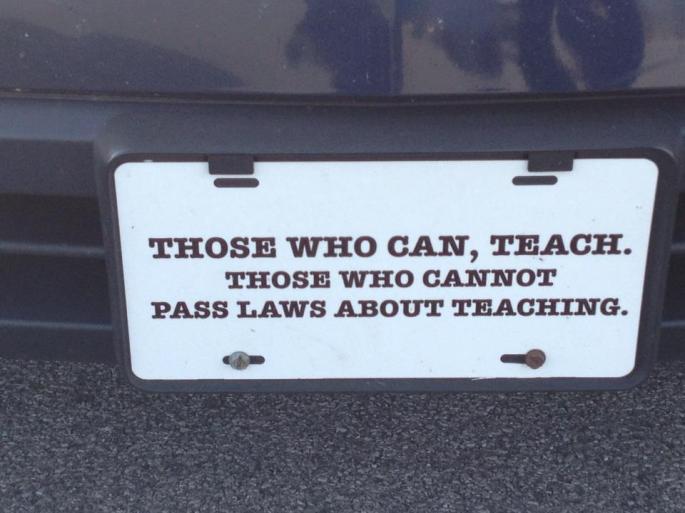
laws about teaching

Naturally, I am very optimistic and I spend time encouraging educators on a daily basis. I celebrate when student teachers get their first job, teachers get promoted to administrators, administrators get moved to the central office. I hear wonderful stories where teachers love their profession and school. I also hear the reports of the difficulties and the challenges.

One of the issues that is often overlooked in the education profession is the school culture and climate. Teachers understand the salary issue is ongoing, and correctly believe that it is critical for them to be paid as the professionals that they are. However, salary is not usually the determining factor to make someone enter the education profession. For most educators, it is a calling of a noble profession. They teach to make a difference in the lives of their students and in their communities.

Student discipline is spiraling out of control in many schools across the nation. We have all seen and heard stories on local news. Internally, in some schools, it may even be worse. In Hamilton County, for example, reports of teachers quitting strictly because of discipline issues are unfortunately becoming commonplace.

However, school culture and climate are beginning to really become a major issue that needs to be addressed. If not addressed soon on the local level, it will certainly become a statewide policy issue to be addressed by policymakers.

Let’s examine a few issues:

  • Loss of Teacher Autonomy. Doris Santoro, author of the book “Demoralized,” describes systemic pressures, such as top-down initiatives or punitive evaluation systems, which has diminished teacher autonomy. State Department of Educations and School Districts must do a better job of addressing the culture and climate in our schools to impact the morale of their teachers. Constant turnover in districts and schools really impacts teachers, as much as students. In addition, there are ongoing and chronic conflicts between school boards, school leaders, and even educators. While change is always inevitable, staff and stakeholder participation is essential. Too often there is little attempt to align culture, strategy, and structure in public education. If educators feel listened to, and their knowledge and experience are respected, there is a greater chance of success.


  • Lack of Support. In the absence of monetary support, educators desperately need emotional, and professional support from their administrators and colleagues. Support starts at the top with ongoing, collaborative teacher support. The working conditions in the schools, become the learning conditions for the students. Administrators must be consistent when dealing with student discipline or parent situations. Teachers need to know their administration has their backs. Students who are sent to school administration for extreme misbehaviors cannot be sent right back to class, and education policies must be clear to all who are involved. If criticism is warranted, do it in private, not in front of parents or children. Every situation is unique, and how an administrator handles a situation depends on each individual situation. In addition, some administrators seemingly scold the entire staff for the faults of a few. A former educator and now author Jennifer Gonzalez wrote: “Behind every teacher story is an administrator who is interpreting policy, setting expectations, and establishing a tone that will determine the quality of their teachers’ work, and by extension, the education their students receive.”


  • Legal and Liability Challenges. We live in a litigious society. As an educator or school employee, teachers are acutely aware that professional liability insurance is critical because district coverage may not protect them individually. Due to their unique role, educators face exposure to liability much greater than does the average citizen and therefore must exercise a higher duty of care than most professionals. Nearly every day teachers must deal with diverse laws related to issues such as child abuse, student discipline, negligence, defamation, student records, and copyright infringement. One district in the state, Williamson County, appointed an attorney—who lacked classroom teaching or school level administrative experience—as its Director of Schools. The new director has additional attorneys on his staff. This has to be concerning to parents, taxpayers, and educators when a district is top-heavy with lawyers—especially when they lack classroom and administrative experience. Ultimately such a heavy legal presence will not serve the interests of classroom teachers when they experience conflict with the district. When a conflict of interest occurs, and they will occur, the interest of the district will likely prevail over the teacher or administrator. This will mean settlements will be reached, even when educators may not be at fault. The district, in order to save money or diminish the negative publicity, will place its interests above those of the teacher or administrator. Educators know it is dangerous and potentially career-threatening if you enter a public-school classroom or school without liability or legal protection. That is why professional education associations are needed more than ever.

Together, salary, student discipline, along with school culture and climate are driving teachers out of their profession. These issues will impact the teacher labor market in ways in which it may not recover creating a shortage of highly qualified teachers in school districts across Tennessee. States and districts must track student discipline issues better. Research into why teachers leave teaching, including pressured or forced resignations would be helpful for future retention issues. Novice and experienced teachers and administrators alike will deal with school leaders that are great, terrible or somewhere in-between during their career. Those are the stories I most like to hear.

##

JC Bowman is the Executive Director of Professional Educators of Tennessee, a non-partisan teacher association headquartered in Nashville, Tennessee. Permission to reprint in whole or in part is hereby granted, provided that the author and the association are properly cited.


Successful Education Leaders Communicate Effectively

Crossing out problems and writing solutions on a blackboard.

I am very sympathetic to parents who make claims that the school district in their community is tone-deaf, and will not listen. I have called and emailed school superintendents myself across the state and, on occasion, failed to receive a courtesy response.

I will often just pick up a phone and call them or their Board Chair when they failed to respond. I think persistence is key in some cases. However, some superintendents fail to understand their lack of response is harmful to the image of a district.

Parents are in a different position. Many are young parents, and do not know how government works, or is supposed to work. In many cases, this leads to a lack of parent engagement.  In public education, we must solicit more, not less, community involvement.

We must all work to hold our superintendents accountable in regard to educational, financial, and administrative performance. There is a growing debate on whether districts should return to electing these school management leaders; we have generally opposed such legislation, believing school boards can make good choices and hold superintendents accountable. We acknowledge that many school districts do a better job of this than other school districts. Notably, urban districts have consistently had much turnover in their leadership versus rural districts across the state. Constant turnover also hurts the elected versus appointed superintendent debate. School boards must elect good candidates with community input.

School boards must embody the beliefs and values of their community. School board members should be as diverse as the citizens they serve. We should thank the men and women who are serving our communities as school board members more often. They are too often unappreciated, and it is often a thankless but needed job. We need more people with management and education backgrounds to consider running for the school board in their community. The pay isn’t great, but the rewards are immeasurable. The Tennessee School Boards Association has some great information on their website for those interested in this critical role.

School boards should provide superintendents latitude in regards to leadership, vision, and strategic thinking on how to address the performance in those areas. And we must expect them to communicate effectively to all stakeholders. There is no doubt we have some excellent leaders across our state. Superintendents like Melanie Miller, Jerry Boyd, Linda Cash, Johnny McDaniel, Bill Heath, Cathy Beck, Freddy Curtis, Richard Rawlings, and Mark Winningham just to name a few.

These exceptional leaders share many characteristics. Perhaps the most important duty of a superintendent is to make sure district students are learning and achieving at the highest level possible. A superintendent must understand effective academic practices and be supportive of the teachers and administrators in the district. Leadership, vision, and strategic thinking are critical skills for every superintendent. A successful superintendent will also be an effective and excellent communicator. The communication part starts with returning emails and phone calls.

I have been critical over the years of many things in public education. From lack of focus or poorly defined goals to disagreement with curriculum or self-serving unions. However, I have always tried to do what my mother advised, “If you are going to criticize, offer a solution.” Teddy Roosevelt blatantly made it clear, “It is not the critic who counts; but rather the man who is actually in the arena.”

For education leaders to be successful they must communicate effectively.  As a practitioner of my craft, I love reading what is going on in other schools and districts across the state.  Every Monday in my email inbox appears a weekly Marczak Monday Memo from Chris Marczak, the superintendent of Maury County Schools.  It is a great example of effective communication and a model that some districts should adopt.  However, school updates are not a substitute for responding to direct emails or telephone calls.  Something I am sure Dr.  Marczak would agree, as he also excels in returning calls and emails.

At Gettysburg, Abraham Lincoln stated that our government was “for the people.” Cynics take that a step further and tell us government is for those who make themselves effectively heard. That is why it is most critical for elected and appointed officials to communicate clearly, concisely, timely, and effectively. For school leaders, it is even more critical.

**

JC Bowman is the Executive Director of Professional Educators of Tennessee, a non-partisan teacher association headquartered in Nashville, Tennessee. Permission to reprint in whole or in part is hereby granted, provided that the author and the association are properly cited.

2020 Vision for Education Policy

2020

Educator opinions differ on numerous issues and vary from year to year. Professional Educators of Tennessee recently surveyed its teachers and solicited educator input across the state. Nearly 750 educators took the survey sent out from Professional Educators of Tennessee in October of 2019 to our members. While the majority of respondents were classroom teachers, several administrators also took part in the survey.

Salary, school climate, and student behavior have been a constant issue during the last four years. Researchers, policymakers, and stakeholders can gain useful insight into the opinions of those on the frontlines educating children. The majority of educators are satisfied with their jobs and believe their job makes a positive difference in the lives of students. However, two-thirds (67%) of teachers stated that teacher morale was a critical issue in their district.

Student behavior remains a significant issue across the state. While there is a myriad issue that concerns educators, they consistently rank discipline issues near the top. The problem appears to be rooted in the student’s home environment and the school’s culture/climate; both must be considered when addressing the problem.


A school and district must adopt policies that support effective classroom management, as well as instruction for all students. One possible policy needs to be better tracking of time that an educator has to spend on discipline issues. Do parents have the right to know, for example, if one student disrupts their own child’s education so frequently that instruction time is lost? School districts must balance responsibilities toward the community with the responsibility to nurture students. Without discipline, students cannot learn.

Testing is an issue where educators offered some valuable insight. Not only is the amount of testing done by the district a concern, but also tying teacher evaluation scores to the testing data also remains controversial.

Salary issues provide an invaluable perception of how educators view the financial reward for their profession. Educators believe that salary compensation should be equal to other fields with the same degree. It is clear that educators either reject or do not understand what policymakers mean by a “differentiated pay system.”

Well over two thirds (70%) of teacher’s support across the board salary increases. We feel that addressing salary issues should be a primary concern for policymakers. Overall, 92% indicated that salary was an issue which concerned them, followed by retirement and healthcare. Educators were very interested in student loan forgiveness incentives.

If the teacher shortages continue to be an issue state-wide and nationwide, there must be more incentives to go into the teaching field and remain there. Obviously higher pay is the biggest enticement, but also consider giving educators the opportunity to job-share and provide more appealing benefits especially when it comes to health care and retirement. And most importantly, treat educators as professionals and trust them to do their jobs without micromanaging that is currently the norm.

Certainly, some educators have been forced to leave their school system for subjective reasons, rather than objective reasons. Actions speak louder than words. In some cases, dismissal may have been warranted, but in many cases, it appears circumstances were little more than personality conflicts and people not fitting into a certain educational or political environment. We have lost some good educators in our state because of this subjectivity, and we would argue many of these educators deserve another chance to keep their careers going. This will require policymakers to make teacher retention and recruitment a top priority.

The consistency of the same issues in the last few years means that much work remains as educators are not seeing the needed changes. Policymakers and stakeholders must continue to work to make improvements in policies that impact salary, school climate, and student behavior. Education policy must remain a high priority across the state.

##

JC Bowman is the Executive Director of Professional Educators of Tennessee, a non-partisan teacher association headquartered in Nashville, Tennessee. Permission to reprint in whole or in part is hereby granted, provided that the author and the association are properly cited. For more information on this subject or any education issue please contact Professional Educators of Tennessee. To schedule an interview please contact Audrey Shores at 1-800-471-4867 ext.102.