School Shootings: No More Political Football

schoolshooting17

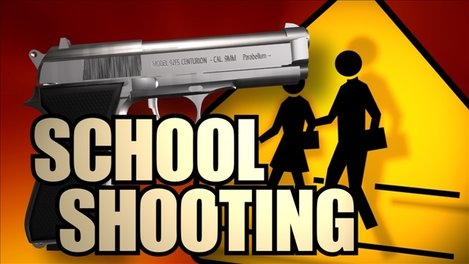
Schools must be safe zones for students and teachers. That means the first step in school safety is securing the perimeter of a school. It seems like simple logic that we should keep intruders out and also make sure the area inside those boundaries is safe for children and adults. Students are our priority, but teachers need protection too.  Our School Safety Survey Results are here. 

Unfortunately, as we have seen far too frequently, our schools are easy targets for those who wish to harm others. When premeditated attacks and school shootings occur, they are usually over within minutes. Most of the time law enforcement is simply not able to respond quickly enough to the event and lives are needlessly lost.

Intruders, who wish to hurt our students and teachers, are usually very familiar with the schools’ defense system and create plans around that information. More than likely, the defense strategy is in the student handbook posted online. These people know when to attack, where to go and often how to escape. Students and teachers alike, as well as approved visitors should have a visible identification badge on them at all times. There needs to be secure exterior doors to limit building access points, and each district should develop a uniform policy for entry into a school.

Former Metro Nashville Principal Bill Gemmill, pointed out: “All schools need upgraded security, whether it is as simple and reasonable as inside locks on classroom doors.” It is also time to put metal detectors in every school across America. The federal government could absorb the cost by simply eliminating any of the already wasteful programs they are funding. Public school safety must be a priority at every level of government. If you see something, say something, and then someone in authority must do something.

The last line of defense that we can have for our kids is an armed person willing and ready to defend them if the unspeakable should happen. That is why it is critical that we look at expanding the School Resource Officer (SRO) program. This is a highly effective program that serves many purposes during the school year and is invaluable where it now exists. It is important that the program be directed by a local law-enforcement agency, working in conjunction with the local education agency. The school can employ and utilize additional security, but the primary responsibility should fall to local law enforcement.

The Center for Problem-Oriented Policing has outlined three basic roles of an SRO: Safety Expert and Law Enforcer, Problem Solver and Liaison to Community Resources and Educator. While all three are important functions, the primary role should focus on the law enforcement and safety component. SRO’s should be preserving order and promoting safety on campus and serving as first responders in the event of critical incidents at schools, such as accidents, fires, explosions, and other life-threatening events. They are not supplementary school administrators dealing with minor school discipline issues or emergency instructors. It is clear that we must better define SRO programs, what we want them to accomplish, and better analyze how we measure their effectiveness. Law Enforcement and School District Leaders should yield to the law enforcement professionals on matters of school safety and law enforcement.

It is time to discuss the gun issue. I strongly support the 2nd Amendment and have a handgun carry permit myself. We must have common sense approach to who, when, and where we can carry firearms, without infringing on the rights of law abiding citizens. We should raise the age for the purchase of certain guns to the age of 21, with exemption to active duty military. We prohibit drinking of alcoholic beverage until 21, we should follow suit here as well. Many young people just are not prepared for the responsibility of drinking or owning a firearm. We should make stronger background checks, considering factors such as criminal background and mental health. We should also prohibit bump stocks that can convert guns into automatic weapons. We should more aggressively punish those who commit crimes with guns. But we will need to be careful that the policy is reasonable.

Policymakers, at the state and federal level, are also likely to look at legislation that empowers individual school districts to determine for themselves what direction they want to take on school safety, including qualified, certified and licensed volunteer school personnel going armed in their building. If a district decides to allow trained and armed teachers and administrators into the schools, the decision should not be taken lightly. The state should never mandate educators having to carry firearms or prohibit them from carrying, if permitted by the district. It is a decision that should be made at the local level based on the needs and size of the community.

Certainly, armed teachers who possess training or a military background would deter some intruders. However, trained law enforcement personnel are much preferred and would be a much greater deterrent. Mike Conrad, a teacher in Detroit said in a recent interview: “I think that the moment that you put a gun on the hip of a teacher in a classroom, that we have accepted the norm that school shootings will not stop, that we are now on the front line to defend against them, instead of trying to find a way to stop them.” The subject is very emotional, with good arguments coming from either side of the debate, which is why each community must decide for themselves this issue.

School safety policies must be flexible and practical. However, the issue of improved school security will not be resolved in the current political environment, as long as real solutions are not considered based on a liberal or conservative bias. It is time to quit playing political volleyball with this issue. Real lives, those of children and adults, are at stake in our schools. The time of talking is past; it is time to take action. Any viable option that can lead to a safer environment in our schools and communities should be on the table.

#####

JC Bowman is the Executive Director of Professional Educators of Tennessee, a non-partisan teacher association headquartered in Nashville, Tennessee. Permission to reprint in whole or in part is hereby granted, provided that the author and the association are properly cited. For more information on this subject or any education issue please contact Professional Educators of Tennessee. To schedule an interview please contact Audrey Shores, Director of Communications, at 1-800-471-4867 ext.102.

This article also appeared at:  http://www.proedtn.org/news/388542/No-More-Political-Volleyball.htm

The School Safety Survey Results are Found here:  http://www.proedtn.org/news/395676/Tennessee-School-Safety-Survey-Results.htm

Dad Gone Wild

Icon

If you are not a regular reader of the education blog Dad Gone Wild written by TC Weber, add it to your list.  He will make you laugh, he will make you mad, and he will make you cry…sometimes in the same article.  His latest column, So Here We Are, goes where few writers dare to go by pointing out: “Nashville has long been over due for a conversation on race and how it plays out in our public institutions.” Weber is right.

In the growing debate over Metro Schools Superintendent Shawn Joseph, Mr. Weber asks the million-dollar question:  How much of the criticism directed toward the Director of Schools is rooted in the color of his skin as opposed to his performance?  Answer that question than proceed to the debate.  If you are judging him because of the color of his skin, you need to exercise your constitutional right and remain silent.  If it is based on performance, then take Weber’s advice and “evaluate with the same rigor we demand of others.”

At times the Dad Gone Wild columns go on for too long, but some of it is so brilliant one wonders if the education students at Lipscomb, Trevecca, Belmont, or Vanderbilt shouldn’t be required to read his columns prior to graduating.  It is where reality and policy intersect, along with a healthy dose of investigative journalism.  A local newspaper should certainly pick up Dad Gone Wild or Mr. Weber should expand his reach beyond Music City and go statewide or national.

Weber states that he wants to “continually push the conversation forward and to expand my boundaries and knowledge base.”  He adds, “I personally don’t believe race is an issue that we can ignore or a conversation we can shy away from. Too many of our important decisions, especially in education, are rooted in race. Funding, programing, and attendance are just some of the areas where race influences our decisions.”  He is correct.  And we all have “skin” in that game.   Then he states: “my goal is to support policy that is best for kids, families, and teachers.”  That point is lost on far too many people, from the bureaucrat to the politician.

Weber emphasizes that “this conversation suffers, as Nashville is currently suffering, from a lack of leadership.”  He believes there “is currently a leadership vacuum in Nashville that starts at the mayoral level and descends downward.”  It would be hard to disagree with this statement, although I might suggest that the grassroots cannot be afraid to lead, and, if needed, push the so called “leaders” out of the way.

I have no problem with the Superintendent rapping along with a song, no matter how vulgar it may be or not be.  That’s his prerogative.  He will ultimately answer to the community if he crosses the professional line.  My opinion of Shawn Joseph will be based strictly on his performance, or lack thereof.  My question is: How do you think he is doing? 

##

JC Bowman is the Executive Director of Professional Educators of Tennessee, a non-partisan teacher association headquartered in Nashville, Tennessee. 

When Policies Collide: Education and Immigration

Fotolia_865888_Subscription_L.jpg

Our nation’s security and immigration policy are federal responsibilities, yet it is has become another example of our federal government not meeting a legitimate need of American citizens.   In fact, we may have reached a tipping point on this subject. In Nashville, for example, foreign-born residents have increased from 2.5 percent of its population a decade ago to more than 12 percent today.

Our country was launched on principles that embrace people that legally come to our country. All immigrants should endeavor to learn and embrace American culture and civic heritage pride, as well as our political heritage.

We have established, and must enforce, the procedures of legal immigration and naturalization at the federal level. It is clear that our current immigration policies have are failing, largely because we have not enforced what has been established or secured our borders. People now arriving on our borders anticipate asylum the minute they get into our country.

Our nation has always welcomed people to our shores. In fact, on the Statute of Liberty in New York Harbor there is a poem by Emma Lazarus to remind us of freedom and opportunity that says, “Give me your tired, your poor, your huddled masses yearning to breathe free…”

However, we must require and strongly support a legal method of immigration. It is true that immigration is not always a question of law and order.  It is also a problem for all of humanity.  Immigrants, both legal and illegal, are real human beings. They are not merely a number or statistic.  The recent wave of illegal children crossing our borders is alarming.  They are being sent by their parents, by questionable means, and encompass the hopes and dreams of their families.

In many ways, immigrants are doing what almost any of us would do if our own children were starving, countries were unsafe, or if they have no hope for the future. And too often in our discussion about immigration, that perception is lacking. Who among us would not do whatever was necessary to see that our children were safe, had food or a chance for a better future? However well mean-meaning, what are the ramifications of these children immigrating to our country and state for public education? State laws that are designed to marginalize immigrant families in the name of deterring illegal immigration have largely been declared unconstitutional.

For example, in 1982, the United States Supreme Court ruled in Plyler vs. DOE that children in our country here illegally have the same right to attend public schools as other citizens. In addition, these children are obliged to attend school until they reach a mandatory age. So, there will be an impact in whatever state that these children reside, including here in Tennessee.

So regardless of our opinion on the subject, the Plyler ruling made clear that public schools could not deny admission to any student. Nor could they treat any student differently or prevent the right of access to school. In addition, public schools cannot require students or parents to disclose their immigration status. Data by the Department of Health and Human Services’ Administration for Children and Families in 2014 showed Tennessee has already received 760 of the more than 30,000 children this year, about 2.5 percent of the unaccompanied children crossing into the United States.

School personnel, especially administrators or educators involved with student intake activities will have their hands tied this fall. We expect it will create numerous issues at local level, and for our state. It is time our federal policymakers do their job and create a tenable immigration policy to safeguard our borders and create legal pathways to citizenship. Failure to do so merely continues bad policy and places public education at the forefront of the battle.

##

JC Bowman is the Executive Director of Professional Educators of Tennessee, a non-partisan teacher association headquartered in Nashville, Tennessee. Follow him on Twitter @jcbowman. Permission to reprint in whole or in part is hereby granted, provided that the author and the association are properly cited.

Breast Feeding 101 for Educators

Blackberry 2014 656

“People are more opinionated about parenting issues than political issues,” according to writer, Jennifer Martin.   Admittedly this is an unusual subject for me to address, but it has become a frequently asked question by our female educators.  Hopefully this clears up the issue for school boards, administrators, teachers and school staff.

Health professionals and public health officials promote breastfeeding to improve infant health. The American Association of Pediatrics recommends breast-feeding exclusively for about six months, “followed by continued breast-feeding as complementary foods are introduced, with continuation of breast-feeding for one year or longer as mutually desired by mother and infant.”

Tennessee has one of the lowest rates of breast-feeding in the nation, according to the government’s Center for Disease Control and Prevention. Fewer than 16 percent of Tennessee infants are being breast-fed exclusively at six months old, according to the most recent statistics. Surrounding states are much higher, and in some states – mainly in the Pacific Northwest – the rate is extremely high.

It is important to note that 82% of public school teachers are female in Tennessee. Women are the predominate sex in our profession. More importantly, most of these women are of child bearing age.  So this is an important topic for all stakeholders. Breastfeeding also provides long-term preventative effects for the mother, including an earlier return to pre-pregnancy weight and a reduced risk of pre-menopausal breast cancer and osteoporosis.

Here are the appropriate state laws.

  • Tenn. Code Ann. § 68-58-101 et seq. (2006, 2011) permits a mother to breastfeed in any location, public or private, that the mother is authorized to be, and prohibits local governments from criminalizing or restricting breastfeeding.
  • Specifies that the act of breastfeeding shall not be considered public indecency as defined by § 39-13-511; or nudity, obscene, or sexual conduct as defined in § 39-17-901.
  • Tenn. Code Ann. § 68-58-101 et seq. and § 39-13-511(d) were amended in 2011 by Tenn. Pub. Acts, Chap. 91 (SB 83) to remove a provision permitting mothers to breastfeed only infants 12 months or younger in any location. (2006 Tenn. Law, Chap. 617; HB 3582)
  • Tenn. Code Ann. § 50-1-305 (1999) requires employers to provide daily unpaid break time for a mother to express breast milk for her infant child.
  • Employers are also required to make a reasonable effort to provide a private location, other than a toilet stall, in close proximity to the workplace for this activity. (1999 Tenn. Law, Chap. 161; SB 1856).

President Obama signed the Affordable Care Act (ACA) on March 30, 2010. (See the combined full text of Public Laws 111-148 and 111-152 here.)  Among many provisions, Section 4207 of the law amends the Fair Labor Standards Act (FLSA) of 1938 (29 U.S. Code 207) to require an employer to provide reasonable break time for an employee to express breast milk for her nursing child for one year after the child’s birth each time such employee has need to express milk. The employer is not required to compensate an employee receiving reasonable break time for any work time spent for such purpose.

The employer must also provide a place, other than a bathroom, for the employee to express breast milk.  If these requirements impose undue hardship, an employer that employs fewer than 50 employees is not subject to these requirements. The federal requirements shall not preempt a state law that provides greater protections to employees.

For more information:

In addition, many health insurance plans provide coverage for specified women’s preventive health services with no cost sharing (e.g., copayment, coinsurance, or deductible). Breastfeeding support, supplies and lactation counseling are one of these specified preventive services.

As a member, if you believe your school district is not following the law on this issue, feel free to contact our offices at 615-778-0803 extension 104 to speak to an attorney or simply email legal@proedtn.org.

##

JC Bowman is the Executive Director of Professional Educators of Tennessee, a non-partisan teacher association headquartered in Nashville, Tennessee. Permission to reprint in whole or in part is hereby granted, provided that the author and the association are properly cited. Follow him on social media via Twitter at @jcbowman.

Beyond Alinsky

Alinsky-dedication

There is no doubt that the “community organizing” methods and philosophy developed by Saul Alinsky have had a penetrating effect on our politics. However, has it made government more responsive or improved results for citizens?  That is highly doubtful.

What happens when Saul Alinsky and his tactics do not go far enough for you?

We are probably about to find out. There are seemingly no longer limits to acceptable behavior in society, no moral conscience for some people and Alinsky’s radical “methods” are now the new normal. Combined with the usual Orwellian double-speak from those trained in Alinsky tactics. They can attract the gullible.

Alinsky famously referenced his admiration for Lucifer in his book Rules for Radicals. I really do not care to speculate what the motivation was; it is in front of the book.  Alinsky adhered to a Marxist ideology.  People should read Rules for Radicals for themselves.  Some of the rules that are often cited, and are subsequently employed regularly are:

  • “Make the enemy live up to its own book of rules.”
  • “Ridicule is man’s most potent weapon.”
  • “If you push a negative hard enough, it will push through and become a positive.”
  • “Pick the target, freeze it, person­alize it, and polarize it.” Cut off the support network and isolate the target from sympathy. Go after people and not instit­utions; people hurt faster than instit­utions.

The objective of most community organizers is to inject politics into every issue, every debate. It is dangerous to induce immoral and scrupulous tactics solely for political gain for the “militant minority.”  One overarching goal is never-ending conflict.  They simply move from issue to issue.

The reaction community organizers seek: is to identify activists, who can build a larger, more robust militant minority within organizations they control.  This warped strategy leaves the majority of people in organizations impacted by community organizers pushing this radical agenda underserved.   This approach is why so many labor unions are dying, as they only exist to serve the excessively bureaucratic union leadership.  This leadership often encompasses a socialist agenda at odds with a majority of the members.

The question for all of us, is how far is too far? In the world of Alinsky, “organizing” is simply the revolution.  Who leads the revolution?  The community organizers who control the radicals/militant minority will be the leaders.  And for many, Alinsky is just a stepping stone for the next wave of issues that will emerge.  And the organizer knows that there can be no action until those “issues are polarized.”  There is no solution possible, when conflict never ends.

##

JC Bowman is the Executive Director of Professional Educators of Tennessee, a non-partisan teacher association headquartered in Nashville, Tennessee. Permission to reprint in whole or in part is hereby granted, provided that the author and the association are properly cited.

More Than Just A Test Score

test score girl

“Public Education” is on the lips of every politician, during every election cycle. Yet, the debate continues. It is doing well, it is doing poorly, it needs reform, whatever the narrative needs to be that day or what the audience wants to hear.

Well, there are three sides to every story: “Yours, mine, and the cold, hard truth,” like the old Don Henley song reminds us. Out of the roughly 55.5 million K-12 students in America, 49.5 million of them are in our public schools, which is a little over 89%. If you visit a public education classroom today, you would be amazed at what our educators do on a daily basis.

We must remind ourselves we are not producing components for an industrial and societal machine. We are educating children. We can all agree that an engaging and challenging education is the proven path to prosperity and a life-long love of learning. Teachers consistently tell us that “testing” and “preparing students for a test” are among their top concerns in our internal surveys.

It has long been acknowledged that a strong public educational system is essential not only to the successful functioning of a democracy, but also to its future. That system must provide all children with an equitable and exceptional education that prepares them for college, career and life.

Educators, themselves, must exercise a higher duty of care than most professionals. Teachers face exposure to liability much greater than does the average citizen. Nearly every day, teachers must deal with diverse laws related to issues such as child abuse, student discipline, negligence, defamation, student records and copyright infringement. And many politicians are more concerned with a test score that their children produce than the immeasurable impact that teachers may make on a child’s life.

Often educators must contend with the fact that students do not have a consistent source of high-quality, nutritious food, if they have food at all at home. Issues like hunger and poverty, like it or not, are not imagined and they are prevalent in classrooms and schools across the nation. According to the United States Department of Agriculture (USDA), 15.3 million children under 18 in the United States live in households where they are unable to consistently access enough nutritious food necessary for a healthy life. These 8 states have statistically higher food insecurity rates than the US national average (14.6%): Arkansas (21.2%), Mississippi (21.1%), Texas (18.0%), Tennessee (17.4%), North Carolina (17.3%), Missouri (16.9%), Georgia (16.6%), and Ohio (16.0%). More than 1 in 5 children is at risk of hunger. Among African-Americans and Latinos, it’s 1 in 3 according to the USDA.

It is hard to focus on education when you are hungry. Poverty and hunger also lead to other health issues, which also go untreated. What other profession besides public education teacher is evaluated on their students’ test scores, when students lack the basic necessities of life?

Steve Turner in his brilliant satirical poem “Creed” referenced the state of our culture, when he wrote prevailing illogical thought processes: “This is the fault of society. Society is the fault of conditions. Conditions are the fault of society.” Seemingly educators bear the brunt of the outcomes of children, and society is a given a pass. The problems we confront are larger than the children walking through the school house door.

The solutions are more than a score on a test. So, when the next politician speaks about education when seeking your vote, ask them what their plans are to alleviate poverty and hunger in your community. That is much more important than test scores to a whole lot of families.

#####

JC Bowman is the Executive Director of Professional Educators of Tennessee, a non-partisan teacher association headquartered in Nashville, Tennessee. Permission to reprint in whole or in part is hereby granted, provided that the author and the association are properly cited.  Check out his Blog at http://www.jcbowman.com.  Follow him on Twitter @jcbowman

What Is a Superintendent of Schools?

1 innovation.jpg

It is often said that the most important role of a board of education is to hire its superintendent. I think that is a somewhat a valid claim. Certainly if you value public education, you must have competent leadership managing the daily operations of the school district. A good superintendent leads the districts educational, financial and administrative performance; facilitates the performance of all personnel; and responds to and informs stakeholders and policymakers about the performance and leadership of the district.

Having met many, if not most, Superintendents of Schools here in Tennessee, I believe we do have some excellent leaders across our state. Probably one of the most important duties of the superintendent is to make sure district students are learning and achieving at the highest level possible. A superintendent must understand effective academic practices and be supportive of the teachers and administrators in the district. Leadership, vision, and strategic thinking are critical skills for every superintendent. A successful superintendent is should also be an effective and excellent communicator. If the only voice a superintendent listens to is his/her own, or a few members of the school board, public education will eventually lose community support.

In the last few years, I have seen some horrifying treatment of Superintendents across the state. I have seen them maligned by anonymous message boards, attacked in the media, belittled by their own school board members, often unfairly. I am reminded of Mark Twain’s quote: “Great minds talk about ideas; good minds talk about events; small minds talk about people.”

Does that mean that we simply accept decisions from superintendents, without challenging them? Of course not! We must particularly hold them accountable in regard to educational, financial and administrative performance. However, we should provide them latitude in regards to leadership, vision and strategic thinking on how to address the performance in those areas. And we must expect them to communicate effectively to all stakeholders.

The American Association of School Administrators suggests that the superintendent, like principals, must also demonstrate a keen understanding of teaching, learning and what works for students. As a change leader, a successful superintendent should emphasize the efficient use of resources, personnel, and data to break down resistance and drive systemic change; empower board and personnel to set goals, measure results, develop accountability, and support planning, evaluation, and resource allocation.

Our state has made some incredible strides in public education. It is an accomplishment that we should admire and respect. It begins with the men and women in the classroom across this state, and we must also acknowledge the hard work of those who lead our schools.

##

JC Bowman is the Executive Director of Professional Educators of Tennessee. Professional Educators of Tennessee, a non-partisan teacher association headquartered in Nashville, Tennessee. Permission to reprint in whole or in part is hereby granted, provided that the author and the association are properly cited.

The Role of a School Board

Fotolia_1877783_Subscription_XL.jpg

Education is primarily a state and local responsibility in the United States. Most Tennesseans support local control of public education by the district board of education. This includes the autonomy of the local school district to adopt curriculum, assessments and programs to meet recognized educational goals and objectives. The most important role of a board of education is to hire its superintendent.

It is clear in the Tennessee Constitution that the responsibility for control and support of public schools is delegated in the Tennessee General Assembly, while in large measure the operation is entrusted to local school boards. The school board is the community’s watchdog on public education, thus ensuring that taxpayers get the most for their tax dollars. Taxpayers must hold school board members accountable for spending and results. School boards represent the public’s voice in public education.

Local school boards reflect the needs and aspirations of the communities as well as the interests and concerns of professional and nonprofessional employees. We believe non-partisan control is what is best for our communities. This is best ensured when educational policy is made by representatives vested in the community they live, and whose undivided attention and interests are devoted strictly to education of the children in that district. What we stress in a nutshell: Public education is a federal concern, a state responsibility, and a local operation.

State and federal education policies should be designed to assist local school districts in improving student achievement for all children and not be disguised as a means to label public schools as failures. Prior to any state or federal intervention based on a school’s or district’s failure to meet performance or accountability standards, governments should ensure that local schools and districts receive the necessary resources, support and time to improve. Tennessee, to its credit, has done a lot right in public education. However, no system is perfect.

The authority of the local school board is established in code, and this authority should not be delegated to others. Local boards of education must not relinquish their governance responsibilities in any situation, especially in management and oversight. We believe all children should have equal access to an education that maximizes his or her individual potential.

School boards are subject to the requirements of existing law are the governing and policymaking bodies for schools in their district. They should refrain from agreements that compromise their responsibility for representing general public interest in education. Local boards (should) know the unique and varied needs of their communities. They must also work with local governance to further the goals of the school district. Professional Educators of Tennessee are also glad to assist school board members when they reach out for assistance.

School boards must embody the community’s beliefs and values. School board members should be as diverse as the citizens they serve. We should thank the men and women who are serving our communities as school board members. They are too often unappreciated, and it is often a thankless but needed job.

Unfortunately, there are some people who end up on school boards who do not understand their unique role, and we should look at increased training to assist them in increasing their knowledge. The Tennessee School Board Association can play a significant function in that effort.

We should also encourage high character men and women in that want to serve the community to consider seeking a position on the school board. We need passionate people committed to children and those who teach them, looking out for each community’s interest. Are you ready to serve?

##

JC Bowman is the Executive Director of Professional Educators of Tennessee, a non-partisan teacher association headquartered in Nashville, Tennessee. Follow him on Twitter @jcbowman. Permission to reprint in whole or in part is hereby granted, provided that the author and the association are properly cited.