Yes, Your Vote Matters

Not everyone shares the same perspective on every issue concerning politics, policies, social matters, or worldviews. Rather than attempting to stifle political discourse, we should encourage and empower voters to make their own informed decisions. We must have faith in the voters to make educated choices that will help shape a brighter future for our state and nation.

Economic concerns and who you trust to handle the economy are cited as the most significant factors influencing voter sentiment for the 2024 presidential election. Education is a crucial driver of economic growth and prosperity, but that has been lost in the discussion.

Extensive research shows that investing more in education fosters economic development, resulting in higher individual salaries, improved workforce efficiency, and an increased gross domestic product. Evolving party dynamics and changing priorities will shape the electoral landscape. Additionally, crime and health care remain significant issues.

Public education is most effective when accountable to the local community rather than a distant bureaucracy in state capitals or Washington, DC. Since 1965, federal one-size-fits-all mandates have burdened local educators. We need leaders dedicated to educating our children and transforming them into moral, productive, and literate citizens.

One viewpoint criticizes the government and advocates for dismantling public education. Proponents of this perspective argue for a privately managed system that they believe will be more effective. Regardless of individual opinions, polished marketing messages emphasizing opportunity, innovation, and efficiency can be expected. Ultimately, the goal is to eliminate public education, which they perceive as detrimental.

Conversely, another perspective highlights that non-academic skills can significantly impact life outcomes, sometimes even more than academic skills. This does not diminish the essential role of literacy and numeracy education, nor does it lessen the importance of history and science courses; both are critical for informed citizenship and workforce success. However, it’s crucial to recognize that success in various life domains is not solely dictated by a few points on state assessments, which often lack true predictive power.

Under both perspectives, it is imperative that parents and community members have a strong vested interest in the success of the schools, and they must co-own the outcomes that are produced. Parents have the right to know how well their children perform compared to their peers nationwide. In addition, taxpayers who support our public school system have the right to know that any system they fund produces the promised results.

The education reform movement urgently needs reform. It has become disconnected from teachers and no longer prioritizes students. Many reforms lack solid evidence. We must consider teachers’ insights on their development to improve student performance. Raising test scores doesn’t guarantee lifelong success, especially if we ignore essential social and fine motor skills vital for cognitive growth.

Education “reformers” have lost their path because they focus on the wrong ideas in education and lack direct first-hand experience in public education. Opinions disguised with misinterpreted data create a bias that becomes terrible public policy.

Educators recognize that critical thinking, creativity, conflict resolution, communication, and teamwork are essential and should not be overlooked. Research shows that well-rounded individuals pursue personal fulfillment and have greater self-confidence. Education should focus on preparing students for careers and teaching lifelong values, discipline, and independent thinking. Albert Einstein noted, “The true sign of intelligence is not knowledge but imagination.”

Winston Churchill taught us that “the price of leadership is responsibility.” This is true of leadership everywhere, from the White House to the state house and even the schoolhouse. While educators have been the ones who have borne the crux of education reform efforts, those in the highest offices of our nation’s capital and state capitols are all too often exempt from being held responsible for their actions. That doesn’t seem fair.

Are we using the right metrics for success? How long will education reform continue without accountability? Who do you trust more: a local teacher who works with your child daily or a bunch of non-educators and lobbyists in Nashville or Washington, D.C.?  Yes, your vote matters. 

##

JC Bowman is the executive director of Professional Educators of Tennessee

Getting to “All Means All”

Eight steps to building an education system that delivers on the promise of excellence and equity

POSTED:October 20, 2014
Professor Paul Reville

To build the education system that the 21st century demands, says Professor Paul Reville, we have to look at what’s failed in our attempts to reform the 20th-century education system we’re still living with.

Speaking at the Harvard Graduate School of Education’s Bold Ideas & Critical Conversations event on September 19, Reville summarized the ways in which our current system is failing to meet the promise of excellence and equity in education. Despite more than 20 years of intense reform efforts, there is still “an iron-law correlation between socioeconomic status and educational achievement and attainment.”

Charting a new pathway toward “all means all,” Reville outlined eight broad ideas that both assess and take us beyond today’s shortcomings:

  • There is now a happy coincidence, Reville said, between what we ought to do and what is in our economic interest to do, which is to educate each and every one of our students to a high standard — to educate them for success in employment, citizenship, family life, and as lifelong learners.
  • Schooling alone is insufficient; it is too weak an intervention to overcome the disadvantages of poverty. “We want a society in which demographics are not destiny,” Reville said, noting that the work to meet that ideal has only just begun.
  • Our current system is outmoded, he continued, citing short school days and a one-size-fits-all approach. “We have a batch-processing, mass-production model of education that served us very well if we wanted to achieve a society in which we were sending a lot of people into low-skill, low-knowledge jobs,” Reville said. “But for high-skill, high-knowledge jobs in a post-industrial information age, we need a very different system.”
  • We need a new design — a new way to integrate systems of education and child development that delivers on the goal of preparing each and every student for success.
  • To get there, “we’re going to need to differentiate,” Reville said. We need a system that meets every child where he or she is, and gives them tools to be successful at each stage of their education.
  • We must become more intentional in mitigating the issues in children’s lives outside of school that get in the way of their success in school. He argues that we need to braid systems of health, mental health, and education, taking steps to build social and emotional learning and resiliency.
  • We have to increase access to out-of-school learning for all students. “Affluent families are doing more than ever before in the 80 percent of children’s lives [spent] outside of school to enrich their children’s education. Disadvantaged families can do less and less,” Reville said.
  • All of these needs and priorities are feeding into the creation of the Education Redesign Lab, a new initiative at HGSE that aims to spearhead a national conversation about how we will build a new system of education and child development that finally delivers on the promise of excellence and equity. Reville envisions a national design process that will bring together all of these elements of reform and create “a visionary blueprint for 21st-century education.”

***

Credit to Usable Knowledge at the Harvard Graduate School of Education.

Website:  www.gse.harvard.edu/uk.

Making Professional Development Meaningful

Bethany 2018
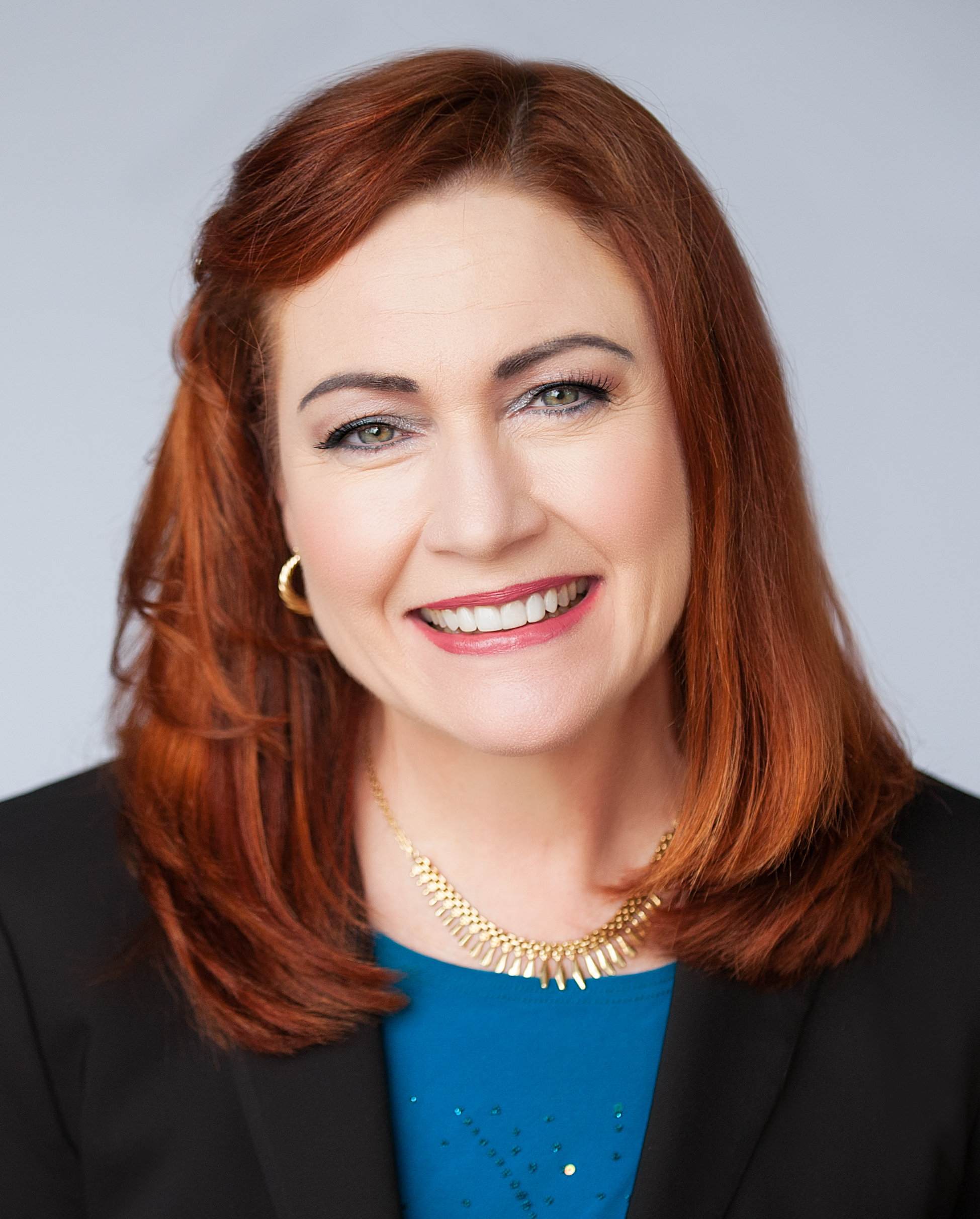
Bethany Bowman

As we talked with teachers across the state and continue to talk to them, one of the issues they mention is the need for high-quality professional development and learning opportunities. Therefore, in 2012 Professional Educators of Tennessee launched Leader U. It is strictly about gathering the best presenters in the state to address key topics that teachers have identified and skipping all the political shenanigans that other organizations try to pass off as professional development. It is real learning for real educators by their peers.

If you are a Tennessee educator or a supporter of Tennessee education, you need to attend a day of exceptional professional learning, Leader U at Trevecca University’s Boone Center in Nashville on Friday, June 1. The conference’s theme is Champions for Children where speakers will provide insight on providing a more engaging classroom and school to its students.

The conference will begin Friday morning with a keynote address from Champion for Children advocate, Dr. Ronald Woodard as he illuminates “Developing a Champion Mindset for Children.”Respected teacher-leaders and presenters from across the state will lead professional development classes on important topics that include Student EngagementOrganized ChaosProject-Based LearningTeam EvaluationBullying and much more. The 2018 Tennessee Teacher of The Year, Cicely Woodard, will do a 90-minute session on The Engaging Classroom while TSIN 2018 Excellence in STEM Teaching Award winner and Edmodo Educator, Sharon Clark, will complete a session on Bridging Gaps/Cultivating Curiosity.

In addition to the keynote, there will be other breakout sessions with a choice of 12 presenters from which teachers and administrators can choose the classes which best fit their needs. The event is TASL accredited for administrators and all educators will receive a certificate for 6 hours professional development credit. The cost to attend is $40 for members of Professional Educators of Tennessee and $60 for non-members. Breakfast and lunch are included.
But wait there is more! We have always understood how busy educators are, so in 2013 we also launched the Leader U On-Demand Professional Learning Portal where you can complete your credits when and where it is convenient for you and receive a certificate as soon as it is completed. Keep track of all the classes you have completed and print your records at any time. Classes include TASL accredited sessions from the annual conference along with webinars from throughout the year and even relevant content from other organizations nationwide. We do our best to provide a one stop-shop for your professional learning needs.

To register for Leader U 2018, visit www.leaderutn.com. Questions? Please email learning@leaderutn.com.

*********

Professional Educators of Tennessee is a non-partisan teacher association headquartered in Nashville, Tennessee. Permission to reprint in whole or in part is hereby granted, provided that the author and the association are properly cited.