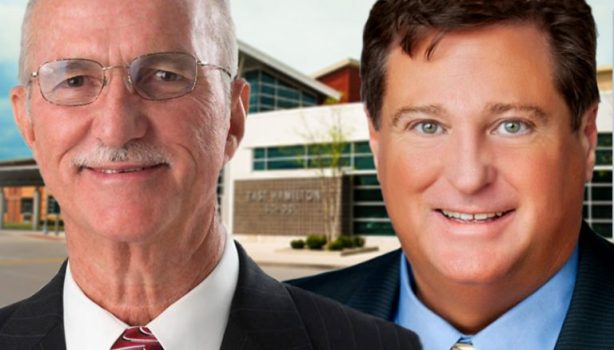
The Role of a School Board

Fotolia_1877783_Subscription_XL.jpg

Education is primarily a state and local responsibility in the United States. Most Tennesseans support local control of public education by the district board of education. This includes the autonomy of the local school district to adopt curriculum, assessments and programs to meet recognized educational goals and objectives. The most important role of a board of education is to hire its superintendent.

It is clear in the Tennessee Constitution that the responsibility for control and support of public schools is delegated in the Tennessee General Assembly, while in large measure the operation is entrusted to local school boards. The school board is the community’s watchdog on public education, thus ensuring that taxpayers get the most for their tax dollars. Taxpayers must hold school board members accountable for spending and results. School boards represent the public’s voice in public education.

Local school boards reflect the needs and aspirations of the communities as well as the interests and concerns of professional and nonprofessional employees. We believe non-partisan control is what is best for our communities. This is best ensured when educational policy is made by representatives vested in the community they live, and whose undivided attention and interests are devoted strictly to education of the children in that district. What we stress in a nutshell: Public education is a federal concern, a state responsibility, and a local operation.

State and federal education policies should be designed to assist local school districts in improving student achievement for all children and not be disguised as a means to label public schools as failures. Prior to any state or federal intervention based on a school’s or district’s failure to meet performance or accountability standards, governments should ensure that local schools and districts receive the necessary resources, support and time to improve. Tennessee, to its credit, has done a lot right in public education. However, no system is perfect.

The authority of the local school board is established in code, and this authority should not be delegated to others. Local boards of education must not relinquish their governance responsibilities in any situation, especially in management and oversight. We believe all children should have equal access to an education that maximizes his or her individual potential.

School boards are subject to the requirements of existing law are the governing and policymaking bodies for schools in their district. They should refrain from agreements that compromise their responsibility for representing general public interest in education. Local boards (should) know the unique and varied needs of their communities. They must also work with local governance to further the goals of the school district. Professional Educators of Tennessee are also glad to assist school board members when they reach out for assistance.

School boards must embody the community’s beliefs and values. School board members should be as diverse as the citizens they serve. We should thank the men and women who are serving our communities as school board members. They are too often unappreciated, and it is often a thankless but needed job.

Unfortunately, there are some people who end up on school boards who do not understand their unique role, and we should look at increased training to assist them in increasing their knowledge. The Tennessee School Board Association can play a significant function in that effort.

We should also encourage high character men and women in that want to serve the community to consider seeking a position on the school board. We need passionate people committed to children and those who teach them, looking out for each community’s interest. Are you ready to serve?

##

JC Bowman is the Executive Director of Professional Educators of Tennessee, a non-partisan teacher association headquartered in Nashville, Tennessee. Follow him on Twitter @jcbowman. Permission to reprint in whole or in part is hereby granted, provided that the author and the association are properly cited.
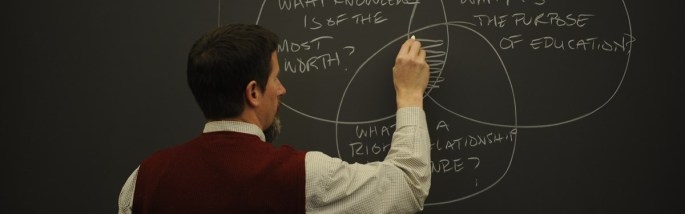
Killing Public Education

1teacher-education

Bill O’Reilly has gone on quite a killing spree. He has written books such as Killing the Rising Sun, Killing Reagan, Killing Patton, Killing Jesus, Killing Kennedy and Killing Lincoln. I think he should also write one called Killing Public Education.

Here is what is killing public education:

  1. A Culture of Disrespect is rampant in our schools. This can be created by a variety of reasons. Lack of respect for a profession, which is roughly 80% female. Too many people incorrectly believing that anybody can be a teacher. The very structure of our public education system, as well as the state of our society, often means educators are the major authority figure in many children’s lives. This necessitates that educators are on the frontlines of the culture wars. This result in an ugly fact: teachers provide the only correction or discipline some children ever receive. This leads to a negative perception of teachers and public education in general.
  2. The struggles that most educators face are daunting. Poverty is rampant in our nation and it is particularly obvious in our Southern states. One high school principal told me: “My school has very high poverty and mobility rates. We can’t continue to blame failure on teachers and principals. Families are failing and the evidence of that damage is clear. We love our students and are dedicated to them. Honestly, I don’t know what the answer is anymore. Eradicate poverty seems to be the obvious solution.” However, government has been trying to address this issue for well over 50 years. And it really hasn’t improved the situation. Family structures are being redefined and crumbling.
  3. We have become so driven by standards, testing and accountability that we have lost sight of what truly matters: children and those who educate our children. Testing has become big business; it is no longer merely a snapshot on a child’s progress. Data is the gold standard. We care more about what data tells us, than what a teacher tells us. And what do we know about the people creating the tests and interpreting the data? Data is not more important than children, or those that teach them. British Prime Minister Benjamin Disraeli said: “There are three kinds of lies: lies, damned lies, and statistics.” Perhaps we are not looking at the right statistics.

Educators know what needs to be done to improve education. Unfortunately, their voices have too often been replaced by philanthropists, business leaders and outside organizations. Often these “outside influencers” are driven by poor understanding of the issues, self-serving interests or in some cases greed.

The argument often used to counter the power of educators is that public education needs to be run more like a business and be more efficient. These arguments often fail to consider the “inside influencers” of district policy, state policy, and federal rules, laws and controls which often end up essentially micro-managing our local schools.

If we do not want to kill public education, the teaching profession must be elevated in stature. Educators must be seen as community leaders both inside and outside of the classroom. Far too often the voices of classroom teachers are not included in the decisions that impact their livelihood or their students. Few occupations are given so little say in their chosen field.

Let’s not wait until the autopsy or until Bill O’Reilly writes another book to explain that educators must be given a more active role in determining the policies that concern their students and the teaching profession. It is imperative that that we accept and nurture the teacher-leaders we already have and look to them for the guidance we need to improve education.

##

JC Bowman is the Executive Director of Professional Educators of Tennessee, a non-partisan teacher association headquartered in Nashville, Tennessee. Follow him on Twitter @jcbowman.

We Can’t Hide from the Tough Issues

Heftiger Disput

Problems are seemingly growing more and more complex, or are they?  In yesterday’s commentary,  Legislators – One Last Thing Before You Go!, we wanted to make sure our teachers are not going to be penalized by flawed test results and scores from this year on a teacher’s 3-year average.  It seems like it should be a simple fix, but actually is a little more complex.  That is what legislators must regularly balance in decision-making in the Tennessee General Assembly.  In public policy it isn’t always a struggle between right and wrong.  There is rarely a perfect solution.

We are very pleased that the Tennessee General Assembly wanted to hold students, educators and school districts harmless.  It really is a hold harmless, provided school districts in fact do not use test data into employment decisions like promotion, retention, termination, compensation—or even an improvement plan. It seems clear that the intent of the legislature was to ensure that the scores couldn’t harm teachers or students in any way, so we think this is an important part emphasized in SB 1623/HB1981.  However, we argued that they just missed a critical component, which is true.  Test results from this year still affect their scores and 3-year averages.

Here is the dilemma:  if we do not use this year’s TVAAS for teachers it would also likely hurt some teachers from gaining tenure.   And that too, is unacceptable and unfair.   So accordingly, this year’s data only counts as 10%, last year at 10% and the previous year at 15% to make up the 35% of the evaluation.   Teachers can use last year or this year as the full 35% if it helps the teacher.   They must have that data as part of their evaluation or the results can’t be used.  So, to be clear, a school district cannot use that flawed data, but a teacher can.  School districts cannot base employment termination and compensation decisions for teachers on data generated by these statewide assessments.  So, do legislators change the law they just passed, try to modify, or leave it be for now?  That is the discussion that they must have this week.

Legislators would be negligent if they do not further discuss the issue. They may choose to just take the fleas with the dog.  They have done excellent work on this issue to protect teachers, and they deserve the credit.  In the end the lesser of disappointing options is to leave in place what was passed.  We understand that choice.  In a perfect world we would have had perfect execution of the TNReady Test by our vendor Questar.  Then we would not be talking about flawed data, impact on 3-year averages or tenure. However, three things are almost certain on the campaign trail in 2018, especially in state races:

  • The continued feasibility of using a complicated statistical method as an evaluation tool for teachers will certainly be further debated by stakeholders and policymakers in the foreseeable future. Do we continue using The Tennessee Value-Added Assessment System (TVAAS)? Move to another more reliable statistical method?  Or do we abandon these complicated formulas altogether?
  • States are allowed to use federal funds, but no longer required, to continue teacher evaluations linked to test scores. Only a handful of states took advantage of the testing flexibility Every Student Succeeds Act (ESSA) allows.  In fact, the US Secretary of Education is explicitly prohibited from mandating any aspect of a teacher evaluation system.  So, will our state continue linkage of test scores to evaluation moving forward? Or will we end the practice?
  • Do we continue moving toward an online test, or do we yet again revert strictly to paper and pencil or some combination of the two?

Sometimes issues are complex, and the simple solution is not possible.  Simon Sinek, wrote: “There is no decision that we can make that doesn’t come with some sort of balance or sacrifice.”  This may be a case where the right solution is based on flawed data may be a right solution.  Then again, we may be all be wrong.  Let the debate continue.

##

Audrey Shores is the Chief Operating Officer of Professional Educators of Tennessee.   JC Bowman is the Executive Director of Professional Educators of Tennessee, a non-partisan teacher association headquartered in Nashville, Tennessee. Permission to reprint in whole or in part is hereby granted, provided that the author and the association are properly cited. For more information on this subject or any education issue please contact Professional Educators of Tennessee.
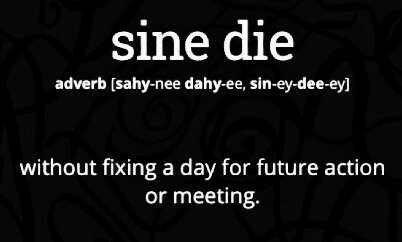
Legislators: One Last Thing Before You Go!

Capitol

The 110th Tennessee General Assembly is nearing the end, and for many, the end cannot come soon enough.  There are political races waiting and they are ready to hit the campaign trail as election season is about to launch in earnest. But before they exit Nashville, there is one last thing left for them to do: finish protecting our educators.  Unfortunately, these flawed test scores can, and will, impact teacher evaluations.

The Tennessee General prudently and quickly stepped in after the latest testing failure.  Let’s make clear, this was the result of concerned stakeholders to make sure students, educators and districts are held harmless for this year’s TNReady invalid results.  Our legislators deserve the recognition and the acclaim for their effort.  Senate Bill 1623 was sponsored by Senator Dolores Gresham, along with Senators Bowling, Massey, and Pody.  House Bill 1981 was sponsored by Representative Eddie Smith, along with Representatives Hardaway, Daniel, and Parkinson.

Educators wanted to ensure that school districts could not base employment termination and compensation decisions for teachers on data generated by these statewide assessments.  This was accentuated in SB 1623/HB1981.  It must be noted that local districts have always had complete discretion in how they choose to factor test data into employment decisions like promotion, retention, termination, and compensation.  Local school districts have considerable flexibility to pause any policies or programs that emphasize the use of TNReady results in these types of personnel decisions.

Previous legislation, now law:  The Tennessee Teaching Evaluation Enhancement Act (T.C.A. § 49-1-302) adjusted the weighting of student growth data in an educator’s evaluation to lessen impact of TNReady on evaluation scores. TNReady factored into evaluation scores at 10 percent for the 2016-17 school year and will factor into evaluation scores at 20 percent for the 2017-18 school year and 35 percent for the 2018-19 school year and thereafter. Additionally, growth data from year one of TNReady will only be used if it benefits the educator. If it does not, the qualitative component of the evaluation composite will increase.

So, despite the incredible work of Tennessee Legislators, they needed to make sure the excluded test scores from this year does not impact teacher evaluations.  It seems clear that the intent of the legislature was to ensure that the scores couldn’t harm teachers or students in any way, so we think this is an important part. However, they just missed a critical component.  Even if employment decisions shouldn’t be based on them, the test results from this year still affect their scores and 3-year averages.

We first raised these concerns on passage of the SB 1623/HB1981 Conference Committee report with a few policymakers.  One teacher who contacted us really does want to be able to use her scores – her students are taking the paper and pencil science test next week, so they haven’t been affected by any of the issues this week. And they have worked really hard to be ready for the test. Others who may be affected negatively certainly would not want the test scores to be used.

To solve the issue, it would be beneficial to teachers to replicate what was done in 2016 with the Evaluation Flexibility Act – SB2508/HB1419 (PC No. 172) – which stated that student growth composites would be excluded unless they resulted in higher evaluation scores, with the qualitative portion of the evaluation score increased in its place. Section 3 describes a similar provision for teachers without access to individual growth data.

“For the 2015-2016 through 2017-2018 school years, student growth evaluation composites generated by assessments administered in the 2015-2016 school year shall be excluded from the student growth measure as specified in subdivision (d)(2)(B)(ii) if such exclusion results in a higher evaluation score for the teacher or principal. The qualitative portion of the evaluation shall be increased to account for any necessary reduction to the student growth measure.”

All the legislature would have to do is take the previous language from Sections 1 & 3 and change 2015-2016 to 2017-2018, and 2017-2018 to 2019-2020. Section 2 doesn’t need to be changed unless the phased in percentage schedule of (d)(2)(E)(i) – (d)(2)(E)(iii) is being updated.  We don’t think that 49-1-302(d)(2)(E)(ii) needs to be adjusted or referenced, since it’s essentially just a circular reference to (d)(2)(B)(ii). Although we think this would make (d)(2)(E)(ii) obsolete, since if the test results would help they would probably just want to go ahead and use it for the full 35% as provided in (d)(2)(E)(iv).

The continued feasibility of using a complicated statistical method as an evaluation tool for teachers will certainly be further debated by stakeholders and policymakers in the foreseeable future.  However, the issue that members of the 110th Tennessee General Assembly must address before leaving for home is making sure our teachers are not penalized by flawed test results and scores from this year on a teacher’s 3-year average.   We know legislators can take action when they focus.  The goal of the legislature is to ensure these flawed scores don’t harm our educators.  We need legislators to finish the job and end what they started.

##

Audrey Shores is the Chief Operating Officer of Professional Educators of Tennessee.   JC Bowman is the Executive Director of Professional Educators of Tennessee, a non-partisan teacher association headquartered in Nashville, Tennessee. Permission to reprint in whole or in part is hereby granted, provided that the author and the association are properly cited. For more information on this subject or any education issue please contact Professional Educators of Tennessee.

The Changing Face of Advocacy

hellios

According to the Greek Mythology, the god, Helios, would put the Sun in a chariot and drive it through the sky each day.  That is how the Sun would rise and set.  Today, we would scoff at such a notion and understand that such a feat would be impossible.  We would think that people who would believe such a notion probably were not very intelligent and extremely gullible.  Such is the story of modern day lobbyists and advocates.

Frank R. Baumgartner, a Professor of Political Science at the University of North Carolina at Chapel Hill says there is no consistent correlation between money spent on lobbying and outcomes.  In his book, Lobbying and Policy Change: Who Wins, Who Loses, and Why, Baumgartner effectively proves that lobbyists are far less influential than political rhetoric suggests and that they fail to change policy despite millions of dollars spent trying. As to the why?  He points to an “entrenched system” with an enormous “bias in favor of the status quo.”

I have been on the forefront of policy change for over a quarter of a century, advocating for education.  It means that I have witnessed much the last three decades in Tennessee. I have seen policymakers come and go.  I have seen lobbyists come and go.  Next year, in 2019, we will see a new US Senator, a new Governor and perhaps as many as 35 new state legislators.  Campaign contributions, as important as those may be to the candidate, mean very little in the current system.  Money no longer “buys” votes, and it should never have done so in the first place.  Politicians now often receive contributions from interests on both sides of any issue.

It is amazing with the vast array of people lobbying on an issue that anyone or any group should take credit for the passage of any legislation.  The truth is that it is always a coalition of stakeholders building a compelling case on a political issue.  In the end, only the legislator votes.  So, any person or group who claims credit for a passage of legislation needs to be reminded of that truth.

In the end, we build coalitions work together, educate legislators on issues and count votes.  The legislator is the decisionmaker.  Advocates have three numbers you have to reach – 50, 17 and one:  50 votes in the House of Representatives, 17 in the Senate, and one from the Governor.  Only the Tennessee General Assembly deserves credit or blame for the passage of legislation.  In all the years that I have worked with legislators, I truthfully have found most to be honest, hard working people who want to do the right thing for their constituents.  I have also seen some who really do not listen, and these usually do not last long in the political arena.

The key to effective advocacy is relationships, which must be developed and also sustained.  Building relationships with lawmakers and other stakeholders means getting to know them, their personal interests and histories, and even their families. Having a relationship never guarantees support, but it does help to ensure that others will listen to you.  We must build networks and coalitions, around the objective of helping those you serve.  Stakeholders know what is likely to be taken serious by policymakers, sometimes just by whom introduces it, or who carries the legislation for the lobbyists.  We must also know how to correctly draft legislation to assist lawmakers who are overwhelmed during session.  We frequently see people try to put things in the wrong part of the code or use the wrong terminology. Advocates must identify people who support changing a policy and are willing to testify.  Those who advocate or lobby have to be taken seriously at the Capitol.  Then there is media coverage, which is a whole separate issue.  The media will cover an issue if they think voters or their audience are interested in the subject.

In advocacy, we have to be honest and transparent.  We have to tell the truth.  People can spot a snake-oil salesman a mile away.  A Cheshire cat grin and a fake tan will only take you so far.  Legislators do not like being lectured to when you testify.  The biggest mistake I see is when a know-it-all goes before a committee arrogantly and moralizes and lectures legislators.  People talk.  Just answer the question when asked, and don’t pontificate to hear your own voice by expounding on unrelated issues.  Conceit, excessive pride, combined with arrogance is called hubris.

When we engage in grassroots and direct advocacy with policymakers and key influencers around the state on behalf of public education policies, it reminds us that we live for a far greater purpose than just ourselves. Our impact is immeasurable and transforming.  It not only matters to the profession and our educators, it also matters to children and families across Tennessee.

Our experience here in Tennessee ensures our members’ concerns are heard at the Tennessee General Assembly and by other stakeholder groups. It also means we work with other groups on goals we want to achieve: some long-term, some short-term.  By doing this, we witness and help facilitate minor and major shifts in education policies and observe and work with changing political leaders.  And we must remember, these new education policies can have a positive or negative impact on educators or children.  We work the entire year focused on the priorities of our organization and our members.  However, we do not do it alone.  We accomplish our goals by working with others and through elected officials.

Leaders also need mountains to climb.  We and they also realize that they cannot solve every problem on our own. Leadership is about giving.  Great leaders understand that leading others means serving others.  The one question leaders must ask themselves: are you interested in finding solutions for today’s challenges? Then learn to work with others to benefit those you serve, without worrying about who gets credit.  It is a hard lesson to learn for some.  The sun will still come up, even if you don’t get the recognition.

##

JC Bowman is the Executive Director of Professional Educators of Tennessee, a non-partisan teacher association headquartered in Nashville, Tennessee. Permission to reprint in whole or in part is hereby granted, provided that the author and the association are properly cited. For more information on this subject or any education issue please contact Professional Educators of Tennessee.
School Safety and Security Event Today

JC Bowman will be joining  Sheriff Jim Hammond and other leaders in Hamilton County to discuss School Safety and Security.  Event is open to the public.  Info: https://atomic-temporary-137731796.wpcomstaging.com/2018/04/13/school-safety-and-security-town-hall/

JC's Blurb 3

School Safety and Security Town Hall

Sheriff-and-Bowman-East-Hamilton

A School Safety and Security Town Hall open to the public will be held Monday at East Hamilton Middle High School to continue a day focused on school safety in Hamilton County.

Hamilton County Sheriff Jim Hammond and Professional Educators of Tennessee are partnering to stage the Town Hall, which will take place 4 p.m. – 5:30 p.m. Monday, April 16, at the school complex in Ooltewah.

In addition to Sheriff Hammond, Chattanooga Police Chief David Roddy, Hamilton County Schools Superintendent Dr. Bryan Johnson, National School Security Expert Michael Yorio, and Dr. J.C. Bowman, Executive Director of Professional Educators of Tennessee, will serve as panelists. Businessman and radio host Weston Wamp will facilitate the Town Hall.

“The Town Hall will give parents, teachers and other stakeholders in public education the chance to offer their views on school safety,” said Sheriff Hammond. “Also, we will be able to share information about the Monday morning discussion with elected and community leaders.”

Dr. Bowman said teachers from counties surrounding Hamilton County will be informed of the timely event. He will also discuss research on school safety which the Professional Educators of Tennessee has completed with its membership.

“We are grateful to join with Sheriff Hammond and other strong leaders in Hamilton County to have timely, orderly discussion about an issue front and center in Hamilton County, the state and the nation,” said Dr. Bowman. “This is a wonderful opportunity for teachers, including our members in Southeast Tennessee.”

Yorio serves as president of SSI Guardian, LLC, and is senior vice president of security for School Specialty, Inc. As he will do in the morning meeting with area leaders, Yorio will bring a national perspective on school safety.

Wamp said the event will be recorded and made available to Professional Educators of Tennessee’s 8,000 members and others. Wamp, a Chattanooga businessman, will facilitate the forum. After brief opening remarks, questions will begin. Partisan, political speech will be stopped from stage, and Wamp urges attendees attending to have prepared, concise questions. Questions will end promptly at 5:30. The theater at East Hamilton has an estimated seating capacity of 300.

About Sheriff Jim Hammond: Sheriff Jim Hammond is the current Sheriff of Hamilton County and has been since August of 2008. His Sheriff’s office personnel consist of 386 full-time and 33 part-time employees. His area of coverage is Hamilton County, which is the fourth largest county in the state of Tennessee. As a Constitutional Elected Official of the State of Tennessee, Sheriff Hammond brings over 54 years of law enforcement experience to his credit, including 15 Years as Chief Deputy. He is also a veteran of the US Navy, an international police instructor, and former adjunct instructor for the University of Tennessee at Chattanooga.

About Professional Educators of Tennessee: Professional Educators of Tennessee is a non-partisan statewide professional association whose members come from all aspects of the educational systems in Tennessee. Their 8,000 statewide members include teachers, administrators and non-certified staff from kindergarten to graduate school level, public and private.

About Michael Yorio and SSI Guardian: National School Security Expert Michael A. Yorio is a former defense industry executive who is credited with founding SSI Guardian, the nation’s leading school safety and security firm and wholly owned subsidiary of School Specialty Inc. He has led the 21st Century Safe School initiative addressing institutional safety from an evidence based best practice approach focusing on the social, emotional, mental and physical factors.

About Weston Wamp: Weston Wamp has worked to promote best-practice guidelines for school safety across the country for two years, and he is currently involved in an effort of a national, non-profit organization that will address gaps in modernizing security in 21st century classrooms. He has hosted “The Pitch” on ESPN Chattanooga (105.1 FM) each Saturday morning for the past two years.

East Hamilton Middle High School is a public high school located in Ooltewah, Tennessee. Established and opened in 2009, it is one of the newest schools in the Hamilton County School district.

Address: 2015 Ooltewah Ringgold Rd, Ooltewah, TN 37363
PrincipalGail Chuy

#####

JC Bowman is the Executive Director of Professional Educators of Tennessee, a non-partisan teacher association headquartered in Nashville, Tennessee. Permission to reprint in whole or in part is hereby granted, provided that the author and the association are properly cited. For more information on this subject or any education issue please contact Professional Educators of Tennessee. To schedule an interview please contact Audrey Shores, Director of Communications, at 1-800-471-4867 ext.102.
JC's Twitter Post 2

Tennessee School Safety Survey Results

school-safety_LG

One of the highest priorities we can have in American society is the safety and protection of children – and the men and women who teach them. From February 27 to March 9, 2018 Professional Educators of Tennessee surveyed 1403 educators across Tennessee. Ninety-seven percent listed their role as being a current educator, while 3% reported being retired educators.

When asked if they felt safe at school, 47% stated they felt safe, while 41% stated they felt somewhat safe, 10% felt somewhat unsafe and 2% felt unsafe.  When asked if an armed School Resource Office improved safety, 98% felt that they either improved or somewhat improved the safety of a school climate. While 62% responded that they have an active shooter protocol, only 55% reported that their School Resource Officer carried a side-arm. Conversely, while 1% of respondents stated their school already had metal detectors, 53% felt they were not needed at this time.

When asked about safety regulations already in place at school, 87% percent stated that all visitors are required to have a visitor’s pass but only 34% of schools required students and staff to wear a photo ID at all times. Seventy-five percent of all educators reported an increase on security procedures and awareness and 89% have practiced “lockdown” drills.

We also asked if educators thought that there were enough school counselors available to actually counsel students needing mental health services.  Sixty-three percent of the respondents said there are NOT enough guidance counselors at their school. Thirty-seven percent believed there are enough guidance counselors.

Regarding the hotly debated issue of allowing teachers to be armed in the classroom, an interesting finding of our survey was that 53% percent of educators stated that they personally would be unlikely to carry a firearm in the classroom, but 63% of those surveyed felt that properly trained personnel should be allowed to carry a weapon to school. Although 59% of educators reported owning a firearm, only 37% stated they would be likely or somewhat likely to carry a firearm to school.

There is a wealth of information in the nearly 850 comments that educators thoughtfully provided. We appreciate the educators who took the time to provide diverse thoughts and responses. Open-ended responses showed strong support for increased focus on student mental health, and lower school-counselor ratios were mentioned frequently. Comments also frequently mentioned support for increased SRO presence and improved school safety infrastructure (eg. bulletproof glass, door locks, intercoms, panic buttons, use of retired military and law enforcement, and cameras). There was both strong opposition to and support for allowing educators to carry firearms in schools. The entire comments section is available for download here. Comments are unedited except for the removal of  identifying district or school information.

#####

JC Bowman is the Executive Director of Professional Educators of Tennessee, a non-partisan teacher association headquartered in Nashville, Tennessee. Permission to reprint in whole or in part is hereby granted, provided that the author and the association are properly cited. For more information on this subject or any education issue please contact Professional Educators of Tennessee. To schedule an interview please contact Audrey Shores, Director of Communications, at 1-800-471-4867 ext.102.

JC's Twitter Post 2

Rethinking Driver’s Education

textingteendriving

Ladies and gentlemen, start your engines! 

With that little phrase, we are off to the races to get to our morning destination—work, school or other location.  I have been driving since I was 13 years old, and legally since I was 16.  I have never seen worse drivers in my lifetime, all across the state and nation.  Every time I get behind the wheel I say a silent prayer, “Dear Lord, please don’t let me be run-over by the idiots today and keep me and others safe out there.”

I remember when driving a vehicle was a privilege, first granted to me by my parents and then recognized by those who issued a license.  In fact, driving a car is not a right promised to every person, but rather a privilege granted to people who complete certain requirements. In the legal arena, even the US Supreme Court says that citizens do not have a fundamental “right to drive.” In Dixon v. Love, 431 U.S. 105, 112-16, 97 S.Ct. 1723, 52 L.Ed.2d 172 (1977), the Supreme Court held that a state could summarily suspend or revoke the license of a motorist who had been repeatedly convicted of traffic offenses with due process satisfied by a full administrative hearing available only after the suspension or revocation had taken place. The Court conspicuously did not afford the possession of a driver’s license the weight of a fundamental right.  (See also Mackey v. Montrym, 443 U.S. 1, 10, 99 S.Ct. 2612, 61 L.Ed.2d 321 (1979); Bell v. Burson, 402 U.S. 535, 539, 542-43, 91 S.Ct. 1586, 29 L.Ed.2d 90 (1971).)

Tennessee does mandate that in order to get an Intermediate Driver’s License, a minor must have certified 50 hours of supervised behind-the-wheel experience, including 10 hours at night.  The Tennessee Department of Safety only requires students to complete a driver’s education course if they have been convicted of multiple moving violations while they are operating on their intermediate restricted license.  It is time to re-think that policy.  It is currently not a requirement in order for a minor child to obtain a permit or license to successfully complete a driver’s education course.  Nobody disputes that it is an important resource that can help students become responsible and safe drivers.  Should we restrict student access on our school campuses until they can prove to be responsible and safe drivers?   Should driver’s education course be required?  How can we prove or truly verify the supervised behind the behind-the-wheel or night experience?  

From a school safety perspective, school district policy should require a student pass a driver’s education course before being allowed to drive to/from school or park their vehicle on school grounds. This class could also be offered during the summer or through any of the legitimate driving schools across the state. The objective should not be to save parents a few dollars on auto insurance, it must be to improve driving, reduce accidents and injuries and ultimately save lives.  We all benefit by learning defensive driving techniques and other safe driving skills that will last a lifetime.

distracted

The  rules of the road are also shifting. We all face obstacles in an increasingly challenging driving environment, especially with more inexperienced drivers on the roads.  Texting in driving, is one of the most distracting items a driver can do.  Phone use – particularly calling and texting – while driving is one of the most common distractions. New technologies bring even greater challenges with distracted drivers.  New technology in vehicles is not always to our benefit, “infotainment” dashboards GPS maps and other hands-free technology may actually impede smart driving and safety.  Multitasking technology is about convenience, not safety.  Good driving habits require training and repetition.

A driver’s education course is a beneficial choice for drivers of any age and experience levels.  However, it should be required for all minors navigating our roads.  It is time to re-think our policies before the next generation starts their engines.  Lives most certainly will depend on it.

##

JC Bowman is the Executive Director of Professional Educators of Tennessee, a non-partisan teacher association headquartered in Nashville, Tennessee. Permission to reprint in whole or in part is hereby granted, provided that the author and the association are properly cited. For more information on this subject or any education issue please contact Professional Educators of Tennessee.