Life’s Whatcha Make It

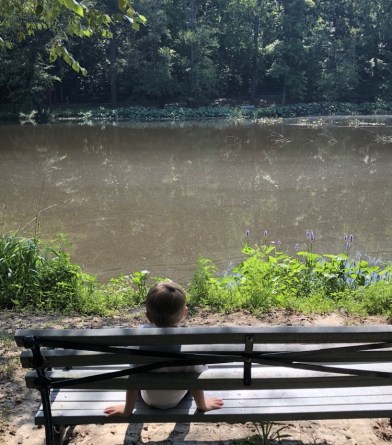
donovan thinking

The future doesn’t belong to the brilliant, but rather to the resilient.  Resilience is the ability that allows people that have a setback in the goals to comeback stronger than ever in their life.  Psychologists have identified a few of the factors that make somebody resilient, among them:  a positive attitude, optimism, the ability to control emotions, and the capacity to see failure as temporary.

Peter Buffett wrote: “Our journey in life rarely follows a straight line but is often met with false starts, crises, and blunders. How we push through and persevere in these challenging moments is where we begin to create the life of our dreams.” Sometimes failure and pain are our life’s greatest teachers. The toughest people are the ones who love despite personal shortcomings, cry to themselves behind closed doors and fight battles that nobody may even know about.


Life is about transcending your circumstances, taking control of your destiny, and living your life to the fullest.  Educators must embrace that mantra in the classroom, and out of it.  As Jake Owen’s recent summer tour “Life’s Whatcha Make It,” he describes it like this:  “[If] you wake up in the morning and you’re happy and you go forward with a smile on your face and want to make it great, most likely, it’s gonna be a great day,” he says. “If you wake up on the wrong side of the bed with negativity in your mind, that’s pretty much how your day’s gonna go.”

It was the movie character, Ferris Bueller, who reminded us that: “Life moves pretty fast. You don’t stop and look around once in a while, you could miss it.”  One of the things that’s people fail to do is appreciate the good things in life.  For most of us, we enjoy a roof over ou

r heads, food on our table, good health, a family that loves us, friends who care, and the opportunity to work a job we like for money.  So, the first step to making the most out of life is deciding what you want to achieve.  What are your goals in life? Do you appreciate what you have?  If you cannot answer that affirmatively, chances are you will never be happy.

Much has been made of what motivates people to teach. A career in public education is one of the most altruistic and generous career choices.  It will never be for the money.  And if you have been deceitfully convinced that it is a paycheck for what draws people into public education then you have lost the vision and purpose of education.   Teachers don’t teach for the income.  They teach for the outcome.   It truly is about your students’ success.  And that is not measurable on a test score, and their success might not be visible until those children reach adulthood.

Teachers are some of the most resilient people I know.  Good teachers know how to bring out the best in students. Still they do not have the ability to control their work environment, their salary, or how those around them respond to changes—from supervisors, to colleagues to students.  When you study great teachers, it is likely you will realize it is the immeasurable things like their caring and hard work, rather than their technique or test scores that set them apart. Teachers who take an actual interest in their students’ lives are the ones students become inspired by, and learn the most from in a classroom.

I was taught first at home, then reinforced later by my time in the Marine Corps to “adapt, improvise and overcome.”  In my career in the military, and later as a classroom teacher, I learned the meaning of Semper Flexibilis, which translates to “always flexible.”  It is true that sometimes the best things in life come out of change, even if the changes are unwanted. If you can’t change it, change the way you think about it.

As adults we reflect on the lessons we learned growing up.  We always remember and cherish the those who encouraged and supported us through difficult times.  Nobody wants to be left out, or made to feel like they do not fit in.   We all want to be seen, felt, and understood.  Those adults who give us emotional support are as important as those who give us academic validation.   Call it empathy, or seemingly being attuned to the needs of others.  We never forget that adult who cared for us as children. As an educator how would students describe you to others?  How do your neighbors describe you?  How does your family describe you? 

Joshua J. Marine wrote: “Challenges are what make life interesting; overcoming them is what makes life meaningful.”  The ability to overcome obstacles is critical whether you are a student, classroom teacher, administrator or CEO of a company.  Learn to chase your dreams, develop your own uniqueness and ability.  Understand there will be disappointments along the way.  Your ability to bounce back is essential to your success in life.   We must also teach our children to be resilient.

##

JC Bowman is the Executive Director of Professional Educators of Tennessee, a non-partisan teacher association headquartered in Nashville, Tennessee. Permission to reprint in whole or in part is hereby granted, provided that the author and the association are properly cited. For more information on this subject or any education issue please contact Professional Educators of Tennessee.

Thomas Jefferson & American Education

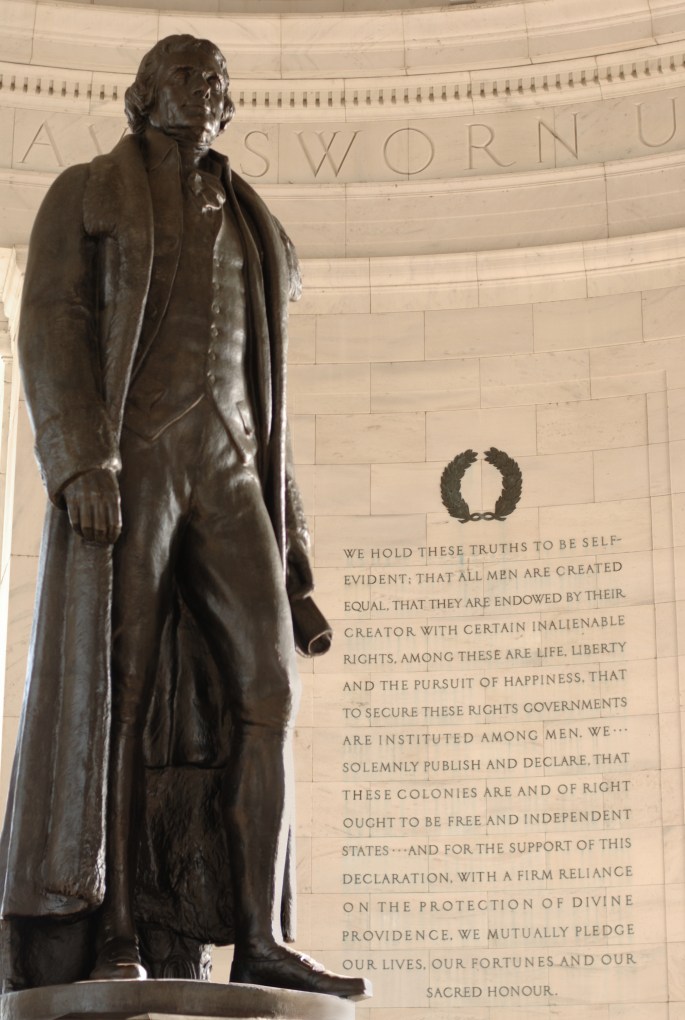
thomas jefferson

The lives of our citizens are enriched through public policies that enhance economic opportunity and freedom. However, some policymakers lack basic understanding of sound economic principles, as well as the fundamental principles of our free enterprise system which include individual initiative, personal responsibility, limited government, respect for private property and the rule of law, economic freedom, and an educated citizenry –the same shared principles that inspired our Founding Fathers.

Most citizens have now started to fully understand that as government growth increases, liberty decreases. They agree it is a shared responsibility of all, stakeholders and policymakers alike, to ensure our tax dollars are wisely spent. In education we need to make sure tax dollars are utilized on programs that benefit students and those who teach them. An essential objective in public education is, and must be, an educated citizenry that creates an informed electorate.

Many have attributed to Thomas Jefferson the genesis of the belief that an educated citizenry is a vital requisite for our survival as a free people. Whether Jefferson ought to be given credit is arguable. However, it is a worthy goal to have an educated citizenry to both secure the future of our democracy and for our citizens to be competitive globally.

To some extent, in education we have abandoned Jefferson’s advocacy that an “enlightened people and an energetic public opinion” should keep the “aristocratic spirit of the government” under control. Jefferson feared the power of the federal government. Government is not the driving force for excellence. The motivation that drives excellence comes from within the individual. Jefferson understood that in order for citizens to lead in the future they must have virtues and talent. It should be by our achievements in life, not an accident of birth, that determine our future. Education is and was the great equalizer.

Jefferson, who is embraced on both the left and the right politically, certainly understood that it was essential that a suitable education be provided for all its citizens. In fact, Jefferson expressed to James Madison, as early as 1787, “Above all things I hope the education of the common people will be attended to, convinced that on their good sense we may rely with the most security for the preservation of a due degree of liberty.” Jefferson virtually echoed the conviction of Montesquieu in Spirit of the Laws, that “virtue may be defined as the love of the laws and of our country” as a principal business of education.

There is no dispute that Jefferson, as a Founding Father, understood the need of public education. He wrote, “a system of general instruction, which shall reach every description of our citizens from the richest to the poorest, as it was the earliest, so will it be the latest of all the public concerns in which I shall permit myself to take an interest.” As if peering into the future, Jefferson also wrote, “If the children are untaught, their ignorance and vices will in future life cost us much dearer in their consequences than it would have done in their correction by a good education.”

A current catchphrase in public education is “college and career ready.” In contrast, in 1814, Thomas Jefferson used a similar comparison, “the laboring and the learned.” He detailed to Peter Carr, “The mass of our citizens may be divided into two classes — the laboring and the learned. The laboring will need the first grade of education to qualify them for their pursuits and duties; the learned will need it as a foundation for further acquirements.” We really have not changed the identified groups; we just use different labels.

Understanding Jefferson’s view challenges the principle that a number of policymakers have embraced that education is merely about job readiness and employment (laboring class). Unmistakably, the imperative of being educated (the learned) is exceedingly indispensable in a knowledge-based economy and for dealing with an evolving interdependent, multipolar world.

In 1816, Jefferson sent a letter to Pierre Du Pont de Nemours in which he favored an idea he thought might secure education without compulsion. It was, according to Jefferson, a Spanish proposal that nobody “should ever acquire the rights of citizenship until he could read and write.” Jefferson said, “It is impossible sufficiently to estimate the wisdom of this provision.” However, Jefferson did not support making parents put their children in school, suggesting that “it is better to tolerate the rare instance of a parent refusing to let his child be educated, than to shock the common feelings and ideas by the forcible transportation and education of the infant against the will of the father.”

By every account, it is clear that Jefferson approved of a tax-supported, public educational system that would enable citizens to express their opinions and understand complex issues that can inform decisions the electorate must make as they cast their votes. In 1824, Jefferson added “a republican nation whose citizens are to be led by reason and persuasion and not by force, the art of reasoning becomes of first importance.”

How public education is to occur and the financial mechanism to leverage those tax dollars can be debated as they were in Jefferson’s day. However, we believe in public education, and when local school systems work in partnership with communities they serve, they can and will educate students successfully. Public education enables students to access opportunities in a rapidly changing, diverse, global society.

The evidence is clear that Jefferson was correct in the importance of public education for the future of democracy and the United States of America. Jefferson believed that “no other sure foundation can be devised for the preservation of freedom and happiness,” and that failing to provide public education would “leave the people in ignorance.” Our job is to make sure we build on that foundation.

##

JC Bowman is the Executive Director of Professional Educators of Tennessee, a non-partisan teacher association headquartered in Brentwood, Tennessee.

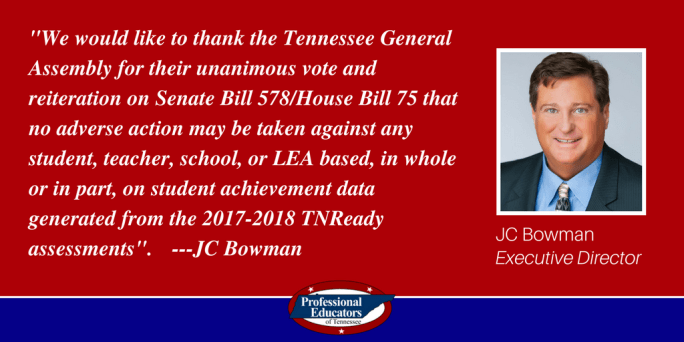
Unanimous Vote Senate Bill 578/House Bill 75

We are pleased that legislators unanimously provided that students, educators or schools will not be held responsible for unreliable results from the failures of the TNReady online assessment platform this year.

JC's Blurb 10

Constitution Bee for Secondary Students in Tennessee

constitutionbeeOn Saturday April 28th at 9-12 PM Central at the Williamson County Administration Building (1320 W. Main St., Franklin, TN 37064).  Be There!  

The Grand Champion prize package has been expanded to include a $3000 scholarship – and that’s in addition to the trip for two to Washington, D.C.!

The Bee is designed to focus on student knowledge of the Constitution and the Bill of Rights in the same way as the National Spelling Bee and the National Geography Bee.

In addition to the Grand Prize winning champion, the top performing student at each grade level (8th, 9th, 10th, 11th, and 12th) will receive a prize package and be featured in profiles at The Tennessee Star.

Registration is still open.  Visit http://tennesseestar.com/2017/09/06/registration-is-open-for-the-tennessee-star-constitution-bee/ to read more and to sign up!

The Tennessee Star Constitution Bee is presented by The Polk Foundation. Read more at http://polkfdn.com.

Special Education Teachers Are Also Special

overworked teacher

It is becoming tough to keep special education teachers in the field beyond two or three years.  We already have a shortage and it is likely to get worse in the future.  Teaching is demanding enough, but special education teachers must cope with even more challenges.  Professional learning is rarely aligned to special education teachers’ needs. Special education teachers face more parental interaction, longer hours, potential lawsuits, additional paperwork, while their students need more attention.  The slogan “work more, same pay” is not exactly a great selling point in teacher recruitment.

The federal Individuals with Disabilities Education Act, or IDEA, requires that every student have what’s known as an IEP — Individualized Education Program.  The IEP involves hours and hours of filling out forms and writing reports documenting each student’s progress.  Recently the Tennessee State Board of Education, in the name of greater transparency, has proposed a rule that may actually create more problems for Special Education Teachers.

The Proposed Rule:  The LEA must notify the parents of a child with a disability at least ten (10) days before an IEP meeting to ensure that a parent will have an opportunity to attend. A meeting conducted pursuant to 34 C.F.R. §300.530(e) may be conducted on at least twenty-four (24) hours’ notice to the parents. If the LEA prepares a draft IEP prior to the IEP meeting, a copy shall be provided to the parent(s) of the child at least twenty-four (24) hours prior to the scheduled meeting time. The copy of the draft IEP shall become the property of the parent(s). If the LEA prepares a draft IEP prior to the IEP team meeting, the LEA shall make it clear to the parents at the outset of the meeting that the services proposed by the LEA are preliminary recommendations for review and discussion with the parents. It is not permissible for the LEA to have the final IEP completed before an IEP Team meeting begins.

Many, but not all, districts provide parents with a draft prior to the IEP meeting, if requested, and with a reasonable timeline.  However, it would not be appropriate or reasonable to mandate that districts provide a draft prior to all IEP meetings.  Here are a few of the concerns, suggestions and questions that have been put forth by our members:

  • May discourage LEAs from creating drafts, which would lead to longer, less structured IEP meetings and may increase the likelihood of procedural errors.
  • May result in LEAs having to hold separate IEP meetings, which could delay initial services up to 30 days after initial eligibility, in order to give time to have a draft ready.
  • Currently, there is no means of documenting LEAs’ compliance as drafts are removed from EasyIEP system after 30 days or when final IEP is created
  • Places undue paperwork burden on already paperwork-heavy sped teachers.
  • May send information that is confusing to parents without having immediate access to professionals who can help interpret or give meaning to info in IEP.
  • May result in fewer parents attending IEP meetings as perception would be that IEP is already completed and their attendance is not necessary.
  • May lead to meetings starting with an adversarial tone.
  • Not all IEP team members are staffed at the same school, making it impossible for them to convene with the other IEP team members to collaborate on the draft 24 hours prior to the meeting.

Looking at the Individuals with Disabilities Education Act and new regulations, an LEA should provide the parents with a copy of its draft proposals, if the LEA has developed them, prior to the IEP team meeting.  Parents deserve an opportunity to review any recommendations prior to the IEP team meeting, in order that they may be better able to engage in a full discussion of the proposals for their child.  It is already not permissible for an LEA to have a final IEP completed before an IEP meeting.  Parents should be able to request a copy of any draft documents prior to an IEP team meeting. However, it is critical to be reminded that not all IEP team members are staffed at the same school, and it may be impossible for them to convene with the other IEP team members to collaborate on the draft 24 hours prior to the meeting.  This creates twice the work for teachers.

Which brings us back full circle.  We subscribe to the philosophy of “All Means All” in public education, which means we educate each and every one of our students to the highest level possible.  If we continue to overwhelm special education teachers when we already have a special education teacher shortage by adding to their workload, recruitment and retention challenges will only escalate.  Then students with disabilities will never attain their full academic potential especially if teachers with no special education background are placed in their classroom.  The proposed IEP policy, as currently being suggested needs work.  This may well be a legislative item in 2019.

##

JC Bowman is the Executive Director of Professional Educators of Tennessee, a non-partisan teacher association headquartered in Nashville, Tennessee. Permission to reprint in whole or in part is hereby granted, provided that the author and the association are properly cited. For more information on this subject or any education issue please contact Professional Educators of Tennessee.
Tennessee School Safety Survey Results

school-safety_LG

One of the highest priorities we can have in American society is the safety and protection of children – and the men and women who teach them. From February 27 to March 9, 2018 Professional Educators of Tennessee surveyed 1403 educators across Tennessee. Ninety-seven percent listed their role as being a current educator, while 3% reported being retired educators.

When asked if they felt safe at school, 47% stated they felt safe, while 41% stated they felt somewhat safe, 10% felt somewhat unsafe and 2% felt unsafe.  When asked if an armed School Resource Office improved safety, 98% felt that they either improved or somewhat improved the safety of a school climate. While 62% responded that they have an active shooter protocol, only 55% reported that their School Resource Officer carried a side-arm. Conversely, while 1% of respondents stated their school already had metal detectors, 53% felt they were not needed at this time.

When asked about safety regulations already in place at school, 87% percent stated that all visitors are required to have a visitor’s pass but only 34% of schools required students and staff to wear a photo ID at all times. Seventy-five percent of all educators reported an increase on security procedures and awareness and 89% have practiced “lockdown” drills.

We also asked if educators thought that there were enough school counselors available to actually counsel students needing mental health services.  Sixty-three percent of the respondents said there are NOT enough guidance counselors at their school. Thirty-seven percent believed there are enough guidance counselors.

Regarding the hotly debated issue of allowing teachers to be armed in the classroom, an interesting finding of our survey was that 53% percent of educators stated that they personally would be unlikely to carry a firearm in the classroom, but 63% of those surveyed felt that properly trained personnel should be allowed to carry a weapon to school. Although 59% of educators reported owning a firearm, only 37% stated they would be likely or somewhat likely to carry a firearm to school.

There is a wealth of information in the nearly 850 comments that educators thoughtfully provided. We appreciate the educators who took the time to provide diverse thoughts and responses. Open-ended responses showed strong support for increased focus on student mental health, and lower school-counselor ratios were mentioned frequently. Comments also frequently mentioned support for increased SRO presence and improved school safety infrastructure (eg. bulletproof glass, door locks, intercoms, panic buttons, use of retired military and law enforcement, and cameras). There was both strong opposition to and support for allowing educators to carry firearms in schools. The entire comments section is available for download here. Comments are unedited except for the removal of  identifying district or school information.

#####

JC Bowman is the Executive Director of Professional Educators of Tennessee, a non-partisan teacher association headquartered in Nashville, Tennessee. Permission to reprint in whole or in part is hereby granted, provided that the author and the association are properly cited. For more information on this subject or any education issue please contact Professional Educators of Tennessee. To schedule an interview please contact Audrey Shores, Director of Communications, at 1-800-471-4867 ext.102.
JC's Twitter Post 2

The Dream Did Not Die

mlk

On April 4, 2018, we commemorate the 50th anniversary of the assassination of Dr. Martin Luther King, Jr. King was shot and killed in Memphis. Tennessee has played a seminal role in Civil Rights, that we often fail to appreciate.

The ground breaking 1954 Supreme Court case Brown v. Board of Education of Topeka was the case in which the Supreme Court Justices ruled unanimously that racial segregation of children in public schools was unconstitutional. It signaled the rightful end of the “separate but equal” principle set forth in the 1896 Plessy v. Ferguson case. The Ferguson case constitutionally allowed laws barring African Americans from sharing the same buses, schools and other public facilities as whites — known as “Jim Crow” laws— and established the separate but equal doctrine that would stand for the next six decades.

Linda Brown, then a nine-year-old girl, became the face of the issue. Ms. Brown died at age 75 on March 25, 2018. Her national legacy in Civil Rights went far beyond public education. Brown said in a 1985 interview: “I feel that after thirty years, looking back on Brown v. The Board of Education, it has made an impact in all facets of life for minorities throughout the land. I really think of it in terms of what it has done for our young people, in taking away that feeling of second class citizenship. I think it has made the dreams, hopes and aspirations of our young people greater, today.”

Few people know the role Tennessee played in Civil Rights and public education. Avon Williams, Jr., a Knoxville, Tennessee native, became a cooperating attorney for the NAACP Legal Defense Fund in 1949 and began a long career in civil rights activism. In 1950, four years before the Supreme Court outlawed school segregation in Brown v. Board of Education, Williams filed Tennessee’s first public school desegregation suit such case when he sued to integrate the public schools in Anderson County, Tennessee. (McSwain v. Board of Anderson County).

Williams’ first cousin, Thurgood Marshall, was the chief lawyer for the Legal Defense and Educational Fund of the NAACP. Marshall later became the first African-American to serve on the US Supreme Court. Williams and Marshall worked closely on racial discrimination cases. Williams went before the Supreme Court seven times to argue cases involving discrimination in public schools, public housing or other public accommodations. In 1955, Williams, Marshall and Z. Alexander Looby, a fellow African American lawyer focused on civil rights, filed suit Kelley v. Board of Education against the Nashville city schools on behalf of African American children.

Looby and Williams were without doubt the most prominent civil rights attorneys in Tennessee during their lifetime. The Journal of African American History stated that “Looby and Williams’s work in school desegregation cases alone encompassed every major case in the state (with the exception of Northcross v. Board of Education) and entered the highest realms of legal activity. Federal judges at the circuit, appeals, and U.S. Supreme Court levels cited and considered many of their cases as the post-Brown v. Board of Education (1954) litigation world unfolded.” In 1968, Avon Williams, Jr. was elected to the Tennessee State Senate. He was one of the first African-Americans to serve in that body since the Civil War. As a Senator, he worked to put guidance counselors in elementary schools and to establish kindergarten classes in Tennessee. Tennessee has a proud, but often untold history in Civil Rights, which greatly enhanced education in our state.

Racism, bigotry and vitriol hate have no place in a modern culture. All children are created in the image of God. Martin Luther King, Jr. poignantly stated: “I have a dream that my four little children will one day live in a nation where they will not be judged by the color of their skin, but by the content of their character.” Does character still matter? Of course, it does.

For centuries, our country has attracted people in search of a share of “the American dream” from all corners of the world. E Pluribus Unum (From Many, One) remains the national motto, yet it appears that there is no longer a consensus about what that should mean. If you step into our public schools today, the many different cultures are on full display.

Americans like Martin Luther King Jr., Linda Brown, Avon Williams, Alexander Looby, and Thurgood Marshall helped integrate America, and move the nation past the old paradigms and backwards thinking that dominated our society. We need to remember and reflect on that history. More importantly, we need to fulfill our destiny as a nation where all citizens can realize the benefits of integration and equality of opportunity regardless of the color of their skin. The dream of Martin Luther King Jr. did not die in Memphis in 1968, it is still alive in 2018.

##

JC Bowman is the Executive Director of Professional Educators of Tennessee, a non-partisan teacher association headquartered in Nashville, Tennessee. Permission to reprint in whole or in part is hereby granted, provided that the author and the association are properly cited. For more information on this subject or any education issue please contact Professional Educators of Tennessee. To schedule an interview please contact Audrey Shores, Director of Communications, at 1-800-471-4867 ext.102.