Overcoming Poverty in Education

poverty

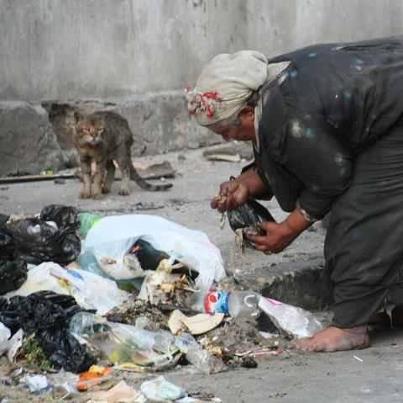
State Representative Harold Love recently shared one of the most inconceivable statistics in Tennessee.  The Nashville zip code 37208 has the highest percentage of incarceration in the nation, according to a Brookings Institution analysis.  The school to prison pipeline is unquestionable.   A child cannot succeed in life if they are denied the opportunities of a quality education. Lack of opportunity and quality education establishes the pathway to incarceration. Education remains the key to escaping poverty, even as poverty remains the biggest obstacle to education.

Tennessee has a richness of poverty.  According to the Southern Education Foundation, over 50 percent of the nation’s children are in poverty. Poverty is a vast and complex issue that plagues communities in a seemingly endless cycle. Accompanying poverty is its sidekick, hunger.  According to the United States Department of Agriculture (USDA), 15.3 million children under 18 in the United States live in households where they are unable to consistently access enough nutritious food necessary for a healthy life. These 8 states have statistically higher food insecurity rates than the US national average (14.6%): Arkansas (21.2%), Mississippi (21.1%), Texas (18.0%), Tennessee (17.4%), North Carolina (17.3%), Missouri (16.9%), Georgia (16.6%), and Ohio (16.0%). More than 1 in 5 children is at risk of hunger. Among African-Americans and Latinos, it’s 1 in 3 according to the USDA.

Carlos Lee, a PhD student at LSU wrote: “Students who live in poverty come to school every day without the proper tools for success. As a result, they are commonly behind their classmates physically, socially, emotionally or cognitively.”  According to Eric Jensen at the Center for New York City Affairs, high-poverty schools are more likely to struggle with school climate concerns such as absenteeism and truancy, bullying, and trust and engagement issues that can weaken the learning environment. The road is to prison may arise out of the home, but it also veers through our school systems.  Poverty puts too many students at a disadvantage before they even step foot in a classroom.

Distinguished educator Paul Reville, and Harvard University, launched the Education Redesign Lab to pilot a revolutionary approach to create a new, more comprehensive education model better designed to close achievement gaps and provide each and every child the support and opportunities they need to be prepared for success. Nashville or Memphis should also look at this approach.

The theory of the Harvard Education Redesign Lab is putting forth to overcome widespread inequity in child development and education support is that “we must dramatically redesign, align, and integrate our systems of child development and education.”  They also believe we must start in early childhood to “tailor instruction to meet each child’s needs, while braiding health and social services with schools, and providing access for all to high-quality expanded learning and enrichment opportunities.”  This, they argue, gives all children a “much fairer chance of succeeding in education and in life.”

I am mindful that the counter argument is that we do not want the state to raise our children.  It grows dependence upon government.  This is true.  And I think we can put safeguards in place to easily prevent that from happening.  However, I also believe that all children are created in the image of God.  It is far more economical to educate a child, than it is to incarcerate an adult  That is why it is important to have private enterprise invest in this effort, not only with their money, but also their human capital. Leaders across our state need to make this a priority.

Our answer cannot be scores on a standardized test.  Studies from the American Psychological Association reveal the psychological effects of hunger on education. Hunger is known to cause depression, anxiety and withdrawal, all of which are obstructions to a child trying to focus on education. Our solution must be to prepare every child for success.  Perhaps we need to redefine what success looks like for those impacted by poverty?  We can, and we must, address these momentous challenges.

Just to recap:  Nashville zip code 37208 has the highest percentage of incarceration in the nation.  Tennessee students are some of the poorest in the nation.  We have the 4th highest food insecurity rate in the United States.  There is no better time for changing the trajectory for children than now.  We already know where those consequences lead.

Numerous philanthropic organizations have supported public education over the years, using their private dollars with public dollars to meet the needs of impoverished youth.  Tennessee has numerous organizations, from the Hyde Family Foundation in West Tennessee to the Frist Foundation in Middle Tennessee to the Niswonger Foundation in East Tennessee which could lead this type of effort.  It might even be something SCORE, the State Collaborative on Reforming Education could make their focus and mission.  Nashville is in their backyard.  We would be glad to assist.

##

JC Bowman is the Executive Director of Professional Educators of Tennessee, a non-partisan teacher association headquartered in Nashville, Tennessee.  Permission to reprint in whole or in part is hereby granted, provided that the author and the association are properly cited. For more information on this subject or any education issue please contact Professional Educators of Tennessee.

More Than Just A Test Score

test score girl

“Public Education” is on the lips of every politician, during every election cycle. Yet, the debate continues. It is doing well, it is doing poorly, it needs reform, whatever the narrative needs to be that day or what the audience wants to hear.

Well, there are three sides to every story: “Yours, mine, and the cold, hard truth,” like the old Don Henley song reminds us. Out of the roughly 55.5 million K-12 students in America, 49.5 million of them are in our public schools, which is a little over 89%. If you visit a public education classroom today, you would be amazed at what our educators do on a daily basis.

We must remind ourselves we are not producing components for an industrial and societal machine. We are educating children. We can all agree that an engaging and challenging education is the proven path to prosperity and a life-long love of learning. Teachers consistently tell us that “testing” and “preparing students for a test” are among their top concerns in our internal surveys.

It has long been acknowledged that a strong public educational system is essential not only to the successful functioning of a democracy, but also to its future. That system must provide all children with an equitable and exceptional education that prepares them for college, career and life.

Educators, themselves, must exercise a higher duty of care than most professionals. Teachers face exposure to liability much greater than does the average citizen. Nearly every day, teachers must deal with diverse laws related to issues such as child abuse, student discipline, negligence, defamation, student records and copyright infringement. And many politicians are more concerned with a test score that their children produce than the immeasurable impact that teachers may make on a child’s life.

Often educators must contend with the fact that students do not have a consistent source of high-quality, nutritious food, if they have food at all at home. Issues like hunger and poverty, like it or not, are not imagined and they are prevalent in classrooms and schools across the nation. According to the United States Department of Agriculture (USDA), 15.3 million children under 18 in the United States live in households where they are unable to consistently access enough nutritious food necessary for a healthy life. These 8 states have statistically higher food insecurity rates than the US national average (14.6%): Arkansas (21.2%), Mississippi (21.1%), Texas (18.0%), Tennessee (17.4%), North Carolina (17.3%), Missouri (16.9%), Georgia (16.6%), and Ohio (16.0%). More than 1 in 5 children is at risk of hunger. Among African-Americans and Latinos, it’s 1 in 3 according to the USDA.

It is hard to focus on education when you are hungry. Poverty and hunger also lead to other health issues, which also go untreated. What other profession besides public education teacher is evaluated on their students’ test scores, when students lack the basic necessities of life?

Steve Turner in his brilliant satirical poem “Creed” referenced the state of our culture, when he wrote prevailing illogical thought processes: “This is the fault of society. Society is the fault of conditions. Conditions are the fault of society.” Seemingly educators bear the brunt of the outcomes of children, and society is a given a pass. The problems we confront are larger than the children walking through the school house door.

The solutions are more than a score on a test. So, when the next politician speaks about education when seeking your vote, ask them what their plans are to alleviate poverty and hunger in your community. That is much more important than test scores to a whole lot of families.

#####

JC Bowman is the Executive Director of Professional Educators of Tennessee, a non-partisan teacher association headquartered in Nashville, Tennessee. Permission to reprint in whole or in part is hereby granted, provided that the author and the association are properly cited.  Check out his Blog at http://www.jcbowman.com.  Follow him on Twitter @jcbowman

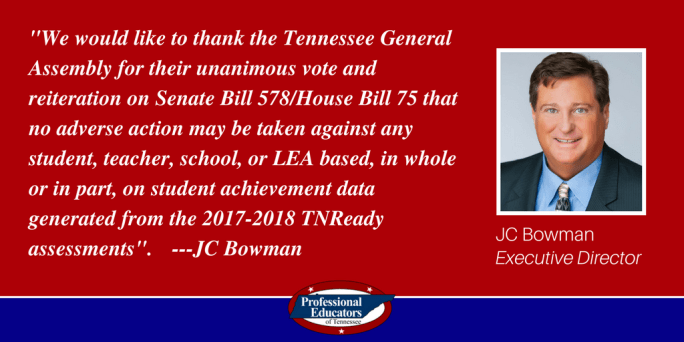
Unanimous Vote Senate Bill 578/House Bill 75

We are pleased that legislators unanimously provided that students, educators or schools will not be held responsible for unreliable results from the failures of the TNReady online assessment platform this year.

JC's Blurb 10

We Can’t Hide from the Tough Issues

Heftiger Disput

Problems are seemingly growing more and more complex, or are they?  In yesterday’s commentary,  Legislators – One Last Thing Before You Go!, we wanted to make sure our teachers are not going to be penalized by flawed test results and scores from this year on a teacher’s 3-year average.  It seems like it should be a simple fix, but actually is a little more complex.  That is what legislators must regularly balance in decision-making in the Tennessee General Assembly.  In public policy it isn’t always a struggle between right and wrong.  There is rarely a perfect solution.

We are very pleased that the Tennessee General Assembly wanted to hold students, educators and school districts harmless.  It really is a hold harmless, provided school districts in fact do not use test data into employment decisions like promotion, retention, termination, compensation—or even an improvement plan. It seems clear that the intent of the legislature was to ensure that the scores couldn’t harm teachers or students in any way, so we think this is an important part emphasized in SB 1623/HB1981.  However, we argued that they just missed a critical component, which is true.  Test results from this year still affect their scores and 3-year averages.

Here is the dilemma:  if we do not use this year’s TVAAS for teachers it would also likely hurt some teachers from gaining tenure.   And that too, is unacceptable and unfair.   So accordingly, this year’s data only counts as 10%, last year at 10% and the previous year at 15% to make up the 35% of the evaluation.   Teachers can use last year or this year as the full 35% if it helps the teacher.   They must have that data as part of their evaluation or the results can’t be used.  So, to be clear, a school district cannot use that flawed data, but a teacher can.  School districts cannot base employment termination and compensation decisions for teachers on data generated by these statewide assessments.  So, do legislators change the law they just passed, try to modify, or leave it be for now?  That is the discussion that they must have this week.

Legislators would be negligent if they do not further discuss the issue. They may choose to just take the fleas with the dog.  They have done excellent work on this issue to protect teachers, and they deserve the credit.  In the end the lesser of disappointing options is to leave in place what was passed.  We understand that choice.  In a perfect world we would have had perfect execution of the TNReady Test by our vendor Questar.  Then we would not be talking about flawed data, impact on 3-year averages or tenure. However, three things are almost certain on the campaign trail in 2018, especially in state races:

  • The continued feasibility of using a complicated statistical method as an evaluation tool for teachers will certainly be further debated by stakeholders and policymakers in the foreseeable future. Do we continue using The Tennessee Value-Added Assessment System (TVAAS)? Move to another more reliable statistical method?  Or do we abandon these complicated formulas altogether?
  • States are allowed to use federal funds, but no longer required, to continue teacher evaluations linked to test scores. Only a handful of states took advantage of the testing flexibility Every Student Succeeds Act (ESSA) allows.  In fact, the US Secretary of Education is explicitly prohibited from mandating any aspect of a teacher evaluation system.  So, will our state continue linkage of test scores to evaluation moving forward? Or will we end the practice?
  • Do we continue moving toward an online test, or do we yet again revert strictly to paper and pencil or some combination of the two?

Sometimes issues are complex, and the simple solution is not possible.  Simon Sinek, wrote: “There is no decision that we can make that doesn’t come with some sort of balance or sacrifice.”  This may be a case where the right solution is based on flawed data may be a right solution.  Then again, we may be all be wrong.  Let the debate continue.

##

Audrey Shores is the Chief Operating Officer of Professional Educators of Tennessee.   JC Bowman is the Executive Director of Professional Educators of Tennessee, a non-partisan teacher association headquartered in Nashville, Tennessee. Permission to reprint in whole or in part is hereby granted, provided that the author and the association are properly cited. For more information on this subject or any education issue please contact Professional Educators of Tennessee.
Legislators: One Last Thing Before You Go!

Capitol

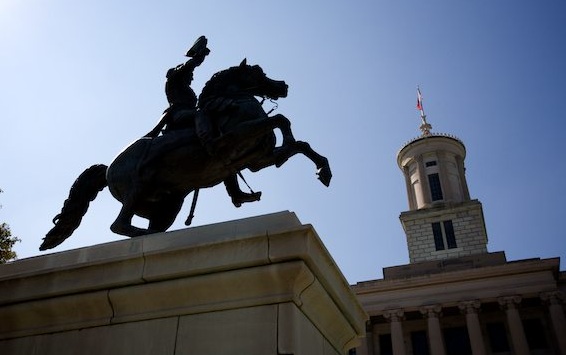
The 110th Tennessee General Assembly is nearing the end, and for many, the end cannot come soon enough.  There are political races waiting and they are ready to hit the campaign trail as election season is about to launch in earnest. But before they exit Nashville, there is one last thing left for them to do: finish protecting our educators.  Unfortunately, these flawed test scores can, and will, impact teacher evaluations.

The Tennessee General prudently and quickly stepped in after the latest testing failure.  Let’s make clear, this was the result of concerned stakeholders to make sure students, educators and districts are held harmless for this year’s TNReady invalid results.  Our legislators deserve the recognition and the acclaim for their effort.  Senate Bill 1623 was sponsored by Senator Dolores Gresham, along with Senators Bowling, Massey, and Pody.  House Bill 1981 was sponsored by Representative Eddie Smith, along with Representatives Hardaway, Daniel, and Parkinson.

Educators wanted to ensure that school districts could not base employment termination and compensation decisions for teachers on data generated by these statewide assessments.  This was accentuated in SB 1623/HB1981.  It must be noted that local districts have always had complete discretion in how they choose to factor test data into employment decisions like promotion, retention, termination, and compensation.  Local school districts have considerable flexibility to pause any policies or programs that emphasize the use of TNReady results in these types of personnel decisions.

Previous legislation, now law:  The Tennessee Teaching Evaluation Enhancement Act (T.C.A. § 49-1-302) adjusted the weighting of student growth data in an educator’s evaluation to lessen impact of TNReady on evaluation scores. TNReady factored into evaluation scores at 10 percent for the 2016-17 school year and will factor into evaluation scores at 20 percent for the 2017-18 school year and 35 percent for the 2018-19 school year and thereafter. Additionally, growth data from year one of TNReady will only be used if it benefits the educator. If it does not, the qualitative component of the evaluation composite will increase.

So, despite the incredible work of Tennessee Legislators, they needed to make sure the excluded test scores from this year does not impact teacher evaluations.  It seems clear that the intent of the legislature was to ensure that the scores couldn’t harm teachers or students in any way, so we think this is an important part. However, they just missed a critical component.  Even if employment decisions shouldn’t be based on them, the test results from this year still affect their scores and 3-year averages.

We first raised these concerns on passage of the SB 1623/HB1981 Conference Committee report with a few policymakers.  One teacher who contacted us really does want to be able to use her scores – her students are taking the paper and pencil science test next week, so they haven’t been affected by any of the issues this week. And they have worked really hard to be ready for the test. Others who may be affected negatively certainly would not want the test scores to be used.

To solve the issue, it would be beneficial to teachers to replicate what was done in 2016 with the Evaluation Flexibility Act – SB2508/HB1419 (PC No. 172) – which stated that student growth composites would be excluded unless they resulted in higher evaluation scores, with the qualitative portion of the evaluation score increased in its place. Section 3 describes a similar provision for teachers without access to individual growth data.

“For the 2015-2016 through 2017-2018 school years, student growth evaluation composites generated by assessments administered in the 2015-2016 school year shall be excluded from the student growth measure as specified in subdivision (d)(2)(B)(ii) if such exclusion results in a higher evaluation score for the teacher or principal. The qualitative portion of the evaluation shall be increased to account for any necessary reduction to the student growth measure.”

All the legislature would have to do is take the previous language from Sections 1 & 3 and change 2015-2016 to 2017-2018, and 2017-2018 to 2019-2020. Section 2 doesn’t need to be changed unless the phased in percentage schedule of (d)(2)(E)(i) – (d)(2)(E)(iii) is being updated.  We don’t think that 49-1-302(d)(2)(E)(ii) needs to be adjusted or referenced, since it’s essentially just a circular reference to (d)(2)(B)(ii). Although we think this would make (d)(2)(E)(ii) obsolete, since if the test results would help they would probably just want to go ahead and use it for the full 35% as provided in (d)(2)(E)(iv).

The continued feasibility of using a complicated statistical method as an evaluation tool for teachers will certainly be further debated by stakeholders and policymakers in the foreseeable future.  However, the issue that members of the 110th Tennessee General Assembly must address before leaving for home is making sure our teachers are not penalized by flawed test results and scores from this year on a teacher’s 3-year average.   We know legislators can take action when they focus.  The goal of the legislature is to ensure these flawed scores don’t harm our educators.  We need legislators to finish the job and end what they started.

##

Audrey Shores is the Chief Operating Officer of Professional Educators of Tennessee.   JC Bowman is the Executive Director of Professional Educators of Tennessee, a non-partisan teacher association headquartered in Nashville, Tennessee. Permission to reprint in whole or in part is hereby granted, provided that the author and the association are properly cited. For more information on this subject or any education issue please contact Professional Educators of Tennessee.
The Trouble with Testing

Testing has taken a wrong turn in public education. I have always tried to keep it simple: testing is like your school picture; it is what you look like on that particular day. Kids go in to take a test. Teachers show up to make sure kids are taking their own test. Parents encourage their children to do their best. However, like Ozzie & Harriet, Leave it to Beaver, and the Lone Ranger, those days are gone.

With an infusion of $501 million federal dollars of Race to the Top money we hurried to increase standards by adopting Common Core, which we corrected by moving back to state standards. We also increased testing, changing both format and frequency. Tennessee also adopted new evaluation methods. The teacher union supported the incorporation of TVAAS data into the state’s teacher evaluations, which landed Tennessee $501 million from the federal Race to the Top grant in 2010. Professional Educators of Tennessee did not support the use of that data on teacher evaluations, nor did they sign a support letter on the original grant submission.

Not everything Tennessee tried was damaging, but it is not debatable that thus far the Age of Accountability has failed students, teachers, parents and taxpayers. Since 2012 Tennessee has had one misstep after another in testing. In 2013, our tests were not aligned to our standards. In 2014, the issue was transparency, notably quick scores and test score waivers for final semester grades were the major issue. In 2015, the new TNReady online tests had issues in the post equating formula. In 2016, we fired the vender Measurement, Inc because after the online platform was botched and they were unable to get out a paper version of the test. In 2017, we were again plagued by issues due to scoring discrepancies. This year 2018, we have already had issues related to testing, including the belief by the testing vendor Questar that the Questar data center is under attack from an external source, although it is not believed at this time that any student data was compromised.

At no point since 2012 were any of the testing issues the fault of students or educators. However, for educators they are often the ones who bear the brunt, quite unfairly, of parental anger. Students also suffer, with everything from loss of instruction time to not understanding their educational progress. When we make education decisions on the basis of unreliable or invalid test results, we place students at risk and harm educators professionally. This is especially unfair to the hardworking teachers in our state. To policymakers and stakeholders alike we must ask these questions:

  • Why are we relying so heavily on test scores to make important educational decisions about students, teachers or schools, especially when the process is flawed?
  • If the Questar data center was under attack from an external source, there should be no greater priority by the Tennessee Bureau of Investigation to identify and prosecute those individuals guilty of this activity and confirm that no student data was compromised.
  • Should we question the reliability, validity, and accuracy of testing in Tennessee since 2013? Especially when shifting between online to paper tests? Note: Reliability relates to the accuracy of their data. Reliability problems in education often arise when researchers overstate the importance of data drawn from too small or too restricted a sample. Validity refers to the essential truthfulness of a piece of data. By asserting validity, does the data actually measure or reflect what is claimed?

In Tennessee we appreciate straight talk and candor. We unquestionably detest hypocrisy. We understand mistakes are made by individuals, by companies and even by our government. We are not pointing fingers; just stating a fact. Clearly there is a problem with testing in Tennessee. It isn’t our students or our educators. It is a flawed testing system.

##

JC Bowman is the Executive Director of Professional Educators of Tennessee, a non-partisan teacher association headquartered in Nashville, Tennessee. Permission to reprint in whole or in part is hereby granted, provided that the author and the association are properly cited. For more information on this subject or any education issue please contact Professional Educators of Tennessee.