The Changing Face of Advocacy

hellios

According to the Greek Mythology, the god, Helios, would put the Sun in a chariot and drive it through the sky each day.  That is how the Sun would rise and set.  Today, we would scoff at such a notion and understand that such a feat would be impossible.  We would think that people who would believe such a notion probably were not very intelligent and extremely gullible.  Such is the story of modern day lobbyists and advocates.

Frank R. Baumgartner, a Professor of Political Science at the University of North Carolina at Chapel Hill says there is no consistent correlation between money spent on lobbying and outcomes.  In his book, Lobbying and Policy Change: Who Wins, Who Loses, and Why, Baumgartner effectively proves that lobbyists are far less influential than political rhetoric suggests and that they fail to change policy despite millions of dollars spent trying. As to the why?  He points to an “entrenched system” with an enormous “bias in favor of the status quo.”

I have been on the forefront of policy change for over a quarter of a century, advocating for education.  It means that I have witnessed much the last three decades in Tennessee. I have seen policymakers come and go.  I have seen lobbyists come and go.  Next year, in 2019, we will see a new US Senator, a new Governor and perhaps as many as 35 new state legislators.  Campaign contributions, as important as those may be to the candidate, mean very little in the current system.  Money no longer “buys” votes, and it should never have done so in the first place.  Politicians now often receive contributions from interests on both sides of any issue.

It is amazing with the vast array of people lobbying on an issue that anyone or any group should take credit for the passage of any legislation.  The truth is that it is always a coalition of stakeholders building a compelling case on a political issue.  In the end, only the legislator votes.  So, any person or group who claims credit for a passage of legislation needs to be reminded of that truth.

In the end, we build coalitions work together, educate legislators on issues and count votes.  The legislator is the decisionmaker.  Advocates have three numbers you have to reach – 50, 17 and one:  50 votes in the House of Representatives, 17 in the Senate, and one from the Governor.  Only the Tennessee General Assembly deserves credit or blame for the passage of legislation.  In all the years that I have worked with legislators, I truthfully have found most to be honest, hard working people who want to do the right thing for their constituents.  I have also seen some who really do not listen, and these usually do not last long in the political arena.

The key to effective advocacy is relationships, which must be developed and also sustained.  Building relationships with lawmakers and other stakeholders means getting to know them, their personal interests and histories, and even their families. Having a relationship never guarantees support, but it does help to ensure that others will listen to you.  We must build networks and coalitions, around the objective of helping those you serve.  Stakeholders know what is likely to be taken serious by policymakers, sometimes just by whom introduces it, or who carries the legislation for the lobbyists.  We must also know how to correctly draft legislation to assist lawmakers who are overwhelmed during session.  We frequently see people try to put things in the wrong part of the code or use the wrong terminology. Advocates must identify people who support changing a policy and are willing to testify.  Those who advocate or lobby have to be taken seriously at the Capitol.  Then there is media coverage, which is a whole separate issue.  The media will cover an issue if they think voters or their audience are interested in the subject.

In advocacy, we have to be honest and transparent.  We have to tell the truth.  People can spot a snake-oil salesman a mile away.  A Cheshire cat grin and a fake tan will only take you so far.  Legislators do not like being lectured to when you testify.  The biggest mistake I see is when a know-it-all goes before a committee arrogantly and moralizes and lectures legislators.  People talk.  Just answer the question when asked, and don’t pontificate to hear your own voice by expounding on unrelated issues.  Conceit, excessive pride, combined with arrogance is called hubris.

When we engage in grassroots and direct advocacy with policymakers and key influencers around the state on behalf of public education policies, it reminds us that we live for a far greater purpose than just ourselves. Our impact is immeasurable and transforming.  It not only matters to the profession and our educators, it also matters to children and families across Tennessee.

Our experience here in Tennessee ensures our members’ concerns are heard at the Tennessee General Assembly and by other stakeholder groups. It also means we work with other groups on goals we want to achieve: some long-term, some short-term.  By doing this, we witness and help facilitate minor and major shifts in education policies and observe and work with changing political leaders.  And we must remember, these new education policies can have a positive or negative impact on educators or children.  We work the entire year focused on the priorities of our organization and our members.  However, we do not do it alone.  We accomplish our goals by working with others and through elected officials.

Leaders also need mountains to climb.  We and they also realize that they cannot solve every problem on our own. Leadership is about giving.  Great leaders understand that leading others means serving others.  The one question leaders must ask themselves: are you interested in finding solutions for today’s challenges? Then learn to work with others to benefit those you serve, without worrying about who gets credit.  It is a hard lesson to learn for some.  The sun will still come up, even if you don’t get the recognition.

##

JC Bowman is the Executive Director of Professional Educators of Tennessee, a non-partisan teacher association headquartered in Nashville, Tennessee. Permission to reprint in whole or in part is hereby granted, provided that the author and the association are properly cited. For more information on this subject or any education issue please contact Professional Educators of Tennessee.

Champions for Children

Respected teacher leaders and presenters from across the state of Tennessee lead professional development  at Professional Educators of Tennessee.  Register here:  http://www.proedtn.org/page/LeaderU2018 

JC's Twitter Post 5


School Safety and Security Event Today

JC Bowman will be joining  Sheriff Jim Hammond and other leaders in Hamilton County to discuss School Safety and Security.  Event is open to the public.  Info: https://atomic-temporary-137731796.wpcomstaging.com/2018/04/13/school-safety-and-security-town-hall/

JC's Blurb 3

School Safety and Security Town Hall

Sheriff-and-Bowman-East-Hamilton

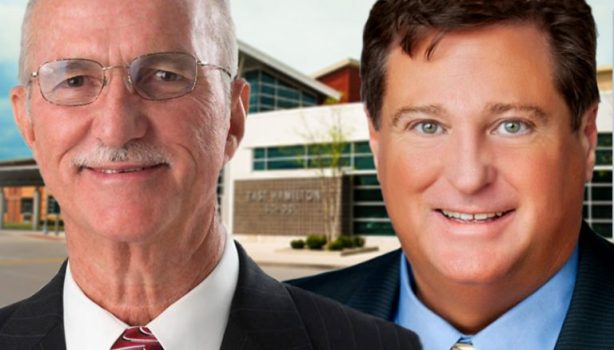
A School Safety and Security Town Hall open to the public will be held Monday at East Hamilton Middle High School to continue a day focused on school safety in Hamilton County.

Hamilton County Sheriff Jim Hammond and Professional Educators of Tennessee are partnering to stage the Town Hall, which will take place 4 p.m. – 5:30 p.m. Monday, April 16, at the school complex in Ooltewah.

In addition to Sheriff Hammond, Chattanooga Police Chief David Roddy, Hamilton County Schools Superintendent Dr. Bryan Johnson, National School Security Expert Michael Yorio, and Dr. J.C. Bowman, Executive Director of Professional Educators of Tennessee, will serve as panelists. Businessman and radio host Weston Wamp will facilitate the Town Hall.

“The Town Hall will give parents, teachers and other stakeholders in public education the chance to offer their views on school safety,” said Sheriff Hammond. “Also, we will be able to share information about the Monday morning discussion with elected and community leaders.”

Dr. Bowman said teachers from counties surrounding Hamilton County will be informed of the timely event. He will also discuss research on school safety which the Professional Educators of Tennessee has completed with its membership.

“We are grateful to join with Sheriff Hammond and other strong leaders in Hamilton County to have timely, orderly discussion about an issue front and center in Hamilton County, the state and the nation,” said Dr. Bowman. “This is a wonderful opportunity for teachers, including our members in Southeast Tennessee.”

Yorio serves as president of SSI Guardian, LLC, and is senior vice president of security for School Specialty, Inc. As he will do in the morning meeting with area leaders, Yorio will bring a national perspective on school safety.

Wamp said the event will be recorded and made available to Professional Educators of Tennessee’s 8,000 members and others. Wamp, a Chattanooga businessman, will facilitate the forum. After brief opening remarks, questions will begin. Partisan, political speech will be stopped from stage, and Wamp urges attendees attending to have prepared, concise questions. Questions will end promptly at 5:30. The theater at East Hamilton has an estimated seating capacity of 300.

About Sheriff Jim Hammond: Sheriff Jim Hammond is the current Sheriff of Hamilton County and has been since August of 2008. His Sheriff’s office personnel consist of 386 full-time and 33 part-time employees. His area of coverage is Hamilton County, which is the fourth largest county in the state of Tennessee. As a Constitutional Elected Official of the State of Tennessee, Sheriff Hammond brings over 54 years of law enforcement experience to his credit, including 15 Years as Chief Deputy. He is also a veteran of the US Navy, an international police instructor, and former adjunct instructor for the University of Tennessee at Chattanooga.

About Professional Educators of Tennessee: Professional Educators of Tennessee is a non-partisan statewide professional association whose members come from all aspects of the educational systems in Tennessee. Their 8,000 statewide members include teachers, administrators and non-certified staff from kindergarten to graduate school level, public and private.

About Michael Yorio and SSI Guardian: National School Security Expert Michael A. Yorio is a former defense industry executive who is credited with founding SSI Guardian, the nation’s leading school safety and security firm and wholly owned subsidiary of School Specialty Inc. He has led the 21st Century Safe School initiative addressing institutional safety from an evidence based best practice approach focusing on the social, emotional, mental and physical factors.

About Weston Wamp: Weston Wamp has worked to promote best-practice guidelines for school safety across the country for two years, and he is currently involved in an effort of a national, non-profit organization that will address gaps in modernizing security in 21st century classrooms. He has hosted “The Pitch” on ESPN Chattanooga (105.1 FM) each Saturday morning for the past two years.

East Hamilton Middle High School is a public high school located in Ooltewah, Tennessee. Established and opened in 2009, it is one of the newest schools in the Hamilton County School district.

Address: 2015 Ooltewah Ringgold Rd, Ooltewah, TN 37363
PrincipalGail Chuy

#####

JC Bowman is the Executive Director of Professional Educators of Tennessee, a non-partisan teacher association headquartered in Nashville, Tennessee. Permission to reprint in whole or in part is hereby granted, provided that the author and the association are properly cited. For more information on this subject or any education issue please contact Professional Educators of Tennessee. To schedule an interview please contact Audrey Shores, Director of Communications, at 1-800-471-4867 ext.102.
JC's Twitter Post 2

Building an Organization with Trust

conference.jpg

Organizations continue to transform and change.  Part of the reason for the decline of unions has been their reluctance to change and willingness to cling to an outdated system built on an industrial model.  Creating and sustaining a culture of high performance while leading organizational effectiveness is one of most complex challenges facing non-profit and organizational leaders.  An imperative question that any organization should ask is: Do your members trust you?

Organizational leaders must understand the processes necessary to incorporate performance improvement, membership focus, professional learning, and necessary change to achieve a highly effective organization. Organizational members have a world of data at their disposal, but what they truly desire is to be a member of an organization that knows their needs and gives them maximum value for their investment.  For example, our organization is able to keep our dues  under $200 dollars ($189 to be exact), while unions are priced in the $600 dollars plus range.   And many teacher union membership forms now authorize them to charge an unspecified amount of dues in perpetuity.

Organizations that are recognized as exceptional providers of customer service are the ones that have incorporated member-focused behaviors into their daily operations. A vibrant, energized organization is one that interacts with its members across every potential outlet of communication. Members want to know what you can do for them and they will engage your organization in ways you might not have imagined even six-months ago.  You have to work to keep ahead of your membership.

Even with a dynamic plan and an unambiguous vision for implementing high-performance and effective systems, the foremost question members and prospective members may ask is, “Why should we look to you instead of your competitor?”  It’s simple.  As a professional educators need to remain informed as to what is happening in their chosen field.  Educationally, they need to keep current with all developments in the scope of their work.  Learning new models and methods does not stop in college or graduate school. Educators often need benefits that school districts are not providing.  And as we have known for years, educators may need legal assistance—which we provide by our staff attorney who understands education law.  Educators need to know what laws affect them and their profession.   They need to know what legislative initiatives are being considered that have an impact on their field, and what they can do to effectively influence legislation to promote the profession— without the partisanship.

We have discovered that our most devoted members want to have a relationship with us. Just like we want to know who they are, they want us to know who they are as well. They want to identify how our organization can help them. And once they comprehend that your organization understands and has viable solutions to their particular set of problems, as well as a vision for making them successful in their chosen field.  That is how you gain loyalty.

But how do you build that loyalty? By building a relationship with your members based on openness, effective communication, value and trust.

We strive try to engage our members constantly.  Nearly half of our members now utilize our website (www.proedtn.org) on a regular basis.  We believe in being interconnected and actively engaged by keeping membership simple and uncomplicated, focused on an approach that is “bottom up,” not “top down,” and on our core business mission of education.  If you want to be recognized as an outstanding provider of member service, you have to consistently exceed the expectations of your members.  Once you adopt this approach, you will find a growing commitment by members.  But once you connect, how do you build loyalty?  You build this loyalty by building trust.

Organizations must strive to embrace openness and transparency in how they interact with their members.  For us, this includes how we build our legal services and member services and benefits.  It also includes vibrant professional learning and development for our members, based upon needs identified by educators, state and local district.

Consider this simple formula for creating a loyal membership base: Openness drives accountability. Accountability builds trust. Trust is the foundation of a relationship. Every organization must have a relationship with its members if it wants to be sustainable.

####

JC Bowman is the Executive Director of Professional Educators of Tennessee, a non-partisan teacher association headquartered in Nashville, Tennessee (www.proedtn.org). 

Permission to reprint in whole or in part is hereby granted, provided that the author and the association are properly cited.  Check out his Blog at http://www.jcbowman.com.  Follow him on Twitter @jcbowman

It’s NOT About the Money

Admin vs. Teachers

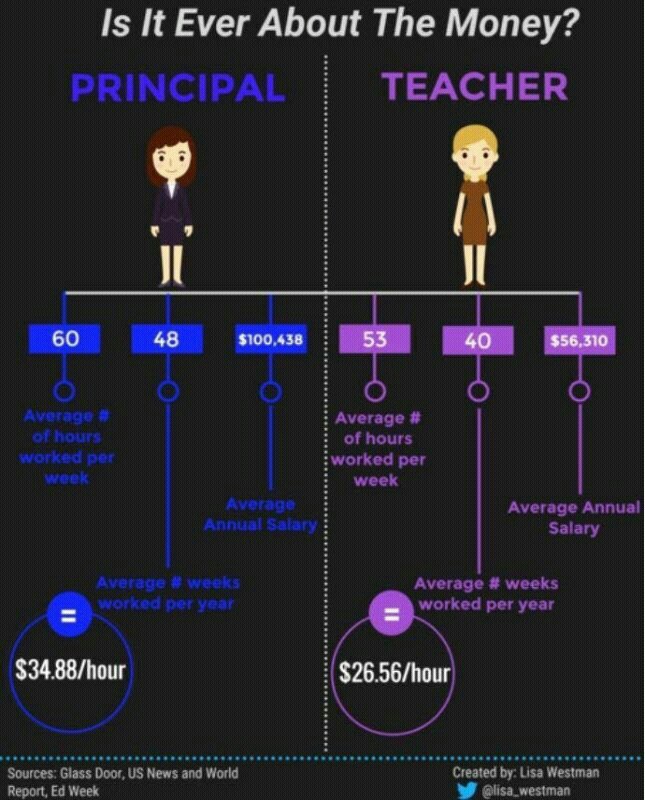
Teachers and Administrators do not go into public education for the money. That point been driven home the last few decades. This is a great chart to demonstrate that money alone will not serve as an inducement to recruit teachers, or keep them in the field.

Still Battles Left to Fight

braveheart-poster

In the year of our lord, thirteen fourteen, patriots of Scotland, starving and outnumbered, charged the fields of Bannockburn. They fought like warrior poets. They fought like Scotsmen and won their freedom.

The most memorable character, in my opinion, outside of William Wallace in the movie Braveheart, was the character, Stephen. One of the great lines from Stephen was when he was describing the battle about to be fought: “The Almighty says this must be a fashionable fight. It’s drawn the finest people.”

Stephen, my hero from the aforementioned movie Braveheart, (and maybe I like it is because of my Irish heritage) added: “In order to find his equal, an Irishman is forced to talk to God… The Almighty says don’t change the subject; just answer the @#*& question.  Of course, Wallace himself says, “As you’re lying on your death bed, would trade all your days, from this day till that, for just one chance, one chance at FREEDOM!!”

However, freedom without values is anarchy.  So yes, individual character does in fact matter.  There remains a real tension between spheres of commonality and social virtues and spheres of individuality and personal virtues. However, there are areas which deservedly lie in the public realm and those which ought to be left to individual choice.

Oliver Williams and John Houck in their book “Virtues in a Democracy” wrote:  “And, while there are frequently differences in interpreting the exact meanings and implications of prevailing virtues…virtues do provide sound and shared foundations for consensus formation, community endeavors, public policies and moral standing.”

In our elections, it is important that we are wise and elect those who best demonstrate virtue and reflect our shared values.  There are four cardinal virtues – justice, wisdom (prudence), courage (fortitude), and moderation (self-control, temperance). These are inherent foundational laws. If these moral values and commitments are as compelling as virtues are, they remain the foundations of moral discourse in society. They are indispensable guides to our actions. Statements which push new moral claims not absorbed into the set of shared virtues — have little or no standing, despite the age in which we now find ourselves living.

In 1788, James Madison asked the question: “Is there no virtue among us? If there be not, we are in a wretched situation. No theoretical checks–no form of government can render us secure. To suppose that any form of government will secure liberty or happiness without any virtue in the people, is a chimerical idea.”  Madison understood the battles that were ahead for a nation.

Our society works best when we recognize the need for shared values. Shared values are much deeper than principles rooted in popular opinion. Those who live for the moment are building their house on sinking sand. Those who only live in the present are incapable of seeing things in perspective. They do not fully grasp the relationship between means and ends, principles and practice. They are often self-centered individuals believing that only they can be the judges of their conduct, choosing what is best and right for them at the expense of society.  This not only hurts families and communities, it also destroys the fabric of our society. That’s why Madison added “we do not depend on their virtue, or put confidence in our rulers, but in the people who are to choose them.”

We fought some great battles in 2017.  Some of these battles were fought politically, socially and culturally.  We will undoubtedly see even more battles in 2018.  However, we also had some celebrations to go with our victories and some good times to go with the bad.  We are eagerly preparing for the legislative session to kick off in the Tennessee General Assembly.  Then, the election season gets underway.  In 2018, we will have a very quick legislative session in Tennessee.  In education, we have found policy enacted quickly often fails to be implemented correctly.  So there are many battles still left to fight here in Tennessee.    We should choose the best people to fight for us.

##

JC Bowman is the Executive Director of Professional Educators of Tennessee.  Professional Educators of Tennessee is a non-partisan teacher association headquartered in Nashville, Tennessee.  Permission to reprint in whole or in part is hereby granted, provided that the author and the association are properly cited. Follow him on Twitter at @jcbowman

Optimism Wins!

Singing the blues away

You remind yourself that the holidays are supposed to be a time of happiness, gathering of friends and family and most importantly optimism for the coming New Year. Yet you get inundated with reminders of the holidays that may conjure up unresolved issues like grief caused by a missing friend or family member, your own failing health or that of a friend or family member. Sometimes there is a sense of increased isolation and loneliness or recognition that there is a difference between the perception of holiday joy and the reality of one’s own life. Holidays can take a toll on even the happiest person.

From now until after the first of 2018 more than likely your life will be busier and certainly more stressful. You will have more things to do, more things to buy, there will be more traffic in our streets, stores will become more crowded, parking will become more difficult, and you will have your patience tried to the extreme waiting longer for service. Guests in your house will further add to your frustration. Heaven forbid if some person accidentally sits in your seat at your place of worship. The additional demands on our time, attention, energy and finances can be very traumatic. All of these issues come to a head during the holiday season. You want love or something like it.

Remind yourself all these issues can help you develop a strategy to tackle this short period of time. Most people struggle with holidays at some point in their lives. Just as we often struggle with life itself. It requires effort to overcome any problem. Recognition of our own thoughts and feelings helps us be successful in being triumphant over even the worst of times.

We begin our adult life with idealistic dreams of running off into the sunset, chasing whatever it is that makes us happy. We hope we are fortunate enough to reach those goals set by our youthful optimism. But for many of us we also learn we can only run so far before reality sets in. We must be extremely careful that we do not turn this optimism into pessimism, or even worse cynicism. This cynicism is often couched in anger and we hear or see the wounded cries. People become blinded by their own pessimism, then cynical of everything but their own cynicism.

Part of what makes us human is the ability to project into the future. However, do not believe for one moment you can find redemption by escaping your situation. Life is never really easy or is it? Are we not the ones who complicate it? When we complicate it do we become our own victims?

Perhaps the best scientific exploration of optimism, an incredible research study thirty-five years in the making entitled “Pessimistic Explanatory Style as a Risk Factor for Physical Illness: A Thirty-five Year Longitudinal Study”, J Person Soc Psych 55 (1988): 23-7, by C. Peterson, M. Seligman, and G. Vaillant, three main findings were established:

  1. Optimists live longer than pessimists;
  2. Optimists suffer from fewer and less severe diseases;
  3. Optimists are much healthier than pessimists.

Some of the benefits of being an optimist according to research are that we know that we will receive greater health benefits, higher quality of life–manifested by greater success, greater happiness and greater love. So, this holiday season take the time to revisit your own priorities for life. Hold on to your dreams. Never give up on thinking what was and what is and what can be. Yes we can all be winners in good times and survivors during the hard times.

If we want to relieve the tremendous stress on friends and family structures, we must make a positive commitment this holiday season to help others, as well as ourselves. We must all become promoters for hope. We need to work together to prevent symptoms of depression and anxiety from dominating our community this holiday season. We need a positive environment to help our children enjoy this most sacred season, and we all have a role to play to make sure those around us remain emotionally stable and use effective coping skills.

This holiday season take an opportunity to make a difference in someone’s life. When churches, synagogues, mosques, businesses, and governments collaborate, impressive things can happen to cause productive change in communities and among individuals. The impact could be of a global magnitude.

Like many I have learned what the power of faith can accomplish in an individual life. In addition, faith has traditionally played a crucial role in shaping both American institutions and civil society, and America has thrived as a model of democracy and equality precisely because of this pervasive religiosity and the traditions it helped establish. The abundance of faith based voices in the public square does not mean that the issues of the day will suddenly vanish. But the inclusion of faith based organization’s views and voices does allow communities to explore areas of consensus that are often overlooked. It provides the faith based community the opportunity to do what it does best, serving others and expanding its role in serving society.

Remember to make this a holiday season to remember. To somebody you may be just the gift they need. Dr. Reinhold Niebuhr often shared this prayer with people, and it helps remind me when I face depression.

The Serenity Prayer

 God grant me the Serenity to accept the things I cannot change, the Courage to change the things I can, and the Wisdom to know the difference;

 Living one day at a time;

 Accepting hardship as a pathway to peace; Taking, as Jesus did, this sinful world as it is, not as I would have it:

Trusting that you will make all things right if I surrender to your will; that I may be reasonably happy in this life and supremely happy with you forever in the next.

Merry Christmas and Happy 2018, and stay positive!

##

JC Bowman is the Executive Director of Professional Educators of Tennessee.  Professional Educators of Tennessee, a non-partisan teacher association headquartered in Nashville, Tennessee.  Permission to reprint in whole or in part is hereby granted, provided that the author and the association are properly cited.
What is a Superintendent of Schools?

difficult decision

It is often said that the most important role of a board of education is to hire its superintendent.  I think that is a somewhat a valid claim.   Certainly if you value public education, you must have competent leadership managing the daily operations of the school district.  A good superintendent leads the districts educational, financial and administrative performance; facilitates the performance of all personnel; and responds to and informs stakeholders and policymakers about the performance and leadership of the district.

Having met many, if not most, Superintendents of Schools here in Tennessee, I believe we do have some excellent leaders across our state.  Probably one of the most important duties of the superintendent is to make sure district students are learning and achieving at the highest level possible.  A superintendent must understand effective academic practices and be supportive of the teachers and administrators in the district.  Leadership, vision, and strategic thinking are critical skills for every superintendent.  A successful superintendent is should also be an effective and excellent communicator.  If the only voice a superintendent listens to is his/her own, or a few members of the school board, public education will eventually lose community support.

In the last few years, I have seen some horrifying treatment of Superintendents across the state.  I have seen them maligned by anonymous message boards, attacked in the media, belittled by their own school board members, often unfairly.  I am reminded of Mark Twain’s quote:  “Great minds talk about ideas; good minds talk about events; small minds talk about people.”

Does that mean that we simply accept decisions from superintendents, without challenging them? Of course not!  We must particularly hold them accountable in regard to educational, financial and administrative performance.  However, we should provide them latitude in regards to leadership, vision and strategic thinking on how to address the performance in those areas. And we must expect them to communicate effectively to all stakeholders.

The American Association of School Administrators suggests that the superintendent, like principals, must also demonstrate a keen understanding of teaching, learning and what works for students. As a change leader, a successful superintendent should emphasize the efficient use of resources, personnel, and data to break down resistance and drive systemic change; empower board and personnel to set goals, measure results, develop accountability, and support planning, evaluation, and resource allocation.

Our state has made some incredible strides in public education.  It is an accomplishment that we should admire and respect.  It begins with the men and women in the classroom across this state, and we must also acknowledge the hard work of those who lead our schools.

##

JC Bowman is the Executive Director of Professional Educators of Tennessee.  Professional Educators of Tennessee, a non-partisan teacher association headquartered in Nashville, Tennessee.  Permission to reprint in whole or in part is hereby granted, provided that the author and the association are properly cited.
 

Reading Aloud to Children

Kids doing homework isolated on white backgroundReading Aloud to Children

By Leah Davies, M.Ed.

Listening comprehension is vitally important if students are to achieve reading comprehension. Children who come from homes with minimal language enrichment need to hear new words if they are to become proficient readers. Reading aloud to children, even if only for a short time each day, enhances their language skills, as well as their love of literature and learning.

In 1983 the Commission on Reading was created and funded by the U. S. Department of Education to study the best way to increase knowledge and reading in children. The commission evaluated ten thousand research studies over the course of two years and reported their results in Becoming a Nation of Readers. Among the findings: “The single most important activity for building the knowledge required for eventual success in reading is reading aloud to children.” The study supported reading aloud in classrooms throughout all grades.*

Experts agree that the way to motivate children to read on their own is by arousing their interest and curiosity. Reading exciting stories to children helps them associate reading with pleasure. When the teacher and children share suspense, emotions, and enjoy fascinating characters, their relationship is strengthened. In addition, when children listen to a teacher read, they learn grammatical form and story structure. Reading stories, poems, books and factual texts to children builds their vocabulary, attention span and knowledge base so that they can speak, read, and write more fluently.

Students need to be exposed to nonfiction, as well as fiction. Teachers may begin with simple nonfiction books to introduce science, math and social studies concepts and then move on to more difficult texts. Model reading for information and investigation by stopping and asking the children to review, define and/or comment on the material. For example, stop reading and say, “Let’s see, what did she say about insects that only live twenty-four hours?” Let the children respond and then say something like, “I wonder what insect she will tell us about next?” Sometimes teachers have the children make a picture dictionary to go along with a story, chart what happened, or create graphics to further understanding. Involving students reinforces inquisitiveness and cognitive skills. Listening to teachers read nonfiction material increases student’s ability to read and comprehend newspaper articles, directions, complicated writings, as well as to perform well on tests that require an extensive vocabulary.

Another method teachers can use when reading aloud is to pause and have their students pair off to discuss the material. When children participate this way, they practice their listening, thinking, and speaking skills. They also pay closer attention to what is read so that they will be able to talk about it. When the teacher stops, the students turn to their partner and relate what they heard, as well as listen to their partner’s thoughts. After a few minutes, the teacher begins to read again.

Ideas to Enhance Reading Picture Books Aloud to Children

1. Choose stories that you have read and that you enjoyed reading.

2. Read a variety of books.

3. Choose a colorful book that is large enough for the group of children to see.

4. Reread favorite books.

5. Read some stories that lend themselves to children repeating a phrase or filling in a word.

6. Practice reading aloud if necessary.

7. Pick an area in the room that is quiet and comfortable.

8. Sit higher than the students so that they can see the pictures and hear you.

9. Help the children settle down before you begin by leading them in a calming game or song.

10. Hold up the book and call attention to the author and illustrator.

11. Ask a question that will spark their interest.

12. Move the book back and forth so that the children can see the illustrations, or show the pictures after you read each page.

13. Read with expression and enthusiasm.

14. Let your facial expressions reflect the emotions of the characters.

15. Use character voices.

16. Pace your reading to fit the story, but read slow enough so the children can understand it.

17. Use puppets or other props.

18. Accept children’s comments or questions unless they interrupt the flow of the story.

19. If the children become distracted, stop and ask, “What do you think will happen next?” You could also do a “finger play” or have them stand and sing a song before continuing to read.

20. Allow time to review the story and/or have the children act it out.

Ideas to Enhance Reading Aloud to Older Children

1. Pre-read and select a book you think they will enjoy.

2. Read books above the average reading level in your class.

3. Select books that are appropriate for the emotional, social and intellectual level of the students.

4. Choose some books or stories that are related to the curriculum.

5. Read literature that represents a variety of writing styles.

6. Select stories with recurring conversation and some drama or suspense.

7. Aim for quality and variety, alternating books or stories that feature boy and girl characters, and those that represent various cultures.

8. Select unfamiliar stories.

9. Allow enough time to create interest in the story before you must stop reading.

10. Read the title and ask the students questions that will arouse their curiosity.

11. Name the author and illustrator and if possible tell something about each one.

12. Sit or stand so that your head is above the students and they can easily hear you.

13. Make sure your posture and facial expressions reflect interest in the story.

14. After reading a chapter, if the students appear disinterested, choose a different book.

15. Read slowly enough for the students to have time to picture the words and assign meaning to them.

16. Add props.

17. Before you begin to read another chapter in a book, ask the students, “What was happening when we finished reading last time?”

18. Have the students make predictions about outcomes.

19. Accept some questions during the reading and when finished, encourage the students to verbalize their reactions, thoughts and emotions.

20. Read intriguing books at the end of the day as a reward for hard-working students.

The classroom teacher is a powerful role model for the enjoyment of reading. When teachers demonstrate a love of reading, their students will more likely become avid reader themselves.

*Richard C. Anderson, Elfrieda H. Hiebert, Judith A. Scott, Ian A.G. Wilkinson, Becoming a Nation of Readers: The Report of the Commission on Reading, (Champaign-Urbana, IL: Center for the Study of Reading, 1985), p. 23 and 51.