Lives, Fortunes, and Honor

thomas jefferson
Jefferson Memorial with Declaration of Independence 

Independence Day is celebrated on July 4th in the United States.  “Ever honored will be the day which gave birth to a nation, and to a System of self-government, making it a new Epoch in the History of Man” according to James Madison.

Thomas Jefferson, known for his expressive writing style, was the principal author of the Declaration of Independence.   Ben Franklin reminded delegates of the Continental Congress of the importance of the occasion by telling them: “we must indeed all hang together, or most assuredly we shall all hang separately.”  While we often focus on the beginning of the Declaration of Independence.

“We hold these truths to be self-evident, that all men are created equal, that they are endowed by their Creator with certain unalienable Rights, that among these are Life, Liberty and the pursuit of Happiness.–That to secure these rights, Governments are instituted among Men, deriving their just powers from the consent of the governed, –That whenever any Form of Government becomes destructive of these ends, it is the Right of the People to alter or to abolish it, and to institute new Government, laying its foundation on such principles and organizing its powers in such form, as to them shall seem most likely to effect their Safety and Happiness.”

It is the final sentence of the Declaration of Independence that has always remained a powerful reminder of a promise among the signers of the Declaration to: “mutually pledge to each other our Lives, our Fortunes, and our Sacred Honor.” These men thought liberty was more important than their own lives or their very possessions.  By risking everything, signers of the Declaration of Independence, men of wealth, many of whom the ultimate price—either through loss of life or prosperity.

Ronald Reagan reminded us: “Freedom is never more than one generation away from extinction. We didn’t pass it to our children in the bloodstream. It must be fought for, protected, and handed on for them to do the same.”   What sacrifice would we be willing to make today for freedom?  That is a question we should ask frequently.  Benjamin Franklin would likely respond “They who can give up essential liberty to obtain a little temporary safety deserve neither liberty nor safety.”

The last letter Thomas Jefferson ever wrote was about the celebration of Independence Day and missing the 50th anniversary of America’s independence.  He was 83 years old and would die within ten days of penning a poorly punctuated letter in 1826, that still contained brilliance within.   It’s good to know he wrote that “our fellow citizens, after half a century of experience and prosperity, continue to approve the choice we made.” Jefferson wrote:

“I should, indeed, with peculiar delight, have met and exchanged there congratulations personally with the small band, the remnant of that host of worthies, who joined with us on that day, in the bold and doubtful election we were to make for our country, between submission or the sword; and to have enjoyed with them the consolatory fact, that our fellow citizens, after half a century of experience and prosperity, continue to approve the choice we made. May it be to the world, what I believe it will be, (to some parts sooner, to others later, but finally to all,) the signal of arousing men to burst the chains under which monkish ignorance and superstition had persuaded them to bind themselves, and to assume the blessings and security of self-government. That form which we have substituted, restores the free right to the unbounded exercise of reason and freedom of opinion. All eyes are opened, or opening, to the rights of man. The general spread of the light of science has already laid open to every view the palpable truth, that the mass of mankind has not been born with saddles on their backs, nor a favored few booted and spurred, ready to ride them legitimately, by the grace of God. These are grounds of hope for others. For ourselves, let the annual return of this day forever refresh our recollections of these rights, and an undiminished devotion to them.”

Freedom should never be taken for granted.  Today we are debating the very concept of what it means to be a citizen of the United States of America.  While many citizens are very passionate about our country, others seem disillusioned and some openly hostile.  It is why the Declaration of Independence is such an important document. It expresses what it means to be an American.  We would be wise, as a state and nation, to teach the next generation of Americans what the words of the Declaration of Independence mean.  We must remind ourselves and children that there once lived men who mutually pledged to each other their lives, fortunes, and sacred honor for the love of freedom.

##

JC Bowman is the Executive Director of Professional Educators of Tennessee, a non-partisan teacher association headquartered in Nashville, Tennessee.  Permission to reprint in whole or in part is hereby granted, provided that the author and the association are properly cited. For more information on this subject or any education issue please contact Professional Educators of Tennessee.


Cartoons in the Classroom

I write:  “Without outside assistance, communities across America simply cannot keep up with technology challenges, either from an economic standpoint or an access standpoint. That is why open-source and donated cloud technology has begun to find greater accepted use in classrooms across America.”

I was honored to write a chapter for the book Cartoons in the Classroom, with Ilya Spitalnik an internationally recognized thought leader, keynote speaker, entrepreneur  and technology adviser.  Ilya created PowToon to assist educators.   PowToon’s commitment to provide technology to educators, as well as their customized tutorials can help educators more effectively integrate cartoons into their teaching methods. You can download the book for free at https://s3.amazonaws.com/powtoon/books/Cartoons-in-the-Classroom-Book.pdf  

cartoons-in-the-classroom


Called to Teach?

Henry and Brittany

Why do people teach?  The major reason someone says they teach is the ability to make a real difference in the lives of children.  There are other reasons, including the fact that someone believes they are “called” to teach.  Almost all teachers are linked together by a passion for educating children.  The passion is innate and has to come from within.

Commissioner Candice McQueen reminded a group of educators in a presentation that we were set apart in our mission.  She pointed out the gifts that educators have are special talents and abilities.  Educators are born for the mission that is being given for us.  Dr. McQueen emphasized the profession is a special calling.

We are all on a search for significance. We desire to make a difference.   Educators are making a huge difference. That is why it is important that we honor them.  It is the English social critic, Os Guinness, who stated: “Calling is not only a matter of being and doing what we are, but also of becoming what we are not yet but are called by God to be.”  He then adds:  “Deep in our hearts, we all want to find and fulfill a purpose bigger than ourselves.”  Education of the next generation is one of the most important occupations we could ever do.  Belief that one is “called to teach” keeps women and men in education, even with all the unwanted public scrutiny.

Matthew Lynch writes about teaching as a calling: “A calling implies a deep-seated belief that teaching is the only profession that makes sense for you to pursue…”  Dylan Fenton, an English teacher and writer does not like the term “calling,” as it creates to him an “idea that good teachers are born, not made and, as a result, allow themselves to stagnate.”   I would argue that Lynch is more accurate than Fenton, as a passionate teacher never stops honing their craft.  John Hunter, an award-winning teacher and educational consultant wrote: “I used to think teaching was a job.  And then I thought it was a profession.  And now I’m of the opinion that it’s a calling.  It’s a very noble calling.”

Henry David Thoreau said, “Most men lead lives of quiet desperation.”  John Keating, in the movie Dead Poets Society challenged his students to not be resigned to that type of life.  Yes, John Keating was subsequently fired, and probably never taught another class the rest of his life.  However, he taught his students to find their own voice.   It was his calling.  If you have profession that brings you passion, gives you someone other than yourself to care for, and is something that makes you want to get up in the morning to accomplish, you will not live a life of quiet desperation.

Teaching is indeed an imposing, self-sacrificing, but also a magnanimous calling.  Going through the process to get certified, whether through traditional means or an alternative route is sometimes difficult.  The creativity aspect of the profession has slowly been eroded.  There is persistent negativity by some lawmakers and the media of public education.  Compared to other professions, educators can expect modest salary and sometimes extremely difficult working conditions.  However, if you are called to teach, you will never find a happier place than in a classroom or serving students.  Educators are set apart to make a difference.  There is no other profession, except perhaps the clergy, that can change lives like a public-school teacher.

##

JC Bowman is the Executive Director of Professional Educators of Tennessee, a non-partisan teacher association headquartered in Nashville, Tennessee.  Permission to reprint in whole or in part is hereby granted, provided that the author and the association are properly cited. For more information on this subject or any education issue please contact Professional Educators of Tennessee.
What Students Can Do to Avoid Summer Melt

melt.jpg

In our last post, we talked about the phenomenon of summer melt, where up to 1/3 of the students who graduate high school with plans to go to college never make it to a college campus.  We discussed what the student’s support team could do to help keep the student on track—but there’s also plenty the student can do to make sure their college plans don’t get derailed.

Open every piece of snail mail you get from the college, and read all of it.  You’re probably used to getting all kinds of mail from all kinds of colleges, but once you’ve decided on a college, anything and everything they send you needs to be read.  Just ask the student who opened the letter congratulating him for being admitted.  He didn’t read the next page, which told him he had a $42,000 scholarship.  Read it all.

Continue to check your email account.  Email may be almost as old school as snail mail, but it’s still how many colleges communicate with students—especially if they need something in a hurry.  The only way you find out what they need is to check email about three times a week in the summer.  And make sure to check your junk email folder; some colleges send emails to thousands of students, and your email account may think it’s spam.  It isn’t.

Look for the checklist.  Most colleges send you a checklist with everything you’ll need to do over the summer, and when you need to do it.  This checklist may come by snail mail, or as a link in an email, or maybe as a text.  Print it out, and put it on your refrigerator at home; that way, your parents can help you keep track of what to do as well.  If your college doesn’t give a checklist, there are others out there, such as this one from College Board.

Confused? Ask.  If there’s any point over the summer when you don’t know what you should be doing, call the college.  I know—students aren’t really crazy about talking to people on the phone, especially if they think the college will get the feeling that you don’t know what you’re doing.

Do it anyway.  Once a college admits you, they will move heaven and earth to have you register, attend and graduate.  There is nothing—NOTHING—they haven’t been asked before, so don’t feel like you’re the only one.  In fact, colleges have Student Services offices because so many students have so many questions.  If you don’t know how to contact them, call the admissions office, and they’ll tell you how.

It’s easy to feel alone in this transition to college, but you have a home team of family, friends and counselors who are there to help, even in the summer.  There’s a ton of people at your college—your new home—who want to help you too, even though they haven’t met you.  All you have to do is ask.

Make this happen.

Patrick O’Connor is a 2017-18 School Counselor Ambassador Fellow at the U.S. Department of Education.

Making Professional Development Meaningful

Bethany 2018
Bethany Bowman

As we talked with teachers across the state and continue to talk to them, one of the issues they mention is the need for high-quality professional development and learning opportunities. Therefore, in 2012 Professional Educators of Tennessee launched Leader U. It is strictly about gathering the best presenters in the state to address key topics that teachers have identified and skipping all the political shenanigans that other organizations try to pass off as professional development. It is real learning for real educators by their peers.

If you are a Tennessee educator or a supporter of Tennessee education, you need to attend a day of exceptional professional learning, Leader U at Trevecca University’s Boone Center in Nashville on Friday, June 1. The conference’s theme is Champions for Children where speakers will provide insight on providing a more engaging classroom and school to its students.

The conference will begin Friday morning with a keynote address from Champion for Children advocate, Dr. Ronald Woodard as he illuminates “Developing a Champion Mindset for Children.”Respected teacher-leaders and presenters from across the state will lead professional development classes on important topics that include Student EngagementOrganized ChaosProject-Based LearningTeam EvaluationBullying and much more. The 2018 Tennessee Teacher of The Year, Cicely Woodard, will do a 90-minute session on The Engaging Classroom while TSIN 2018 Excellence in STEM Teaching Award winner and Edmodo Educator, Sharon Clark, will complete a session on Bridging Gaps/Cultivating Curiosity.

In addition to the keynote, there will be other breakout sessions with a choice of 12 presenters from which teachers and administrators can choose the classes which best fit their needs. The event is TASL accredited for administrators and all educators will receive a certificate for 6 hours professional development credit. The cost to attend is $40 for members of Professional Educators of Tennessee and $60 for non-members. Breakfast and lunch are included.

But wait there is more! We have always understood how busy educators are, so in 2013 we also launched the Leader U On-Demand Professional Learning Portal where you can complete your credits when and where it is convenient for you and receive a certificate as soon as it is completed. Keep track of all the classes you have completed and print your records at any time. Classes include TASL accredited sessions from the annual conference along with webinars from throughout the year and even relevant content from other organizations nationwide. We do our best to provide a one stop-shop for your professional learning needs.

To register for Leader U 2018, visit www.leaderutn.com. Questions? Please email learning@leaderutn.com.

*********

Professional Educators of Tennessee is a non-partisan teacher association headquartered in Nashville, Tennessee. Permission to reprint in whole or in part is hereby granted, provided that the author and the association are properly cited.

School Shootings: No More Political Football

schoolshooting17

Schools must be safe zones for students and teachers. That means the first step in school safety is securing the perimeter of a school. It seems like simple logic that we should keep intruders out and also make sure the area inside those boundaries is safe for children and adults. Students are our priority, but teachers need protection too.  Our School Safety Survey Results are here. 

Unfortunately, as we have seen far too frequently, our schools are easy targets for those who wish to harm others. When premeditated attacks and school shootings occur, they are usually over within minutes. Most of the time law enforcement is simply not able to respond quickly enough to the event and lives are needlessly lost.

Intruders, who wish to hurt our students and teachers, are usually very familiar with the schools’ defense system and create plans around that information. More than likely, the defense strategy is in the student handbook posted online. These people know when to attack, where to go and often how to escape. Students and teachers alike, as well as approved visitors should have a visible identification badge on them at all times. There needs to be secure exterior doors to limit building access points, and each district should develop a uniform policy for entry into a school.

Former Metro Nashville Principal Bill Gemmill, pointed out: “All schools need upgraded security, whether it is as simple and reasonable as inside locks on classroom doors.” It is also time to put metal detectors in every school across America. The federal government could absorb the cost by simply eliminating any of the already wasteful programs they are funding. Public school safety must be a priority at every level of government. If you see something, say something, and then someone in authority must do something.

The last line of defense that we can have for our kids is an armed person willing and ready to defend them if the unspeakable should happen. That is why it is critical that we look at expanding the School Resource Officer (SRO) program. This is a highly effective program that serves many purposes during the school year and is invaluable where it now exists. It is important that the program be directed by a local law-enforcement agency, working in conjunction with the local education agency. The school can employ and utilize additional security, but the primary responsibility should fall to local law enforcement.

The Center for Problem-Oriented Policing has outlined three basic roles of an SRO: Safety Expert and Law Enforcer, Problem Solver and Liaison to Community Resources and Educator. While all three are important functions, the primary role should focus on the law enforcement and safety component. SRO’s should be preserving order and promoting safety on campus and serving as first responders in the event of critical incidents at schools, such as accidents, fires, explosions, and other life-threatening events. They are not supplementary school administrators dealing with minor school discipline issues or emergency instructors. It is clear that we must better define SRO programs, what we want them to accomplish, and better analyze how we measure their effectiveness. Law Enforcement and School District Leaders should yield to the law enforcement professionals on matters of school safety and law enforcement.

It is time to discuss the gun issue. I strongly support the 2nd Amendment and have a handgun carry permit myself. We must have common sense approach to who, when, and where we can carry firearms, without infringing on the rights of law abiding citizens. We should raise the age for the purchase of certain guns to the age of 21, with exemption to active duty military. We prohibit drinking of alcoholic beverage until 21, we should follow suit here as well. Many young people just are not prepared for the responsibility of drinking or owning a firearm. We should make stronger background checks, considering factors such as criminal background and mental health. We should also prohibit bump stocks that can convert guns into automatic weapons. We should more aggressively punish those who commit crimes with guns. But we will need to be careful that the policy is reasonable.

Policymakers, at the state and federal level, are also likely to look at legislation that empowers individual school districts to determine for themselves what direction they want to take on school safety, including qualified, certified and licensed volunteer school personnel going armed in their building. If a district decides to allow trained and armed teachers and administrators into the schools, the decision should not be taken lightly. The state should never mandate educators having to carry firearms or prohibit them from carrying, if permitted by the district. It is a decision that should be made at the local level based on the needs and size of the community.

Certainly, armed teachers who possess training or a military background would deter some intruders. However, trained law enforcement personnel are much preferred and would be a much greater deterrent. Mike Conrad, a teacher in Detroit said in a recent interview: “I think that the moment that you put a gun on the hip of a teacher in a classroom, that we have accepted the norm that school shootings will not stop, that we are now on the front line to defend against them, instead of trying to find a way to stop them.” The subject is very emotional, with good arguments coming from either side of the debate, which is why each community must decide for themselves this issue.

School safety policies must be flexible and practical. However, the issue of improved school security will not be resolved in the current political environment, as long as real solutions are not considered based on a liberal or conservative bias. It is time to quit playing political volleyball with this issue. Real lives, those of children and adults, are at stake in our schools. The time of talking is past; it is time to take action. Any viable option that can lead to a safer environment in our schools and communities should be on the table.

#####

JC Bowman is the Executive Director of Professional Educators of Tennessee, a non-partisan teacher association headquartered in Nashville, Tennessee. Permission to reprint in whole or in part is hereby granted, provided that the author and the association are properly cited. For more information on this subject or any education issue please contact Professional Educators of Tennessee. To schedule an interview please contact Audrey Shores, Director of Communications, at 1-800-471-4867 ext.102.

This article also appeared at:  http://www.proedtn.org/news/388542/No-More-Political-Volleyball.htm

The School Safety Survey Results are Found here:  http://www.proedtn.org/news/395676/Tennessee-School-Safety-Survey-Results.htm

Dad Gone Wild

Icon

If you are not a regular reader of the education blog Dad Gone Wild written by TC Weber, add it to your list.  He will make you laugh, he will make you mad, and he will make you cry…sometimes in the same article.  His latest column, So Here We Are, goes where few writers dare to go by pointing out: “Nashville has long been over due for a conversation on race and how it plays out in our public institutions.” Weber is right.

In the growing debate over Metro Schools Superintendent Shawn Joseph, Mr. Weber asks the million-dollar question:  How much of the criticism directed toward the Director of Schools is rooted in the color of his skin as opposed to his performance?  Answer that question than proceed to the debate.  If you are judging him because of the color of his skin, you need to exercise your constitutional right and remain silent.  If it is based on performance, then take Weber’s advice and “evaluate with the same rigor we demand of others.”

At times the Dad Gone Wild columns go on for too long, but some of it is so brilliant one wonders if the education students at Lipscomb, Trevecca, Belmont, or Vanderbilt shouldn’t be required to read his columns prior to graduating.  It is where reality and policy intersect, along with a healthy dose of investigative journalism.  A local newspaper should certainly pick up Dad Gone Wild or Mr. Weber should expand his reach beyond Music City and go statewide or national.

Weber states that he wants to “continually push the conversation forward and to expand my boundaries and knowledge base.”  He adds, “I personally don’t believe race is an issue that we can ignore or a conversation we can shy away from. Too many of our important decisions, especially in education, are rooted in race. Funding, programing, and attendance are just some of the areas where race influences our decisions.”  He is correct.  And we all have “skin” in that game.   Then he states: “my goal is to support policy that is best for kids, families, and teachers.”  That point is lost on far too many people, from the bureaucrat to the politician.

Weber emphasizes that “this conversation suffers, as Nashville is currently suffering, from a lack of leadership.”  He believes there “is currently a leadership vacuum in Nashville that starts at the mayoral level and descends downward.”  It would be hard to disagree with this statement, although I might suggest that the grassroots cannot be afraid to lead, and, if needed, push the so called “leaders” out of the way.

I have no problem with the Superintendent rapping along with a song, no matter how vulgar it may be or not be.  That’s his prerogative.  He will ultimately answer to the community if he crosses the professional line.  My opinion of Shawn Joseph will be based strictly on his performance, or lack thereof.  My question is: How do you think he is doing? 

##

JC Bowman is the Executive Director of Professional Educators of Tennessee, a non-partisan teacher association headquartered in Nashville, Tennessee. 

When Policies Collide: Education and Immigration

Fotolia_865888_Subscription_L.jpg

Our nation’s security and immigration policy are federal responsibilities, yet it is has become another example of our federal government not meeting a legitimate need of American citizens.   In fact, we may have reached a tipping point on this subject. In Nashville, for example, foreign-born residents have increased from 2.5 percent of its population a decade ago to more than 12 percent today.

Our country was launched on principles that embrace people that legally come to our country. All immigrants should endeavor to learn and embrace American culture and civic heritage pride, as well as our political heritage.

We have established, and must enforce, the procedures of legal immigration and naturalization at the federal level. It is clear that our current immigration policies have are failing, largely because we have not enforced what has been established or secured our borders. People now arriving on our borders anticipate asylum the minute they get into our country.

Our nation has always welcomed people to our shores. In fact, on the Statute of Liberty in New York Harbor there is a poem by Emma Lazarus to remind us of freedom and opportunity that says, “Give me your tired, your poor, your huddled masses yearning to breathe free…”

However, we must require and strongly support a legal method of immigration. It is true that immigration is not always a question of law and order.  It is also a problem for all of humanity.  Immigrants, both legal and illegal, are real human beings. They are not merely a number or statistic.  The recent wave of illegal children crossing our borders is alarming.  They are being sent by their parents, by questionable means, and encompass the hopes and dreams of their families.

In many ways, immigrants are doing what almost any of us would do if our own children were starving, countries were unsafe, or if they have no hope for the future. And too often in our discussion about immigration, that perception is lacking. Who among us would not do whatever was necessary to see that our children were safe, had food or a chance for a better future? However well mean-meaning, what are the ramifications of these children immigrating to our country and state for public education? State laws that are designed to marginalize immigrant families in the name of deterring illegal immigration have largely been declared unconstitutional.

For example, in 1982, the United States Supreme Court ruled in Plyler vs. DOE that children in our country here illegally have the same right to attend public schools as other citizens. In addition, these children are obliged to attend school until they reach a mandatory age. So, there will be an impact in whatever state that these children reside, including here in Tennessee.

So regardless of our opinion on the subject, the Plyler ruling made clear that public schools could not deny admission to any student. Nor could they treat any student differently or prevent the right of access to school. In addition, public schools cannot require students or parents to disclose their immigration status. Data by the Department of Health and Human Services’ Administration for Children and Families in 2014 showed Tennessee has already received 760 of the more than 30,000 children this year, about 2.5 percent of the unaccompanied children crossing into the United States.

School personnel, especially administrators or educators involved with student intake activities will have their hands tied this fall. We expect it will create numerous issues at local level, and for our state. It is time our federal policymakers do their job and create a tenable immigration policy to safeguard our borders and create legal pathways to citizenship. Failure to do so merely continues bad policy and places public education at the forefront of the battle.

##

JC Bowman is the Executive Director of Professional Educators of Tennessee, a non-partisan teacher association headquartered in Nashville, Tennessee. Follow him on Twitter @jcbowman. Permission to reprint in whole or in part is hereby granted, provided that the author and the association are properly cited.

Overcoming Poverty in Education

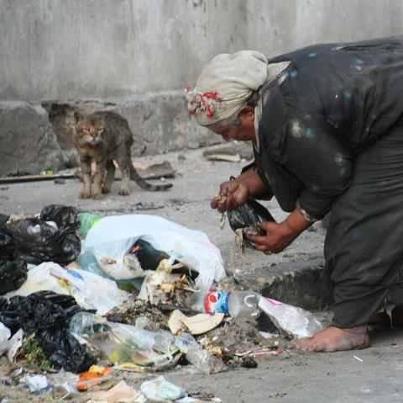
poverty

State Representative Harold Love recently shared one of the most inconceivable statistics in Tennessee.  The Nashville zip code 37208 has the highest percentage of incarceration in the nation, according to a Brookings Institution analysis.  The school to prison pipeline is unquestionable.   A child cannot succeed in life if they are denied the opportunities of a quality education. Lack of opportunity and quality education establishes the pathway to incarceration. Education remains the key to escaping poverty, even as poverty remains the biggest obstacle to education.

Tennessee has a richness of poverty.  According to the Southern Education Foundation, over 50 percent of the nation’s children are in poverty. Poverty is a vast and complex issue that plagues communities in a seemingly endless cycle. Accompanying poverty is its sidekick, hunger.  According to the United States Department of Agriculture (USDA), 15.3 million children under 18 in the United States live in households where they are unable to consistently access enough nutritious food necessary for a healthy life. These 8 states have statistically higher food insecurity rates than the US national average (14.6%): Arkansas (21.2%), Mississippi (21.1%), Texas (18.0%), Tennessee (17.4%), North Carolina (17.3%), Missouri (16.9%), Georgia (16.6%), and Ohio (16.0%). More than 1 in 5 children is at risk of hunger. Among African-Americans and Latinos, it’s 1 in 3 according to the USDA.

Carlos Lee, a PhD student at LSU wrote: “Students who live in poverty come to school every day without the proper tools for success. As a result, they are commonly behind their classmates physically, socially, emotionally or cognitively.”  According to Eric Jensen at the Center for New York City Affairs, high-poverty schools are more likely to struggle with school climate concerns such as absenteeism and truancy, bullying, and trust and engagement issues that can weaken the learning environment. The road is to prison may arise out of the home, but it also veers through our school systems.  Poverty puts too many students at a disadvantage before they even step foot in a classroom.

Distinguished educator Paul Reville, and Harvard University, launched the Education Redesign Lab to pilot a revolutionary approach to create a new, more comprehensive education model better designed to close achievement gaps and provide each and every child the support and opportunities they need to be prepared for success. Nashville or Memphis should also look at this approach.

The theory of the Harvard Education Redesign Lab is putting forth to overcome widespread inequity in child development and education support is that “we must dramatically redesign, align, and integrate our systems of child development and education.”  They also believe we must start in early childhood to “tailor instruction to meet each child’s needs, while braiding health and social services with schools, and providing access for all to high-quality expanded learning and enrichment opportunities.”  This, they argue, gives all children a “much fairer chance of succeeding in education and in life.”

I am mindful that the counter argument is that we do not want the state to raise our children.  It grows dependence upon government.  This is true.  And I think we can put safeguards in place to easily prevent that from happening.  However, I also believe that all children are created in the image of God.  It is far more economical to educate a child, than it is to incarcerate an adult  That is why it is important to have private enterprise invest in this effort, not only with their money, but also their human capital. Leaders across our state need to make this a priority.

Our answer cannot be scores on a standardized test.  Studies from the American Psychological Association reveal the psychological effects of hunger on education. Hunger is known to cause depression, anxiety and withdrawal, all of which are obstructions to a child trying to focus on education. Our solution must be to prepare every child for success.  Perhaps we need to redefine what success looks like for those impacted by poverty?  We can, and we must, address these momentous challenges.

Just to recap:  Nashville zip code 37208 has the highest percentage of incarceration in the nation.  Tennessee students are some of the poorest in the nation.  We have the 4th highest food insecurity rate in the United States.  There is no better time for changing the trajectory for children than now.  We already know where those consequences lead.

Numerous philanthropic organizations have supported public education over the years, using their private dollars with public dollars to meet the needs of impoverished youth.  Tennessee has numerous organizations, from the Hyde Family Foundation in West Tennessee to the Frist Foundation in Middle Tennessee to the Niswonger Foundation in East Tennessee which could lead this type of effort.  It might even be something SCORE, the State Collaborative on Reforming Education could make their focus and mission.  Nashville is in their backyard.  We would be glad to assist.

##

JC Bowman is the Executive Director of Professional Educators of Tennessee, a non-partisan teacher association headquartered in Nashville, Tennessee.  Permission to reprint in whole or in part is hereby granted, provided that the author and the association are properly cited. For more information on this subject or any education issue please contact Professional Educators of Tennessee.