Independence Day is celebrated on July 4th in the United States. “Ever honored will be the day which gave birth to a nation, and to a System of self-government, making it a new Epoch in the History of Man” according to James Madison.


Independence Day is celebrated on July 4th in the United States. “Ever honored will be the day which gave birth to a nation, and to a System of self-government, making it a new Epoch in the History of Man” according to James Madison.

The Tennessee Department of Education announced at a noon press conference on Thursday some necessary changes to the state TNReady test that teachers, administrators and superintendents have been asking the state to make. Among the changes include rebidding the testing contract, refining the current Questar contract, revising timeline for online testing, and engaging more teachers. These steps complement additional actions already in the works, including eliminating two TNReady end-of-course exams, eliminating the March stand-alone field test for the next two years, simplifying and streamlining test administration, bringing in a third party to perform an independent review of Questar’s technological capabilities, improving customer service, and engaging dozens of additional Tennessee teachers, content experts, and testing coordinators to look at every part of our state testing program.
Dale Lynch from the Tennessee Organization of School Superintendents and JC Bowman from Professional Educators of Tennessee were in attendance at the announcement. Both praised the Tennessee Department of Education for taking proactive steps to address the issue. Bowman added: “Leadership collects input from those on the ground, makes the process better for all, and then tweaks the product as needed. We firmly believe that changes needed to be made, and we are pleased that Commissioner McQueen and her team heard our message and made the necessary changes to improve student assessment in Tennessee.”
Education Commissioner Candice McQueen said at the press conference: “improvements are being made after ongoing conversations with teachers, parents, education leaders, and policymakers over the past several weeks and are aimed at addressing a number of areas of concern.” She added: “Teachers, students and families deserve a testing process they can have confidence in, and we are doing everything possible to meet that responsibility,” Commissioner McQueen said. “We are always committed to listening and improving, and we’ll continue to do just that.”
The multi-faceted changes announced today will immediately improve the state assessment—TNReady—and establish a longer-term framework for success. The steps being taken to improve TNReady include:
In May, a national study recognized Tennessee as the No. 1 state in the country for improvement in the quality of its academic standards, going from an “F” rating in 2007 to an “A” in 2017. TNReady is designed to measure those standards, and it has a variety of different types of questions to look for the depth of students’ knowledge.
Tennessee is one of less than 10 states that still has a paper test in middle school—and both state and district leaders recognize that the workforce of the 21st century is increasingly online. We also want every student to have a positive testing experience, and we want to maximize the ability to have a seamless online administration. Accordingly, the state is adjusting the timeline to continue the transition to online but at a modified pace. For 2018-19:
Further, the department will improve paper administration, as well. In addition to having Tennessee teachers review all test questions, scripts, and test forms, the department is streamlining test logistics to have fewer versions of the test distributed across the state. This makes it much easier on testing coordinators and proctors to administer. The state has also combined the answer document and test questions into one test booklet in lower grades so it is easier for students to take the test.
For more information on the additional TNReady improvements you can visit the Tennessee Department of Education website.
I write: “Without outside assistance, communities across America simply cannot keep up with technology challenges, either from an economic standpoint or an access standpoint. That is why open-source and donated cloud technology has begun to find greater accepted use in classrooms across America.”
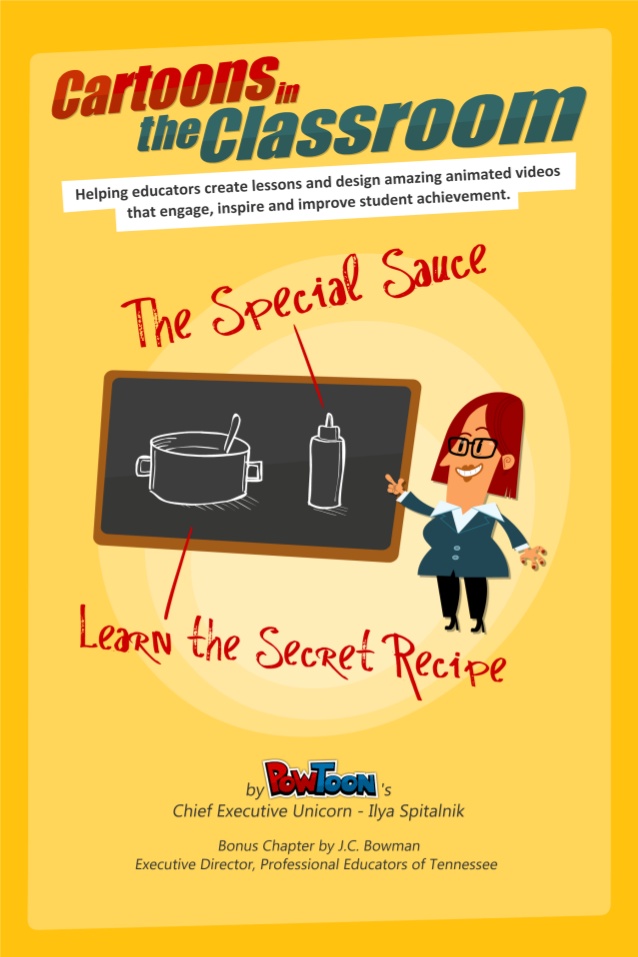
I was honored to write a chapter for the book Cartoons in the Classroom, with Ilya Spitalnik an internationally recognized thought leader, keynote speaker, entrepreneur and technology adviser. Ilya created PowToon to assist educators. PowToon’s commitment to provide technology to educators, as well as their customized tutorials can help educators more effectively integrate cartoons into their teaching methods. You can download the book for free at https://s3.amazonaws.com/powtoon/books/Cartoons-in-the-Classroom-Book.pdf
As we talked with teachers across the state and continue to talk to them, one of the issues they mention is the need for high-quality professional development and learning opportunities. Therefore, in 2012 Professional Educators of Tennessee launched Leader U. It is strictly about gathering the best presenters in the state to address key topics that teachers have identified and skipping all the political shenanigans that other organizations try to pass off as professional development. It is real learning for real educators by their peers.
If you are a Tennessee educator or a supporter of Tennessee education, you need to attend a day of exceptional professional learning, Leader U at Trevecca University’s Boone Center in Nashville on Friday, June 1. The conference’s theme is Champions for Children where speakers will provide insight on providing a more engaging classroom and school to its students.
The conference will begin Friday morning with a keynote address from Champion for Children advocate, Dr. Ronald Woodard as he illuminates “Developing a Champion Mindset for Children.”Respected teacher-leaders and presenters from across the state will lead professional development classes on important topics that include Student Engagement, Organized Chaos, Project-Based Learning, Team Evaluation, Bullying and much more. The 2018 Tennessee Teacher of The Year, Cicely Woodard, will do a 90-minute session on The Engaging Classroom while TSIN 2018 Excellence in STEM Teaching Award winner and Edmodo Educator, Sharon Clark, will complete a session on Bridging Gaps/Cultivating Curiosity.
In addition to the keynote, there will be other breakout sessions with a choice of 12 presenters from which teachers and administrators can choose the classes which best fit their needs. The event is TASL accredited for administrators and all educators will receive a certificate for 6 hours professional development credit. The cost to attend is $40 for members of Professional Educators of Tennessee and $60 for non-members. Breakfast and lunch are included.
But wait there is more! We have always understood how busy educators are, so in 2013 we also launched the Leader U On-Demand Professional Learning Portal where you can complete your credits when and where it is convenient for you and receive a certificate as soon as it is completed. Keep track of all the classes you have completed and print your records at any time. Classes include TASL accredited sessions from the annual conference along with webinars from throughout the year and even relevant content from other organizations nationwide. We do our best to provide a one stop-shop for your professional learning needs.
To register for Leader U 2018, visit www.leaderutn.com. Questions? Please email learning@leaderutn.com.
*********
Professional Educators of Tennessee is a non-partisan teacher association headquartered in Nashville, Tennessee. Permission to reprint in whole or in part is hereby granted, provided that the author and the association are properly cited.

Why are teachers dismissed? Sometimes teachers are not a good fit at a particular school. Despite well-meaning efforts and good intentions, it just doesn’t work out. What is an administrator to do?
Many times, in fact, the teacher is simply just dismissed. I think this is a poor strategy and reflective of mediocre management, especially if an administrator’s first reaction is to simply get rid of a teacher. Keep in mind we are not talking about an incompetent teacher. As an organization, we understand teacher quality matters.
Often the problem is not about ability. Sometimes it is that a new teacher doesn’t fit in socially. And schools can be cliquish. It takes some time for a new teacher or a veteran teacher relocating to a school to make new friends or build a relationship with other faculty members.
Think about it like this: if a teacher does not get quickly embedded into a school culture, he or she jeopardizes his or her entire career over social factors. That doesn’t seem fair.
There is little doubt that many teacher dismissals are arbitrary. Too much of public education is still subjective, rather than objective. Teacher assessment is a difficult task and generally is not done with exacting measures. That means we are letting good teachers walk out of our schools, never to return. This may be due to bad luck of an inappropriate school assignment, lack of support by other educators or unreasonable but influential parents/guardians. It could also be bad management by school administrators who fail to create a manner in which teacher improvement is attainable, or some other unknown factor.
Another scenario that is beginning to escalate is the loss of veteran educators. Some districts may be targeting veteran educators for dismissal or simply encouraging them to retire or move on. This leaves a greater number of less-experienced teachers in some schools. This could prove to be harmful to students, particularly in socio-economically disadvantaged and urban schools.
Of course, teacher burnout is often higher at socio-economically disadvantaged and urban schools/districts. And if we are truthful, we must acknowledge that problems that go along with poverty undeniably make some kids harder to educate and are not so easy to address—especially for beginning teachers. The problem is much greater than who the teachers in a school may be.
Research points out that people who suffer job loss may go through some predictable emotional stages that may include lowered self-esteem, despair, shame, anger and feelings of rejection. Teachers are no different. We need to examine ways to intercede and work to give our educators the benefit of time to improve. Yet we must recognize that the most important task of a teacher is the education of the student. A school district must start with support before it moves to accountability.
At Professional Educators of Tennessee, we regularly seek input of our members to design necessary professional learning opportunities to help the teacher in the classroom, as well as the administrator who wants to assist their staff. We have developed a collaborative relationship with many districts built on this premise and want to make sure all children have great teachers.
Education is not as simple as manufacturing widgets. It cannot be measured by charts, graphs or standardized tests, despite the fact that many believe it can. So, before you fire a teacher or damage a career or a person, we hope that an administrator has exhausted every means at their disposal to invest in that educator and help them reach their full potential. In our opinion, an administrator’s number one objective outside the education of children is to provide support to our teachers.
##
JC Bowman is the Executive Director of Professional Educators of Tennessee, a non-partisan teacher association headquartered in Nashville, Tennessee.
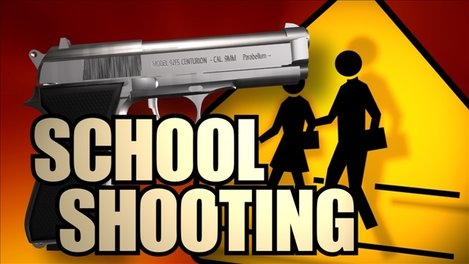
Schools must be safe zones for students and teachers. That means the first step in school safety is securing the perimeter of a school. It seems like simple logic that we should keep intruders out and also make sure the area inside those boundaries is safe for children and adults. Students are our priority, but teachers need protection too. Our School Safety Survey Results are here.
Unfortunately, as we have seen far too frequently, our schools are easy targets for those who wish to harm others. When premeditated attacks and school shootings occur, they are usually over within minutes. Most of the time law enforcement is simply not able to respond quickly enough to the event and lives are needlessly lost.
Intruders, who wish to hurt our students and teachers, are usually very familiar with the schools’ defense system and create plans around that information. More than likely, the defense strategy is in the student handbook posted online. These people know when to attack, where to go and often how to escape. Students and teachers alike, as well as approved visitors should have a visible identification badge on them at all times. There needs to be secure exterior doors to limit building access points, and each district should develop a uniform policy for entry into a school.
Former Metro Nashville Principal Bill Gemmill, pointed out: “All schools need upgraded security, whether it is as simple and reasonable as inside locks on classroom doors.” It is also time to put metal detectors in every school across America. The federal government could absorb the cost by simply eliminating any of the already wasteful programs they are funding. Public school safety must be a priority at every level of government. If you see something, say something, and then someone in authority must do something.
The last line of defense that we can have for our kids is an armed person willing and ready to defend them if the unspeakable should happen. That is why it is critical that we look at expanding the School Resource Officer (SRO) program. This is a highly effective program that serves many purposes during the school year and is invaluable where it now exists. It is important that the program be directed by a local law-enforcement agency, working in conjunction with the local education agency. The school can employ and utilize additional security, but the primary responsibility should fall to local law enforcement.
The Center for Problem-Oriented Policing has outlined three basic roles of an SRO: Safety Expert and Law Enforcer, Problem Solver and Liaison to Community Resources and Educator. While all three are important functions, the primary role should focus on the law enforcement and safety component. SRO’s should be preserving order and promoting safety on campus and serving as first responders in the event of critical incidents at schools, such as accidents, fires, explosions, and other life-threatening events. They are not supplementary school administrators dealing with minor school discipline issues or emergency instructors. It is clear that we must better define SRO programs, what we want them to accomplish, and better analyze how we measure their effectiveness. Law Enforcement and School District Leaders should yield to the law enforcement professionals on matters of school safety and law enforcement.
It is time to discuss the gun issue. I strongly support the 2nd Amendment and have a handgun carry permit myself. We must have common sense approach to who, when, and where we can carry firearms, without infringing on the rights of law abiding citizens. We should raise the age for the purchase of certain guns to the age of 21, with exemption to active duty military. We prohibit drinking of alcoholic beverage until 21, we should follow suit here as well. Many young people just are not prepared for the responsibility of drinking or owning a firearm. We should make stronger background checks, considering factors such as criminal background and mental health. We should also prohibit bump stocks that can convert guns into automatic weapons. We should more aggressively punish those who commit crimes with guns. But we will need to be careful that the policy is reasonable.
Policymakers, at the state and federal level, are also likely to look at legislation that empowers individual school districts to determine for themselves what direction they want to take on school safety, including qualified, certified and licensed volunteer school personnel going armed in their building. If a district decides to allow trained and armed teachers and administrators into the schools, the decision should not be taken lightly. The state should never mandate educators having to carry firearms or prohibit them from carrying, if permitted by the district. It is a decision that should be made at the local level based on the needs and size of the community.
Certainly, armed teachers who possess training or a military background would deter some intruders. However, trained law enforcement personnel are much preferred and would be a much greater deterrent. Mike Conrad, a teacher in Detroit said in a recent interview: “I think that the moment that you put a gun on the hip of a teacher in a classroom, that we have accepted the norm that school shootings will not stop, that we are now on the front line to defend against them, instead of trying to find a way to stop them.” The subject is very emotional, with good arguments coming from either side of the debate, which is why each community must decide for themselves this issue.
School safety policies must be flexible and practical. However, the issue of improved school security will not be resolved in the current political environment, as long as real solutions are not considered based on a liberal or conservative bias. It is time to quit playing political volleyball with this issue. Real lives, those of children and adults, are at stake in our schools. The time of talking is past; it is time to take action. Any viable option that can lead to a safer environment in our schools and communities should be on the table.
#####
JC Bowman is the Executive Director of Professional Educators of Tennessee, a non-partisan teacher association headquartered in Nashville, Tennessee. Permission to reprint in whole or in part is hereby granted, provided that the author and the association are properly cited. For more information on this subject or any education issue please contact Professional Educators of Tennessee. To schedule an interview please contact Audrey Shores, Director of Communications, at 1-800-471-4867 ext.102.
This article also appeared at: http://www.proedtn.org/news/388542/No-More-Political-Volleyball.htm
The School Safety Survey Results are Found here: http://www.proedtn.org/news/395676/Tennessee-School-Safety-Survey-Results.htm
“If you don’t understand — from the school district to the superintendents — that we want our teachers held harmless, then I’m sorry, you’re tone-deaf,” said State Representative Eddie Smith.

That message was heard and understood statewide. The state issued two very important guidance documents that make clear that message, which was released by the Tennessee Department of Education. Professional Educators of Tennessee, along with many others were privileged to work with the Department of Education and add our input. In addition, we will be putting together a webinar on this matter.
The guidance that the Department developed was a result of thoughtful and collaborative efforts to ensure that our state follows all state and federal laws. The new legislation that states that no adverse actions for students, teachers or schools will result from the 2017-18 TNReady administration. These two key documents, which were shared with districts and schools today, are posted on the state website, along with a list of initial improvements the state is making to the state assessment program:
Some highlights from these documents:
We believe everyone at the Tennessee Department of Education by issuing this guidance, are seeking to follow the letter of the law. Look for an announcement of the webinar coming soon at http://www.proedtn.org within the next few days.
###
JC Bowman is the Executive Director of Professional Educators of Tennessee, a non-partisan teacher association headquartered in Nashville, Tennessee. Permission to reprint in whole or in part is hereby granted, provided that the author and the association are properly cited. For more information on this subject or any education issue please contact Professional Educators of Tennessee.


“Public Education” is on the lips of every politician, during every election cycle. Yet, the debate continues. It is doing well, it is doing poorly, it needs reform, whatever the narrative needs to be that day or what the audience wants to hear.
Well, there are three sides to every story: “Yours, mine, and the cold, hard truth,” like the old Don Henley song reminds us. Out of the roughly 55.5 million K-12 students in America, 49.5 million of them are in our public schools, which is a little over 89%. If you visit a public education classroom today, you would be amazed at what our educators do on a daily basis.
We must remind ourselves we are not producing components for an industrial and societal machine. We are educating children. We can all agree that an engaging and challenging education is the proven path to prosperity and a life-long love of learning. Teachers consistently tell us that “testing” and “preparing students for a test” are among their top concerns in our internal surveys.
It has long been acknowledged that a strong public educational system is essential not only to the successful functioning of a democracy, but also to its future. That system must provide all children with an equitable and exceptional education that prepares them for college, career and life.
Educators, themselves, must exercise a higher duty of care than most professionals. Teachers face exposure to liability much greater than does the average citizen. Nearly every day, teachers must deal with diverse laws related to issues such as child abuse, student discipline, negligence, defamation, student records and copyright infringement. And many politicians are more concerned with a test score that their children produce than the immeasurable impact that teachers may make on a child’s life.
Often educators must contend with the fact that students do not have a consistent source of high-quality, nutritious food, if they have food at all at home. Issues like hunger and poverty, like it or not, are not imagined and they are prevalent in classrooms and schools across the nation. According to the United States Department of Agriculture (USDA), 15.3 million children under 18 in the United States live in households where they are unable to consistently access enough nutritious food necessary for a healthy life. These 8 states have statistically higher food insecurity rates than the US national average (14.6%): Arkansas (21.2%), Mississippi (21.1%), Texas (18.0%), Tennessee (17.4%), North Carolina (17.3%), Missouri (16.9%), Georgia (16.6%), and Ohio (16.0%). More than 1 in 5 children is at risk of hunger. Among African-Americans and Latinos, it’s 1 in 3 according to the USDA.
It is hard to focus on education when you are hungry. Poverty and hunger also lead to other health issues, which also go untreated. What other profession besides public education teacher is evaluated on their students’ test scores, when students lack the basic necessities of life?
Steve Turner in his brilliant satirical poem “Creed” referenced the state of our culture, when he wrote prevailing illogical thought processes: “This is the fault of society. Society is the fault of conditions. Conditions are the fault of society.” Seemingly educators bear the brunt of the outcomes of children, and society is a given a pass. The problems we confront are larger than the children walking through the school house door.
The solutions are more than a score on a test. So, when the next politician speaks about education when seeking your vote, ask them what their plans are to alleviate poverty and hunger in your community. That is much more important than test scores to a whole lot of families.
#####
JC Bowman is the Executive Director of Professional Educators of Tennessee, a non-partisan teacher association headquartered in Nashville, Tennessee. Permission to reprint in whole or in part is hereby granted, provided that the author and the association are properly cited. Check out his Blog at http://www.jcbowman.com. Follow him on Twitter @jcbowman

 JC Bowman
You must be logged in to post a comment.