Don’t Fire The Teacher

4ef91294e22d5f56649fababaa7bb3af~2399006406..jpg

Why are teachers dismissed? Sometimes teachers are not a good fit at a particular school. Despite well-meaning efforts and good intentions, it just doesn’t work out. What is an administrator to do?

Many times, in fact, the teacher is simply just dismissed. I think this is a poor strategy and reflective of mediocre management, especially if an administrator’s first reaction is to simply get rid of a teacher. Keep in mind we are not talking about an incompetent teacher. As an organization, we understand teacher quality matters.

Often the problem is not about ability. Sometimes it is that a new teacher doesn’t fit in socially. And schools can be cliquish. It takes some time for a new teacher or a veteran teacher relocating to a school to make new friends or build a relationship with other faculty members.

Think about it like this:  if a teacher does not get quickly embedded into a school culture, he or she jeopardizes his or her entire career over social factors. That doesn’t seem fair.

There is little doubt that many teacher dismissals are arbitrary. Too much of public education is still subjective, rather than objective. Teacher assessment is a difficult task and generally is not done with exacting measures. That means we are letting good teachers walk out of our schools, never to return. This may be due to bad luck of an inappropriate school assignment, lack of support by other educators or unreasonable but influential parents/guardians. It could also be bad management by school administrators who fail to create a manner in which teacher improvement is attainable, or some other unknown factor.

Another scenario that is beginning to escalate is the loss of veteran educators. Some districts may be targeting veteran educators for dismissal or simply encouraging them to retire or move on. This leaves a greater number of less-experienced teachers in some schools. This could prove to be harmful to students, particularly in socio-economically disadvantaged and urban schools.

Of course, teacher burnout is often higher at socio-economically disadvantaged and urban schools/districts. And if we are truthful, we must acknowledge that problems that go along with poverty undeniably make some kids harder to educate and are not so easy to address—especially for beginning teachers. The problem is much greater than who the teachers in a school may be.

Research points out that people who suffer job loss may go through some predictable emotional stages that may include lowered self-esteem, despair, shame, anger and feelings of rejection. Teachers are no different. We need to examine ways to intercede and work to give our educators the benefit of time to improve. Yet we must recognize that the most important task of a teacher is the education of the student. A school district must start with support before it moves to accountability.

At Professional Educators of Tennessee, we regularly seek input of our members to design necessary professional learning opportunities to help the teacher in the classroom, as well as the administrator who wants to assist their staff. We have developed a collaborative relationship with many districts built on this premise and want to make sure all children have great teachers.

Education is not as simple as manufacturing widgets. It cannot be measured by charts, graphs or standardized tests, despite the fact that many believe it can. So, before you fire a teacher or damage a career or a person, we hope that an administrator has exhausted every means at their disposal to invest in that educator and help them reach their full potential. In our opinion, an administrator’s number one objective outside the education of children is to provide support to our teachers.

##

JC Bowman is the Executive Director of Professional Educators of Tennessee, a non-partisan teacher association headquartered in Nashville, Tennessee. 

 

School Shootings: No More Political Football

schoolshooting17

Schools must be safe zones for students and teachers. That means the first step in school safety is securing the perimeter of a school. It seems like simple logic that we should keep intruders out and also make sure the area inside those boundaries is safe for children and adults. Students are our priority, but teachers need protection too.  Our School Safety Survey Results are here. 

Unfortunately, as we have seen far too frequently, our schools are easy targets for those who wish to harm others. When premeditated attacks and school shootings occur, they are usually over within minutes. Most of the time law enforcement is simply not able to respond quickly enough to the event and lives are needlessly lost.

Intruders, who wish to hurt our students and teachers, are usually very familiar with the schools’ defense system and create plans around that information. More than likely, the defense strategy is in the student handbook posted online. These people know when to attack, where to go and often how to escape. Students and teachers alike, as well as approved visitors should have a visible identification badge on them at all times. There needs to be secure exterior doors to limit building access points, and each district should develop a uniform policy for entry into a school.

Former Metro Nashville Principal Bill Gemmill, pointed out: “All schools need upgraded security, whether it is as simple and reasonable as inside locks on classroom doors.” It is also time to put metal detectors in every school across America. The federal government could absorb the cost by simply eliminating any of the already wasteful programs they are funding. Public school safety must be a priority at every level of government. If you see something, say something, and then someone in authority must do something.

The last line of defense that we can have for our kids is an armed person willing and ready to defend them if the unspeakable should happen. That is why it is critical that we look at expanding the School Resource Officer (SRO) program. This is a highly effective program that serves many purposes during the school year and is invaluable where it now exists. It is important that the program be directed by a local law-enforcement agency, working in conjunction with the local education agency. The school can employ and utilize additional security, but the primary responsibility should fall to local law enforcement.

The Center for Problem-Oriented Policing has outlined three basic roles of an SRO: Safety Expert and Law Enforcer, Problem Solver and Liaison to Community Resources and Educator. While all three are important functions, the primary role should focus on the law enforcement and safety component. SRO’s should be preserving order and promoting safety on campus and serving as first responders in the event of critical incidents at schools, such as accidents, fires, explosions, and other life-threatening events. They are not supplementary school administrators dealing with minor school discipline issues or emergency instructors. It is clear that we must better define SRO programs, what we want them to accomplish, and better analyze how we measure their effectiveness. Law Enforcement and School District Leaders should yield to the law enforcement professionals on matters of school safety and law enforcement.

It is time to discuss the gun issue. I strongly support the 2nd Amendment and have a handgun carry permit myself. We must have common sense approach to who, when, and where we can carry firearms, without infringing on the rights of law abiding citizens. We should raise the age for the purchase of certain guns to the age of 21, with exemption to active duty military. We prohibit drinking of alcoholic beverage until 21, we should follow suit here as well. Many young people just are not prepared for the responsibility of drinking or owning a firearm. We should make stronger background checks, considering factors such as criminal background and mental health. We should also prohibit bump stocks that can convert guns into automatic weapons. We should more aggressively punish those who commit crimes with guns. But we will need to be careful that the policy is reasonable.

Policymakers, at the state and federal level, are also likely to look at legislation that empowers individual school districts to determine for themselves what direction they want to take on school safety, including qualified, certified and licensed volunteer school personnel going armed in their building. If a district decides to allow trained and armed teachers and administrators into the schools, the decision should not be taken lightly. The state should never mandate educators having to carry firearms or prohibit them from carrying, if permitted by the district. It is a decision that should be made at the local level based on the needs and size of the community.

Certainly, armed teachers who possess training or a military background would deter some intruders. However, trained law enforcement personnel are much preferred and would be a much greater deterrent. Mike Conrad, a teacher in Detroit said in a recent interview: “I think that the moment that you put a gun on the hip of a teacher in a classroom, that we have accepted the norm that school shootings will not stop, that we are now on the front line to defend against them, instead of trying to find a way to stop them.” The subject is very emotional, with good arguments coming from either side of the debate, which is why each community must decide for themselves this issue.

School safety policies must be flexible and practical. However, the issue of improved school security will not be resolved in the current political environment, as long as real solutions are not considered based on a liberal or conservative bias. It is time to quit playing political volleyball with this issue. Real lives, those of children and adults, are at stake in our schools. The time of talking is past; it is time to take action. Any viable option that can lead to a safer environment in our schools and communities should be on the table.

#####

JC Bowman is the Executive Director of Professional Educators of Tennessee, a non-partisan teacher association headquartered in Nashville, Tennessee. Permission to reprint in whole or in part is hereby granted, provided that the author and the association are properly cited. For more information on this subject or any education issue please contact Professional Educators of Tennessee. To schedule an interview please contact Audrey Shores, Director of Communications, at 1-800-471-4867 ext.102.

This article also appeared at:  http://www.proedtn.org/news/388542/No-More-Political-Volleyball.htm

The School Safety Survey Results are Found here:  http://www.proedtn.org/news/395676/Tennessee-School-Safety-Survey-Results.htm

The Edge of Chaos

children expressions

The edge of chaos is a space between order and disorder.  For some, creativity is often found at the edge of chaos. In 2009, neuroscientists stated that evidence is emerging which suggests that operating at the edge of chaos may drive our brain’s astonishing capabilities. In fact, our complex brains may thrive on the chaotic.  In human terms, that may mean a dislike of rules and rigidity and formality, as well as a penchant for not following established rules.

Many people are most creative when their mind is most chaotic. However, a state of chaos is not sustainable and can certainly have negative effects. Albert Einstein, a genius by most accounts, said, “The true sign of intelligence is not knowledge but imagination.”

In A Journey into Chaos: Creativity and the Unconscious, Dr. Nancy C. Andreasen, states that the “capacity to be creative, to produce new concepts, ideas, inventions, objects or art, is perhaps the most important attribute of the human brain.”  She then points out: “Understanding how creative ideas arise from the brain is one of the most fascinating challenges of contemporary neuroscience.”

Is there a relationship between creativity and high intelligence?  Andreasen states that there is “a common assumption is that creativity and high intelligence are the same thing.”  This is, as she points out “a misconception.” Andreasen also studied the relationship between creativity and mental illness, which had inconclusive results because of limited participants.   It is clear consciousness, the unconscious and creativity are all important facets of the human mind.

In 1985, Robert Sternberg put forward his Triarchic Theory of Intelligence, contending that previous definitions of intelligence are too narrow because they are based solely on intelligences that can be assessed in IQ tests. Instead, Sternberg believes types of intelligence are broken down into three subsets: analytic, creative, and practical.

Mogbel Alenizi, a lecturer at Qassim University in Saudi Arabia wrote: “The field of creativity is a broad one, with definitions varying in and between countries and no consensus on how best to test for creativity or measure development.”  He added: “However, agreement is emerging that creativity is complex and the investment theory that suggests a combination of factors contribute to creativity (intellectual abilities, knowledge, styles of thinking, personality, motivation and environment).”  Certainly, genetics could factor in that equation at some level.

The wide range of approaches to creativity—from psychoanalytic, to psychological, to neurobiological—generally reveals the diversity of the field, but has led some to describe it as “a degenerating research program,” as Mark Batey, a senior lecturer in organizational psychology at the University of Manchester, wrote in his article on measuring creativity.

There are also global differences on our conceptions of creativity.  Research has tended to focus more on the person and the process than on the outcome or the social context in which the creativity occurs.  Which opens up a whole field for educators and researchers that may want to reach their creative students, in which formal education or standardized test fail to accurately depict.  It especially difficult, when creativity can be hard to identify and even more difficult to measure.

Education expert Sir Ken Robinson notes that in the factories of the 20th century, creativity was not valued. However, he points out it’s critical for success in the 21st Century.  Our school system, despite its imperfections has still produced students who have enabled America to lead in innovation around the globe.  The number of patents and innovations are one testament to our success, despite an education system that often limits creativity.  This has led to a tug of war between proponents of STEM education (science, technology, engineering, and math) and advocates for STEAM lessons, which add art to the mix.  We should welcome that debate.

So, we must ask ourselves:  Are our schools, which seem so accountability driven, measured by standardized tests reaching all students?  Are we stifling creativity in our schools?  What does success even look like in each school? Each community?  Each state?  Perhaps, we need more creativity, and use of our own imagination to address those issues?  Possibly we need to re-think many factors in how we measure success in public education?  Sometimes, through examination, we may find that in order, a little disorder is good.  Welcome to the Edge of Chaos.

What do you think? 

##

JC Bowman is the Executive Director of Professional Educators of Tennessee, a non-partisan teacher association headquartered in Nashville, Tennessee. 

TNReady Legislation & Guidance

“If you don’t understand — from the school district to the superintendents — that we want our teachers held harmless, then I’m sorry, you’re tone-deaf,” said State Representative Eddie Smith.

That message was heard and understood statewide. The state issued two very important guidance documents that make clear that message, which was released by the Tennessee Department of Education. Professional Educators of Tennessee, along with many others were privileged to work with the Department of Education and add our input. In addition, we will be putting together a webinar on this matter.

The guidance that the Department developed was a result of thoughtful and collaborative efforts to ensure that our state follows all state and federal laws. The new legislation that states that no adverse actions for students, teachers or schools will result from the 2017-18 TNReady administration. These two key documents, which were shared with districts and schools today, are posted on the state website, along with a list of initial improvements the state is making to the state assessment program:

  • Detailed Evaluation Guidance (here)
  • FAQ that provides an overview of the various areas the new laws impact, including student, education, school, and district accountability (here)

Some highlights from these documents:

  • We will still follow the Tennessee Teaching Evaluation Enhancement Act of 2015, which adjusted the growth component of teacher evaluation for a multi-year period, and we will provide educators with the best possible option for calculating their level of overall effectiveness (LOE). In addition, educators who have 2017-18 TNReady data included in their composite will have the ability to nullify their entire LOE score this year IF they choose.
  • Regarding school accountability, rather than issuing A-F grades, we will provide information on school performance based on the various indicators in our ESSA plan, but we will not publish an overall summative label. No adverse action will be taken against a school based on 2017-18 TNReady data. We will still name Reward and Priority schools, but no school will be identified as a Priority school using 2017-18 TNReady data.
  • Districts can decide whether TNReady data factors into students’ scores. If a district chooses to do so, then that cannot result in a lower final grade for a student. This means that districts may include scores for some students and exclude scores for others, or a student may have TNReady scores included for some specific subject areas and not others.

We believe everyone at the Tennessee Department of Education by issuing this guidance, are seeking to follow the letter of the law. Look for an announcement of the webinar coming soon at http://www.proedtn.org within the next few days.

###

JC Bowman is the Executive Director of Professional Educators of Tennessee, a non-partisan teacher association headquartered in Nashville, Tennessee. Permission to reprint in whole or in part is hereby granted, provided that the author and the association are properly cited. For more information on this subject or any education issue please contact Professional Educators of Tennessee.

When Policies Collide: Education and Immigration

Fotolia_865888_Subscription_L.jpg

Our nation’s security and immigration policy are federal responsibilities, yet it is has become another example of our federal government not meeting a legitimate need of American citizens.   In fact, we may have reached a tipping point on this subject. In Nashville, for example, foreign-born residents have increased from 2.5 percent of its population a decade ago to more than 12 percent today.

Our country was launched on principles that embrace people that legally come to our country. All immigrants should endeavor to learn and embrace American culture and civic heritage pride, as well as our political heritage.

We have established, and must enforce, the procedures of legal immigration and naturalization at the federal level. It is clear that our current immigration policies have are failing, largely because we have not enforced what has been established or secured our borders. People now arriving on our borders anticipate asylum the minute they get into our country.

Our nation has always welcomed people to our shores. In fact, on the Statute of Liberty in New York Harbor there is a poem by Emma Lazarus to remind us of freedom and opportunity that says, “Give me your tired, your poor, your huddled masses yearning to breathe free…”

However, we must require and strongly support a legal method of immigration. It is true that immigration is not always a question of law and order.  It is also a problem for all of humanity.  Immigrants, both legal and illegal, are real human beings. They are not merely a number or statistic.  The recent wave of illegal children crossing our borders is alarming.  They are being sent by their parents, by questionable means, and encompass the hopes and dreams of their families.

In many ways, immigrants are doing what almost any of us would do if our own children were starving, countries were unsafe, or if they have no hope for the future. And too often in our discussion about immigration, that perception is lacking. Who among us would not do whatever was necessary to see that our children were safe, had food or a chance for a better future? However well mean-meaning, what are the ramifications of these children immigrating to our country and state for public education? State laws that are designed to marginalize immigrant families in the name of deterring illegal immigration have largely been declared unconstitutional.

For example, in 1982, the United States Supreme Court ruled in Plyler vs. DOE that children in our country here illegally have the same right to attend public schools as other citizens. In addition, these children are obliged to attend school until they reach a mandatory age. So, there will be an impact in whatever state that these children reside, including here in Tennessee.

So regardless of our opinion on the subject, the Plyler ruling made clear that public schools could not deny admission to any student. Nor could they treat any student differently or prevent the right of access to school. In addition, public schools cannot require students or parents to disclose their immigration status. Data by the Department of Health and Human Services’ Administration for Children and Families in 2014 showed Tennessee has already received 760 of the more than 30,000 children this year, about 2.5 percent of the unaccompanied children crossing into the United States.

School personnel, especially administrators or educators involved with student intake activities will have their hands tied this fall. We expect it will create numerous issues at local level, and for our state. It is time our federal policymakers do their job and create a tenable immigration policy to safeguard our borders and create legal pathways to citizenship. Failure to do so merely continues bad policy and places public education at the forefront of the battle.

##

JC Bowman is the Executive Director of Professional Educators of Tennessee, a non-partisan teacher association headquartered in Nashville, Tennessee. Follow him on Twitter @jcbowman. Permission to reprint in whole or in part is hereby granted, provided that the author and the association are properly cited.
Overcoming Poverty in Education

poverty

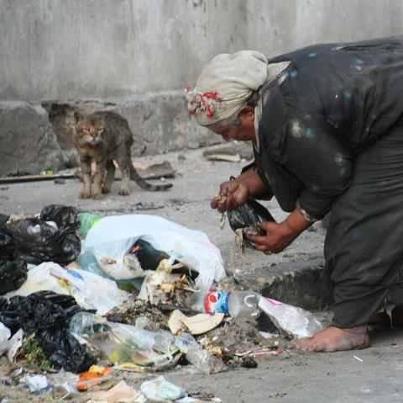
State Representative Harold Love recently shared one of the most inconceivable statistics in Tennessee.  The Nashville zip code 37208 has the highest percentage of incarceration in the nation, according to a Brookings Institution analysis.  The school to prison pipeline is unquestionable.   A child cannot succeed in life if they are denied the opportunities of a quality education. Lack of opportunity and quality education establishes the pathway to incarceration. Education remains the key to escaping poverty, even as poverty remains the biggest obstacle to education.

Tennessee has a richness of poverty.  According to the Southern Education Foundation, over 50 percent of the nation’s children are in poverty. Poverty is a vast and complex issue that plagues communities in a seemingly endless cycle. Accompanying poverty is its sidekick, hunger.  According to the United States Department of Agriculture (USDA), 15.3 million children under 18 in the United States live in households where they are unable to consistently access enough nutritious food necessary for a healthy life. These 8 states have statistically higher food insecurity rates than the US national average (14.6%): Arkansas (21.2%), Mississippi (21.1%), Texas (18.0%), Tennessee (17.4%), North Carolina (17.3%), Missouri (16.9%), Georgia (16.6%), and Ohio (16.0%). More than 1 in 5 children is at risk of hunger. Among African-Americans and Latinos, it’s 1 in 3 according to the USDA.

Carlos Lee, a PhD student at LSU wrote: “Students who live in poverty come to school every day without the proper tools for success. As a result, they are commonly behind their classmates physically, socially, emotionally or cognitively.”  According to Eric Jensen at the Center for New York City Affairs, high-poverty schools are more likely to struggle with school climate concerns such as absenteeism and truancy, bullying, and trust and engagement issues that can weaken the learning environment. The road is to prison may arise out of the home, but it also veers through our school systems.  Poverty puts too many students at a disadvantage before they even step foot in a classroom.

Distinguished educator Paul Reville, and Harvard University, launched the Education Redesign Lab to pilot a revolutionary approach to create a new, more comprehensive education model better designed to close achievement gaps and provide each and every child the support and opportunities they need to be prepared for success. Nashville or Memphis should also look at this approach.

The theory of the Harvard Education Redesign Lab is putting forth to overcome widespread inequity in child development and education support is that “we must dramatically redesign, align, and integrate our systems of child development and education.”  They also believe we must start in early childhood to “tailor instruction to meet each child’s needs, while braiding health and social services with schools, and providing access for all to high-quality expanded learning and enrichment opportunities.”  This, they argue, gives all children a “much fairer chance of succeeding in education and in life.”

I am mindful that the counter argument is that we do not want the state to raise our children.  It grows dependence upon government.  This is true.  And I think we can put safeguards in place to easily prevent that from happening.  However, I also believe that all children are created in the image of God.  It is far more economical to educate a child, than it is to incarcerate an adult  That is why it is important to have private enterprise invest in this effort, not only with their money, but also their human capital. Leaders across our state need to make this a priority.

Our answer cannot be scores on a standardized test.  Studies from the American Psychological Association reveal the psychological effects of hunger on education. Hunger is known to cause depression, anxiety and withdrawal, all of which are obstructions to a child trying to focus on education. Our solution must be to prepare every child for success.  Perhaps we need to redefine what success looks like for those impacted by poverty?  We can, and we must, address these momentous challenges.

Just to recap:  Nashville zip code 37208 has the highest percentage of incarceration in the nation.  Tennessee students are some of the poorest in the nation.  We have the 4th highest food insecurity rate in the United States.  There is no better time for changing the trajectory for children than now.  We already know where those consequences lead.

Numerous philanthropic organizations have supported public education over the years, using their private dollars with public dollars to meet the needs of impoverished youth.  Tennessee has numerous organizations, from the Hyde Family Foundation in West Tennessee to the Frist Foundation in Middle Tennessee to the Niswonger Foundation in East Tennessee which could lead this type of effort.  It might even be something SCORE, the State Collaborative on Reforming Education could make their focus and mission.  Nashville is in their backyard.  We would be glad to assist.

##

JC Bowman is the Executive Director of Professional Educators of Tennessee, a non-partisan teacher association headquartered in Nashville, Tennessee.  Permission to reprint in whole or in part is hereby granted, provided that the author and the association are properly cited. For more information on this subject or any education issue please contact Professional Educators of Tennessee.

Breast Feeding 101 for Educators

Blackberry 2014 656

“People are more opinionated about parenting issues than political issues,” according to writer, Jennifer Martin.   Admittedly this is an unusual subject for me to address, but it has become a frequently asked question by our female educators.  Hopefully this clears up the issue for school boards, administrators, teachers and school staff.

Health professionals and public health officials promote breastfeeding to improve infant health. The American Association of Pediatrics recommends breast-feeding exclusively for about six months, “followed by continued breast-feeding as complementary foods are introduced, with continuation of breast-feeding for one year or longer as mutually desired by mother and infant.”

Tennessee has one of the lowest rates of breast-feeding in the nation, according to the government’s Center for Disease Control and Prevention. Fewer than 16 percent of Tennessee infants are being breast-fed exclusively at six months old, according to the most recent statistics. Surrounding states are much higher, and in some states – mainly in the Pacific Northwest – the rate is extremely high.

It is important to note that 82% of public school teachers are female in Tennessee. Women are the predominate sex in our profession. More importantly, most of these women are of child bearing age.  So this is an important topic for all stakeholders. Breastfeeding also provides long-term preventative effects for the mother, including an earlier return to pre-pregnancy weight and a reduced risk of pre-menopausal breast cancer and osteoporosis.

Here are the appropriate state laws.

  • Tenn. Code Ann. § 68-58-101 et seq. (2006, 2011) permits a mother to breastfeed in any location, public or private, that the mother is authorized to be, and prohibits local governments from criminalizing or restricting breastfeeding.
  • Specifies that the act of breastfeeding shall not be considered public indecency as defined by § 39-13-511; or nudity, obscene, or sexual conduct as defined in § 39-17-901.
  • Tenn. Code Ann. § 68-58-101 et seq. and § 39-13-511(d) were amended in 2011 by Tenn. Pub. Acts, Chap. 91 (SB 83) to remove a provision permitting mothers to breastfeed only infants 12 months or younger in any location. (2006 Tenn. Law, Chap. 617; HB 3582)
  • Tenn. Code Ann. § 50-1-305 (1999) requires employers to provide daily unpaid break time for a mother to express breast milk for her infant child.
  • Employers are also required to make a reasonable effort to provide a private location, other than a toilet stall, in close proximity to the workplace for this activity. (1999 Tenn. Law, Chap. 161; SB 1856).

President Obama signed the Affordable Care Act (ACA) on March 30, 2010. (See the combined full text of Public Laws 111-148 and 111-152 here.)  Among many provisions, Section 4207 of the law amends the Fair Labor Standards Act (FLSA) of 1938 (29 U.S. Code 207) to require an employer to provide reasonable break time for an employee to express breast milk for her nursing child for one year after the child’s birth each time such employee has need to express milk. The employer is not required to compensate an employee receiving reasonable break time for any work time spent for such purpose.

The employer must also provide a place, other than a bathroom, for the employee to express breast milk.  If these requirements impose undue hardship, an employer that employs fewer than 50 employees is not subject to these requirements. The federal requirements shall not preempt a state law that provides greater protections to employees.

For more information:

In addition, many health insurance plans provide coverage for specified women’s preventive health services with no cost sharing (e.g., copayment, coinsurance, or deductible). Breastfeeding support, supplies and lactation counseling are one of these specified preventive services.

As a member, if you believe your school district is not following the law on this issue, feel free to contact our offices at 615-778-0803 extension 104 to speak to an attorney or simply email legal@proedtn.org.

##

JC Bowman is the Executive Director of Professional Educators of Tennessee, a non-partisan teacher association headquartered in Nashville, Tennessee. Permission to reprint in whole or in part is hereby granted, provided that the author and the association are properly cited. Follow him on social media via Twitter at @jcbowman.

Chaos is a Ladder

Alinsky-Littlefinger_840x480

I am unapologetically a fan of the HBO series Game of Thrones.  In the episode, “The Climb,” the overly ambitious character, Petyr Baelish, aka Littlefinger, played masterfully by Aiden Gillen, delivers a speech that is eerily reminiscent of Saul Alinsky:

“Chaos isn’t a pit. Chaos is a ladder. Many who try to climb it fail and never get to try again. The fall breaks them. And some are given a chance to climb; they cling to the realm or the gods or love. Only the ladder is real. The climb is all there is.”

Essentially, Littlefinger is supporting a moral code that says everyone ought to be out for themselves. The only purpose in life is to gain power. Sound familiar?  Power can only be accumulated through chaos, by using upheaval to rearrange things so that you gain power.  The speech reads like a paragraph out of Rules for Radicals, with the word chaos replacing the word conflict.  Issues such as patriotism, love, religious faith – are all things to be denigrated.

For Littlefinger, a character loathed by most fans, the tearing of the realm can create opportunities. For people who subscribe to his, or Alinsky’s theories on accumulating power for the sake of accumulating power, what is there left to rule over when you have destroyed the world?  In 1972 as Alinsky was questioned by Playboy, the interviewer asked him: “Do you believe in any kind of afterlife?” Alinsky said if there was an afterlife he would “unreservedly choose to go to hell.” And while further explaining his answer:  “Once I get into hell, I’ll start organizing…”

Emma Goldman, an anarchist in the first half of the twentieth century declared, “Religion, the dominion of the human mind; Property, the dominion of human needs; and Government, the dominion of human conduct, represent the stronghold of man’s enslavement and all the horrors it entails.” That radical response, which is embraced by Marxists, should be alarming to those in our country.

The levels of hypocrisy of most, who seek conflict, rather than attainable solutions to issues facing people, are rarely confronted. People should not be afraid to talk about their beliefs, stick up for those in the faith community who are under attack, and call out bigotry whenever or wherever we find it.  When you want chaos or conflict, your goal is to continue the creation of problems, not find solutions to real problems.   And if problems do not exist, you make them up. That is why some organizations and institutions are increasingly losing members, support and influence.

For example, in our organization and on a personal level we try to map-out a path toward a viable and sustainable solution on issues facing our members. Just recently, we were made aware of school district that had too many students in their class for a teacher.  Our solution was not to go to the media and have the school district on the defense.  We didn’t get on the school board agenda, and send letters to our members to embarrass the Superintendent.  We simply called and talked to the Central Office.  The problem was resolved in 5 minutes.  The Director of Schools was simply unaware of the issue.  That is leadership, and it doesn’t have to be built on pointless or unnecessary conflict.

Resolving issues is about people working together to resolve legitimate concerns. There are no hidden agendas when you build a culture motivated upon collaboration and problem solving.  As an organization, our beliefs are practical and non-partisan, consisting of rational people across a broad political spectrum who will focus on solutions for our members.  A solid strategy is critical in order to solve any problem.  If your problem-solving creates chaos, that is a sign of a serious leadership problem.  This never-ending cycle is not conducive to the adversity most people face.  Solving problems consist of the transparent exchange of ideas, where the concerns and points of view of all people are freely expressed, not just those of the militant minority.

To relate this to my field of public education, we have to engage parents and taxpayers more on the great challenges we face.   We cannot engage in frivolous lawsuits against our own school districts and expect Boards of Education to be responsive to legitimate concerns.  Public education fails, when Alinsky tactics win.  It isn’t hard to figure that out.  We must work together.

In a Game of Thrones episode from this past season, “The Spoils of War,” Bran Stark perhaps mockingly uses Littlefinger’s own words against him: “Chaos is a ladder.”  This statement reveals that Bran understood the very heart of a master manipulator Petyr Baelish.  He knows that Littlefinger is a self-centered, promoter of himself, more interested in power-plays and schemes, and being deceptive.

Petyr Baelish, will never hear the announcement, “Littlefinger, First of His Name, King of the Andals and the First Men, Lord of the Seven Kingdoms, and Protector of the Realm.” He may be organizing hell with Alinsky, still in the middle of chaos—and there is no ladder there.

##

JC Bowman is the Executive Director of Professional Educators of Tennessee, a non-partisan teacher association headquartered in Nashville, Tennessee. Permission to reprint in whole or in part is hereby granted, provided that the author and the association are properly cited. 


Beyond Alinsky

Alinsky-dedication

There is no doubt that the “community organizing” methods and philosophy developed by Saul Alinsky have had a penetrating effect on our politics. However, has it made government more responsive or improved results for citizens?  That is highly doubtful.

What happens when Saul Alinsky and his tactics do not go far enough for you?

We are probably about to find out. There are seemingly no longer limits to acceptable behavior in society, no moral conscience for some people and Alinsky’s radical “methods” are now the new normal. Combined with the usual Orwellian double-speak from those trained in Alinsky tactics. They can attract the gullible.

Alinsky famously referenced his admiration for Lucifer in his book Rules for Radicals. I really do not care to speculate what the motivation was; it is in front of the book.  Alinsky adhered to a Marxist ideology.  People should read Rules for Radicals for themselves.  Some of the rules that are often cited, and are subsequently employed regularly are:

  • “Make the enemy live up to its own book of rules.”
  • “Ridicule is man’s most potent weapon.”
  • “If you push a negative hard enough, it will push through and become a positive.”
  • “Pick the target, freeze it, person­alize it, and polarize it.” Cut off the support network and isolate the target from sympathy. Go after people and not instit­utions; people hurt faster than instit­utions.

The objective of most community organizers is to inject politics into every issue, every debate. It is dangerous to induce immoral and scrupulous tactics solely for political gain for the “militant minority.”  One overarching goal is never-ending conflict.  They simply move from issue to issue.

The reaction community organizers seek: is to identify activists, who can build a larger, more robust militant minority within organizations they control.  This warped strategy leaves the majority of people in organizations impacted by community organizers pushing this radical agenda underserved.   This approach is why so many labor unions are dying, as they only exist to serve the excessively bureaucratic union leadership.  This leadership often encompasses a socialist agenda at odds with a majority of the members.

The question for all of us, is how far is too far? In the world of Alinsky, “organizing” is simply the revolution.  Who leads the revolution?  The community organizers who control the radicals/militant minority will be the leaders.  And for many, Alinsky is just a stepping stone for the next wave of issues that will emerge.  And the organizer knows that there can be no action until those “issues are polarized.”  There is no solution possible, when conflict never ends.

##

JC Bowman is the Executive Director of Professional Educators of Tennessee, a non-partisan teacher association headquartered in Nashville, Tennessee. Permission to reprint in whole or in part is hereby granted, provided that the author and the association are properly cited.