Dream On

Every child should have a dream for their future.   Not knowing who or what we want will lead us to becoming someone and something we never wanted to be.  As parent or as an educator the greatest gift we give children the belief that if they work hard they can be anything they want to be in life.  Of course, we all struggle at times to figure out just what it is we want out of life.

A brighter future starts with a quality education and giving children everywhere the tools and support they need to find success in school and in life.  America is understood to be the home of possibility.  The World Economic Forum estimates that 65 per cent of children today will end up in careers that don’t even exist yet and for which schools are not preparing them. Unfortunately, our school system is built on a model more linked to the industrial age, than the digital/technological age.

Two education entrepreneurs Kanya Balakrishna and Andrew Mangino launched a website called the Future Project to reach 50 million students across the country they say are at risk of never discovering their full potential.   Their focus is to encourage kids to dream.  They believe that dreams inspire learning – “not the sort of rote, superficial learning that will help students pass state standardized tests” but rather “real learning that inspires deep, meaningful, life-changing mastery and purpose.”  This kind of learning, they believe, will inspire “positive change both for the individual and their community.”  It is an intriguing idea that deserves discussion.

Educator Sean Hampton-Cole offered up that he had a “dream that within our lifetimes, personal enrichment, critical analysis, creative output and purposeful problem-solving will be considered at least as important as factual recall in education.”   We need art and music in our culture.  Unfortunately, we are neglecting those subjects in our schools.  President Ronald Reagan struck a similar note in speaking about the humanities in 1987: “The humanities teach us who we are and what we can be,” he said. “They lie at the very core of the culture of which we’re a part, and they provide the foundation from which we may reach out to other cultures. The arts are among our nation’s finest creations and the reflection of freedom’s light.”

Art and music programs are likely to be among the first victims of budget cuts in financially-stretched school districts already fighting to meet other academic demands, and they are rarely restored.  The College Board, found that students who take four years of arts and music classes while in high school score 95 points better on their SAT exams than students who took only a half year or less (scores averaged 1061 among students in arts educations compared to 966 for students without arts education). It is important for policymakers to understand that art, music, and literature improve problem-solving and critical-thinking skills.

This is exactly what the World Economic Forum revealed that business executives were looking for in future employees.   Their number one response? Complex problem solving. Other skills on their top ten list included critical thinking, creativity, collaboration and emotional intelligence.  Literacy, numeracy and scientific knowledge will always be essential.    Policymakers and stakeholders alike need to understand that arts and music are vital in promoting, educating and developing our youth to excel and reach their dreams.  President John F. Kennedy reminded us: “I am certain that after the dust of centuries has passed over our cities, we too, will be remembered not for victories or defeats in battle or in politics, but for our contribution to the human spirit.”

In her book, Not For Profit: Why Democracy Needs the Humanities, Martha Nussbaum argues that arts education, under threat all over the world, must be embraced because it supplies the skills needed to nurture true democratic citizens. Education must nurture the whole child, and arts are vital in this endeavor. Nussbaum contends that it is vital for our children to have critical and hands-on engagement with art, music, and literature, all of which help foster our basic humanity — creativity, critical thinking, and empathy for others. Cultivating these values, she argues, are the deeper purposes of education.

Seth Godin takes it a step further in Stop Stealing Dreams when he writes: “Have we created a trillion-dollar, multimillion-student, sixteen-year schooling cycle to take our best and our brightest and snuff out their dreams—sometimes when they’re so nascent that they haven’t even been articulated? Is the product of our massive schooling industry an endless legion of assistants? The century of dream-snuffing has to end. The real shortage we face is dreams, and the wherewithal and the will to make them come true. We’re facing a significant emergency, one that’s not just economic but cultural as well. The time to act is right now, and the person to do it is you.”

This generation of educators have to be the ones to restore the dream of our students.  It isn’t just about education reform or public education reimagined.   There is a coming education revolution. We must ensure each child, in every school, in all communities are healthy, safe, engaged, supported, and challenged.  This will require the kind of teaching to prepare students to become creative problem solvers who can take initiative and responsibility.  To paraphrase Steven Tyler:  When we look in the mirror.  The lines are getting clearer.  The past is gone.  Dream On.

##

JC Bowman is the Executive Director of Professional Educators of Tennessee, a non-partisan teacher association headquartered in Nashville, Tennessee.  Permission to reprint in whole or in part is hereby granted, provided that the author and the association are properly cited. For more information on this subject or any education issue please contact Professional Educators of Tennessee.
A Few Thoughts on Educational Assessment and Evaluation

jc ed background

At Professional Educators of Tennessee we view assessment of students much like a school picture.  It may not be an accurate depiction, but it is what the student looks like on that day.  Our position has always been that the fewer tests administered to students would equal less disruptions for students and teachers. We have worked with the Tennessee Department of Education toward this objective.  We feel like progress has been made and will continue to work with them and the next governor toward this sensible objective.

The 2018 TNReady student assessment results showed mixed results, but state leaders saw encouraging areas of progress, and we celebrate that success.  The majority of the 650,000 students who took the assessment this year did so on paper, but about 300,000 students took the test online.  Students improved most in early grades reading, and narrowed achievement gaps.  In addition, the results show a need for deeper, more sustained work to support improvement.  The release of the results of the latest statewide assessment, while flawed, do provide a data point for educators to consider.  We encourage them to look at the results, take the result seriously and consider the steps they need to take to help all students and schools succeed.

In general, we must always be careful in determining teacher performance based strictly on the test scores of students to whom the teacher is assigned during a school year. The risk of misidentifying and mislabeling teacher performance based on test scores is too high for it to be the major indicator of teacher performance, especially when you look at issues such as student demographic characteristics. A number of states, including Michigan, have since taken steps to lessen the impact test scores have on teacher evaluations, repeatedly mentioning factors outside an educator’s control which can influence a student’s academic performance.  The interaction between teacher and student is the primary determinant of student success.

Moving forward, it is worth noting that Dr. Bill Sanders, the creator of value added assessment, warned of the misuse of TVAAS for individual teacher data because of its volatility.  We would certainly remind policymakers of this detail. In fact, classroom observations by trained personnel, along with teacher and principal input, would likely produce far more consistent and reliable data for assessing the quality of teaching than scores on an annual assessment. Assessment outcomes cannot be viewed as a reliable or significant indicator of Tennessee student proficiency until we have consecutive years of stable test delivery in which students and educators are confident.

We look forward to continuing the dialogue with policymakers and working with all stakeholders toward creating a better framework for both educator evaluation and student assessment in Tennessee.  We have proven as a state that we are willing to be innovative and now we have the opportunity to get it right. We are committed to working with stakeholders to improve implementation of state assessment so that parents, educators, and policymakers can continue to know how our students are faring each year.  As we build on our success, and we need to move forward together.

– – –

JC Bowman is the Executive Director of Professional Educators of Tennessee, a non-partisan teacher association headquartered in Nashville, Tennessee.  Permission to reprint in whole or in part is hereby granted, provided that the author and the association are properly cited. For more information on this subject or any education issue please contact Professional Educators of Tennessee. 

A Professional Voice focused on Public Education in Tennessee

img_20180422_212449-1394880902.jpgAs professionals, our members are committed to supporting quality public education and the professional rights and obligations of the education community. Our members set the policy and priorities of  our association to meet the needs of Tennessee educators. Working in partnership with parents, business, community and government, we provide the programs and services that enable educators and schoolchildren to achieve their highest potential.  Professional Educators of Tennessee was created by Tennessee educators for Tennessee educators.  Our focus is the state of Tennessee.      

From professional development to information on the latest education trends, we offer a myriad of resources to help you in and out of the classroom. For over 39 years, Professional Educators of Tennessee has been serving great teachers across the state of Tennessee.  Our members have often been  at the forefront of education in the state.

As the fastest growing teacher association in the state, we know that our members can be catalysts for innovative solutions to the many challenges facing education.  We look forward to creating mutually beneficial partnerships to rethink curriculum, offer professional development, develop sound policy and improve educational environments and outcomes for students across Tennessee.  We have great legal services and member benefits as well!

Protecting your career is just as important as protecting any other life investment. That’s why we provide eligible members a superior protection package to protect you in the classroom with $2 million worth of liability insurance with access to our attorney’s that are available by phone, e-mail or fax during normal business hours.  In fact, we will gladly compare liability policies with any education organization serving teachers in the state. You can join for $189 a year, not over $600 like a union, with a national agenda.  Keep in mind we do not endorse or contribute to political parties or candidates with your dues. We are not a union.  

We work year-round as a professional, positive voice focused on uniting educators in support of an exemplary public education for every student in Tennessee.  We know vitriol and anger only hurts public education and never solves problems.  We understand in order to create a more effective system that provides the basic academic skills necessary for success in life for our students, that we must all work together. Education is a parental right, a state and local responsibility, and a national strategic interest.

It would be our honor to serve you.  Check Professional Educators of Tennessee out at www.proedtn.org

ProEd_logo

Teachers are Going, Going….Gone

Featured Image -- 373

We know without a doubt that teachers are the number one in-school influence on student achievement. Data indicates that in the last 20 years, teacher attrition has nearly doubled. In fact, 16–30% of teachers leave the teaching profession each year. It is estimated by some that school districts now spend $1B to $2.2B per year nationally replacing teachers. The average cost to replace a teacher is about $20,000 each in many districts. One-third of today’s teachers will retire in the next five years.

In Teacher Turnover: Why It Matters and What We Can Do About It by Desiree Carver-Thomas and Linda Darling-Hammond the authors maintain: “When students return to school this year, many will enter one of the more than 100,000 classrooms across the country staffed by an instructor who is not fully qualified to teach. This is because many districts, facing ongoing teacher shortages, are hiring underqualified candidates to fill vacancies.

When discussing why they leave, 18% of teachers see leadership as a key factor in whether or not they stay on the job. Leadership at the district level and building level is critical. Lack of collaboration time and sporadic Professional Development were other factors influencing teacher departure. An astounding statistic is that 90% of open teaching positions are created by teachers who left the profession. Other key influences Carver-Thomas and Darling-Hammond identified on turnover include “a lack of administrative support, working in districts with lower salaries, dissatisfactions with testing and accountability pressures, lack of opportunities for advancement, and dissatisfaction with working conditions.”

Experience in the classroom matters. Effectiveness increases substantially for the first 12 years a teacher is on the job. As teachers gain experience, their student absenteeism rates decline. Students with a highly effective teacher three years in a row can score 50 percentile points higher on achievement tests than students who have a less effective teacher three years in a row. “Turnover rates are highest in the South and lowest in the Northeast, where states tend to offer higher pay, support smaller class sizes, and make greater investments in education. Shortages also persist in specific areas: mathematics, science, special education, English language development, and foreign languages. Turnover rates are 50% higher in Title I schools, which serve more low-income students. Turnover rates are also 70% higher for teachers in schools serving the largest concentrations of students of color” added Carver-Thomas and Darling-Hammond.

Teacher turnover will eventually lead to a teacher shortage if the supply of new teachers via traditional or alternative routes cannot keep up with the demand. It appears we are heading in that direction. If we continue down that path, nationally and across the state, many underqualified candidates will eventually fill those vacancies. Research indicates that high rates of turnover harm student achievement in schools and districts. “In high-turnover schools, the inexperienced and underqualified teachers often hired to fill empty spots also have a negative impact on student learning” according to Carver-Thomas and Darling-Hammond.

To improve teacher retention, districts and schools must build strong leadership teams aligned to common goals. Schools should provide teachers with common planning time each week. Schools and districts should create a teacher mentorship program, partnering new teachers with veteran teachers. Districts must give teachers and administrators a choice in their professional development’s content and delivery method. There cannot be a one size fits all approach to PD, which too many districts try to mandate. For example, Professional Educators of Tennessee offers their members access to a state-of-the-art online learning portal so educators can get credits to renew their Tennessee Teacher’s License and learn about new and innovative teaching strategies. Educators are able to take the courses when and where it is convenient for them. Many of their offerings are TASL accredited classes as well. In addition, districts should focus on compensation, teacher preparation and support, and teaching conditions.

We need to keep our most effective educators in the classroom and in public education. Our federal, state, and district policymakers must take this issue serious. We are losing too many good educators, and it is time we address the issue.

*********

JC Bowman is the Executive Director of Professional Educators of Tennessee, a non-partisan teacher association headquartered in Nashville, Tennessee. Permission to reprint in whole or in part is hereby granted, provided that the author and the association are properly cited.

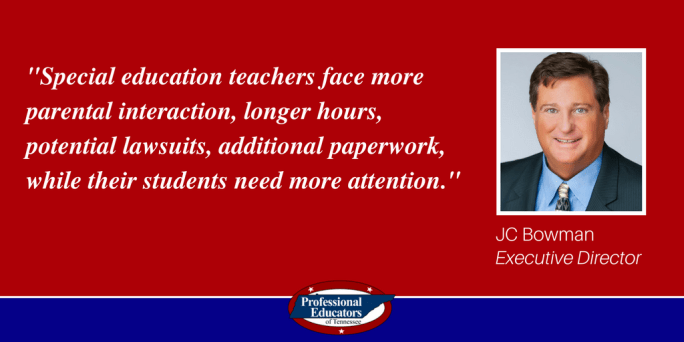
Special Education Teachers Face More Challenges

Special education teachers face more challenges today then ever before…..

JC's Blurb 8

Provisional Endorsements for Special Education

As a reminder, last year the State Board of Education approved an additional pathway for educators seeking to add a special education endorsement to their license. Click here for more information on how educators may attain a provisional endorsement for special education.

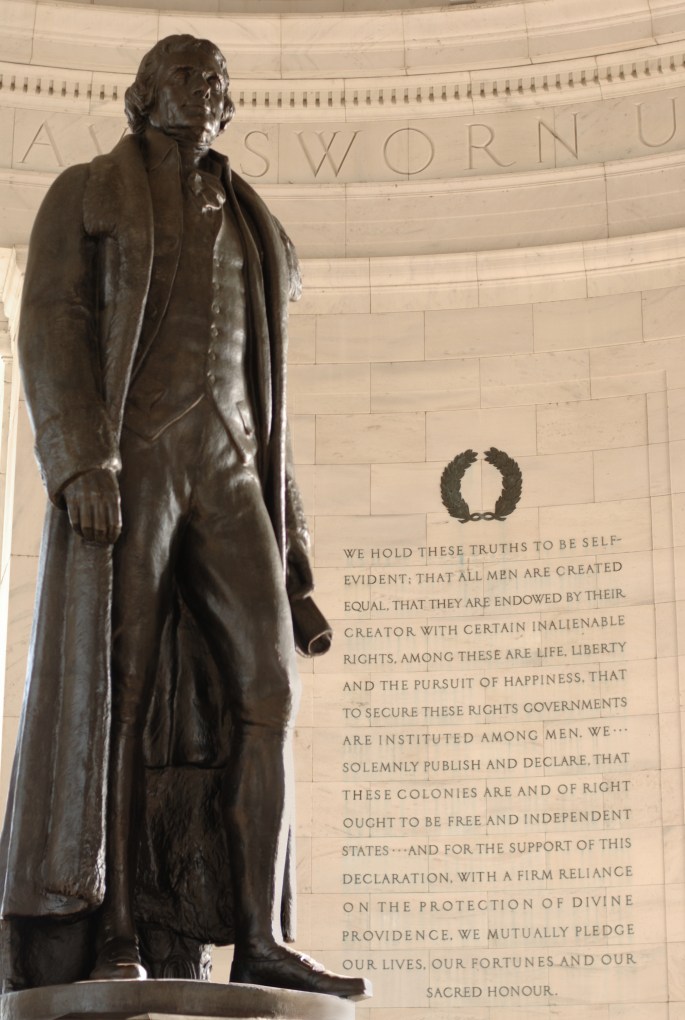
Freedom should never be taken for granted…

Freedom should never be taken for granted. Today we are debating the very concept of what it means to be a citizen of the United States of America. It is why the Declaration of Independence is such an important document. It expresses what it means to be an American. —JC Bowman, Professional Educators of Tennessee

Thomas Jefferson & American Education

thomas jefferson

The lives of our citizens are enriched through public policies that enhance economic opportunity and freedom. However, some policymakers lack basic understanding of sound economic principles, as well as the fundamental principles of our free enterprise system which include individual initiative, personal responsibility, limited government, respect for private property and the rule of law, economic freedom, and an educated citizenry –the same shared principles that inspired our Founding Fathers.

Most citizens have now started to fully understand that as government growth increases, liberty decreases. They agree it is a shared responsibility of all, stakeholders and policymakers alike, to ensure our tax dollars are wisely spent. In education we need to make sure tax dollars are utilized on programs that benefit students and those who teach them. An essential objective in public education is, and must be, an educated citizenry that creates an informed electorate.

Many have attributed to Thomas Jefferson the genesis of the belief that an educated citizenry is a vital requisite for our survival as a free people. Whether Jefferson ought to be given credit is arguable. However, it is a worthy goal to have an educated citizenry to both secure the future of our democracy and for our citizens to be competitive globally.

To some extent, in education we have abandoned Jefferson’s advocacy that an “enlightened people and an energetic public opinion” should keep the “aristocratic spirit of the government” under control. Jefferson feared the power of the federal government. Government is not the driving force for excellence. The motivation that drives excellence comes from within the individual. Jefferson understood that in order for citizens to lead in the future they must have virtues and talent. It should be by our achievements in life, not an accident of birth, that determine our future. Education is and was the great equalizer.

Jefferson, who is embraced on both the left and the right politically, certainly understood that it was essential that a suitable education be provided for all its citizens. In fact, Jefferson expressed to James Madison, as early as 1787, “Above all things I hope the education of the common people will be attended to, convinced that on their good sense we may rely with the most security for the preservation of a due degree of liberty.” Jefferson virtually echoed the conviction of Montesquieu in Spirit of the Laws, that “virtue may be defined as the love of the laws and of our country” as a principal business of education.

There is no dispute that Jefferson, as a Founding Father, understood the need of public education. He wrote, “a system of general instruction, which shall reach every description of our citizens from the richest to the poorest, as it was the earliest, so will it be the latest of all the public concerns in which I shall permit myself to take an interest.” As if peering into the future, Jefferson also wrote, “If the children are untaught, their ignorance and vices will in future life cost us much dearer in their consequences than it would have done in their correction by a good education.”

A current catchphrase in public education is “college and career ready.” In contrast, in 1814, Thomas Jefferson used a similar comparison, “the laboring and the learned.” He detailed to Peter Carr, “The mass of our citizens may be divided into two classes — the laboring and the learned. The laboring will need the first grade of education to qualify them for their pursuits and duties; the learned will need it as a foundation for further acquirements.” We really have not changed the identified groups; we just use different labels.

Understanding Jefferson’s view challenges the principle that a number of policymakers have embraced that education is merely about job readiness and employment (laboring class). Unmistakably, the imperative of being educated (the learned) is exceedingly indispensable in a knowledge-based economy and for dealing with an evolving interdependent, multipolar world.

In 1816, Jefferson sent a letter to Pierre Du Pont de Nemours in which he favored an idea he thought might secure education without compulsion. It was, according to Jefferson, a Spanish proposal that nobody “should ever acquire the rights of citizenship until he could read and write.” Jefferson said, “It is impossible sufficiently to estimate the wisdom of this provision.” However, Jefferson did not support making parents put their children in school, suggesting that “it is better to tolerate the rare instance of a parent refusing to let his child be educated, than to shock the common feelings and ideas by the forcible transportation and education of the infant against the will of the father.”

By every account, it is clear that Jefferson approved of a tax-supported, public educational system that would enable citizens to express their opinions and understand complex issues that can inform decisions the electorate must make as they cast their votes. In 1824, Jefferson added “a republican nation whose citizens are to be led by reason and persuasion and not by force, the art of reasoning becomes of first importance.”

How public education is to occur and the financial mechanism to leverage those tax dollars can be debated as they were in Jefferson’s day. However, we believe in public education, and when local school systems work in partnership with communities they serve, they can and will educate students successfully. Public education enables students to access opportunities in a rapidly changing, diverse, global society.

The evidence is clear that Jefferson was correct in the importance of public education for the future of democracy and the United States of America. Jefferson believed that “no other sure foundation can be devised for the preservation of freedom and happiness,” and that failing to provide public education would “leave the people in ignorance.” Our job is to make sure we build on that foundation.

##

JC Bowman is the Executive Director of Professional Educators of Tennessee, a non-partisan teacher association headquartered in Brentwood, Tennessee.

Not the Last Words of Steve Jobs

jc bowman karaoke

I took a few days off to reflect on life, reconnect with family and resurrect my creativity. The daily grind will get you, if you let it.   We all need rest.

While it was a hoax many people found inspiration in the “last words of Steve Jobs” meme currently being passed around online.  So despite the fact that it’s fake, I post it in its entirety below:

The last words of Steve Jobs

I have come to the pinnacle of success in business.
In the eyes of others, my life has been the symbol of success.
However, apart from work, I have little joy. Finally, my wealth is simply a fact to which I am accustomed.
At this time, lying on the hospital bed and remembering all my life, I realize that all the accolades and riches of which I was once so proud, have become insignificant with my imminent death.
In the dark, when I look at green lights, of the equipment for artificial respiration and feel the buzz of their mechanical sounds, I can feel the breath of my approaching death looming over me.
Only now do I understand that once you accumulate enough money for the rest of your life, you have to pursue objectives that are not related to wealth.
It should be something more important:
For example, stories of love, art, dreams of my childhood.
No, stop pursuing wealth, it can only make a person into a twisted being, just like me.

Some folks added:  Material things lost can be found. But there is one thing that can never be found when it is lost – Life.

Whichever stage in life we are at right now, with time, we will face the day when the curtain comes down.

Treasure Love for your family, love for your spouse, love for your friends. Treat yourself well. Cherish others.

The author of that essay isn’t known, it is still an emotionally-touching read, but the fact is that Steve Jobs never said these words. Not even close.  It is still a good message, but it was not the words of of Steve Jobs.

The fact is we all need rest.  We should all do what matters to us.   We should love more.  We should cherish those we love and care about.

In public education the single most important factor in determining the most successful student learning outcomes possible is the quality of our teachers.  Educators do not serve the public for the money.

One of the best to articulate the impact of teaching was Elliot Eisner who spoke these words:  “But the satisfactions of teaching extend beyond the academic. Indeed, the most lasting contributions come from rescuing a child from despair, restoring a sense of hope, soothing a discomfort. These are the occasions whose memories last longest because they are often the occasions that matter most. They are the occasions whose importance transcends academic interests. They address the human needs that all of us share.”

Get your rest educators.  Recharge your batteries.  You are making a difference.  What you do matters.  Marcus Aurelius wrote:  “What we do now echoes in eternity.”  He could have been talking about educators.

###

JC Bowman is the Executive Director of Professional Educators of Tennessee, a non-partisan teacher association headquartered in Nashville, Tennessee. Permission to reprint in whole or in part is hereby granted, provided that the author and the association are properly cited. For more information on this subject or any education issue please contact Professional Educators of Tennessee. To schedule an interview please contact Audrey Shores, Director of Communications, at 1-800-471-4867 ext.102.


Called to Teach?

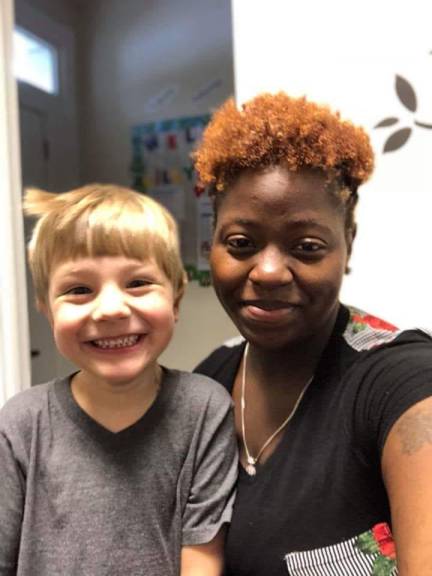
Henry and Brittany

Why do people teach?  The major reason someone says they teach is the ability to make a real difference in the lives of children.  There are other reasons, including the fact that someone believes they are “called” to teach.  Almost all teachers are linked together by a passion for educating children.  The passion is innate and has to come from within.

Commissioner Candice McQueen reminded a group of educators in a presentation that we were set apart in our mission.  She pointed out the gifts that educators have are special talents and abilities.  Educators are born for the mission that is being given for us.  Dr. McQueen emphasized the profession is a special calling.

We are all on a search for significance. We desire to make a difference.   Educators are making a huge difference. That is why it is important that we honor them.  It is the English social critic, Os Guinness, who stated: “Calling is not only a matter of being and doing what we are, but also of becoming what we are not yet but are called by God to be.”  He then adds:  “Deep in our hearts, we all want to find and fulfill a purpose bigger than ourselves.”  Education of the next generation is one of the most important occupations we could ever do.  Belief that one is “called to teach” keeps women and men in education, even with all the unwanted public scrutiny.

Matthew Lynch writes about teaching as a calling: “A calling implies a deep-seated belief that teaching is the only profession that makes sense for you to pursue…”  Dylan Fenton, an English teacher and writer does not like the term “calling,” as it creates to him an “idea that good teachers are born, not made and, as a result, allow themselves to stagnate.”   I would argue that Lynch is more accurate than Fenton, as a passionate teacher never stops honing their craft.  John Hunter, an award-winning teacher and educational consultant wrote: “I used to think teaching was a job.  And then I thought it was a profession.  And now I’m of the opinion that it’s a calling.  It’s a very noble calling.”

Henry David Thoreau said, “Most men lead lives of quiet desperation.”  John Keating, in the movie Dead Poets Society challenged his students to not be resigned to that type of life.  Yes, John Keating was subsequently fired, and probably never taught another class the rest of his life.  However, he taught his students to find their own voice.   It was his calling.  If you have profession that brings you passion, gives you someone other than yourself to care for, and is something that makes you want to get up in the morning to accomplish, you will not live a life of quiet desperation.

Teaching is indeed an imposing, self-sacrificing, but also a magnanimous calling.  Going through the process to get certified, whether through traditional means or an alternative route is sometimes difficult.  The creativity aspect of the profession has slowly been eroded.  There is persistent negativity by some lawmakers and the media of public education.  Compared to other professions, educators can expect modest salary and sometimes extremely difficult working conditions.  However, if you are called to teach, you will never find a happier place than in a classroom or serving students.  Educators are set apart to make a difference.  There is no other profession, except perhaps the clergy, that can change lives like a public-school teacher.

##

JC Bowman is the Executive Director of Professional Educators of Tennessee, a non-partisan teacher association headquartered in Nashville, Tennessee.  Permission to reprint in whole or in part is hereby granted, provided that the author and the association are properly cited. For more information on this subject or any education issue please contact Professional Educators of Tennessee.