The Dream Did Not Die

mlk

On April 4, 2018, we commemorate the 50th anniversary of the assassination of Dr. Martin Luther King, Jr. King was shot and killed in Memphis. Tennessee has played a seminal role in Civil Rights, that we often fail to appreciate.

The ground breaking 1954 Supreme Court case Brown v. Board of Education of Topeka was the case in which the Supreme Court Justices ruled unanimously that racial segregation of children in public schools was unconstitutional. It signaled the rightful end of the “separate but equal” principle set forth in the 1896 Plessy v. Ferguson case. The Ferguson case constitutionally allowed laws barring African Americans from sharing the same buses, schools and other public facilities as whites — known as “Jim Crow” laws— and established the separate but equal doctrine that would stand for the next six decades.

Linda Brown, then a nine-year-old girl, became the face of the issue. Ms. Brown died at age 75 on March 25, 2018. Her national legacy in Civil Rights went far beyond public education. Brown said in a 1985 interview: “I feel that after thirty years, looking back on Brown v. The Board of Education, it has made an impact in all facets of life for minorities throughout the land. I really think of it in terms of what it has done for our young people, in taking away that feeling of second class citizenship. I think it has made the dreams, hopes and aspirations of our young people greater, today.”

Few people know the role Tennessee played in Civil Rights and public education. Avon Williams, Jr., a Knoxville, Tennessee native, became a cooperating attorney for the NAACP Legal Defense Fund in 1949 and began a long career in civil rights activism. In 1950, four years before the Supreme Court outlawed school segregation in Brown v. Board of Education, Williams filed Tennessee’s first public school desegregation suit such case when he sued to integrate the public schools in Anderson County, Tennessee. (McSwain v. Board of Anderson County).

Williams’ first cousin, Thurgood Marshall, was the chief lawyer for the Legal Defense and Educational Fund of the NAACP. Marshall later became the first African-American to serve on the US Supreme Court. Williams and Marshall worked closely on racial discrimination cases. Williams went before the Supreme Court seven times to argue cases involving discrimination in public schools, public housing or other public accommodations. In 1955, Williams, Marshall and Z. Alexander Looby, a fellow African American lawyer focused on civil rights, filed suit Kelley v. Board of Education against the Nashville city schools on behalf of African American children.

Looby and Williams were without doubt the most prominent civil rights attorneys in Tennessee during their lifetime. The Journal of African American History stated that “Looby and Williams’s work in school desegregation cases alone encompassed every major case in the state (with the exception of Northcross v. Board of Education) and entered the highest realms of legal activity. Federal judges at the circuit, appeals, and U.S. Supreme Court levels cited and considered many of their cases as the post-Brown v. Board of Education (1954) litigation world unfolded.” In 1968, Avon Williams, Jr. was elected to the Tennessee State Senate. He was one of the first African-Americans to serve in that body since the Civil War. As a Senator, he worked to put guidance counselors in elementary schools and to establish kindergarten classes in Tennessee. Tennessee has a proud, but often untold history in Civil Rights, which greatly enhanced education in our state.

Racism, bigotry and vitriol hate have no place in a modern culture. All children are created in the image of God. Martin Luther King, Jr. poignantly stated: “I have a dream that my four little children will one day live in a nation where they will not be judged by the color of their skin, but by the content of their character.” Does character still matter? Of course, it does.

For centuries, our country has attracted people in search of a share of “the American dream” from all corners of the world. E Pluribus Unum (From Many, One) remains the national motto, yet it appears that there is no longer a consensus about what that should mean. If you step into our public schools today, the many different cultures are on full display.

Americans like Martin Luther King Jr., Linda Brown, Avon Williams, Alexander Looby, and Thurgood Marshall helped integrate America, and move the nation past the old paradigms and backwards thinking that dominated our society. We need to remember and reflect on that history. More importantly, we need to fulfill our destiny as a nation where all citizens can realize the benefits of integration and equality of opportunity regardless of the color of their skin. The dream of Martin Luther King Jr. did not die in Memphis in 1968, it is still alive in 2018.

##

JC Bowman is the Executive Director of Professional Educators of Tennessee, a non-partisan teacher association headquartered in Nashville, Tennessee. Permission to reprint in whole or in part is hereby granted, provided that the author and the association are properly cited. For more information on this subject or any education issue please contact Professional Educators of Tennessee. To schedule an interview please contact Audrey Shores, Director of Communications, at 1-800-471-4867 ext.102.

Is Culture Still Relevant?

JC Bowman in NYC

We now live in a world where borders apparently don’t matter. The activities of corporations operating in multiple countries simultaneously, as well as travel being readily accessible, and networking possibilities of the Internet and social media render national borders somewhat less significant.  Then we need to ask the question:  Is culture still relevant?

Yet, William Bennett, a rather brilliant man and former US Secretary of Education, made an observation last year that politics and public engagement in social issues can make more of a difference than he once thought. Bennett is rather philosophical, and his opinion still carries much weight among policymakers and media.

To take it a step further, examine the words of Richard Shweder: “I believe that all the good things in life can’t be simultaneously maximized. I believe that when it comes to implementing true values there are always trade-offs, which is why there are different traditions of values (i.e., cultures) and why no one cultural tradition has ever been able to honor everything that is good.” People fail to consider there is no perfect society despite our historical attempts at creating it.

Debates on culture also include our conflicting orientation on matters such as secular versus religious, our concept of freedom along with our trust or distrust in the leadership of those who govern us. Culture impacts the success or failure of a certain aspect of society, such as health, education, institutions, justice, national security as well as other policy issues.

Thomas Jefferson wrote of the self-evident truth that “all men are created equal; endowed by their creator with the right to life, liberty and the pursuit of happiness.” This endures as the powerful philosophical and moral foundation of the American republic itself.

On the subject of freedom in culture, President Franklin Delano Roosevelt in his State of the Union Address he delivered on January 6, 1941, stated that American’s looked forward to a world founded upon four essential human freedoms. Roosevelt may not recognize the current age, but his points are worth a reminder.

  • The first is freedom of speech and expression—everywhere in the world.
  • The second is freedom of every person to worship God in his own way—everywhere in the world.
  • The third is freedom from want—which, translated into world terms, means economic understandings which will secure to every nation a healthy peacetime life for its inhabitants—everywhere in the world.
  • The fourth is freedom from fear—which, translated into world terms, means a world-wide reduction of armaments to such a point and in such a thorough fashion that no nation will be in a position to commit an act of physical aggression against any neighbor—anywhere in the world.

Samuel Huntington, a political scientist at Harvard University, suggested that there are a set of eight cultural “civilizations” who are a major influence on current culture–Western, Eastern Orthodox, Latin American, Islamic, Japanese, Chinese, Hindu, and African. This explains our present-day struggles across the nation and the world, as well as repeated conflicts between countries and cultures.

Another major theme Huntington puts forward was that we have moved from a bi-polar competition between communism and democracy/capitalism to a geopolitical battle fostered by a multi-polar world of competing civilizations. In regards to immigration in our own country, that is manifested by the failure of people to assimilate into American society and culture.  He argues that could eventually change our nation into one where multiple languages, multiple cultures, create multiple peoples.   This is also a direct conflict with the concept of the founding principles of our nation.

Huntington wrote: “September 11 gave a major boost to the supporters of America as one people with a common culture. Yet the war to deconstruct our culture has not ended. It remains unresolved today whether America will be a nation of individuals with equal rights sharing a common culture, or an association of racial, ethnic, and cultural groups held together by hopes for material gains.”

Orwellian logic from which the principle that “All animals are equal” gives birth to the transformative postscript: “but some animals are more equal than others” when we are only focused on material gains. Equal rights are a common goal that culture should embrace.  As we consider culture, we have to see how this becomes applicable to public education, and what role should public schools plays in building a common culture, if any?  The time for discussion is now.

The United States is a diverse country, racially and ethnically, as well as in how people choose to organize themselves socially and politically. It can be argued that our public schools are integrally situated to communicate society’s values, such as individual responsibility, patriotism, integrity, objectivity, justice, respect for others, being on time, doing a good job, working well with others, being a good citizen, and exercising democracy in government and other interactions.  Americans have thus far kept our republic, and created it to be resilient and strong.  However, the United States will remain free only with relentless vigilance and public engagement, which must be transmitted in our culture.

Certainly we can do more to improve opportunities for all students. Public education has done an excellent job of positioning our state, nation and students for success.  Our ethnic identity and culture is rapidly changing.  The question we must ask ourselves, is that always for the better?  If we are not careful, we may risk losing what made America the envy of the world and a continual place of liberty and opportunity for our citizens. Educators must be the ones that provide hope, opportunity, and optimism for the subsequent generations.  In the end, history will prove that culture matters.

##

JC Bowman is the Executive Director of Professional Educators of Tennessee, a non-partisan teacher association headquartered in Nashville, Tennessee.  Permission to reprint in whole or in part is hereby granted, provided that the author and the association are properly cited. Follow him on social media via Twitter at @jcbowman.

Educators: Add “Adaptable Skills” to the Educational Mix; Advice From Advanced Placement Capstone Students

An education committed solely to acquiring skills and knowledge required for specific jobs — calculus, chemistry and American government, for example — has limitations. Schools that also instill adaptable skills students will need in many workplace contexts — written and oral communication, critical thinking and creativity, for example — can provide a better path to 21st-century success.

Five Fairfax County, Virginia high school juniors conveyed this message during a recent visit to the U.S. Department of Education (ED) headquarters, where they showcased their Advanced Placement Capstone™ project on how well the United States’ modern education system prepares students for post-college success.

AP Capstone is a two-year course of study developed by the College Board that complements discipline-specific advanced placement classes such as world history or macroeconomics.  The capstone classes equip students with skills increasingly valued by colleges, including an ability to conduct independent research, validate the reliability of sources and work collaboratively. About 1,100 high schools around the U.S. and abroad currently participate in AP Capstone.

The five students who presented their research on education were accompanied by 30 others from Oakton High School, along with their AP Capstone teachers, Elizabeth Snyder and Eliot Waxman. The students gave group presentations on subjects ranging from the competition between brick-and-mortar stores and e-commerce, to conservation efforts to end the illegal ivory trade.

Each group selected a research topic that fired its curiosity; the group that chose education did so because “[they] all had some sort of passion” for the subject and shared “a desire to learn about education and to improve the system because it is such a major part of [their] lives,” according to junior Samantha Condro.

Three female students stand next to a projector screen in the ED library addressing an audience.

After agreeing upon an education focus, the group moved through prescribed steps, which included (1) identifying perspectives through which to consider the topic, (2) delving independently into the research, (3) writing individual papers, (4) sharing findings, (5) synthesizing information, (6) drawing conclusions and (7) collaborating on a presentation.

Facing the ED audience, Samantha described an American education system in which “first . . . we work K─12 to get good grades; then we decide where we want to go to college based on the majors it provides, the size and the location; then we work through college to get good grades; and eventually we graduate and are ready for the workplace.” Recalling much of her education to date, junior Gabrielle Shapo said, “I grew up regurgitating what was on the chalk board.”

With this model, workforce readiness is no guarantee, group members said. Gabrielle cited research from the American Association of Colleges and Universities describing a gap between employers’ and students’ ratings on preparedness: The former gave students low scores and the latter higher ones. Disparities existed in all 17 areas surveyed, including ethical judgment and decision-making, working with people from different backgrounds, and applying knowledge and skills in real-world settings.

In today’s education system, skills and knowledge required for specific jobs trump the teaching of adaptable skills, group members reported. Students acquire some of the latter skills in traditional academic classrooms, but more often in science laboratories and extracurricular activities. Standardized tests, the group noted, assess mastery of the curriculum but not adaptable skills. This can hinder the ability of colleges to gain a complete picture of their applicants, and can thwart employers’ ability to hire students grounded in job-specific expertise and adaptable skills.

Junior Sean Tieff recognizes a place for lecture-based classrooms: “They have gotten their fair share of criticism, but they are a good source of learning,” he said.  Sean noted that creative educators can weave the teaching of adaptable skills into a standard academic curriculum, by, for example,  providing more labs, offering more opportunities to learn and study in  groups (such as via AP Capstone!), and encouraging internships and outside-the-classroom learning.

Two male students stand in front of a desk and bookcase. One is speaking to the audience, the other listening.

Partnerships of educators and corporate officials can narrow the gap between what students learn and what employers want them to learn, group members suggested; employers can identify omissions (although corporations should not prescribe the curriculum).  Corporations can also fund new teaching methods and training needed for students to learn better adaptable skills.

Following the presentation, group members answered questions from the ED audience and heard suggestions for broadening their research. One questioner suggested group members interview teachers to learn why adaptive skills are not more widely taught.  (The bureaucracy? The budget? Pressure to focus on information in standardized tests?)

A surprise audience member, Secretary of Education Betsy DeVos, related the students’ ideas about “adaptable skills” with “experiential learning.” Agreeing with its importance, she encouraged them to complete internships and work in their fields as they pursue their education. Junior Alec Stall described positive vibes upon completing the AP Capstone project.  “I am a big procrastinator,” he said. “But this class was really rewarding, because when I got that paper done and I found out how all of my sources connected . . . and how all of the information flowed together . . . that was such a great feeling.”

Nancy Paulu is a writer and editor in ED’s Office of Communications and Outreach. All photos are by ED photographer Joshua Hoover.

Low Morale & Burnout

prof classe 05Passion and energy within any organization or company starts at the top with the leadership.   The moment when an employee begins to feel unappreciated is when morale begins to suffer.  Lack of respect and lack of support are often cited as reasons why people leave their jobs.  Other reasons include excessive workload, concerns about management, anxiety about the future, especially job security, income and retirement security, lack of recognition, continuous change and compensation that does not align with exceptional performance.  Anxiety and anger are key ingredients of low morale.

A decade ago, the Gallup Organization estimated that disengaged employees cost the economy as much as $350 billion dollars per year in lost productivity including absenteeism, illness and other low morale issues.  An alarming 70% of American workers are not showing up to work committed to delivering their best performance, and this has serious implications for the bottom line of individual companies and the U.S. economy as a whole.  Of the 70% of American workers who are not reaching their full potential, 52% are not engaged, and another 18% are actively disengaged. These employees are emotionally disconnected from their companies and may actually be working against their employers’ interests. They are less productive, are more likely to steal from their companies, negatively influence their coworkers, miss workdays, and drive customers away.

Psychology Today reports that burnout is not a simple result of long hours. The cynicism, depression, and lethargy of burnout can occur when you’re not in control of how you carry out your job, when you’re working toward goals that don’t resonate with you, and when you lack social support. If you don’t tailor your responsibilities to match your true calling, or at least take a break once in a while, you could face a mountain of mental and physical health problems.

In public education, we see low morale often mentioned in criticism of the job.  This reveals that administrators have a lot of work to do in addressing low morale and burnout with their teachers.  If successful in improving morale, leadership will see higher productivity, better retention, reduction in stress, and an improved workplace for all.  In education, the workplace is where children learn.  Having contented and energized employees who are willing to go the extra mile for students and the school district would be key to having an effective learning environment.  In education, like any organization, people are the most critical resource.

In order to avoid low morale or burnout, leaders must effectively communicate their vision.   Employees must not only understand, they must buy into that vision which will help determine how an employee feels about their work and work environment.  A 2010 Canadian survey mentioned that the most effective staff morale boosting behaviors of managers are to 1) talk less and listen more; 2) give clear expectations; 3) have more informal interaction with staff; 4) assign tasks to staff based on skills rather than office politics; 5) give more rights to staff; (e.g., give staff more opportunities to make a decision for certain tasks) and 6) to respect people with greater expertise. Lastly, an important way to understand the current employee morale climate is by administering culture or climate surveys regularly.  People must feel a sense of attachment to their work, only then will they care about their performance.

These are complex issues and intertwined with various contributing factors. Just as there is no lone factor that explains low morale or burnout, addressing it will require a combination of solutions, and require a substantial amount of time and effort.  Leaders must remain attentive to the signs of low morale and burnout.  Only by focusing on creating an environment that allows employees to perform up to their skills and potential can an organization or company hope to avert low morale and burnout.

##

JC Bowman is the Executive Director of Professional Educators of Tennessee, a non-partisan teacher association headquartered in Nashville, Tennessee. Permission to reprint in whole or in part is hereby granted, provided that the author and the association are properly cited. For more information on this subject or any education issue please contact Professional Educators of Tennessee. To schedule an interview please contact Audrey Shores, Director of Communications, at 1-800-471-4867 ext.102.

Protecting Our Profession

I describe myself with the following identifiers: Son, Brother, Husband, Father, Grandfather, US Marine, Educator and Friend. Follower of Christ. It is who I am, and who I was, and all that I hope to be.

A retired Marine Sargent describes Marines this way: the Marine Corps uniform doesn’t come off when our active duty is over. We wear it daily in our attitude and our love of Corps and country. We wear it on our tattoos and our bumper stickers. We wear it on our hearts. I am proud of my service to our country and the values the Marine Corps reinforced in my life; I took those attributes with me to the classroom, as an educator in Tennessee: Honor, Courage, and Commitment.

Honor is the foundation of character. It empowers us in ethical and moral behavior: to never lie, cheat, or steal; to abide by an uncompromising code of integrity; to respect human dignity; and to have respect and concern for each other. It represents the maturity, dedication, trust, and dependability to act responsibly, be accountable for our actions, fulfill our obligations, and hold others accountable for their actions. Courage is the mental, moral, and physical strength that sees us through tough challenges, overcoming fear, to do what is right. We adhere to a higher standard of personal conduct, to lead by example, and to make tough decisions under stress and pressure. Commitment is the spirit of dedication and determination that leads to professionalism and mastery of our profession. Commitment promotes the highest order of discipline, personally and professionally. It allows us to build pride, concern for others, and an unrelenting determination to achieve a standard of excellence in every endeavor.

Honor, Courage, and Commitment. Most educators possess the same strength and integrity as Marines. Teaching is about caring for our profession, having a passion for it, and conveying that passion to everyone, most importantly to our students. Teachers are an exceptionally important aspect for any society for a number of reasons. Our role in society is both beneficial and significant. Teachers play an extraordinary part in the lives of children during the formative years of their development. The importance of teachers cannot be understated. For this reason, educators are held to higher standards. Ductus Exemplo is a Latin term that translates into “lead by example.” It means behaving in a manner that inspires others. We must lead the next generation in our role as educators.

Our organization supports, and requests that the Government Operations Committee approve, the State Board of Education’s revised permanent rule concerning Educator License Discipline. There is no higher duty than making sure that our children are safe and protected in the classroom. We have never received a call, email, or letter asking for our organization to keep a pedophile in a Tennessee classroom. And we would reject such an overture, if such a request was made. Very few teachers will be impacted by any change in the rule. The changes will provide teachers with clear guidance and accountability, ultimately serving the educator and student alike. We are particularly encouraged by the intent of the rule which is to establish a broadened, but focused explanation of the safety standards in place to protect our students and to clarify them for our educators. It protects our profession.

The OREA report on Educator Sexual Misconduct has made clear that Tennessee has a fractured, ambiguous reporting system that has allowed educators who have engaged in sexual misconduct to slip through the cracks. This hurts the overwhelming vast majority of teachers who must not only be confident in the abilities and character of themselves—but each other. The wheels of bureaucracy move slowly, but above all: character matters. Professional Educators of Tennessee has been following closely the review of Rule 0520-02-03. We are supportive of the revisions, which we believe enhance the uniformity of discipline, define the terms utilized, and clarifies, simplifies and explains the teacher disciplinary process. Bringing clarity to this issue has been long overdue.

We take the issue of teacher licensure very seriously. Licensure is primarily a function of the state and it is the gatekeeper to employment. It is so important that this is done correctly and transparently. As always, we will continue to work with the Tennessee Board of Education, the Department of Education and the Tennessee General Assembly on our concerns on licensure issues, and to ensure that our educators are treated fairly and impartially.

Failure by the Government Ops Committee to take positive action on the licensure issue will erode confidence in public education, and necessitate additional action by the legislature to close the loopholes that make it possible for teachers dismissed for abuse to find another teaching job in another district or state. I implore Government Operations to approve the Educator Licensure Rule and send a message to those who engage in inappropriate sexual misconduct with students that they are not welcome in our Tennessee classrooms. Show the citizens of our state that Honor, Courage, and Commitment matter not only in the battlefield and our classrooms, but also right here in the Tennessee General Assembly.

##

JC Bowman is the Executive Director of Professional Educators of Tennessee.  Professional Educators of Tennessee is a non-partisan teacher association headquartered in Nashville, Tennessee.  Permission to reprint in whole or in part is hereby granted, provided that the author and the association are properly cited.


Still Battles Left to Fight

braveheart-poster

In the year of our lord, thirteen fourteen, patriots of Scotland, starving and outnumbered, charged the fields of Bannockburn. They fought like warrior poets. They fought like Scotsmen and won their freedom.

The most memorable character, in my opinion, outside of William Wallace in the movie Braveheart, was the character, Stephen. One of the great lines from Stephen was when he was describing the battle about to be fought: “The Almighty says this must be a fashionable fight. It’s drawn the finest people.”

Stephen, my hero from the aforementioned movie Braveheart, (and maybe I like it is because of my Irish heritage) added: “In order to find his equal, an Irishman is forced to talk to God… The Almighty says don’t change the subject; just answer the @#*& question.  Of course, Wallace himself says, “As you’re lying on your death bed, would trade all your days, from this day till that, for just one chance, one chance at FREEDOM!!”

However, freedom without values is anarchy.  So yes, individual character does in fact matter.  There remains a real tension between spheres of commonality and social virtues and spheres of individuality and personal virtues. However, there are areas which deservedly lie in the public realm and those which ought to be left to individual choice.

Oliver Williams and John Houck in their book “Virtues in a Democracy” wrote:  “And, while there are frequently differences in interpreting the exact meanings and implications of prevailing virtues…virtues do provide sound and shared foundations for consensus formation, community endeavors, public policies and moral standing.”

In our elections, it is important that we are wise and elect those who best demonstrate virtue and reflect our shared values.  There are four cardinal virtues – justice, wisdom (prudence), courage (fortitude), and moderation (self-control, temperance). These are inherent foundational laws. If these moral values and commitments are as compelling as virtues are, they remain the foundations of moral discourse in society. They are indispensable guides to our actions. Statements which push new moral claims not absorbed into the set of shared virtues — have little or no standing, despite the age in which we now find ourselves living.

In 1788, James Madison asked the question: “Is there no virtue among us? If there be not, we are in a wretched situation. No theoretical checks–no form of government can render us secure. To suppose that any form of government will secure liberty or happiness without any virtue in the people, is a chimerical idea.”  Madison understood the battles that were ahead for a nation.

Our society works best when we recognize the need for shared values. Shared values are much deeper than principles rooted in popular opinion. Those who live for the moment are building their house on sinking sand. Those who only live in the present are incapable of seeing things in perspective. They do not fully grasp the relationship between means and ends, principles and practice. They are often self-centered individuals believing that only they can be the judges of their conduct, choosing what is best and right for them at the expense of society.  This not only hurts families and communities, it also destroys the fabric of our society. That’s why Madison added “we do not depend on their virtue, or put confidence in our rulers, but in the people who are to choose them.”

We fought some great battles in 2017.  Some of these battles were fought politically, socially and culturally.  We will undoubtedly see even more battles in 2018.  However, we also had some celebrations to go with our victories and some good times to go with the bad.  We are eagerly preparing for the legislative session to kick off in the Tennessee General Assembly.  Then, the election season gets underway.  In 2018, we will have a very quick legislative session in Tennessee.  In education, we have found policy enacted quickly often fails to be implemented correctly.  So there are many battles still left to fight here in Tennessee.    We should choose the best people to fight for us.

##

JC Bowman is the Executive Director of Professional Educators of Tennessee.  Professional Educators of Tennessee is a non-partisan teacher association headquartered in Nashville, Tennessee.  Permission to reprint in whole or in part is hereby granted, provided that the author and the association are properly cited. Follow him on Twitter at @jcbowman

Christmas in My Heart

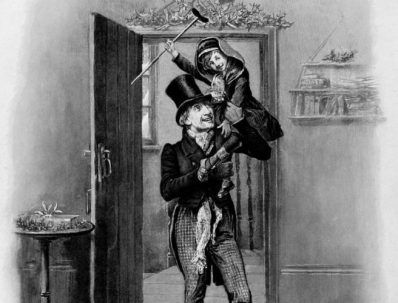
dickens2

“I will honor Christmas in my heart, and try to keep it all the year. I will live in the Past, the Present, and the Future. The Spirits of all Three shall strive within me. I will not shut out the lessons that they teach!” ― Charles Dickens, A Christmas Carol

It appears that 2017 has been a long year for many people, and 2018 promises even more of the same problems with even more politics. That is usually not a good recipe for success. However, if there is any lesson to be learned it is that we should endeavor to get the most out of life, use our God-given talent and our abilities, be loyal, love our friends and family, and honor God. We should not simply strive to be common, but seek to be remarkable. Your life is God’s gift to you. What you do in life, is your gift to God.  Teachers understand this more than most.

This Christmas season we will undoubtedly hear the story of God’s love taking the form of man and coming down to earth. There is much more to that story. But what is amazing to me is the role that women played in the life of Jesus. The old saying is that the hand that rocks the cradle rules the world. Rodgers and Hammerstein added another twist: the hand that rocks the cradle rules the heart. Either way, women have played such a critical role in the world, often unrecognized by the very people who have experienced their influence. Invisible to the naked eye, true leadership is in the womb, the breast, the hands, and the soul of woman.

A mother has the most difficult task, for she must take a young, impressionable human being, and emphasize in their young life the things they must learn and experience, the hurt they will inevitably feel, the sadness – this is a difficult task a mother must do. It takes a tremendous amount of strength, patience, and moral fiber to give birth, raise, and eventually let go of, a child. My mother did an unbelievable job, in a difficult situation with a strong-willed child. I am the man I am today because of the woman she is. I am a living testament to her encouragement, love and yes discipline. She instilled in me a passion to believe in myself and to do what is right, even when others around you do what is wrong. More importantly she gave me the desire to live my life with intention. What a beautiful gift to give.

Kahlil Gibran, author of The Prophet, wrote the poem “On Children.” Here is what he said: “You may give your children your love but not your thoughts, for they have their own thoughts. You may house their bodies but not their souls, for their souls dwell in the house of tomorrow, which you cannot visit, not even in your dreams.”

I love that thought that Gibran expresses, but I differ with him: I do think we can dream that brighter future for our children. I hope that it is a future filled with hope. I wish for peace and harmony in the world and the eventual safe return of all our troops from foreign lands. In 1983 I was deployed and wasn’t home with my family during the Christmas holiday.   It was an incredibly lonely time.

I would wish that all families had an opportunity this Christmas to spend time with the ones they truly love, whether they are halfway around the world or simply across the street. Love is the greatest gift of all. If you want a magical holiday season, give yourself in love beyond what you traditionally are willing to surrender. Seize the opportunity and have the courage to tell those around you how much you care and appreciate them.

Jesus is the reason for the season. But really he is the reason for every season. The old adage “he who has no Christmas in his heart will never find Christmas under a tree” is pretty accurate. So, from our team at Professional Educators of Tennessee to your family, we wish you an enjoyable Holiday Season and an even happier 2018!

##1dickens

JC Bowman is the Executive Director of Professional Educators of Tennessee.  Professional Educators of Tennessee, a non-partisan teacher association headquartered in Nashville, Tennessee.  Permission to reprint in whole or in part is hereby granted, provided that the author and the association are properly cited.

Reflecting on Our Bill of Rights

declaration of independence

In 1941, President Franklin Roosevelt designated December 15 as Bill of Rights DayThis is the day we recognize and commemorate the first 10 amendments to the Constitution, which spell out our rights as citizens here in the United States of America.  That date was chosen because the Bill of Rights was originally ratified on December 15, 1791.  Our rights and freedoms as Americans are rooted in the Bill of Rights.  Unfortunately, many Americans do not fully appreciate or understand our Bill of Rights.

Future President, James Madison of Virginia, was the primary author of the first 10 amendments to the Constitution, which are recognized today as our Bill of Rights.  The Virginia Declaration of Rights, written by George Mason, strongly influenced their writing. Other documents such as the Magna Carta, the Petition of Right, the English Bill of Rights, and the Massachusetts Body of Liberties are considered foundations to our Bill of Rights.  The Bill of Rights was written to provide mutual constitutional protection of individual liberties of our citizens, and to limit the power of the federal government.

Regardless of personal political persuasion or affiliation, American citizens can unite around the Bill of Rights because it communicates our basic shared values.   President George W. Bush stated, “The true [American] revolution was not to defy one earthly power, but to declare principles that stand above every earthly power—the equality of each person before God, and the responsibility of government to secure the rights of all.”  President Franklin D. Roosevelt referred to the Constitution as “the great American charter of personal liberty and human dignity.”

Limiting the power of government and safeguarding the rights of our citizens is something we must all make a conscientious effort to protect.   We should be especially appreciative for the protection afforded in our Bill of Rights against a national government gaining ground against our most fundamental rights—freedom of speech, protest, and conscience guarantees our equal protection under the law.  A free society does not just occur. It has to be consciously devised and intentionally preserved. Eternal vigilance is the price of freedom.

We invite all citizens and educators to celebrate Bill of Rights Day on December 15 and commemorate the ratification of the first ten amendments to the U.S. Constitution.  It is critical to share the knowledge of the relevance and practicality gained through an understanding of the U.S. Constitution to the next generation.[i]

The Bill of Rights

Amendment I

Congress shall make no law respecting an establishment of religion, or prohibiting the free exercise thereof; or abridging the freedom of speech, or of the press; or the right of the people peaceably to assemble, and to petition the government for a redress of grievances.

Amendment II

A well-regulated militia, being necessary to the security of a free state, the right of the people to keep and bear arms, shall not be infringed.

Amendment III

No soldier shall, in time of peace be quartered in any house, without the consent of the owner, nor in time of war, but in a manner to be prescribed by law.

Amendment IV

The right of the people to be secure in their persons, houses, papers, and effects, against unreasonable searches and seizures, shall not be violated, and no warrants shall issue, but upon probable cause, supported by oath or affirmation, and particularly describing the place to be searched, and the persons or things to be seized.

Amendment V

No person shall be held to answer for a capital, or otherwise infamous crime, unless on a presentment or indictment of a grand jury, except in cases arising in the land or naval forces, or in the militia, when in actual service in time of war or public danger; nor shall any person be subject for the same offense to be twice put in jeopardy of life or limb; nor shall be compelled in any criminal case to be a witness against himself, nor be deprived of life, liberty, or property, without due process of law; nor shall private property be taken for public use, without just compensation.

Amendment VI

In all criminal prosecutions, the accused shall enjoy the right to a speedy and public trial, by an impartial jury of the state and district wherein the crime shall have been committed, which district shall have been previously ascertained by law, and to be informed of the nature and cause of the accusation; to be confronted with the witnesses against him; to have compulsory process for obtaining witnesses in his favor, and to have the assistance of counsel for his defense.

Amendment VII

In suits at common law, where the value in controversy shall exceed twenty dollars, the right of trial by jury shall be preserved, and no fact tried by a jury, shall be otherwise reexamined in any court of the United States, than according to the rules of the common law.

Amendment VIII

Excessive bail shall not be required, nor excessive fines imposed, nor cruel and unusual punishments inflicted.

Amendment IX

The enumeration in the Constitution, of certain rights, shall not be construed to deny or disparage others retained by the people.

Amendment X

The powers not delegated to the United States by the Constitution, nor prohibited by it to the states, are reserved to the states respectively, or to the people.

##

JC Bowman in NYCJC Bowman is the Executive Director of Professional Educators of Tennessee.  Professional Educators of Tennessee, a non-partisan teacher association headquartered in Nashville, Tennessee.  Permission to reprint in whole or in part is hereby granted, provided that the author and the association are properly cited.


[i] NOTE:  We are glad to assist our educator members across the state in promoting awareness of the United States Constitution, through various partners and projects.  In addition, if you email our partners at the 917 Society (917society@gmail.com) they will provide copies of the US Constitutions free of charge to all 8th grade classrooms.

Optimism Wins!

Singing the blues away

You remind yourself that the holidays are supposed to be a time of happiness, gathering of friends and family and most importantly optimism for the coming New Year. Yet you get inundated with reminders of the holidays that may conjure up unresolved issues like grief caused by a missing friend or family member, your own failing health or that of a friend or family member. Sometimes there is a sense of increased isolation and loneliness or recognition that there is a difference between the perception of holiday joy and the reality of one’s own life. Holidays can take a toll on even the happiest person.

From now until after the first of 2018 more than likely your life will be busier and certainly more stressful. You will have more things to do, more things to buy, there will be more traffic in our streets, stores will become more crowded, parking will become more difficult, and you will have your patience tried to the extreme waiting longer for service. Guests in your house will further add to your frustration. Heaven forbid if some person accidentally sits in your seat at your place of worship. The additional demands on our time, attention, energy and finances can be very traumatic. All of these issues come to a head during the holiday season. You want love or something like it.

Remind yourself all these issues can help you develop a strategy to tackle this short period of time. Most people struggle with holidays at some point in their lives. Just as we often struggle with life itself. It requires effort to overcome any problem. Recognition of our own thoughts and feelings helps us be successful in being triumphant over even the worst of times.

We begin our adult life with idealistic dreams of running off into the sunset, chasing whatever it is that makes us happy. We hope we are fortunate enough to reach those goals set by our youthful optimism. But for many of us we also learn we can only run so far before reality sets in. We must be extremely careful that we do not turn this optimism into pessimism, or even worse cynicism. This cynicism is often couched in anger and we hear or see the wounded cries. People become blinded by their own pessimism, then cynical of everything but their own cynicism.

Part of what makes us human is the ability to project into the future. However, do not believe for one moment you can find redemption by escaping your situation. Life is never really easy or is it? Are we not the ones who complicate it? When we complicate it do we become our own victims?

Perhaps the best scientific exploration of optimism, an incredible research study thirty-five years in the making entitled “Pessimistic Explanatory Style as a Risk Factor for Physical Illness: A Thirty-five Year Longitudinal Study”, J Person Soc Psych 55 (1988): 23-7, by C. Peterson, M. Seligman, and G. Vaillant, three main findings were established:

  1. Optimists live longer than pessimists;
  2. Optimists suffer from fewer and less severe diseases;
  3. Optimists are much healthier than pessimists.

Some of the benefits of being an optimist according to research are that we know that we will receive greater health benefits, higher quality of life–manifested by greater success, greater happiness and greater love. So, this holiday season take the time to revisit your own priorities for life. Hold on to your dreams. Never give up on thinking what was and what is and what can be. Yes we can all be winners in good times and survivors during the hard times.

If we want to relieve the tremendous stress on friends and family structures, we must make a positive commitment this holiday season to help others, as well as ourselves. We must all become promoters for hope. We need to work together to prevent symptoms of depression and anxiety from dominating our community this holiday season. We need a positive environment to help our children enjoy this most sacred season, and we all have a role to play to make sure those around us remain emotionally stable and use effective coping skills.

This holiday season take an opportunity to make a difference in someone’s life. When churches, synagogues, mosques, businesses, and governments collaborate, impressive things can happen to cause productive change in communities and among individuals. The impact could be of a global magnitude.

Like many I have learned what the power of faith can accomplish in an individual life. In addition, faith has traditionally played a crucial role in shaping both American institutions and civil society, and America has thrived as a model of democracy and equality precisely because of this pervasive religiosity and the traditions it helped establish. The abundance of faith based voices in the public square does not mean that the issues of the day will suddenly vanish. But the inclusion of faith based organization’s views and voices does allow communities to explore areas of consensus that are often overlooked. It provides the faith based community the opportunity to do what it does best, serving others and expanding its role in serving society.

Remember to make this a holiday season to remember. To somebody you may be just the gift they need. Dr. Reinhold Niebuhr often shared this prayer with people, and it helps remind me when I face depression.

The Serenity Prayer

 God grant me the Serenity to accept the things I cannot change, the Courage to change the things I can, and the Wisdom to know the difference;

 Living one day at a time;

 Accepting hardship as a pathway to peace; Taking, as Jesus did, this sinful world as it is, not as I would have it:

Trusting that you will make all things right if I surrender to your will; that I may be reasonably happy in this life and supremely happy with you forever in the next.

Merry Christmas and Happy 2018, and stay positive!

##

JC Bowman is the Executive Director of Professional Educators of Tennessee.  Professional Educators of Tennessee, a non-partisan teacher association headquartered in Nashville, Tennessee.  Permission to reprint in whole or in part is hereby granted, provided that the author and the association are properly cited.

What is a Superintendent of Schools?

difficult decision

It is often said that the most important role of a board of education is to hire its superintendent.  I think that is a somewhat a valid claim.   Certainly if you value public education, you must have competent leadership managing the daily operations of the school district.  A good superintendent leads the districts educational, financial and administrative performance; facilitates the performance of all personnel; and responds to and informs stakeholders and policymakers about the performance and leadership of the district.

Having met many, if not most, Superintendents of Schools here in Tennessee, I believe we do have some excellent leaders across our state.  Probably one of the most important duties of the superintendent is to make sure district students are learning and achieving at the highest level possible.  A superintendent must understand effective academic practices and be supportive of the teachers and administrators in the district.  Leadership, vision, and strategic thinking are critical skills for every superintendent.  A successful superintendent is should also be an effective and excellent communicator.  If the only voice a superintendent listens to is his/her own, or a few members of the school board, public education will eventually lose community support.

In the last few years, I have seen some horrifying treatment of Superintendents across the state.  I have seen them maligned by anonymous message boards, attacked in the media, belittled by their own school board members, often unfairly.  I am reminded of Mark Twain’s quote:  “Great minds talk about ideas; good minds talk about events; small minds talk about people.”

Does that mean that we simply accept decisions from superintendents, without challenging them? Of course not!  We must particularly hold them accountable in regard to educational, financial and administrative performance.  However, we should provide them latitude in regards to leadership, vision and strategic thinking on how to address the performance in those areas. And we must expect them to communicate effectively to all stakeholders.

The American Association of School Administrators suggests that the superintendent, like principals, must also demonstrate a keen understanding of teaching, learning and what works for students. As a change leader, a successful superintendent should emphasize the efficient use of resources, personnel, and data to break down resistance and drive systemic change; empower board and personnel to set goals, measure results, develop accountability, and support planning, evaluation, and resource allocation.

Our state has made some incredible strides in public education.  It is an accomplishment that we should admire and respect.  It begins with the men and women in the classroom across this state, and we must also acknowledge the hard work of those who lead our schools.

##

JC Bowman is the Executive Director of Professional Educators of Tennessee.  Professional Educators of Tennessee, a non-partisan teacher association headquartered in Nashville, Tennessee.  Permission to reprint in whole or in part is hereby granted, provided that the author and the association are properly cited.