

Category: Students
More Than Just A Test Score

“Public Education” is on the lips of every politician, during every election cycle. Yet, the debate continues. It is doing well, it is doing poorly, it needs reform, whatever the narrative needs to be that day or what the audience wants to hear.
Well, there are three sides to every story: “Yours, mine, and the cold, hard truth,” like the old Don Henley song reminds us. Out of the roughly 55.5 million K-12 students in America, 49.5 million of them are in our public schools, which is a little over 89%. If you visit a public education classroom today, you would be amazed at what our educators do on a daily basis.
We must remind ourselves we are not producing components for an industrial and societal machine. We are educating children. We can all agree that an engaging and challenging education is the proven path to prosperity and a life-long love of learning. Teachers consistently tell us that “testing” and “preparing students for a test” are among their top concerns in our internal surveys.
It has long been acknowledged that a strong public educational system is essential not only to the successful functioning of a democracy, but also to its future. That system must provide all children with an equitable and exceptional education that prepares them for college, career and life.
Educators, themselves, must exercise a higher duty of care than most professionals. Teachers face exposure to liability much greater than does the average citizen. Nearly every day, teachers must deal with diverse laws related to issues such as child abuse, student discipline, negligence, defamation, student records and copyright infringement. And many politicians are more concerned with a test score that their children produce than the immeasurable impact that teachers may make on a child’s life.
Often educators must contend with the fact that students do not have a consistent source of high-quality, nutritious food, if they have food at all at home. Issues like hunger and poverty, like it or not, are not imagined and they are prevalent in classrooms and schools across the nation. According to the United States Department of Agriculture (USDA), 15.3 million children under 18 in the United States live in households where they are unable to consistently access enough nutritious food necessary for a healthy life. These 8 states have statistically higher food insecurity rates than the US national average (14.6%): Arkansas (21.2%), Mississippi (21.1%), Texas (18.0%), Tennessee (17.4%), North Carolina (17.3%), Missouri (16.9%), Georgia (16.6%), and Ohio (16.0%). More than 1 in 5 children is at risk of hunger. Among African-Americans and Latinos, it’s 1 in 3 according to the USDA.
It is hard to focus on education when you are hungry. Poverty and hunger also lead to other health issues, which also go untreated. What other profession besides public education teacher is evaluated on their students’ test scores, when students lack the basic necessities of life?
Steve Turner in his brilliant satirical poem “Creed” referenced the state of our culture, when he wrote prevailing illogical thought processes: “This is the fault of society. Society is the fault of conditions. Conditions are the fault of society.” Seemingly educators bear the brunt of the outcomes of children, and society is a given a pass. The problems we confront are larger than the children walking through the school house door.
The solutions are more than a score on a test. So, when the next politician speaks about education when seeking your vote, ask them what their plans are to alleviate poverty and hunger in your community. That is much more important than test scores to a whole lot of families.
#####
JC Bowman is the Executive Director of Professional Educators of Tennessee, a non-partisan teacher association headquartered in Nashville, Tennessee. Permission to reprint in whole or in part is hereby granted, provided that the author and the association are properly cited. Check out his Blog at http://www.jcbowman.com. Follow him on Twitter @jcbowman
What Is a Superintendent of Schools?

It is often said that the most important role of a board of education is to hire its superintendent. I think that is a somewhat a valid claim. Certainly if you value public education, you must have competent leadership managing the daily operations of the school district. A good superintendent leads the districts educational, financial and administrative performance; facilitates the performance of all personnel; and responds to and informs stakeholders and policymakers about the performance and leadership of the district.
Having met many, if not most, Superintendents of Schools here in Tennessee, I believe we do have some excellent leaders across our state. Probably one of the most important duties of the superintendent is to make sure district students are learning and achieving at the highest level possible. A superintendent must understand effective academic practices and be supportive of the teachers and administrators in the district. Leadership, vision, and strategic thinking are critical skills for every superintendent. A successful superintendent is should also be an effective and excellent communicator. If the only voice a superintendent listens to is his/her own, or a few members of the school board, public education will eventually lose community support.
In the last few years, I have seen some horrifying treatment of Superintendents across the state. I have seen them maligned by anonymous message boards, attacked in the media, belittled by their own school board members, often unfairly. I am reminded of Mark Twain’s quote: “Great minds talk about ideas; good minds talk about events; small minds talk about people.”
Does that mean that we simply accept decisions from superintendents, without challenging them? Of course not! We must particularly hold them accountable in regard to educational, financial and administrative performance. However, we should provide them latitude in regards to leadership, vision and strategic thinking on how to address the performance in those areas. And we must expect them to communicate effectively to all stakeholders.
The American Association of School Administrators suggests that the superintendent, like principals, must also demonstrate a keen understanding of teaching, learning and what works for students. As a change leader, a successful superintendent should emphasize the efficient use of resources, personnel, and data to break down resistance and drive systemic change; empower board and personnel to set goals, measure results, develop accountability, and support planning, evaluation, and resource allocation.
Our state has made some incredible strides in public education. It is an accomplishment that we should admire and respect. It begins with the men and women in the classroom across this state, and we must also acknowledge the hard work of those who lead our schools.
##
JC Bowman is the Executive Director of Professional Educators of Tennessee. Professional Educators of Tennessee, a non-partisan teacher association headquartered in Nashville, Tennessee. Permission to reprint in whole or in part is hereby granted, provided that the author and the association are properly cited.
Betray the Age
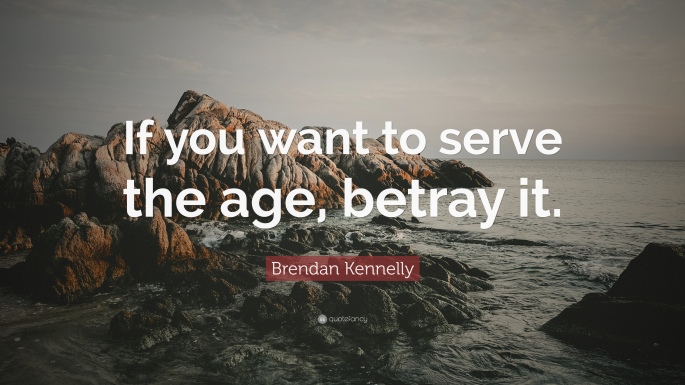
One of my musical heroes, Bono, the singer for the rock group U2, shares the story of the Irish poet, Brendan Kennelly. He relates that Kennelly has a memorable poem called The Book of Judas, and there’s a line in it that says: “If you want to serve the age, betray it.”
Then Bono asks: “What does that mean, to betray the age?”
Answering the question, Bono says: “Well to me betraying the Age means exposing its conceits, its foibles, its phony moral certitudes. It means telling the secrets of the age and facing harsher truths.”
Prevailing wisdom says that it is no measure of mental health to be well adjusted to a profoundly sick society. Every day in Tennessee, educators are challenged by a wide-ranging mixture of social, psychological, and physical problems that impede the improvement of so many students entrusted into their care.
Unfortunately for educators, policymakers worry about the results of a test given at the end of every school the year, used so that we can measure the effectiveness of those teachers educating children. We have made textbook companies and test publishers prosperous, while we engage in a rigorous debate over trivial items.
We eagerly listen to wealthy philanthropists (or organizations representing them) that lack the prerequisite background in the policy areas that they are influencing. By virtue of their wealth, they have gained an unfair advantage, as well as access to policymakers. They then promote public policies by the access of their political donations and may not even understand the problems average people face. In education, they certainly do not understand the challenges confronting public school educators.
For example, Tennessee is the 12th poorest state based on the last US Census figures. Even more startling is that the child poverty rate is 26%. So when the philanthropist experiences donor fatigue and migrates to their next passing interest, educators will still be here to do what God has gifted them to do — which is to educate and demonstrate compassion for the children of our state.
The late political theorist Hannah Arendt wrote, “No cause is left but the most ancient of all, the one, in fact, that from the beginning of our history, has determined the very existence of politics, the cause of freedom versus tyranny.” When political donations replace the contributions of men and women from controlling their own destiny, tyranny will gain a stranglehold in our society.
If we oppose state control of the means of production, it stands to reason that production in the hands of a few would also be undesirable. Politicians understand it is much easier to make laws than repeal them. Too often the extremes on both ends of the political spectrum are heard and the majority of people get silenced.
Every age has moral blind spots, with issues such as slavery, discrimination, unequal pay between sexes, and religious intolerance. Still, my Irish heritage compels me to believe in the idea that anything is possible when we embrace freedom.
The question for educators is this: where are we willing to spend our moral and intellectual capital, our money, or our sweat equity outside of the walls of our classroom or homes?
In a field as diverse as public education, we must all collaborate together to foster a more constructive dialogue among education stakeholders and policymakers. We share a common destiny. We have the power to create amazing change in this world and be champions for the vulnerable who cannot speak for themselves when they need us the most.
This is the time for bold measures. This is Tennessee and we are the generation of Educators to bring change, not only to our profession but to all of our society. Betray the Age.
##
JC Bowman is the Executive Director of Professional Educators of Tennessee, a non-partisan teacher association headquartered in Nashville, Tennessee. Follow him on Twitter @jcbowman. Permission to reprint in whole or in part is hereby granted, provided that the author and the association are properly cited. His Blog is at http://www.jcbowman.com
You Did It!!

Last night I watched legislators—on both sides of the political aisle, whether you agree with them or not, bust their butts; I witnessed Educators: teachers, administrators and Superintendents—across the state, individually and completely on their own initiative work for a common goal; I saw parents using all means at their disposal to work for the same objective; and, I observed a beleaguered Department of Education also work to get this done with all of us. It was beautiful. No adverse action may be taken against any student, teacher, school, or LEA based, in whole or in part, on student achievement data generated from the 2017-2018 TNReady assessments. Perfect? No. But we will take it. So when the union comes along and claims credit for this work. Remind them: The effort belongs to all of us. We simply serve to protect our kids, educators and schools. We are public education. And together we all accomplish more. —– JC Bowman.
We Can’t Hide from the Tough Issues
Problems are seemingly growing more and more complex, or are they? In yesterday’s commentary, Legislators – One Last Thing Before You Go!, we wanted to make sure our teachers are not going to be penalized by flawed test results and scores from this year on a teacher’s 3-year average. It seems like it should be a simple fix, but actually is a little more complex. That is what legislators must regularly balance in decision-making in the Tennessee General Assembly. In public policy it isn’t always a struggle between right and wrong. There is rarely a perfect solution.
We are very pleased that the Tennessee General Assembly wanted to hold students, educators and school districts harmless. It really is a hold harmless, provided school districts in fact do not use test data into employment decisions like promotion, retention, termination, compensation—or even an improvement plan. It seems clear that the intent of the legislature was to ensure that the scores couldn’t harm teachers or students in any way, so we think this is an important part emphasized in SB 1623/HB1981. However, we argued that they just missed a critical component, which is true. Test results from this year still affect their scores and 3-year averages.
Here is the dilemma: if we do not use this year’s TVAAS for teachers it would also likely hurt some teachers from gaining tenure. And that too, is unacceptable and unfair. So accordingly, this year’s data only counts as 10%, last year at 10% and the previous year at 15% to make up the 35% of the evaluation. Teachers can use last year or this year as the full 35% if it helps the teacher. They must have that data as part of their evaluation or the results can’t be used. So, to be clear, a school district cannot use that flawed data, but a teacher can. School districts cannot base employment termination and compensation decisions for teachers on data generated by these statewide assessments. So, do legislators change the law they just passed, try to modify, or leave it be for now? That is the discussion that they must have this week.
Legislators would be negligent if they do not further discuss the issue. They may choose to just take the fleas with the dog. They have done excellent work on this issue to protect teachers, and they deserve the credit. In the end the lesser of disappointing options is to leave in place what was passed. We understand that choice. In a perfect world we would have had perfect execution of the TNReady Test by our vendor Questar. Then we would not be talking about flawed data, impact on 3-year averages or tenure. However, three things are almost certain on the campaign trail in 2018, especially in state races:
- The continued feasibility of using a complicated statistical method as an evaluation tool for teachers will certainly be further debated by stakeholders and policymakers in the foreseeable future. Do we continue using The Tennessee Value-Added Assessment System (TVAAS)? Move to another more reliable statistical method? Or do we abandon these complicated formulas altogether?
- States are allowed to use federal funds, but no longer required, to continue teacher evaluations linked to test scores. Only a handful of states took advantage of the testing flexibility Every Student Succeeds Act (ESSA) allows. In fact, the US Secretary of Education is explicitly prohibited from mandating any aspect of a teacher evaluation system. So, will our state continue linkage of test scores to evaluation moving forward? Or will we end the practice?
- Do we continue moving toward an online test, or do we yet again revert strictly to paper and pencil or some combination of the two?
Sometimes issues are complex, and the simple solution is not possible. Simon Sinek, wrote: “There is no decision that we can make that doesn’t come with some sort of balance or sacrifice.” This may be a case where the right solution is based on flawed data may be a right solution. Then again, we may be all be wrong. Let the debate continue.
##
Audrey Shores is the Chief Operating Officer of Professional Educators of Tennessee. JC Bowman is the Executive Director of Professional Educators of Tennessee, a non-partisan teacher association headquartered in Nashville, Tennessee. Permission to reprint in whole or in part is hereby granted, provided that the author and the association are properly cited. For more information on this subject or any education issue please contact Professional Educators of Tennessee.
Constitution Bee for Secondary Students in Tennessee
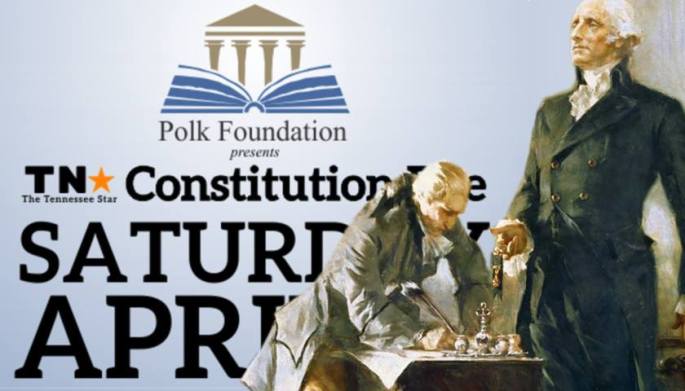 On Saturday April 28th at 9-12 PM Central at the Williamson County Administration Building (1320 W. Main St., Franklin, TN 37064). Be There!
 The Grand Champion prize package has been expanded to include a $3000 scholarship – and that’s in addition to the trip for two to Washington, D.C.!
The Bee is designed to focus on student knowledge of the Constitution and the Bill of Rights in the same way as the National Spelling Bee and the National Geography Bee.
In addition to the Grand Prize winning champion, the top performing student at each grade level (8th, 9th, 10th, 11th, and 12th) will receive a prize package and be featured in profiles at The Tennessee Star.
Registration is still open. Visit http://tennesseestar.com/2017/09/06/registration-is-open-for-the-tennessee-star-constitution-bee/ to read more and to sign up!
The Tennessee Star Constitution Bee is presented by The Polk Foundation. Read more at http://polkfdn.com.

We Give Thanks this Thanksgiving
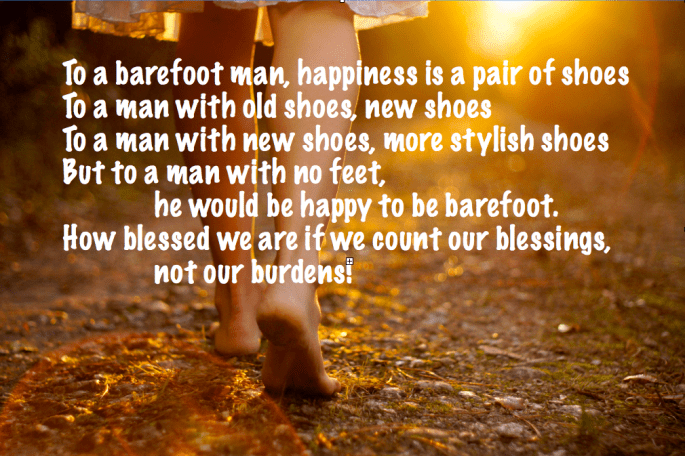 I used to keep a framed picture in my classroom: “Your Life is God’s gift to you. What you do with your Life is your gift to God.” I wish every child could hear that repeated every day. And what teachers do with their gift benefits so many children on a daily basis. Teachers are often on the front line of the poverty battle. It is important that children know from where their gifts originate. This Thanksgiving is a good opportunity to be thankful for the gift of life we have and the gift of others in our lives.
I grew up with the knowledge I wasn’t any better than anyone else, but nobody else was better than me. Because my parents understood that we were all created in the image of God. I believe that we should never be intimidated by those in power. Power is perception, and people who have it over you do so because you give it to them in most instances. Bono, of the rock group U2 in a Rolling Stone interview said: “I don’t fear politicians or presidents. They should be afraid. They’ll be accountable for what happened on their watch.” Too often unelected bureaucrats exert influence over our lives and careers. We need to look closely at the issue of the legitimacy of power.
I have worked with many faith and community organizations and it seems to me that many of the problems they seek to address have one root cause: poverty. I take the problems of global poverty much more serious, and have noticed a rise in poverty in both urban and rural America.
It is the best American tradition of helping others help themselves. Now is an opportune time for compassion and justice to help the poorest people of our nation and the world. I see a passion for compassion diminishing in America. Government simply cannot meet the needs of all citizens. Faith and community organizations need help. They need your time and efforts. They need your money and support. We should embrace government partnership with faith-based organizations and other non-profit community organizations to do the work of fighting poverty and other issues.
To his credit, President George W. Bush recognized the poverty problem when he said: “The growing divide between wealth and poverty, between opportunity and misery, is both a challenge to our compassion and a source of instability. We must confront it.” “We cannot,” said the president, “leave behind half of humanity as we seek a better future for ourselves. We cannot accept permanent poverty in a world of progress. There are no second-class citizens in the human race.”
Bono added, “It’s an amazing thing to think that ours is the first generation in history that really can end extreme poverty, the kind that means a child dies for lack of food in its belly. This should be seen as the most incredible, historic opportunity but instead it’s become a millstone around our necks. We let our own pathetic excuses about how it’s ‘difficult’ justify our own inaction. Let’s be honest. We have the science, the technology, and the wealth. What we don’t have is the will, and that’s not a reason that history will accept.”
Poor and starving people are not particularly appealing news stories, but fighting poverty is and should be a moral imperative for citizens in our cities, state and nation. Educators are often on the frontlines.
Faith reminds us that theological apathy is not an acceptable excuse. Yes, “the poor will always be with us.” However, Jesus, in his first sermon said, “The spirit of the Lord is upon me, because he has anointed me to preach good news to the poor.”
As we sit in our comfortable pews on Sunday morning singing about what it is like up there, we should remember that the poverty of spirit as equally lamentable to poverty of physical wealth. This Thanksgiving we should be thankful for both the small and large blessing in our lives. If you are a parent and your child is about to enter the world, it would be a great comfort to know that your country will use all of its resources to meet the most basic needs of all citizens, so they can succeed in our country.
To paraphase an oft cited poem, if you want to touch the face of God or His heart, it is not necessary to escape the surly bonds of Earth. Take an interest in the things that interest God. Do not be so eager to grow old or love your children as long as they will let you. Eliminate some of those nonessential things that clutter our lives. Recognize what is really essential: faith, family and friends. Embrace others. Treat everybody with dignity and respect. Lose control, let God love through you. Don’t fear the politicians. Hold them accountable. God will indeed hold us all accountable.
Think of those less fortunate this year before your Thanksgiving prayers, those in poverty whose plates are often empty. We are incapable of breaking the cycle of poverty without all of us working together. The number of hungry people in the world reached nearly 800 million, a harsh reminder that the world has yet to get serious about the challenge of ending hunger. We can make a difference, can’t we?
##
JC Bowman is the Executive Director of Professional Educators of Tennessee, a non-partisan teacher association headquartered in Nashville, Tennessee. Permission to reprint in whole or in part is hereby granted, provided that the author and the association are properly cited. For more information on this subject or any education issue please contact Professional Educators of Tennessee. To schedule an interview please contact Audrey Shores, Director of Communications, at 1-800-471-4867 ext.102.
 JC Bowman
You must be logged in to post a comment.