
Rethinking Driver’s Education

textingteendriving

Ladies and gentlemen, start your engines! 

With that little phrase, we are off to the races to get to our morning destination—work, school or other location.  I have been driving since I was 13 years old, and legally since I was 16.  I have never seen worse drivers in my lifetime, all across the state and nation.  Every time I get behind the wheel I say a silent prayer, “Dear Lord, please don’t let me be run-over by the idiots today and keep me and others safe out there.”

I remember when driving a vehicle was a privilege, first granted to me by my parents and then recognized by those who issued a license.  In fact, driving a car is not a right promised to every person, but rather a privilege granted to people who complete certain requirements. In the legal arena, even the US Supreme Court says that citizens do not have a fundamental “right to drive.” In Dixon v. Love, 431 U.S. 105, 112-16, 97 S.Ct. 1723, 52 L.Ed.2d 172 (1977), the Supreme Court held that a state could summarily suspend or revoke the license of a motorist who had been repeatedly convicted of traffic offenses with due process satisfied by a full administrative hearing available only after the suspension or revocation had taken place. The Court conspicuously did not afford the possession of a driver’s license the weight of a fundamental right.  (See also Mackey v. Montrym, 443 U.S. 1, 10, 99 S.Ct. 2612, 61 L.Ed.2d 321 (1979); Bell v. Burson, 402 U.S. 535, 539, 542-43, 91 S.Ct. 1586, 29 L.Ed.2d 90 (1971).)

Tennessee does mandate that in order to get an Intermediate Driver’s License, a minor must have certified 50 hours of supervised behind-the-wheel experience, including 10 hours at night.  The Tennessee Department of Safety only requires students to complete a driver’s education course if they have been convicted of multiple moving violations while they are operating on their intermediate restricted license.  It is time to re-think that policy.  It is currently not a requirement in order for a minor child to obtain a permit or license to successfully complete a driver’s education course.  Nobody disputes that it is an important resource that can help students become responsible and safe drivers.  Should we restrict student access on our school campuses until they can prove to be responsible and safe drivers?   Should driver’s education course be required?  How can we prove or truly verify the supervised behind the behind-the-wheel or night experience?  

From a school safety perspective, school district policy should require a student pass a driver’s education course before being allowed to drive to/from school or park their vehicle on school grounds. This class could also be offered during the summer or through any of the legitimate driving schools across the state. The objective should not be to save parents a few dollars on auto insurance, it must be to improve driving, reduce accidents and injuries and ultimately save lives.  We all benefit by learning defensive driving techniques and other safe driving skills that will last a lifetime.

distracted

The  rules of the road are also shifting. We all face obstacles in an increasingly challenging driving environment, especially with more inexperienced drivers on the roads.  Texting in driving, is one of the most distracting items a driver can do.  Phone use – particularly calling and texting – while driving is one of the most common distractions. New technologies bring even greater challenges with distracted drivers.  New technology in vehicles is not always to our benefit, “infotainment” dashboards GPS maps and other hands-free technology may actually impede smart driving and safety.  Multitasking technology is about convenience, not safety.  Good driving habits require training and repetition.

A driver’s education course is a beneficial choice for drivers of any age and experience levels.  However, it should be required for all minors navigating our roads.  It is time to re-think our policies before the next generation starts their engines.  Lives most certainly will depend on it.

##

JC Bowman is the Executive Director of Professional Educators of Tennessee, a non-partisan teacher association headquartered in Nashville, Tennessee. Permission to reprint in whole or in part is hereby granted, provided that the author and the association are properly cited. For more information on this subject or any education issue please contact Professional Educators of Tennessee.
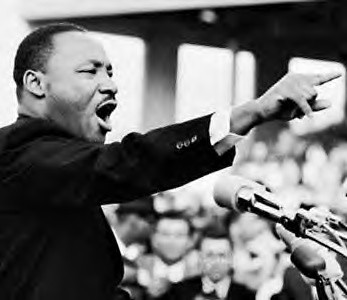

 

The Dream Did Not Die

mlk

On April 4, 2018, we commemorate the 50th anniversary of the assassination of Dr. Martin Luther King, Jr. King was shot and killed in Memphis. Tennessee has played a seminal role in Civil Rights, that we often fail to appreciate.

The ground breaking 1954 Supreme Court case Brown v. Board of Education of Topeka was the case in which the Supreme Court Justices ruled unanimously that racial segregation of children in public schools was unconstitutional. It signaled the rightful end of the “separate but equal” principle set forth in the 1896 Plessy v. Ferguson case. The Ferguson case constitutionally allowed laws barring African Americans from sharing the same buses, schools and other public facilities as whites — known as “Jim Crow” laws— and established the separate but equal doctrine that would stand for the next six decades.

Linda Brown, then a nine-year-old girl, became the face of the issue. Ms. Brown died at age 75 on March 25, 2018. Her national legacy in Civil Rights went far beyond public education. Brown said in a 1985 interview: “I feel that after thirty years, looking back on Brown v. The Board of Education, it has made an impact in all facets of life for minorities throughout the land. I really think of it in terms of what it has done for our young people, in taking away that feeling of second class citizenship. I think it has made the dreams, hopes and aspirations of our young people greater, today.”

Few people know the role Tennessee played in Civil Rights and public education. Avon Williams, Jr., a Knoxville, Tennessee native, became a cooperating attorney for the NAACP Legal Defense Fund in 1949 and began a long career in civil rights activism. In 1950, four years before the Supreme Court outlawed school segregation in Brown v. Board of Education, Williams filed Tennessee’s first public school desegregation suit such case when he sued to integrate the public schools in Anderson County, Tennessee. (McSwain v. Board of Anderson County).

Williams’ first cousin, Thurgood Marshall, was the chief lawyer for the Legal Defense and Educational Fund of the NAACP. Marshall later became the first African-American to serve on the US Supreme Court. Williams and Marshall worked closely on racial discrimination cases. Williams went before the Supreme Court seven times to argue cases involving discrimination in public schools, public housing or other public accommodations. In 1955, Williams, Marshall and Z. Alexander Looby, a fellow African American lawyer focused on civil rights, filed suit Kelley v. Board of Education against the Nashville city schools on behalf of African American children.

Looby and Williams were without doubt the most prominent civil rights attorneys in Tennessee during their lifetime. The Journal of African American History stated that “Looby and Williams’s work in school desegregation cases alone encompassed every major case in the state (with the exception of Northcross v. Board of Education) and entered the highest realms of legal activity. Federal judges at the circuit, appeals, and U.S. Supreme Court levels cited and considered many of their cases as the post-Brown v. Board of Education (1954) litigation world unfolded.” In 1968, Avon Williams, Jr. was elected to the Tennessee State Senate. He was one of the first African-Americans to serve in that body since the Civil War. As a Senator, he worked to put guidance counselors in elementary schools and to establish kindergarten classes in Tennessee. Tennessee has a proud, but often untold history in Civil Rights, which greatly enhanced education in our state.

Racism, bigotry and vitriol hate have no place in a modern culture. All children are created in the image of God. Martin Luther King, Jr. poignantly stated: “I have a dream that my four little children will one day live in a nation where they will not be judged by the color of their skin, but by the content of their character.” Does character still matter? Of course, it does.

For centuries, our country has attracted people in search of a share of “the American dream” from all corners of the world. E Pluribus Unum (From Many, One) remains the national motto, yet it appears that there is no longer a consensus about what that should mean. If you step into our public schools today, the many different cultures are on full display.

Americans like Martin Luther King Jr., Linda Brown, Avon Williams, Alexander Looby, and Thurgood Marshall helped integrate America, and move the nation past the old paradigms and backwards thinking that dominated our society. We need to remember and reflect on that history. More importantly, we need to fulfill our destiny as a nation where all citizens can realize the benefits of integration and equality of opportunity regardless of the color of their skin. The dream of Martin Luther King Jr. did not die in Memphis in 1968, it is still alive in 2018.

##

JC Bowman is the Executive Director of Professional Educators of Tennessee, a non-partisan teacher association headquartered in Nashville, Tennessee. Permission to reprint in whole or in part is hereby granted, provided that the author and the association are properly cited. For more information on this subject or any education issue please contact Professional Educators of Tennessee. To schedule an interview please contact Audrey Shores, Director of Communications, at 1-800-471-4867 ext.102.

Still Battles Left to Fight

braveheart-poster

In the year of our lord, thirteen fourteen, patriots of Scotland, starving and outnumbered, charged the fields of Bannockburn. They fought like warrior poets. They fought like Scotsmen and won their freedom.

The most memorable character, in my opinion, outside of William Wallace in the movie Braveheart, was the character, Stephen. One of the great lines from Stephen was when he was describing the battle about to be fought: “The Almighty says this must be a fashionable fight. It’s drawn the finest people.”

Stephen, my hero from the aforementioned movie Braveheart, (and maybe I like it is because of my Irish heritage) added: “In order to find his equal, an Irishman is forced to talk to God… The Almighty says don’t change the subject; just answer the @#*& question.  Of course, Wallace himself says, “As you’re lying on your death bed, would trade all your days, from this day till that, for just one chance, one chance at FREEDOM!!”

However, freedom without values is anarchy.  So yes, individual character does in fact matter.  There remains a real tension between spheres of commonality and social virtues and spheres of individuality and personal virtues. However, there are areas which deservedly lie in the public realm and those which ought to be left to individual choice.

Oliver Williams and John Houck in their book “Virtues in a Democracy” wrote:  “And, while there are frequently differences in interpreting the exact meanings and implications of prevailing virtues…virtues do provide sound and shared foundations for consensus formation, community endeavors, public policies and moral standing.”

In our elections, it is important that we are wise and elect those who best demonstrate virtue and reflect our shared values.  There are four cardinal virtues – justice, wisdom (prudence), courage (fortitude), and moderation (self-control, temperance). These are inherent foundational laws. If these moral values and commitments are as compelling as virtues are, they remain the foundations of moral discourse in society. They are indispensable guides to our actions. Statements which push new moral claims not absorbed into the set of shared virtues — have little or no standing, despite the age in which we now find ourselves living.

In 1788, James Madison asked the question: “Is there no virtue among us? If there be not, we are in a wretched situation. No theoretical checks–no form of government can render us secure. To suppose that any form of government will secure liberty or happiness without any virtue in the people, is a chimerical idea.”  Madison understood the battles that were ahead for a nation.

Our society works best when we recognize the need for shared values. Shared values are much deeper than principles rooted in popular opinion. Those who live for the moment are building their house on sinking sand. Those who only live in the present are incapable of seeing things in perspective. They do not fully grasp the relationship between means and ends, principles and practice. They are often self-centered individuals believing that only they can be the judges of their conduct, choosing what is best and right for them at the expense of society.  This not only hurts families and communities, it also destroys the fabric of our society. That’s why Madison added “we do not depend on their virtue, or put confidence in our rulers, but in the people who are to choose them.”

We fought some great battles in 2017.  Some of these battles were fought politically, socially and culturally.  We will undoubtedly see even more battles in 2018.  However, we also had some celebrations to go with our victories and some good times to go with the bad.  We are eagerly preparing for the legislative session to kick off in the Tennessee General Assembly.  Then, the election season gets underway.  In 2018, we will have a very quick legislative session in Tennessee.  In education, we have found policy enacted quickly often fails to be implemented correctly.  So there are many battles still left to fight here in Tennessee.    We should choose the best people to fight for us.

##

JC Bowman is the Executive Director of Professional Educators of Tennessee.  Professional Educators of Tennessee is a non-partisan teacher association headquartered in Nashville, Tennessee.  Permission to reprint in whole or in part is hereby granted, provided that the author and the association are properly cited. Follow him on Twitter at @jcbowman

Reflecting on Our Bill of Rights

declaration of independence

In 1941, President Franklin Roosevelt designated December 15 as Bill of Rights DayThis is the day we recognize and commemorate the first 10 amendments to the Constitution, which spell out our rights as citizens here in the United States of America.  That date was chosen because the Bill of Rights was originally ratified on December 15, 1791.  Our rights and freedoms as Americans are rooted in the Bill of Rights.  Unfortunately, many Americans do not fully appreciate or understand our Bill of Rights.

Future President, James Madison of Virginia, was the primary author of the first 10 amendments to the Constitution, which are recognized today as our Bill of Rights.  The Virginia Declaration of Rights, written by George Mason, strongly influenced their writing. Other documents such as the Magna Carta, the Petition of Right, the English Bill of Rights, and the Massachusetts Body of Liberties are considered foundations to our Bill of Rights.  The Bill of Rights was written to provide mutual constitutional protection of individual liberties of our citizens, and to limit the power of the federal government.

Regardless of personal political persuasion or affiliation, American citizens can unite around the Bill of Rights because it communicates our basic shared values.   President George W. Bush stated, “The true [American] revolution was not to defy one earthly power, but to declare principles that stand above every earthly power—the equality of each person before God, and the responsibility of government to secure the rights of all.”  President Franklin D. Roosevelt referred to the Constitution as “the great American charter of personal liberty and human dignity.”

Limiting the power of government and safeguarding the rights of our citizens is something we must all make a conscientious effort to protect.   We should be especially appreciative for the protection afforded in our Bill of Rights against a national government gaining ground against our most fundamental rights—freedom of speech, protest, and conscience guarantees our equal protection under the law.  A free society does not just occur. It has to be consciously devised and intentionally preserved. Eternal vigilance is the price of freedom.

We invite all citizens and educators to celebrate Bill of Rights Day on December 15 and commemorate the ratification of the first ten amendments to the U.S. Constitution.  It is critical to share the knowledge of the relevance and practicality gained through an understanding of the U.S. Constitution to the next generation.[i]

The Bill of Rights

Amendment I

Congress shall make no law respecting an establishment of religion, or prohibiting the free exercise thereof; or abridging the freedom of speech, or of the press; or the right of the people peaceably to assemble, and to petition the government for a redress of grievances.

Amendment II

A well-regulated militia, being necessary to the security of a free state, the right of the people to keep and bear arms, shall not be infringed.

Amendment III

No soldier shall, in time of peace be quartered in any house, without the consent of the owner, nor in time of war, but in a manner to be prescribed by law.

Amendment IV

The right of the people to be secure in their persons, houses, papers, and effects, against unreasonable searches and seizures, shall not be violated, and no warrants shall issue, but upon probable cause, supported by oath or affirmation, and particularly describing the place to be searched, and the persons or things to be seized.

Amendment V

No person shall be held to answer for a capital, or otherwise infamous crime, unless on a presentment or indictment of a grand jury, except in cases arising in the land or naval forces, or in the militia, when in actual service in time of war or public danger; nor shall any person be subject for the same offense to be twice put in jeopardy of life or limb; nor shall be compelled in any criminal case to be a witness against himself, nor be deprived of life, liberty, or property, without due process of law; nor shall private property be taken for public use, without just compensation.

Amendment VI

In all criminal prosecutions, the accused shall enjoy the right to a speedy and public trial, by an impartial jury of the state and district wherein the crime shall have been committed, which district shall have been previously ascertained by law, and to be informed of the nature and cause of the accusation; to be confronted with the witnesses against him; to have compulsory process for obtaining witnesses in his favor, and to have the assistance of counsel for his defense.

Amendment VII

In suits at common law, where the value in controversy shall exceed twenty dollars, the right of trial by jury shall be preserved, and no fact tried by a jury, shall be otherwise reexamined in any court of the United States, than according to the rules of the common law.

Amendment VIII

Excessive bail shall not be required, nor excessive fines imposed, nor cruel and unusual punishments inflicted.

Amendment IX

The enumeration in the Constitution, of certain rights, shall not be construed to deny or disparage others retained by the people.

Amendment X

The powers not delegated to the United States by the Constitution, nor prohibited by it to the states, are reserved to the states respectively, or to the people.

##

JC Bowman in NYCJC Bowman is the Executive Director of Professional Educators of Tennessee.  Professional Educators of Tennessee, a non-partisan teacher association headquartered in Nashville, Tennessee.  Permission to reprint in whole or in part is hereby granted, provided that the author and the association are properly cited.


[i] NOTE:  We are glad to assist our educator members across the state in promoting awareness of the United States Constitution, through various partners and projects.  In addition, if you email our partners at the 917 Society (917society@gmail.com) they will provide copies of the US Constitutions free of charge to all 8th grade classrooms.